

Motmot

Rock Dove vs Hill Pigeon

Columba livia versus Columba rupestris

Play a quiz with Rock Dove and Hill Pigeon
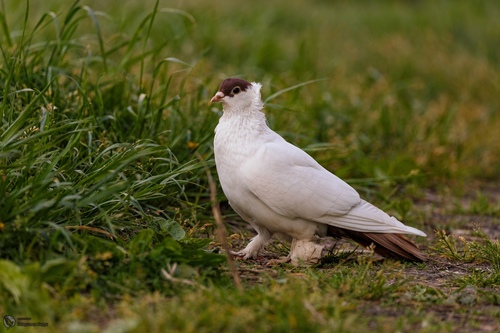
Rock Dove (Columba livia) Rock Dove
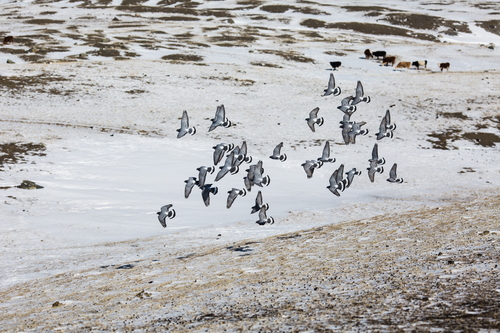
Hill Pigeon (Columba rupestris) Hill Pigeon

Media

Loading…

In short

The most reliable field mark to separate Rock Dove from Hill Pigeon is the tail pattern in flight: Hill Pigeon shows a broad, white tail-band across the black tail, while Rock Dove has a black tail band but lacks the broad white band. Both species are similar in size and general shape, but Hill Pigeon is paler overall, with a paler mantle and upperwings, and a white patch on the back. Rock Dove is more uniformly pale grey with two black wing bars and a white lower back. These differences are visible in both perched and flying birds, but the tail pattern is especially diagnostic in flight. Both species can occur together in some regions, so careful attention to these marks is essential.

Identification tips

  1. Tail pattern in flight: Hill Pigeon always shows a broad, white tail-band across a black tail, visible in all ages and especially clear in flight or when the tail is fanned. Rock Dove has a black tail band but lacks the broad white band, though the outer tail feathers may be narrowly edged white; this is the single most reliable field mark.
  2. Mantle and upperwing color: Hill Pigeon is noticeably paler on the mantle and upperwings compared to Rock Dove, which is more uniformly pale grey. This can be seen in perched birds and in good light.
  3. White patch on back: Hill Pigeon shows a white patch on the back, which can be visible when perched or in flight. Rock Dove has a white lower back, but not a distinct white patch as in Hill Pigeon.
  4. Wing bars: Both species have two black bars on each wing, so this is not a reliable separator.
  5. Iridescence on neck: Both show greenish to reddish-purple iridescence on the neck, but Rock Dove's is more intense, especially in males; this is subtle and not always visible in the field.
  6. Head and body shape: Both are stout-bodied pigeons with similar proportions; structure is not a reliable separator.
  7. Feet and bill: Both have red to pink feet and a grey-black bill with a pale cere; these features are not useful for separation.
  8. Juvenile plumage: Key tail and mantle differences are present in all ages, so immature birds can be separated by the same marks as adults.
  9. Flight style: Both are strong fliers and glide frequently; flight style is not diagnostic.
  10. Habitat context: If seen in high-altitude, open, rugged terrain, especially above 1,500 m, Hill Pigeon is more likely. In urban areas or lowland cliffs, Rock Dove (including ferals) is more likely, but beware of overlap.
  11. Mixing flocks: In areas of overlap, both species can occur together and even mix in flocks, so always check tail pattern carefully.
  12. Vocalizations: Both have similar soft cooing calls; do not rely on voice for separation.
  13. Domesticated/feral confusion: Many urban 'pigeons' are feral Rock Doves with variable plumage; only wild-type Rock Doves show the classic field marks. Hill Pigeon is not domesticated and is more consistent in appearance.
  14. Sex and season: Both sexes are similar; seasonal variation is minimal for key marks. Hill Pigeon may breed earlier at high altitude, but this does not affect field marks.
  15. Common pitfalls: Do not confuse the white lower back of Rock Dove with the broad white tail-band of Hill Pigeon; always look for the tail pattern in flight for a confident ID.

Size

Both species are stout-bodied pigeons of similar size and build. The Rock Dove averages about 280.5 g in body mass [wikidata], and the Hill Pigeon is described as similar in size and general appearance [wikipedia]. No consistent size difference is noted in the field, so size alone is not a reliable separator.

Plumage

The most important plumage difference is in the tail: Hill Pigeon of all ages shows a broad, white tail-band across the black tail, which is highly visible in flight and when the tail is fanned. Rock Dove has a black tail band but lacks the broad white band, though the outer tail feathers are narrowly edged white. Hill Pigeon also has a paler mantle and upperwings and a white patch on the back, making it look paler overall than Rock Dove. Rock Dove is more uniformly pale grey, with two black bars on each wing and a white lower back. Both species have red to pink feet and similar head and neck iridescence, though Rock Dove's neck is more intensely glossy. Juvenile and adult plumages are similar in pattern for these key marks, so the tail pattern is diagnostic at all ages.

Behaviour

Both species are gregarious and often found in flocks, sometimes mixing together. Rock Doves are known for noisy, clapping take-offs and display flights with wing clapping or tail fanning. Hill Pigeons also display bowing and courtship similar to Rock Doves. Both species feed mainly on seeds and grains, but Hill Pigeon can be more opportunistic, sometimes feeding on leftover or partially digested food from other animals. Both species are tame and may be found near human settlements, but Hill Pigeon is more often found at higher elevations and in more rugged terrain.

Habitat

Rock Dove is the ancestor of domestic and feral pigeons and is widespread, often found in urban areas, cliffs, and open country. Hill Pigeon prefers open, rugged country at higher elevations (1,500–6,100 m), often nesting on cliffs, gorges, and rocky outcrops, but can also be found near human settlements in mountainous regions. Where their ranges overlap, Hill Pigeon is more likely in high-altitude, open landscapes, while Rock Dove (including ferals) is common at lower elevations and in cities.

Voice

Both species have similar soft cooing calls typical of Columba pigeons. Rock Dove's call is a soft, slightly wavering 'crruoo-u', with variations for alarm and nest calls. Hill Pigeon is not described as having a distinctively different voice, and both display similar bowing and strutting behaviors during courtship. Vocalizations are not reliably diagnostic between these two species.

Submit a better description

Use the same sections as the comparison. Your text is published immediately.

The most reliable field mark to separate Rock Dove from Hill Pigeon is the tail pattern in flight: Hill Pigeon shows a broad, white tail-band across the black tail, while Rock Dove has a black tail band but lacks the broad white band. Both species are similar in size and general shape, but Hill Pigeon is paler overall, with a paler mantle and upperwings, and a white patch on the back. Rock Dove is more uniformly pale grey with two black wing bars and a white lower back. These differences are visible in both perched and flying birds, but the tail pattern is especially diagnostic in flight. Both species can occur together in some regions, so careful attention to these marks is essential.

  1. Tail pattern in flight: Hill Pigeon always shows a broad, white tail-band across a black tail, visible in all ages and especially clear in flight or when the tail is fanned. Rock Dove has a black tail band but lacks the broad white band, though the outer tail feathers may be narrowly edged white; this is the single most reliable field mark.
  2. Mantle and upperwing color: Hill Pigeon is noticeably paler on the mantle and upperwings compared to Rock Dove, which is more uniformly pale grey. This can be seen in perched birds and in good light.
  3. White patch on back: Hill Pigeon shows a white patch on the back, which can be visible when perched or in flight. Rock Dove has a white lower back, but not a distinct white patch as in Hill Pigeon.
  4. Wing bars: Both species have two black bars on each wing, so this is not a reliable separator.
  5. Iridescence on neck: Both show greenish to reddish-purple iridescence on the neck, but Rock Dove's is more intense, especially in males; this is subtle and not always visible in the field.
  6. Head and body shape: Both are stout-bodied pigeons with similar proportions; structure is not a reliable separator.
  7. Feet and bill: Both have red to pink feet and a grey-black bill with a pale cere; these features are not useful for separation.
  8. Juvenile plumage: Key tail and mantle differences are present in all ages, so immature birds can be separated by the same marks as adults.
  9. Flight style: Both are strong fliers and glide frequently; flight style is not diagnostic.
  10. Habitat context: If seen in high-altitude, open, rugged terrain, especially above 1,500 m, Hill Pigeon is more likely. In urban areas or lowland cliffs, Rock Dove (including ferals) is more likely, but beware of overlap.
  11. Mixing flocks: In areas of overlap, both species can occur together and even mix in flocks, so always check tail pattern carefully.
  12. Vocalizations: Both have similar soft cooing calls; do not rely on voice for separation.
  13. Domesticated/feral confusion: Many urban 'pigeons' are feral Rock Doves with variable plumage; only wild-type Rock Doves show the classic field marks. Hill Pigeon is not domesticated and is more consistent in appearance.
  14. Sex and season: Both sexes are similar; seasonal variation is minimal for key marks. Hill Pigeon may breed earlier at high altitude, but this does not affect field marks.
  15. Common pitfalls: Do not confuse the white lower back of Rock Dove with the broad white tail-band of Hill Pigeon; always look for the tail pattern in flight for a confident ID.

Both species are stout-bodied pigeons of similar size and build. The Rock Dove averages about 280.5 g in body mass [wikidata], and the Hill Pigeon is described as similar in size and general appearance [wikipedia]. No consistent size difference is noted in the field, so size alone is not a reliable separator.

The most important plumage difference is in the tail: Hill Pigeon of all ages shows a broad, white tail-band across the black tail, which is highly visible in flight and when the tail is fanned. Rock Dove has a black tail band but lacks the broad white band, though the outer tail feathers are narrowly edged white. Hill Pigeon also has a paler mantle and upperwings and a white patch on the back, making it look paler overall than Rock Dove. Rock Dove is more uniformly pale grey, with two black bars on each wing and a white lower back. Both species have red to pink feet and similar head and neck iridescence, though Rock Dove's neck is more intensely glossy. Juvenile and adult plumages are similar in pattern for these key marks, so the tail pattern is diagnostic at all ages.

Both species are gregarious and often found in flocks, sometimes mixing together. Rock Doves are known for noisy, clapping take-offs and display flights with wing clapping or tail fanning. Hill Pigeons also display bowing and courtship similar to Rock Doves. Both species feed mainly on seeds and grains, but Hill Pigeon can be more opportunistic, sometimes feeding on leftover or partially digested food from other animals. Both species are tame and may be found near human settlements, but Hill Pigeon is more often found at higher elevations and in more rugged terrain.

Rock Dove is the ancestor of domestic and feral pigeons and is widespread, often found in urban areas, cliffs, and open country. Hill Pigeon prefers open, rugged country at higher elevations (1,500–6,100 m), often nesting on cliffs, gorges, and rocky outcrops, but can also be found near human settlements in mountainous regions. Where their ranges overlap, Hill Pigeon is more likely in high-altitude, open landscapes, while Rock Dove (including ferals) is common at lower elevations and in cities.

Both species have similar soft cooing calls typical of Columba pigeons. Rock Dove's call is a soft, slightly wavering 'crruoo-u', with variations for alarm and nest calls. Hill Pigeon is not described as having a distinctively different voice, and both display similar bowing and strutting behaviors during courtship. Vocalizations are not reliably diagnostic between these two species.

Discard your changes?

You have unsaved edits. If you leave now, those changes will be lost.

Rock Dove · Hill Pigeon · My Tricky Birds