

Motmot

Rhinoceros Auklet vs Cassin's Auklet

Cerorhinca monocerata versus Ptychoramphus aleuticus

Play a quiz with Rhinoceros Auklet and Cassin's Auklet
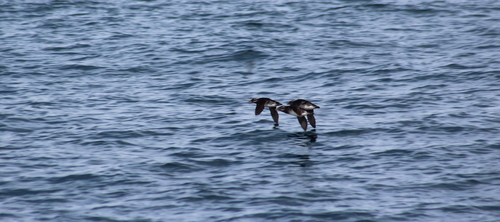
Rhinoceros Auklet (Cerorhinca monocerata) Rhinoceros Auklet
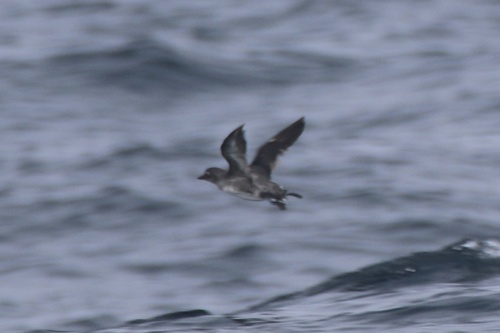
Cassin's Auklet (Ptychoramphus aleuticus) Cassin's Auklet

Media

Loading…

In short

The most reliable field mark separating Rhinoceros Auklet from Cassin's Auklet is the large, thick orange-brown bill with a prominent horn (in breeding adults) on the former, compared to the much smaller, dark bill with a pale spot on the latter. Rhinoceros Auklet is also significantly larger and bulkier, with a more powerful overall structure, while Cassin's Auklet is compact and round-bodied, often described as 'tennis-ball-like' in flight. Plumage is broadly similar—dark above, pale below—but only Rhinoceros Auklet adults in breeding season show white facial plumes and the horn. Cassin's Auklet lacks any dramatic seasonal changes. Immature or non-breeding Rhinoceros Auklet can be trickier, but the bill remains thicker and paler than Cassin's at all ages. Both species may be seen at sea or near burrow colonies, but their size and bill shape are the best field clues.

Identification tips

  1. Bill shape and color: Rhinoceros Auklet always has a thick, deep bill that is orange-brown in adults, with a prominent horn in breeding season. Cassin's Auklet has a much smaller, thinner, dark bill with a pale spot; never a horn. This is the single most reliable mark at all ages.
  2. Facial plumes and horn (breeding Rhinoceros Auklet only): In breeding season, look for white plumes above the eye and behind the bill, plus the horn on the bill. Cassin's Auklet never shows these features.
  3. Size and shape: Rhinoceros Auklet is much larger and bulkier, with a more elongated body and head. Cassin's Auklet is small, round-bodied, and compact—often described as 'tennis-ball-like' in flight.
  4. Flight jizz: Cassin's Auklet in flight appears as a small, fast, round ball with rapid wingbeats. Rhinoceros Auklet looks heavier and more powerful, with slower, deeper wingbeats.
  5. Bill color in immatures/non-breeding: Even when the horn and plumes are absent, Rhinoceros Auklet's bill remains thicker and paler than Cassin's at all ages. Cassin's always has a small, dark bill with a pale spot.
  6. Facial pattern: Cassin's Auklet has a small white mark above the eye, but lacks any dramatic facial plumes. Rhinoceros Auklet (in breeding) has bold white plumes; otherwise, its face is plain but the bill still stands out.
  7. Plumage: Both are dark above and pale below. No strong differences in upperwing or underwing pattern are described for either species.
  8. Feet color: Cassin's Auklet has blue feet, but this is rarely visible in the field.
  9. At-sea behavior: Cassin's Auklet tends to flush at a distance from boats, while Rhinoceros Auklet may be less wary but is a poorer flier, often needing a slope to take off from land.
  10. Colony context: Both nest in burrows, but Cassin's Auklet may be present year-round in southern colonies, while Rhinoceros Auklet is more strictly seasonal.
  11. Feeding behavior: Rhinoceros Auklet carries fish crosswise in its bill (like puffins), while Cassin's Auklet regurgitates food from a pouch—rarely observed directly, but can be a clue if seen.
  12. No dramatic seasonal change in Cassin's: Cassin's Auklet looks the same year-round; if you see a bird with obvious seasonal facial features, it's a Rhinoceros Auklet.
  13. No age-specific upperwing marks: Neither species shows distinctive juvenile or immature wing patterns in flight, so focus on structure and bill.
  14. No sexual dimorphism in field: Both sexes look alike; size difference in Rhinoceros Auklet is minor and not useful in the field.
  15. If in doubt, default to bill size and shape: When all else fails, the thick, pale bill of Rhinoceros Auklet (with or without horn) is the best separator from the tiny, dark bill of Cassin's Auklet.

Size

Rhinoceros Auklet is much larger and heavier (average 483 g) than Cassin's Auklet (average 177 g) [wikidata]. This size difference is obvious in direct comparison or with experience: Rhinoceros Auklet appears robust and elongated, while Cassin's Auklet is notably small and compact. In flight, Cassin's Auklet looks like a flying tennis ball, emphasizing its roundness and diminutive size. Even without direct comparison, the bulk and length of Rhinoceros Auklet stand out.

Plumage

No age-specific upperwing or flight pattern marks are described for either species in the sources, so focus falls on facial and bill features. Breeding adult Rhinoceros Auklet shows a horn on the bill and white plumes above the eye and behind the bill—these are absent in all Cassin's Auklets and in non-breeding or immature Rhinoceros Auklets. Cassin's Auklet is always plain-faced, with only a small white mark above the eye and a dark bill with a pale spot. Both species are dark above and pale below, but Cassin's Auklet lacks any dramatic seasonal or age-related plumage changes. Immature and non-breeding Rhinoceros Auklets lose the horn and plumes, but the bill remains thicker and paler than Cassin's at all ages.

Behaviour

Both species nest in burrows and are mostly nocturnal at colonies, arriving and departing under cover of darkness to avoid predators. At sea, Cassin's Auklet is often seen offshore in pelagic waters, sometimes in association with underwater features, and is known to move away from boats at a distance. Rhinoceros Auklet also feeds at sea, but its larger size and poorer flight ability (prefers sloped takeoff sites) can be noticed if observed taking off from land. Both species carry food back to chicks at night, but Rhinoceros Auklet carries fish in its bill (like puffins), while Cassin's Auklet regurgitates food from a gular pouch.

Habitat

Both species breed on offshore islands in the North Pacific, digging burrows or using natural cavities. Cassin's Auklet is more likely to be found year-round at colonies in the southern part of its range, while Rhinoceros Auklet migrates more widely outside the breeding season. At sea, Cassin's Auklet prefers clear, pelagic waters and may be undercounted due to its tendency to avoid ships. Both can occur together in some areas, but Cassin's Auklet is especially numerous around Triangle Island, BC.

Submit a better description

Use the same sections as the comparison. Your text is published immediately.

The most reliable field mark separating Rhinoceros Auklet from Cassin's Auklet is the large, thick orange-brown bill with a prominent horn (in breeding adults) on the former, compared to the much smaller, dark bill with a pale spot on the latter. Rhinoceros Auklet is also significantly larger and bulkier, with a more powerful overall structure, while Cassin's Auklet is compact and round-bodied, often described as 'tennis-ball-like' in flight. Plumage is broadly similar—dark above, pale below—but only Rhinoceros Auklet adults in breeding season show white facial plumes and the horn. Cassin's Auklet lacks any dramatic seasonal changes. Immature or non-breeding Rhinoceros Auklet can be trickier, but the bill remains thicker and paler than Cassin's at all ages. Both species may be seen at sea or near burrow colonies, but their size and bill shape are the best field clues.

  1. Bill shape and color: Rhinoceros Auklet always has a thick, deep bill that is orange-brown in adults, with a prominent horn in breeding season. Cassin's Auklet has a much smaller, thinner, dark bill with a pale spot; never a horn. This is the single most reliable mark at all ages.
  2. Facial plumes and horn (breeding Rhinoceros Auklet only): In breeding season, look for white plumes above the eye and behind the bill, plus the horn on the bill. Cassin's Auklet never shows these features.
  3. Size and shape: Rhinoceros Auklet is much larger and bulkier, with a more elongated body and head. Cassin's Auklet is small, round-bodied, and compact—often described as 'tennis-ball-like' in flight.
  4. Flight jizz: Cassin's Auklet in flight appears as a small, fast, round ball with rapid wingbeats. Rhinoceros Auklet looks heavier and more powerful, with slower, deeper wingbeats.
  5. Bill color in immatures/non-breeding: Even when the horn and plumes are absent, Rhinoceros Auklet's bill remains thicker and paler than Cassin's at all ages. Cassin's always has a small, dark bill with a pale spot.
  6. Facial pattern: Cassin's Auklet has a small white mark above the eye, but lacks any dramatic facial plumes. Rhinoceros Auklet (in breeding) has bold white plumes; otherwise, its face is plain but the bill still stands out.
  7. Plumage: Both are dark above and pale below. No strong differences in upperwing or underwing pattern are described for either species.
  8. Feet color: Cassin's Auklet has blue feet, but this is rarely visible in the field.
  9. At-sea behavior: Cassin's Auklet tends to flush at a distance from boats, while Rhinoceros Auklet may be less wary but is a poorer flier, often needing a slope to take off from land.
  10. Colony context: Both nest in burrows, but Cassin's Auklet may be present year-round in southern colonies, while Rhinoceros Auklet is more strictly seasonal.
  11. Feeding behavior: Rhinoceros Auklet carries fish crosswise in its bill (like puffins), while Cassin's Auklet regurgitates food from a pouch—rarely observed directly, but can be a clue if seen.
  12. No dramatic seasonal change in Cassin's: Cassin's Auklet looks the same year-round; if you see a bird with obvious seasonal facial features, it's a Rhinoceros Auklet.
  13. No age-specific upperwing marks: Neither species shows distinctive juvenile or immature wing patterns in flight, so focus on structure and bill.
  14. No sexual dimorphism in field: Both sexes look alike; size difference in Rhinoceros Auklet is minor and not useful in the field.
  15. If in doubt, default to bill size and shape: When all else fails, the thick, pale bill of Rhinoceros Auklet (with or without horn) is the best separator from the tiny, dark bill of Cassin's Auklet.

Rhinoceros Auklet is much larger and heavier (average 483 g) than Cassin's Auklet (average 177 g) [wikidata]. This size difference is obvious in direct comparison or with experience: Rhinoceros Auklet appears robust and elongated, while Cassin's Auklet is notably small and compact. In flight, Cassin's Auklet looks like a flying tennis ball, emphasizing its roundness and diminutive size. Even without direct comparison, the bulk and length of Rhinoceros Auklet stand out.

No age-specific upperwing or flight pattern marks are described for either species in the sources, so focus falls on facial and bill features. Breeding adult Rhinoceros Auklet shows a horn on the bill and white plumes above the eye and behind the bill—these are absent in all Cassin's Auklets and in non-breeding or immature Rhinoceros Auklets. Cassin's Auklet is always plain-faced, with only a small white mark above the eye and a dark bill with a pale spot. Both species are dark above and pale below, but Cassin's Auklet lacks any dramatic seasonal or age-related plumage changes. Immature and non-breeding Rhinoceros Auklets lose the horn and plumes, but the bill remains thicker and paler than Cassin's at all ages.

Both species nest in burrows and are mostly nocturnal at colonies, arriving and departing under cover of darkness to avoid predators. At sea, Cassin's Auklet is often seen offshore in pelagic waters, sometimes in association with underwater features, and is known to move away from boats at a distance. Rhinoceros Auklet also feeds at sea, but its larger size and poorer flight ability (prefers sloped takeoff sites) can be noticed if observed taking off from land. Both species carry food back to chicks at night, but Rhinoceros Auklet carries fish in its bill (like puffins), while Cassin's Auklet regurgitates food from a gular pouch.

Both species breed on offshore islands in the North Pacific, digging burrows or using natural cavities. Cassin's Auklet is more likely to be found year-round at colonies in the southern part of its range, while Rhinoceros Auklet migrates more widely outside the breeding season. At sea, Cassin's Auklet prefers clear, pelagic waters and may be undercounted due to its tendency to avoid ships. Both can occur together in some areas, but Cassin's Auklet is especially numerous around Triangle Island, BC.

Discard your changes?

You have unsaved edits. If you leave now, those changes will be lost.

Rhinoceros Auklet · Cassin's Auklet · My Tricky Birds