

Motmot

Red-winged Francolin vs Grey-winged Francolin

Scleroptila levaillantii versus Scleroptila afra

Play a quiz with Red-winged Francolin and Grey-winged Francolin
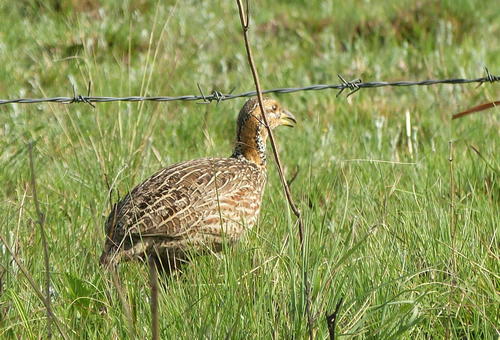
Red-winged Francolin (Scleroptila levaillantii) Red-winged Francolin
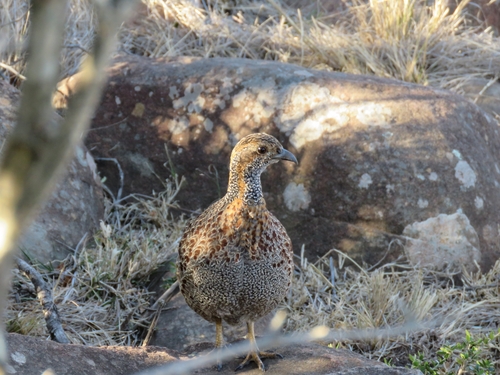
Grey-winged Francolin (Scleroptila afra) Grey-winged Francolin

Media

Loading…

In short

The most reliable field mark for separating Red-winged Francolin from Grey-winged Francolin is the color of the upperwing in flight: Red-winged Francolin shows rich rufous (red) tones on the upperwing coverts and secondaries, while Grey-winged Francolin has a much plainer, greyish upperwing. This difference is visible in both adults and immatures, especially when flushed or flying. Both species are ground-dwelling francolins with similar structure and shape, but their ranges overlap only in Lesotho and South Africa. If you see a francolin with distinctly red-toned wings in flight, it is Red-winged; if the wings are dull grey, it is Grey-winged. Other plumage and habitat clues can help, but wing color is the key field mark.

Identification tips

  1. Check the color of the upperwing in flight: Red-winged Francolin always shows a distinct rufous-red panel on the upperwing, visible in both adults and juveniles. Grey-winged Francolin has a plain greyish upperwing with no red tones.
  2. Flush the bird if possible: The wing color is most obvious when the bird is flushed and flies a short distance. If you see a flash of red on the wings, it's Red-winged.
  3. Perched birds are trickier: On the ground, both species are mottled brown and buff. If you cannot see the upperwing, separation is difficult; look for subtle warmth in the plumage, but this is not reliable.
  4. Range is a strong clue: Outside Lesotho and South Africa, any Scleroptila francolin is Red-winged. Within Lesotho and South Africa, both species can occur, so use wing color.
  5. Habitat is not diagnostic where ranges overlap: Both species use high-altitude grasslands and moorlands in Lesotho and South Africa.
  6. No reliable size or structure difference: Both are medium-sized, similarly shaped francolins; do not use size or bill shape for ID.
  7. Juvenile and immature birds: The wing color difference holds for all ages; even young birds show the species-typical wing panel.
  8. No consistent head or underpart differences: Face, throat, and underpart patterns are too similar to use in the field.
  9. Behavior is similar: Both flush with a whirring flight and are shy, ground-dwelling birds.
  10. Vocalizations are not covered in the available notes: Do not rely on call or song for separation based on current sources.
  11. If in doubt, prioritize a flight view: If you only see a perched bird, try to get a look at the upperwing in flight for a confident ID.
  12. Do not confuse with other Scleroptila francolins: Only these two have the described range and wing coloration in southern Africa.
  13. Season and sex do not affect the key field mark: The wing color difference is present year-round and in both sexes.
  14. If you see a red-winged francolin in Lesotho or South Africa, double-check the wing color: Both species occur here, so the wing panel is essential.
  15. If you see a grey-winged francolin outside Lesotho or South Africa, reconsider: It is almost certainly Red-winged Francolin.

Size

Both species are similar in size and overall structure, being medium-sized francolins in the Scleroptila group. There is no reliable size or shape difference in the field; bill, tail, and body proportions are essentially alike. Use plumage, not size, for separation.

Plumage

The most diagnostic plumage difference is in the upperwing coloration, especially visible in flight. Red-winged Francolin (all ages) shows obvious rufous-red coloration on the upperwing coverts and secondaries, creating a striking contrast with the rest of the wing. This red panel is visible even in immatures and is especially apparent when the bird is flushed. Grey-winged Francolin, by contrast, has a uniform greyish upperwing with no rufous panel; the wings look plain and dull in flight, matching the bird's name. On the ground, both species are mottled brown and buff, but Red-winged Francolin may show warmer tones overall. No other consistent plumage marks (such as throat, face, or underparts) are reliably diagnostic between these two species in the field. Age-related variation is minimal for the key wing mark: both juveniles and adults show the species-typical wing color.

Behaviour

Both species are ground-dwelling, often found in small groups, and flush with a whirring flight when disturbed. Their behavior in the field is very similar: they walk or run through grass, are shy and secretive, and are most often seen when flushed. No behavioral differences are reliably diagnostic between these two species.

Habitat

Red-winged Francolin has a much wider range, occurring in a variety of grasslands and open habitats across central and southern Africa, including highland and montane grasslands. Grey-winged Francolin is much more restricted, found only in Lesotho and South Africa, typically in high-altitude grasslands and moorlands. In areas where both occur (Lesotho, South Africa), habitat overlap is possible, so habitat alone is not diagnostic, but outside this area, range can be a strong clue: a francolin with red wings outside Lesotho/South Africa is almost certainly Red-winged.

Submit a better description

Use the same sections as the comparison. Your text is published immediately.

The most reliable field mark for separating Red-winged Francolin from Grey-winged Francolin is the color of the upperwing in flight: Red-winged Francolin shows rich rufous (red) tones on the upperwing coverts and secondaries, while Grey-winged Francolin has a much plainer, greyish upperwing. This difference is visible in both adults and immatures, especially when flushed or flying. Both species are ground-dwelling francolins with similar structure and shape, but their ranges overlap only in Lesotho and South Africa. If you see a francolin with distinctly red-toned wings in flight, it is Red-winged; if the wings are dull grey, it is Grey-winged. Other plumage and habitat clues can help, but wing color is the key field mark.

  1. Check the color of the upperwing in flight: Red-winged Francolin always shows a distinct rufous-red panel on the upperwing, visible in both adults and juveniles. Grey-winged Francolin has a plain greyish upperwing with no red tones.
  2. Flush the bird if possible: The wing color is most obvious when the bird is flushed and flies a short distance. If you see a flash of red on the wings, it's Red-winged.
  3. Perched birds are trickier: On the ground, both species are mottled brown and buff. If you cannot see the upperwing, separation is difficult; look for subtle warmth in the plumage, but this is not reliable.
  4. Range is a strong clue: Outside Lesotho and South Africa, any Scleroptila francolin is Red-winged. Within Lesotho and South Africa, both species can occur, so use wing color.
  5. Habitat is not diagnostic where ranges overlap: Both species use high-altitude grasslands and moorlands in Lesotho and South Africa.
  6. No reliable size or structure difference: Both are medium-sized, similarly shaped francolins; do not use size or bill shape for ID.
  7. Juvenile and immature birds: The wing color difference holds for all ages; even young birds show the species-typical wing panel.
  8. No consistent head or underpart differences: Face, throat, and underpart patterns are too similar to use in the field.
  9. Behavior is similar: Both flush with a whirring flight and are shy, ground-dwelling birds.
  10. Vocalizations are not covered in the available notes: Do not rely on call or song for separation based on current sources.
  11. If in doubt, prioritize a flight view: If you only see a perched bird, try to get a look at the upperwing in flight for a confident ID.
  12. Do not confuse with other Scleroptila francolins: Only these two have the described range and wing coloration in southern Africa.
  13. Season and sex do not affect the key field mark: The wing color difference is present year-round and in both sexes.
  14. If you see a red-winged francolin in Lesotho or South Africa, double-check the wing color: Both species occur here, so the wing panel is essential.
  15. If you see a grey-winged francolin outside Lesotho or South Africa, reconsider: It is almost certainly Red-winged Francolin.

Both species are similar in size and overall structure, being medium-sized francolins in the Scleroptila group. There is no reliable size or shape difference in the field; bill, tail, and body proportions are essentially alike. Use plumage, not size, for separation.

The most diagnostic plumage difference is in the upperwing coloration, especially visible in flight. Red-winged Francolin (all ages) shows obvious rufous-red coloration on the upperwing coverts and secondaries, creating a striking contrast with the rest of the wing. This red panel is visible even in immatures and is especially apparent when the bird is flushed. Grey-winged Francolin, by contrast, has a uniform greyish upperwing with no rufous panel; the wings look plain and dull in flight, matching the bird's name. On the ground, both species are mottled brown and buff, but Red-winged Francolin may show warmer tones overall. No other consistent plumage marks (such as throat, face, or underparts) are reliably diagnostic between these two species in the field. Age-related variation is minimal for the key wing mark: both juveniles and adults show the species-typical wing color.

Both species are ground-dwelling, often found in small groups, and flush with a whirring flight when disturbed. Their behavior in the field is very similar: they walk or run through grass, are shy and secretive, and are most often seen when flushed. No behavioral differences are reliably diagnostic between these two species.

Red-winged Francolin has a much wider range, occurring in a variety of grasslands and open habitats across central and southern Africa, including highland and montane grasslands. Grey-winged Francolin is much more restricted, found only in Lesotho and South Africa, typically in high-altitude grasslands and moorlands. In areas where both occur (Lesotho, South Africa), habitat overlap is possible, so habitat alone is not diagnostic, but outside this area, range can be a strong clue: a francolin with red wings outside Lesotho/South Africa is almost certainly Red-winged.

Discard your changes?

You have unsaved edits. If you leave now, those changes will be lost.

Red-winged Francolin · Grey-winged Francolin · My Tricky Birds