

Francolín Alirrojo vs Francolín Aligrís
Scleroptila levaillantii frente a Scleroptila afra
Juega un quiz con Francolín Alirrojo y Francolín Aligrís
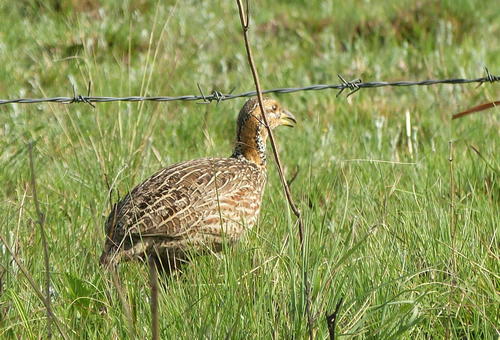 Francolín Alirrojo
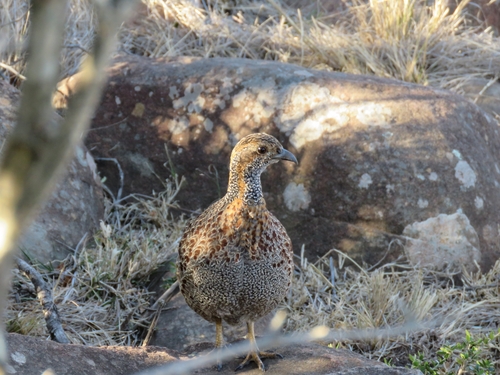 Francolín Aligrís
En breve
La marca de campo más confiable para separar el Francolín Alirrojo del Francolín Aligrís es el color del ala superior en vuelo: el Francolín Alirrojo muestra tonos ricos de rufo (rojo) en las cobertoras y secundarias del ala superior, mientras que el Francolín Aligrís tiene un ala superior mucho más simple y grisácea. Esta diferencia es visible tanto en adultos como en inmaduros, especialmente cuando se asustan o vuelan. Ambas especies son francolines terrestres con una estructura y forma similares, pero sus rangos se superponen solo en Lesotho y Sudáfrica. Si ves un francolín con alas de tonos rojos distintivos en vuelo, es Alirrojo; si las alas son de un gris apagado, es Aligrís. Otras pistas de plumaje y hábitat pueden ayudar, pero el color del ala es la marca de campo clave.
Consejos de identificación
- Verifica el color del ala superior en vuelo: El Francolín Alirrojo siempre muestra un panel distintivo de rufo-rojo en el ala superior, visible tanto en adultos como en juveniles. El Francolín Aligrís tiene un ala superior grisácea simple sin tonos rojos.
- Asusta al ave si es posible: El color del ala es más obvio cuando el ave se asusta y vuela una corta distancia. Si ves un destello de rojo en las alas, es Alirrojo.
- Las aves posadas son más difíciles: En el suelo, ambas especies son moteadas de marrón y beige. Si no puedes ver el ala superior, la separación es difícil; busca un calor sutil en el plumaje, pero esto no es confiable.
- El rango es una pista fuerte: Fuera de Lesotho y Sudáfrica, cualquier francolín Scleroptila es Alirrojo. Dentro de Lesotho y Sudáfrica, ambas especies pueden ocurrir, así que usa el color del ala.
- El hábitat no es diagnóstico donde los rangos se superponen: Ambas especies utilizan pastizales y turberas de alta altitud en Lesotho y Sudáfrica.
- No hay diferencia confiable de tamaño o estructura: Ambas son francolines de tamaño mediano y forma similar; no uses el tamaño o la forma del pico para la identificación.
- Aves juveniles e inmaduras: La diferencia de color del ala se mantiene para todas las edades; incluso los jóvenes muestran el panel de ala típico de la especie.
- No hay diferencias consistentes en la cabeza o partes inferiores: Los patrones de la cara, la garganta y las partes inferiores son demasiado similares para usarse en el campo.
- El comportamiento es similar: Ambas se asustan con un vuelo zumbante y son aves tímidas y terrestres.
- Las vocalizaciones no están cubiertas en las notas disponibles: No confíes en el llamado o canto para la separación según las fuentes actuales.
- Si tienes dudas, prioriza una vista en vuelo: Si solo ves un ave posada, intenta ver el ala superior en vuelo para una identificación confiable.
- No confundas con otros francolines Scleroptila: Solo estos dos tienen el rango y la coloración de alas descritos en el sur de África.
- La temporada y el sexo no afectan la marca de campo clave: La diferencia de color del ala está presente durante todo el año y en ambos sexos.
- Si ves un francolín alirrojo en Lesotho o Sudáfrica, verifica el color del ala: Ambas especies ocurren aquí, así que el panel del ala es esencial.
- Si ves un francolín aligrís fuera de Lesotho o Sudáfrica, reconsidera: Casi con certeza es el Francolín Alirrojo.
Tamaño
Ambas especies son similares en tamaño y estructura general, siendo francolines de tamaño mediano en el grupo Scleroptila. No hay diferencia confiable de tamaño o forma en el campo; el pico, la cola y las proporciones del cuerpo son esencialmente iguales. Usa el plumaje, no el tamaño, para la separación.
Plumaje
La diferencia de plumaje más diagnóstica está en la coloración del ala superior, especialmente visible en vuelo. El Francolín Alirrojo (todas las edades) muestra una coloración obvia de rufo-rojo en las cobertoras y secundarias del ala superior, creando un contraste sorprendente con el resto del ala. Este panel rojo es visible incluso en inmaduros y es especialmente evidente cuando el ave se asusta. El Francolín Aligrís, en contraste, tiene un ala superior grisácea uniforme sin panel rufo; las alas se ven simples y apagadas en vuelo, coincidiendo con el nombre del ave. En el suelo, ambas especies son moteadas de marrón y beige, pero el Francolín Alirrojo puede mostrar tonos más cálidos en general. No hay otras marcas de plumaje consistentes (como garganta, cara o partes inferiores) que sean confiablemente diagnósticas entre estas dos especies en el campo. La variación relacionada con la edad es mínima para la marca clave del ala: tanto los juveniles como los adultos muestran el color de ala típico de la especie.
Comportamiento
Ambas especies son terrestres, a menudo se encuentran en pequeños grupos y se asustan con un vuelo zumbante cuando son perturbadas. Su comportamiento en el campo es muy similar: caminan o corren a través de la hierba, son tímidas y secretivas, y se ven más a menudo cuando se asustan. No hay diferencias de comportamiento que sean confiablemente diagnósticas entre estas dos especies.
Hábitat
El Francolín Alirrojo tiene un rango mucho más amplio, ocurriendo en una variedad de pastizales y hábitats abiertos en el centro y sur de África, incluidos pastizales de alta montaña y montañas. El Francolín Aligrís es mucho más restringido, encontrado solo en Lesotho y Sudáfrica, típicamente en pastizales y turberas de alta altitud. En áreas donde ambas ocurren (Lesotho, Sudáfrica), es posible la superposición de hábitat, por lo que el hábitat solo no es diagnóstico, pero fuera de esta área, el rango puede ser una pista fuerte: un francolín con alas rojas fuera de Lesotho/Sudáfrica es casi con certeza el Francolín Alirrojo.