

Motmot

Red-necked Stint vs Little Stint

Calidris ruficollis versus Calidris minuta

Play a quiz with Red-necked Stint and Little Stint
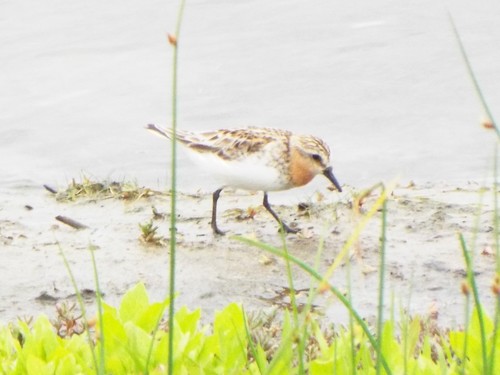
Red-necked Stint (Calidris ruficollis) Red-necked Stint
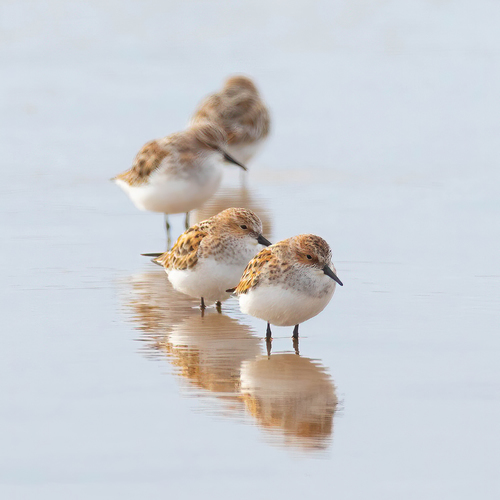
Little Stint (Calidris minuta) Little Stint

Media

Loading…

In short

The most reliable field separation between Red-necked Stint and Little Stint is in juvenile plumage: juvenile Little Stints show pale crown stripes and a pinkish breast, while juvenile Red-necked Stints have more contrasting mantle patterns and weaker white lines down the back. Both species are tiny, dark-legged stints with fine bills and similar structure, but subtle differences in leg length, wing projection, and plumage details—especially in breeding and juvenile birds—can help. In winter, both are very similar and difficult to separate, but Red-necked Stint tends to have shorter legs and longer primary projection. Calls are similar and not reliable for field separation.

Identification tips

  1. Juvenile plumage is the best separator: Juvenile Little Stint shows pale crown stripes and a pinkish breast; Red-necked Stint juvenile has a more contrasting mantle and weaker white lines down the back.
  2. Breeding adult breast color: Red-necked Stint has an unstreaked orange breast bordered below by dark markings; Little Stint's orange wash may be more extensive, but the throat remains white.
  3. Back pattern in breeding plumage: Both have a strong white 'V' on the back, but check for the border and extent of orange on the breast.
  4. Leg length: Red-necked Stint tends to have slightly shorter legs than Little Stint, especially noticeable when birds are side by side.
  5. Primary projection: Red-necked Stint has a longer primary projection (wing tips extend further beyond the tail) than Little Stint, best seen in side profile or when at rest.
  6. Bill structure: Both have fine, dark bills; bill shape is not a reliable separator between these two.
  7. Mantle contrast in juveniles: Red-necked Stint juveniles have a more contrasting mantle than Little Stint juveniles.
  8. Crown stripes in juveniles: Only juvenile Little Stint shows pale crown stripes; Red-necked Stint lacks this feature.
  9. Breast color in juveniles: Juvenile Little Stint has a pinkish tinge to the breast, absent in Red-necked Stint.
  10. White lines on back in juveniles: Red-necked Stint juveniles have weaker white lines down the back compared to Little Stint.
  11. Leg color: Both have dark legs; do not use leg color to separate them.
  12. Winter (non-breeding) plumage: Both species become very similar and are extremely difficult to separate; structural clues (leg length, wing projection) are the only subtle hints.
  13. Flight views: No distinctive upperwing or flight pattern differences are noted in the sources for these two species.
  14. Voice: Both give a 'stit' call; not useful for separation.
  15. Geographical context: If seen in Africa or South Asia, Little Stint is far more likely; in Australasia, Red-necked Stint predominates. However, both can occur as vagrants, so always check plumage and structure.

Size

Both species are virtually identical in size, with adult body mass averaging 26.0 g for Red-necked Stint and 25.55 g for Little Stint [wikidata]. Length and wingspan overlap completely (Red-necked: 13–17 cm, 28–37 cm; Little Stint: similar). In the field, size is not a reliable separator, even in mixed flocks.

Plumage

Juvenile Little Stints show pale crown stripes and a pinkish breast, which are not present in Red-necked Stint juveniles. Instead, juvenile Red-necked Stints have a more contrasting mantle and weaker white lines down the back. In breeding plumage, both species develop an orange or rufous wash to the breast and a strong white 'V' on the back, but Red-necked Stint's orange is more confined to the breast and is bordered below by dark markings, while Little Stint's orange wash can be more extensive and the throat remains white. In non-breeding (winter) plumage, both become drab and very similar, with subtle differences: Red-necked tends to look shorter-legged and longer-winged. Both have fine dark bills and dark legs in all plumages.

Behaviour

Both species are highly gregarious and often form flocks with other small Calidris waders. Their foraging behavior is similar—quick, active movements on mudflats or wet sand. No significant behavioral differences are noted in the sources for field separation.

Habitat

Red-necked Stint breeds in northeast Russia and winters along Southeast Asian and Australasian coastlines. Little Stint breeds in arctic Europe and Asia, wintering south to Africa and South Asia. Both use coastal mudflats, estuaries, and sometimes inland pools on migration or in winter. In regions where both occur as vagrants, habitat preference is not diagnostic.

Voice

Both species give a sharp or hoarse 'stit' call, which is not reliably separable in the field. Voice should not be relied upon for identification between these two.

Submit a better description

Use the same sections as the comparison. Your text is published immediately.

The most reliable field separation between Red-necked Stint and Little Stint is in juvenile plumage: juvenile Little Stints show pale crown stripes and a pinkish breast, while juvenile Red-necked Stints have more contrasting mantle patterns and weaker white lines down the back. Both species are tiny, dark-legged stints with fine bills and similar structure, but subtle differences in leg length, wing projection, and plumage details—especially in breeding and juvenile birds—can help. In winter, both are very similar and difficult to separate, but Red-necked Stint tends to have shorter legs and longer primary projection. Calls are similar and not reliable for field separation.

  1. Juvenile plumage is the best separator: Juvenile Little Stint shows pale crown stripes and a pinkish breast; Red-necked Stint juvenile has a more contrasting mantle and weaker white lines down the back.
  2. Breeding adult breast color: Red-necked Stint has an unstreaked orange breast bordered below by dark markings; Little Stint's orange wash may be more extensive, but the throat remains white.
  3. Back pattern in breeding plumage: Both have a strong white 'V' on the back, but check for the border and extent of orange on the breast.
  4. Leg length: Red-necked Stint tends to have slightly shorter legs than Little Stint, especially noticeable when birds are side by side.
  5. Primary projection: Red-necked Stint has a longer primary projection (wing tips extend further beyond the tail) than Little Stint, best seen in side profile or when at rest.
  6. Bill structure: Both have fine, dark bills; bill shape is not a reliable separator between these two.
  7. Mantle contrast in juveniles: Red-necked Stint juveniles have a more contrasting mantle than Little Stint juveniles.
  8. Crown stripes in juveniles: Only juvenile Little Stint shows pale crown stripes; Red-necked Stint lacks this feature.
  9. Breast color in juveniles: Juvenile Little Stint has a pinkish tinge to the breast, absent in Red-necked Stint.
  10. White lines on back in juveniles: Red-necked Stint juveniles have weaker white lines down the back compared to Little Stint.
  11. Leg color: Both have dark legs; do not use leg color to separate them.
  12. Winter (non-breeding) plumage: Both species become very similar and are extremely difficult to separate; structural clues (leg length, wing projection) are the only subtle hints.
  13. Flight views: No distinctive upperwing or flight pattern differences are noted in the sources for these two species.
  14. Voice: Both give a 'stit' call; not useful for separation.
  15. Geographical context: If seen in Africa or South Asia, Little Stint is far more likely; in Australasia, Red-necked Stint predominates. However, both can occur as vagrants, so always check plumage and structure.

Both species are virtually identical in size, with adult body mass averaging 26.0 g for Red-necked Stint and 25.55 g for Little Stint [wikidata]. Length and wingspan overlap completely (Red-necked: 13–17 cm, 28–37 cm; Little Stint: similar). In the field, size is not a reliable separator, even in mixed flocks.

Juvenile Little Stints show pale crown stripes and a pinkish breast, which are not present in Red-necked Stint juveniles. Instead, juvenile Red-necked Stints have a more contrasting mantle and weaker white lines down the back. In breeding plumage, both species develop an orange or rufous wash to the breast and a strong white 'V' on the back, but Red-necked Stint's orange is more confined to the breast and is bordered below by dark markings, while Little Stint's orange wash can be more extensive and the throat remains white. In non-breeding (winter) plumage, both become drab and very similar, with subtle differences: Red-necked tends to look shorter-legged and longer-winged. Both have fine dark bills and dark legs in all plumages.

Both species are highly gregarious and often form flocks with other small Calidris waders. Their foraging behavior is similar—quick, active movements on mudflats or wet sand. No significant behavioral differences are noted in the sources for field separation.

Red-necked Stint breeds in northeast Russia and winters along Southeast Asian and Australasian coastlines. Little Stint breeds in arctic Europe and Asia, wintering south to Africa and South Asia. Both use coastal mudflats, estuaries, and sometimes inland pools on migration or in winter. In regions where both occur as vagrants, habitat preference is not diagnostic.

Both species give a sharp or hoarse 'stit' call, which is not reliably separable in the field. Voice should not be relied upon for identification between these two.

Discard your changes?

You have unsaved edits. If you leave now, those changes will be lost.

Red-necked Stint · Little Stint · My Tricky Birds