

Red-necked Nightjar vs Eurasian Wryneck
Caprimulgus ruficollis versus Jynx torquilla
Play a quiz with Red-necked Nightjar and Eurasian Wryneck
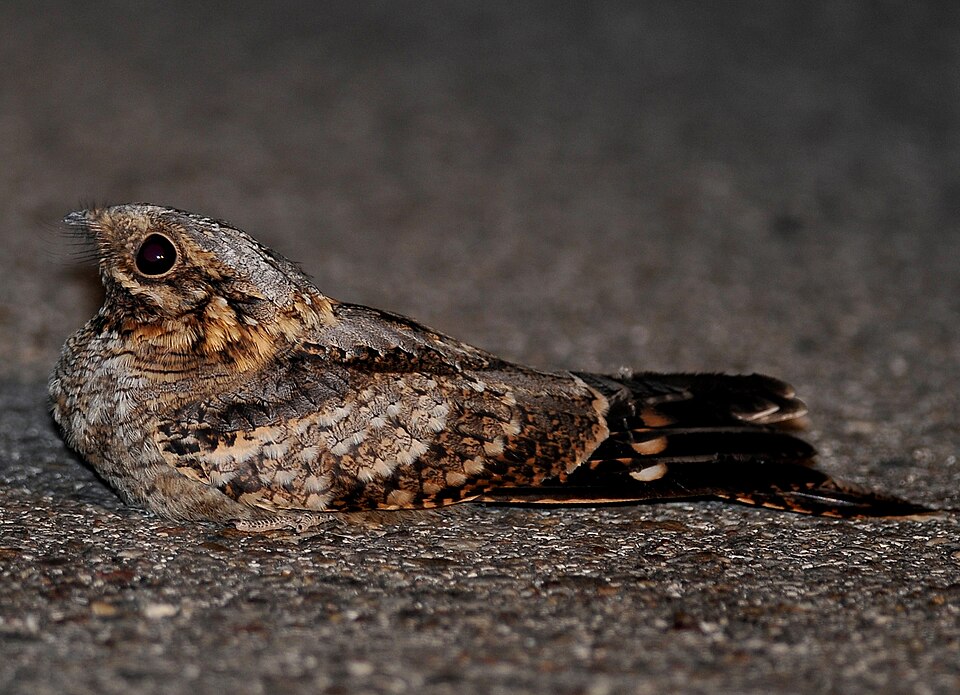 Red-necked Nightjar
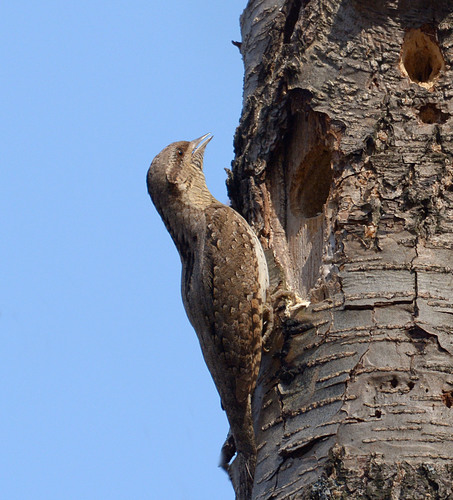 Eurasian Wryneck
In short
The most reliable field mark between Red-necked Nightjar and Eurasian Wryneck is overall structure and jizz: the nightjar is much larger, longer-winged, and longer-tailed, with a broad, flat head and a wide gape, while the wryneck is smaller, slimmer, and more thrush-like, with a slender, pointed bill. In flight, Red-necked Nightjar shows white spots in the wings and tail (all ages), and a distinctive rufous neck-collar, while Eurasian Wryneck lacks any white in the wings or tail and has a cryptic, intricately barred plumage. Perched, the nightjar's lichen-grey, streaked and barred pattern can be confusing, but the nightjar’s size, rufous collar, and white markings are key. Wryneck is smaller, with a more woodpecker-like posture, and never shows white in the wings or tail. Habitat and behavior also help: nightjar is crepuscular and found in open heaths, wryneck is diurnal and prefers orchards or open woodland.
Identification tips
- White wing and tail spots (nightjar only): Red-necked Nightjar of all ages shows prominent white spots in the wings and outer tail feathers, especially visible in flight or when the tail is spread. Eurasian Wryneck never shows white in the wings or tail.
- Rufous neck-collar (nightjar only): The Red-necked Nightjar has a distinct rufous collar around the neck, visible in good light and at rest. Wryneck lacks any rufous collar.
- Overall size and shape: Nightjar is much larger, with a long tail and wings, and a broad, flat head. Wryneck is small, slim, and thrush-like, with a short, rounded tail and a slender, pointed bill.
- Bill structure: Nightjar has a very short, wide, and flat bill adapted for aerial insect catching; wryneck has a long, slender, pointed bill, more like a woodpecker’s.
- Plumage pattern: Nightjar is lichen-grey, heavily barred and streaked, with a more uniform appearance; wryneck is intricately barred and mottled in pale brown, rufous, and black, with a grey, speckled rump and tail, and arrow-head markings on the underparts.
- Perched jizz: Nightjar sits lengthwise along a branch or on the ground, often appearing very flat and camouflaged. Wryneck perches upright, often on trunks or branches, with a more vertical, woodpecker-like stance.
- Flight style: Nightjar flies with buoyant, silent, moth-like wingbeats, often at dusk or dawn. Wryneck’s flight is more direct and undulating, typical of small woodpeckers or thrushes, and is diurnal.
- Voice: Nightjar’s call is a mechanical kyok-kyok-kyok and a churring song; wryneck’s is a sharp, shrill quee-quee-quee-quee or tuck-tuck.
- Habitat: Nightjar is found in open sandy heaths with scattered trees or bushes, rarely in orchards or dense woodland. Wryneck prefers old orchards, open woodland, and farmland with bare ground and ant nests.
- Daytime behavior: Nightjar is almost always motionless and camouflaged by day, lying on the ground or along a branch. Wryneck is active by day, foraging on the ground or on trees.
- Neck movement: Wryneck shows characteristic twisting and contorting of the neck when alarmed or displaying, a behavior never shown by nightjar.
- Legs and feet: Wryneck has zygodactyl feet (two toes forward, two back), allowing it to cling to vertical surfaces; nightjar has weak feet and is rarely seen clinging to trunks.
- Juvenile confusion: Both species’ juveniles resemble adults, but nightjar juveniles still show white wing/tail spots and rufous collar; wryneck juveniles are duller but never show white in wings/tail.
- Tail shape: Nightjar’s tail is long and squared or slightly rounded with white outer feathers; wryneck’s tail is short, rounded, and grey with fine barring.
- Seasonal context: Nightjar is present in Iberia/North Africa in summer, absent in most of Europe outside migration/vagrancy; wryneck is widespread in Europe and Asia in summer, and can occur in orchards and open woodland where nightjar would not be expected.
Size
Red-necked Nightjar is much larger and heavier (body mass ~84 g, length 32 cm, wingspan 64 cm) compared to Eurasian Wryneck (body mass ~37 g, length 16–18 cm). The nightjar is the largest European nightjar, with a long tail and wings, whereas the wryneck is slim, elongated, and thrush-sized. In the field, the nightjar’s size and long-winged, long-tailed silhouette are immediately apparent, especially in flight. Wryneck appears much smaller and more compact, with a short, rounded tail and a slender build.
Plumage
No age-specific upperwing or flight pattern marks are described for juveniles of either species, but all ages of Red-necked Nightjar show white spots in the wings and outer tail feathers, as well as a rufous neck-collar. The nightjar’s plumage is lichen-grey, heavily barred and streaked with buff, chestnut, and black, with barred underparts. Eurasian Wryneck, of all ages, has intricately barred and mottled upperparts in pale brown, rufous, and black, with a grey, speckled rump and tail, and creamy white underparts marked with brown arrow-heads. The wryneck’s plumage is more cryptic and lacks any white in the wings or tail. Juvenile wrynecks are similar to adults but duller and less contrasting. In summary, nightjar shows white in wings/tail and a rufous collar; wryneck never does, and is more finely patterned overall.
Behaviour
Red-necked Nightjar is crepuscular/nocturnal, most active at dusk and dawn, flying with silent, moth-like, buoyant wingbeats, often low over open ground. During the day, it lies motionless on the ground, relying on camouflage. When singing, it may perch along a branch or post. Eurasian Wryneck is diurnal, foraging on the ground or in trees, often seen clinging to vertical surfaces or perched upright with its head held high. It is more active by day, sometimes forming small groups on migration, and displays a characteristic twisting and contorting of the neck when alarmed. The wryneck’s woodpecker-like climbing and posture are unlike the nightjar’s.
Habitat
Red-necked Nightjar breeds in open sandy heaths with scattered trees or bushes, mainly in Iberia and North Africa, and winters in tropical West Africa. It avoids dense woodland and is rarely seen far from open, sandy ground. Eurasian Wryneck breeds in temperate Europe and Asia, favoring old orchards, open woodland, and farmland with scattered trees and bare ground for foraging, especially where ant nests are abundant. Wryneck is more likely in orchards, parkland, and edges of woodland, and is not tied to sandy heath.
Voice
Red-necked Nightjar gives a repetitive, mechanical kyok-kyok-kyok... call, rising and falling as the bird turns its head, and a churring song when perched. It also produces a sharp wing-clap during courtship. Eurasian Wryneck’s main call is a series of harsh, shrill quee-quee-quee-quee notes, reminiscent of a small woodpecker or falcon, and a staccato tuck-tuck alarm. When disturbed, it may hiss. The nightjar’s song is mechanical and churring; the wryneck’s is sharp, shrill, and woodpecker-like.