
Motmot

Red Kite vs Black Kite

Milvus milvus versus Milvus migrans

Play a quiz with Red Kite and Black Kite
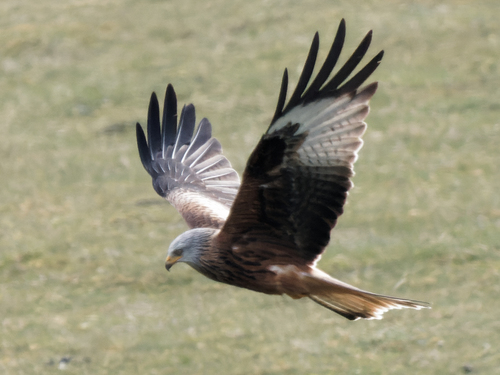
Red Kite (Milvus milvus) Red Kite
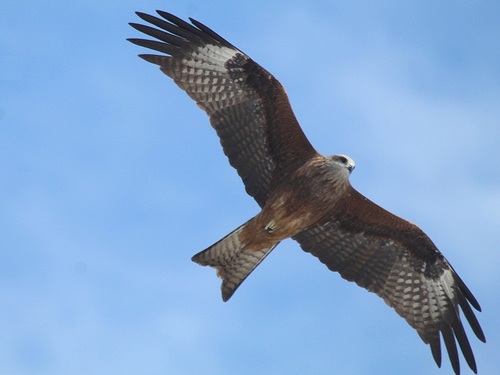
Black Kite (Milvus migrans) Black Kite

Media

Loading…

In short

The most reliable field mark for separating Red Kite from Black Kite is the tail shape in flight: Red Kite shows a long, deeply forked tail (especially in adults), while Black Kite has a shorter, much less forked or even slightly rounded tail. Juvenile Red Kites also display a distinctive pale line across the upperwing coverts, lacking in Black Kite. Red Kite is overall rufous with contrasting white patches in the primaries, whereas Black Kite is a more uniform dark brown, lacking rufous tones. Red Kite is larger and more elegant in flight, often soaring with wings held in a pronounced dihedral, while Black Kite appears stockier and more labored. Both species can be confused at a distance, especially immatures, but careful attention to tail shape, wing pattern, and overall coloration will resolve most field identifications.

Identification tips

  1. Tail Shape in Flight: Red Kite (all ages) has a long, deeply forked tail, especially obvious in adults; Black Kite's tail is shorter, only shallowly forked or even slightly rounded. This is the single most reliable field mark.
  2. Juvenile Upperwing Pattern: Juvenile Red Kite shows a long, narrow pale line across the greater coverts on both upper- and underwing, visible in flight; Black Kite never shows this feature at any age.
  3. Tail Pattern in Juveniles: Juvenile Red Kite's tail is less deeply forked than adults but still more so than Black Kite, and shows a dark subterminal band; Black Kite juveniles lack this and have a more uniform tail.
  4. Overall Coloration: Red Kite is rufous on the body, upper tail, and wing coverts, with white primary patches and black wing tips; Black Kite is a uniform dark brown, sometimes with a paler head/neck, but never rufous or with white wing patches.
  5. Wing Pattern: Red Kite adults have white primary patches contrasting with black wing tips and dark secondaries; Black Kite's wings are more uniformly dark, with no strong contrast or white patches.
  6. Flight Jizz: Red Kite is elegant, with long wings held in a dihedral and a constantly twisting tail; Black Kite is stockier, with less pronounced dihedral and a more direct, less buoyant flight.
  7. Size and Structure: Red Kite is larger and longer-winged, with a longer tail; Black Kite is smaller, more compact, and shorter-tailed. This is most obvious when both species are seen together.
  8. Bill and Cere: Both have yellow cere and legs, but Black Kite's bill is black, while Red Kite's is paler. This is subtle and rarely visible at a distance.
  9. Breast Streaking: Adult Red Kite has black breast streaks; juveniles have pale streaks. Black Kite shows streaked underparts due to dark feather shafts but lacks the rufous wash.
  10. Head Color: Black Kite often has a paler head and neck, especially in some subspecies, but this is not as striking as the overall rufous of Red Kite.
  11. Habitat Context: In Europe, Red Kite is more likely in rural, open country and woodland edge; Black Kite is common near water, rubbish tips, and urban areas.
  12. Behavior Around Humans: Black Kite is bolder and more likely to scavenge in towns and cities; Red Kite is shyer and more rural.
  13. Vocalizations: Red Kite gives a thin, piping call; Black Kite's call is a shrill whistle followed by a whinnying series. Use with caution, as both are often silent.
  14. Sex and Age: Both species are sexually similar; size difference is subtle in the field. Juvenile Red Kite's pale covert line is the best age-specific mark.
  15. Pitfalls: At a distance, especially in poor light, Black Kite can appear more fork-tailed than it is, and worn or moulting Red Kites may look less deeply forked. Always check multiple features, especially tail shape and upperwing pattern in flight.

Size

Red Kite is noticeably larger and heavier than Black Kite, with an average body mass of 1122 g compared to 828 g for Black Kite. Red Kite's wingspan (175–195 cm) is also greater than Black Kite's (about 150 cm). In the field, Red Kite appears longer-winged and longer-tailed, contributing to its more graceful, buoyant flight style. Black Kite is more compact and slightly shorter-tailed, with a less striking silhouette.

Plumage

Juvenile Red Kites are best identified by a long, narrow pale line formed by pale tips to all greater coverts on both upper- and underwing, a feature absent in Black Kite of any age. Juvenile Red Kites also have a buff breast and belly, a less deeply forked tail with a dark subterminal band, and paler breast streaks compared to adults. Adult Red Kites are richly rufous on the body, upper tail, and wing coverts, with white primary patches and black wing tips; their tails are deeply forked. Black Kites of all ages are generally dark brown above and below, with paler heads and necks, and lack any rufous tones or strong white in the wings. Their tails are only shallowly forked, and the wing pattern is more uniform, with no pale covert lines. The cere and legs are yellow in both, but Black Kite's bill is black, while Red Kite's is paler. Sexes are similar in both species.

Behaviour

Red Kite is an elegant, buoyant soarer, often seen gliding on long, angled wings with a twisting, constantly moving forked tail. It frequently holds its wings in a pronounced dihedral (V-shape) and appears almost effortless in flight. Black Kite, while also a capable soarer, has a more direct, less graceful flight, often with shallower wingbeats and less tail movement. Black Kite is more likely to be seen scavenging near water, rubbish tips, or urban areas, and is generally bolder around human activity. Red Kite tends to be more associated with open countryside and woodland edges.

Habitat

Red Kite is now largely restricted to Europe, favoring open countryside, farmland, and wooded valleys, often away from dense urban areas. Black Kite has a much broader range, being the world's most abundant raptor, and is commonly found near water, in open country, and especially around towns and cities where it scavenges. In Europe, Black Kite is more likely to be seen near rivers, lakes, or urban environments, while Red Kite is more rural.

Voice

Red Kite gives a thin, piping call, less mewling than Common Buzzard, and generally quieter than Black Kite. Black Kite's call is a distinctive shrill whistle followed by a rapid, whinnying series of notes, often heard around nesting sites or when birds are interacting. While calls can be useful, both species are often silent in flight, so vocalizations are not always diagnostic in the field.

Submit a better description

Use the same sections as the comparison. Your text is published immediately.

The most reliable field mark for separating Red Kite from Black Kite is the tail shape in flight: Red Kite shows a long, deeply forked tail (especially in adults), while Black Kite has a shorter, much less forked or even slightly rounded tail. Juvenile Red Kites also display a distinctive pale line across the upperwing coverts, lacking in Black Kite. Red Kite is overall rufous with contrasting white patches in the primaries, whereas Black Kite is a more uniform dark brown, lacking rufous tones. Red Kite is larger and more elegant in flight, often soaring with wings held in a pronounced dihedral, while Black Kite appears stockier and more labored. Both species can be confused at a distance, especially immatures, but careful attention to tail shape, wing pattern, and overall coloration will resolve most field identifications.

  1. Tail Shape in Flight: Red Kite (all ages) has a long, deeply forked tail, especially obvious in adults; Black Kite's tail is shorter, only shallowly forked or even slightly rounded. This is the single most reliable field mark.
  2. Juvenile Upperwing Pattern: Juvenile Red Kite shows a long, narrow pale line across the greater coverts on both upper- and underwing, visible in flight; Black Kite never shows this feature at any age.
  3. Tail Pattern in Juveniles: Juvenile Red Kite's tail is less deeply forked than adults but still more so than Black Kite, and shows a dark subterminal band; Black Kite juveniles lack this and have a more uniform tail.
  4. Overall Coloration: Red Kite is rufous on the body, upper tail, and wing coverts, with white primary patches and black wing tips; Black Kite is a uniform dark brown, sometimes with a paler head/neck, but never rufous or with white wing patches.
  5. Wing Pattern: Red Kite adults have white primary patches contrasting with black wing tips and dark secondaries; Black Kite's wings are more uniformly dark, with no strong contrast or white patches.
  6. Flight Jizz: Red Kite is elegant, with long wings held in a dihedral and a constantly twisting tail; Black Kite is stockier, with less pronounced dihedral and a more direct, less buoyant flight.
  7. Size and Structure: Red Kite is larger and longer-winged, with a longer tail; Black Kite is smaller, more compact, and shorter-tailed. This is most obvious when both species are seen together.
  8. Bill and Cere: Both have yellow cere and legs, but Black Kite's bill is black, while Red Kite's is paler. This is subtle and rarely visible at a distance.
  9. Breast Streaking: Adult Red Kite has black breast streaks; juveniles have pale streaks. Black Kite shows streaked underparts due to dark feather shafts but lacks the rufous wash.
  10. Head Color: Black Kite often has a paler head and neck, especially in some subspecies, but this is not as striking as the overall rufous of Red Kite.
  11. Habitat Context: In Europe, Red Kite is more likely in rural, open country and woodland edge; Black Kite is common near water, rubbish tips, and urban areas.
  12. Behavior Around Humans: Black Kite is bolder and more likely to scavenge in towns and cities; Red Kite is shyer and more rural.
  13. Vocalizations: Red Kite gives a thin, piping call; Black Kite's call is a shrill whistle followed by a whinnying series. Use with caution, as both are often silent.
  14. Sex and Age: Both species are sexually similar; size difference is subtle in the field. Juvenile Red Kite's pale covert line is the best age-specific mark.
  15. Pitfalls: At a distance, especially in poor light, Black Kite can appear more fork-tailed than it is, and worn or moulting Red Kites may look less deeply forked. Always check multiple features, especially tail shape and upperwing pattern in flight.

Red Kite is noticeably larger and heavier than Black Kite, with an average body mass of 1122 g compared to 828 g for Black Kite. Red Kite's wingspan (175–195 cm) is also greater than Black Kite's (about 150 cm). In the field, Red Kite appears longer-winged and longer-tailed, contributing to its more graceful, buoyant flight style. Black Kite is more compact and slightly shorter-tailed, with a less striking silhouette.

Juvenile Red Kites are best identified by a long, narrow pale line formed by pale tips to all greater coverts on both upper- and underwing, a feature absent in Black Kite of any age. Juvenile Red Kites also have a buff breast and belly, a less deeply forked tail with a dark subterminal band, and paler breast streaks compared to adults. Adult Red Kites are richly rufous on the body, upper tail, and wing coverts, with white primary patches and black wing tips; their tails are deeply forked. Black Kites of all ages are generally dark brown above and below, with paler heads and necks, and lack any rufous tones or strong white in the wings. Their tails are only shallowly forked, and the wing pattern is more uniform, with no pale covert lines. The cere and legs are yellow in both, but Black Kite's bill is black, while Red Kite's is paler. Sexes are similar in both species.

Red Kite is an elegant, buoyant soarer, often seen gliding on long, angled wings with a twisting, constantly moving forked tail. It frequently holds its wings in a pronounced dihedral (V-shape) and appears almost effortless in flight. Black Kite, while also a capable soarer, has a more direct, less graceful flight, often with shallower wingbeats and less tail movement. Black Kite is more likely to be seen scavenging near water, rubbish tips, or urban areas, and is generally bolder around human activity. Red Kite tends to be more associated with open countryside and woodland edges.

Red Kite is now largely restricted to Europe, favoring open countryside, farmland, and wooded valleys, often away from dense urban areas. Black Kite has a much broader range, being the world's most abundant raptor, and is commonly found near water, in open country, and especially around towns and cities where it scavenges. In Europe, Black Kite is more likely to be seen near rivers, lakes, or urban environments, while Red Kite is more rural.

Red Kite gives a thin, piping call, less mewling than Common Buzzard, and generally quieter than Black Kite. Black Kite's call is a distinctive shrill whistle followed by a rapid, whinnying series of notes, often heard around nesting sites or when birds are interacting. While calls can be useful, both species are often silent in flight, so vocalizations are not always diagnostic in the field.

Discard your changes?

You have unsaved edits. If you leave now, those changes will be lost.

Red Kite · Black Kite · My Tricky Birds