

Motmot

Red-eyed Vireo vs Isabelline Shrike

Vireo olivaceus versus Lanius isabellinus

Play a quiz with Red-eyed Vireo and Isabelline Shrike
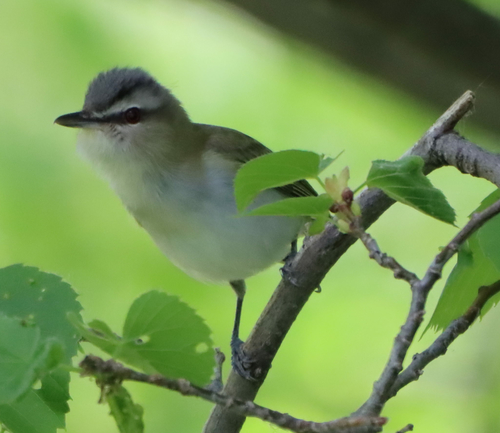
Red-eyed Vireo (Vireo olivaceus) Red-eyed Vireo
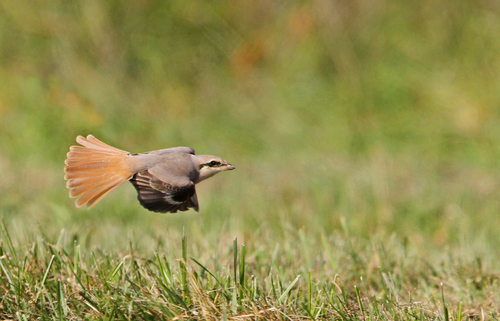
Isabelline Shrike (Lanius isabellinus) Isabelline Shrike

Media

Loading…

In short

The most reliable field mark between Red-eyed Vireo and Isabelline Shrike is overall color and facial pattern: Red-eyed Vireo shows a crisp white supercilium and dark eye-stripe with olive-green upperparts, while Isabelline Shrike is sandy isabelline-brown above with a reddish tail and lacks the vireo's bold face contrast. Juvenile shrikes can show faint underpart vermiculations, but never the vireo's sharp facial lines. Structurally, shrike is much bulkier with a heavy, hooked bill and upright stance, compared to the vireo's smaller, warbler-like jizz and straight bill. In flight or perched, the shrike's size and tail color are strong clues, while the vireo's subtle yellow flanks and red eye (in adults) are supporting marks.

Identification tips

  1. Facial pattern: Red-eyed Vireo shows a broad, white supercilium (eyebrow) above a sharp, dark eye-stripe, with a gray crown edged black; Isabelline Shrike lacks this, instead having a more uniform pale face with a faint mask. This is diagnostic in all ages and seasons.
  2. Upperparts color: Vireo is olive-green above; shrike is sandy isabelline (pale brown) above. The vireo never looks sandy, and the shrike never looks olive.
  3. Tail color: Isabelline Shrike has a distinctly reddish tail, visible both perched and in flight; vireo's tail is olive like the back, never red-toned.
  4. Underparts: Vireo is white below with faint yellowish on flanks and undertail coverts (sometimes subtle); shrike is pale below, sometimes with very faint vermiculations in juveniles, but never shows the vireo's yellowish wash.
  5. Bill shape: Shrike has a heavy, hooked bill typical of predatory birds; vireo's bill is straight, shorter, and lacks a hook. This is visible even at a distance with good light.
  6. Eye color: Adult vireo has a red iris (not always visible in the field); shrike's eye is dark. This mark is only useful at close range and in good light.
  7. Size and structure: Shrike is much larger, bulkier, and longer-tailed than the small, warbler-like vireo. Shrike perches upright, vireo more horizontally.
  8. Behavior: Vireo forages actively in foliage, often acrobatic; shrike perches conspicuously in the open, scanning for prey, and makes direct flights between perches.
  9. Habitat: Vireo is found in wooded or forested areas; shrike is in open country, scrub, or steppe. If you see the bird in dense woods, vireo is much more likely.
  10. Juvenile marks: Young shrikes may show faint underpart barring, but never the vireo's clean white underparts or bold face pattern. Juvenile vireos look like duller adults, retaining the facial pattern.
  11. Wing pattern in flight: No distinctive wing panels or patterns are described for either species in these notes, so rely on overall color and structure.
  12. Perched jizz: Shrike is upright, robust, and often on exposed perches; vireo is smaller, more horizontal, and typically in foliage.
  13. Seasonal context: Red-eyed Vireo is migratory in the Americas; Isabelline Shrike is Old World, breeding from the Caspian to China and wintering in Africa/Arabia. If you are outside the overlap zone, this is decisive.
  14. Vocalization: Not described in these notes; do not rely on voice for separation here.
  15. Pitfalls: Beware of dull or backlit views where shrike may look less sandy or vireo less olive; always look for the face pattern and bill shape as primary clues.

Size

Isabelline Shrike is substantially larger and heavier than Red-eyed Vireo. The shrike averages about 30 g in body mass [wikidata], while the vireo weighs only 12–26 g [wikipedia]. In length, the vireo is 12–13 cm, with a wingspan of 23–25 cm, making it a small, warbler-sized bird. The shrike is not given a length here, but is known to be noticeably bulkier, with a larger head and bill, and a longer tail. In the field, the shrike's size and robust build are immediately apparent next to the vireo's more delicate, slender appearance.

Plumage

Juvenile and immature Isabelline Shrikes may show faint vermiculations (fine barring) on the underparts, but these are much sparser than on similar shrike species and never approach the clean, white underparts of Red-eyed Vireo of any age. Red-eyed Vireo of all ages shows olive-green upperparts, white underparts, and a distinct facial pattern: a broad white supercilium above a dark eye-stripe, with a gray crown edged black. Adult vireos have a red iris, but this can be hard to see at distance. The vireo's flanks and undertail coverts are tinged yellowish (sometimes faint). Isabelline Shrike is overall sandy isabelline (pale brown) above, with a reddish tail; it lacks the vireo's bold face pattern, instead showing a more uniform, pale face with a subtle mask. The shrike's tail is distinctly red-toned, a strong mark in all plumages. The shrike never shows the vireo's olive tones or crisp facial lines.

Behaviour

Red-eyed Vireo is an active foliage-gleaner, moving through tree canopies, often acrobatic and sometimes hanging upside down for fruit or insects. It is generally more restless and warbler-like in movement. Isabelline Shrike typically perches upright on exposed branches, wires, or posts, scanning for prey, and may sally out to catch insects or small vertebrates. The shrike's behavior is more predatory and less acrobatic, with frequent long, direct flights between prominent perches. In mixed flocks or migration, vireo is more likely to be seen within foliage, while shrike is usually conspicuous and solitary.

Habitat

Red-eyed Vireo breeds in open woodlands across Canada and the US, favoring leafy, mature trees and forest edges. It is almost always found in wooded or semi-wooded habitats, rarely in open country. Isabelline Shrike occupies open habitats between the Caspian Sea and China, including scrub, steppe, and semi-arid areas, often with scattered bushes or trees. It is rarely found in dense woodland. Thus, dense canopy and forested settings strongly favor vireo, while open, shrubby, or semi-arid landscapes are shrike territory.

Submit a better description

Use the same sections as the comparison. Your text is published immediately.

The most reliable field mark between Red-eyed Vireo and Isabelline Shrike is overall color and facial pattern: Red-eyed Vireo shows a crisp white supercilium and dark eye-stripe with olive-green upperparts, while Isabelline Shrike is sandy isabelline-brown above with a reddish tail and lacks the vireo's bold face contrast. Juvenile shrikes can show faint underpart vermiculations, but never the vireo's sharp facial lines. Structurally, shrike is much bulkier with a heavy, hooked bill and upright stance, compared to the vireo's smaller, warbler-like jizz and straight bill. In flight or perched, the shrike's size and tail color are strong clues, while the vireo's subtle yellow flanks and red eye (in adults) are supporting marks.

  1. Facial pattern: Red-eyed Vireo shows a broad, white supercilium (eyebrow) above a sharp, dark eye-stripe, with a gray crown edged black; Isabelline Shrike lacks this, instead having a more uniform pale face with a faint mask. This is diagnostic in all ages and seasons.
  2. Upperparts color: Vireo is olive-green above; shrike is sandy isabelline (pale brown) above. The vireo never looks sandy, and the shrike never looks olive.
  3. Tail color: Isabelline Shrike has a distinctly reddish tail, visible both perched and in flight; vireo's tail is olive like the back, never red-toned.
  4. Underparts: Vireo is white below with faint yellowish on flanks and undertail coverts (sometimes subtle); shrike is pale below, sometimes with very faint vermiculations in juveniles, but never shows the vireo's yellowish wash.
  5. Bill shape: Shrike has a heavy, hooked bill typical of predatory birds; vireo's bill is straight, shorter, and lacks a hook. This is visible even at a distance with good light.
  6. Eye color: Adult vireo has a red iris (not always visible in the field); shrike's eye is dark. This mark is only useful at close range and in good light.
  7. Size and structure: Shrike is much larger, bulkier, and longer-tailed than the small, warbler-like vireo. Shrike perches upright, vireo more horizontally.
  8. Behavior: Vireo forages actively in foliage, often acrobatic; shrike perches conspicuously in the open, scanning for prey, and makes direct flights between perches.
  9. Habitat: Vireo is found in wooded or forested areas; shrike is in open country, scrub, or steppe. If you see the bird in dense woods, vireo is much more likely.
  10. Juvenile marks: Young shrikes may show faint underpart barring, but never the vireo's clean white underparts or bold face pattern. Juvenile vireos look like duller adults, retaining the facial pattern.
  11. Wing pattern in flight: No distinctive wing panels or patterns are described for either species in these notes, so rely on overall color and structure.
  12. Perched jizz: Shrike is upright, robust, and often on exposed perches; vireo is smaller, more horizontal, and typically in foliage.
  13. Seasonal context: Red-eyed Vireo is migratory in the Americas; Isabelline Shrike is Old World, breeding from the Caspian to China and wintering in Africa/Arabia. If you are outside the overlap zone, this is decisive.
  14. Vocalization: Not described in these notes; do not rely on voice for separation here.
  15. Pitfalls: Beware of dull or backlit views where shrike may look less sandy or vireo less olive; always look for the face pattern and bill shape as primary clues.

Isabelline Shrike is substantially larger and heavier than Red-eyed Vireo. The shrike averages about 30 g in body mass [wikidata], while the vireo weighs only 12–26 g [wikipedia]. In length, the vireo is 12–13 cm, with a wingspan of 23–25 cm, making it a small, warbler-sized bird. The shrike is not given a length here, but is known to be noticeably bulkier, with a larger head and bill, and a longer tail. In the field, the shrike's size and robust build are immediately apparent next to the vireo's more delicate, slender appearance.

Juvenile and immature Isabelline Shrikes may show faint vermiculations (fine barring) on the underparts, but these are much sparser than on similar shrike species and never approach the clean, white underparts of Red-eyed Vireo of any age. Red-eyed Vireo of all ages shows olive-green upperparts, white underparts, and a distinct facial pattern: a broad white supercilium above a dark eye-stripe, with a gray crown edged black. Adult vireos have a red iris, but this can be hard to see at distance. The vireo's flanks and undertail coverts are tinged yellowish (sometimes faint). Isabelline Shrike is overall sandy isabelline (pale brown) above, with a reddish tail; it lacks the vireo's bold face pattern, instead showing a more uniform, pale face with a subtle mask. The shrike's tail is distinctly red-toned, a strong mark in all plumages. The shrike never shows the vireo's olive tones or crisp facial lines.

Red-eyed Vireo is an active foliage-gleaner, moving through tree canopies, often acrobatic and sometimes hanging upside down for fruit or insects. It is generally more restless and warbler-like in movement. Isabelline Shrike typically perches upright on exposed branches, wires, or posts, scanning for prey, and may sally out to catch insects or small vertebrates. The shrike's behavior is more predatory and less acrobatic, with frequent long, direct flights between prominent perches. In mixed flocks or migration, vireo is more likely to be seen within foliage, while shrike is usually conspicuous and solitary.

Red-eyed Vireo breeds in open woodlands across Canada and the US, favoring leafy, mature trees and forest edges. It is almost always found in wooded or semi-wooded habitats, rarely in open country. Isabelline Shrike occupies open habitats between the Caspian Sea and China, including scrub, steppe, and semi-arid areas, often with scattered bushes or trees. It is rarely found in dense woodland. Thus, dense canopy and forested settings strongly favor vireo, while open, shrubby, or semi-arid landscapes are shrike territory.

Discard your changes?

You have unsaved edits. If you leave now, those changes will be lost.

Red-eyed Vireo · Isabelline Shrike · My Tricky Birds