

Red-eyed Dove vs Grey Crowned-Crane
Streptopelia semitorquata versus Balearica regulorum
Play a quiz with Red-eyed Dove and Grey Crowned-Crane
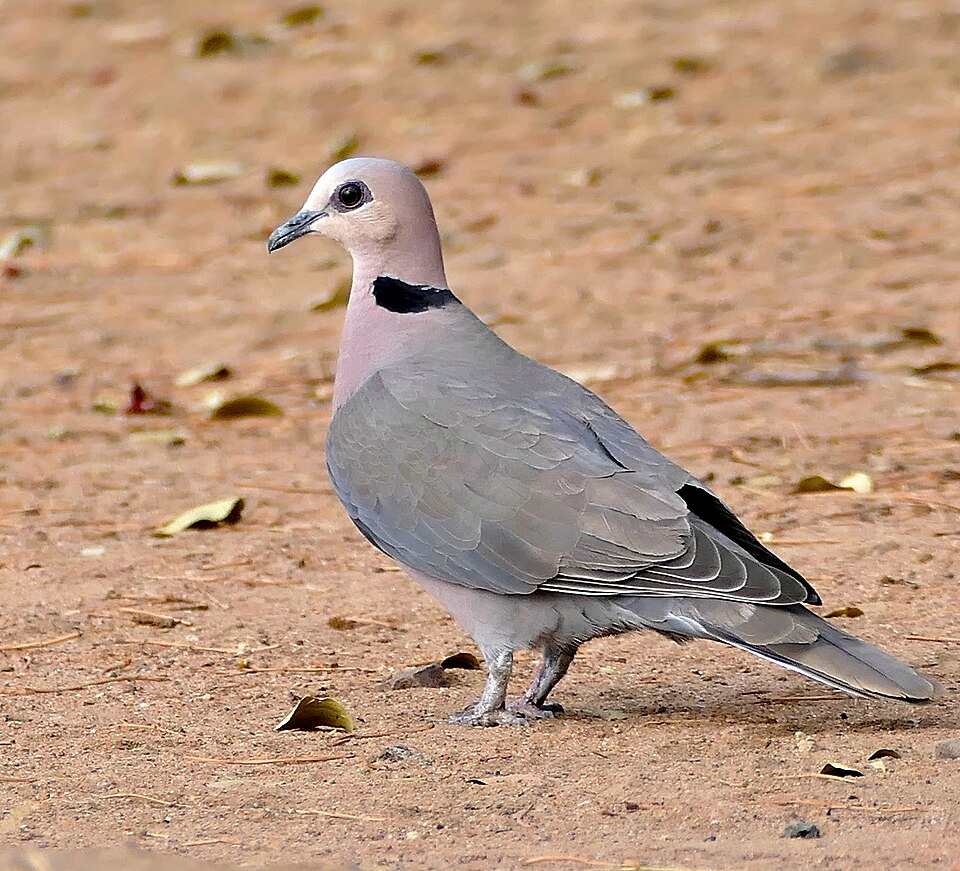 Red-eyed Dove
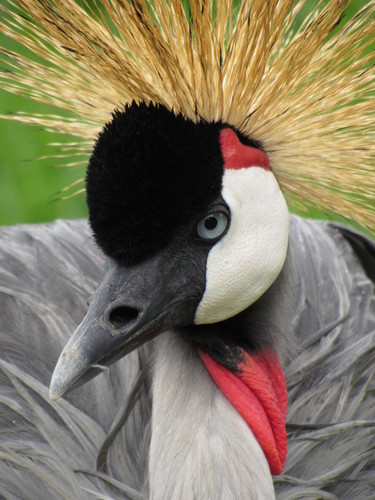 Grey Crowned-Crane
In short
The most reliable way to separate Red-eyed Dove from Grey Crowned-Crane is by overall structure and size: the crane is a towering, long-legged bird with a golden crown and white cheeks, while the dove is a large but compact pigeon with a dark neck half-collar and reddish eyes. Juvenile cranes are greyer with a buff face, but still show the distinctive head shape and long legs, unlike the dove's more uniform, rounded pigeon profile. In flight or at rest, the crane’s long neck, legs, and unique crown are unmistakable, while the dove is much smaller, lacks any head ornament, and shows a typical pigeon jizz. Even at a distance, habitat and flocking behavior can help: doves are usually alone or in pairs, cranes in large flocks.
Identification tips
- Size and Structure: Grey Crowned-Crane is enormous (1 m tall, 2 m wingspan) with long legs and neck, while Red-eyed Dove is a large but compact pigeon. Even at a distance, the crane’s size and upright stance are obvious.
- Head and Face: Cranes have a stiff golden crown, white cheeks, and a red throat pouch; doves have a plain head with a dark half-collar and reddish eyes but no crown or facial ornaments.
- Legs and Posture: Cranes walk on long, black legs and often wade in shallow water or tall grass; doves have short, purplish-red legs and perch or walk on the ground.
- Flight Silhouette: Cranes fly with neck and legs outstretched, showing long wings with white, dark grey, and dark red panels; doves have a compact, fast pigeon flight with no trailing legs or neck.
- Juvenile Plumage: Young cranes are greyer with a buff face but still show the unique head shape and long legs; juvenile doves are duller brown but otherwise like adults, with no head ornament.
- Neck Collar: Doves show a black half-collar on the neck (more restricted and indistinct in juveniles), while cranes have no such mark.
- Iris and Skin Color: Doves have reddish to orange irises and purplish-red orbital skin and legs, but these are subtle and not visible at distance; cranes’ facial colors are bolder and more contrasting.
- Group Size: Doves are usually alone or in pairs; cranes are often in large flocks, especially outside the breeding season.
- Behavior: Cranes perform elaborate dances, bowing, and jumping, while doves do not display in this way.
- Habitat: Doves prefer wooded or riparian areas; cranes are in open savannah, marshes, and fields.
- Vocalization: Cranes give loud, booming or honking calls; doves coo softly. If you hear a loud call, it’s not the dove.
- Perching: Cranes can roost in trees due to their long hind toe, but are usually seen walking; doves perch on branches or wires.
- Bill: Cranes have a relatively short, grey bill; doves have a black, more typical pigeon bill.
- Tail: Doves have a rounded tail with dark grey and brownish-grey tones; cranes’ tail is less prominent, hidden by long tertials.
- Season/Location: Both species are present year-round in much of their range, but check local abundance (cranes are more localized, doves widespread).
Size
Red-eyed Dove is a large pigeon (body mass ~235 g), but is dwarfed by the Grey Crowned-Crane, which stands about 1 m tall and weighs around 3.5 kg. The crane’s wingspan (about 2 m) is vastly greater than the dove’s, and its long legs and neck make it appear even larger. Even the largest doves are less than half the crane’s height and a fraction of its bulk. The dove is the largest 'ringneck' dove, but still looks small and compact next to a crane.
Plumage
Juvenile Grey Crowned-Cranes are overall greyer with a feathered buff face, lacking the full golden crown of adults, but still show a pale face and developing crown structure. Red-eyed Dove juveniles are duller and browner than adults, but retain the basic pigeon shape and lack any facial ornamentation. Adult cranes are unmistakable with their stiff golden crown, white cheeks, and red throat pouch, while doves show a dark mauve-pink to wine-red breast, greyish brown upperparts, and a black half-collar on the neck. The dove’s iris is reddish to orange, and its orbital skin and legs are purplish red, but these are subtle compared to the crane’s bold head pattern. In flight, the crane’s white, dark grey, and dark red wing panels and trailing legs contrast with the dove’s more uniform, compact wing and body shape.
Behaviour
Red-eyed Doves are typically solitary or in pairs and feed quietly, often in trees or on the ground. Their flight is quick with regular beats and occasional sharp flicks, typical of pigeons. Grey Crowned-Cranes are highly social, often seen in flocks of 30–150, and engage in elaborate dancing displays involving bowing, jumping, and wing-flapping. Cranes spend much time walking in open habitats, foraging with long strides, and are the only cranes that roost in trees, thanks to their long hind toe. Their courtship and social behavior are much more conspicuous than the dove’s.
Habitat
Red-eyed Dove is widespread in sub-Saharan Africa, favoring forests near rivers and avoiding deserts; it is common in wooded and semi-open habitats. Grey Crowned-Crane also ranges widely in sub-Saharan Africa but prefers dry savannah, marshes, cultivated lands, and grassy flats near water. Cranes are more likely to be seen in open, wet, or agricultural areas, while doves are more often in wooded or riparian zones. The presence of large flocks in open country is a strong clue for cranes.
Voice
Red-eyed Dove has a typical pigeon coo, not described in detail here, but generally soft and repetitive. Grey Crowned-Crane gives a booming call (using its red throat pouch) and a honking sound, both quite different from any dove’s voice. The crane’s calls are loud and carry far, while the dove’s are more subdued. If you hear a loud, resonant boom or honk, it’s the crane.