

Motmot

Red-crested Pochard vs Common Pochard

Netta rufina versus Aythya ferina

Play a quiz with Red-crested Pochard and Common Pochard
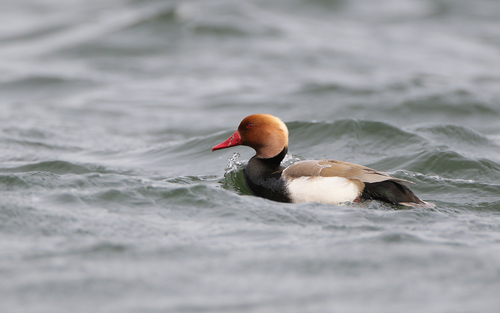
Red-crested Pochard (Netta rufina) Red-crested Pochard
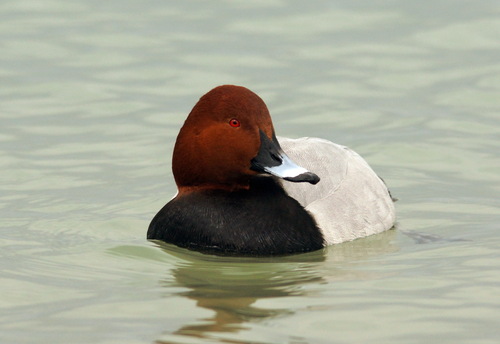
Common Pochard (Aythya ferina) Common Pochard

Media

Loading…

In short

The most reliable field mark to separate Red-crested Pochard from Common Pochard is the male's striking orange head and bright red bill, which are never shown by Common Pochard of any age or sex. Females and immatures are trickier, but Red-crested Pochard females have a pale face and a more rounded head, while Common Pochard females appear duskier and have a sloping forehead. In flight or at a distance, structure and head shape are key, as both species are medium to large diving ducks often seen together. Always check for bill color and head shape first, especially outside of adult male plumage.

Identification tips

  1. Adult male Red-crested Pochard is unmistakable: Look for a bright orange, rounded head and vivid red bill, black breast, white flanks, and brown back. No Common Pochard shows this combination.
  2. Adult male Common Pochard: Shows a chestnut head and neck, black breast and tail, pale grey body with fine vermiculations, and a dark grey bill with a blue-grey band. The head is not as rounded or orange as Red-crested Pochard.
  3. Female Red-crested Pochard: Pale brown overall, with a distinct whitish face and darker crown/back. The face often looks pale and contrasts with the crown, especially at a distance.
  4. Female Common Pochard: Duller brown overall, lacks the pale face, and has a sloping forehead. The iris is brown, sometimes yellowish-brown, and the bill lacks the bright red of Red-crested Pochard.
  5. Eclipse male Red-crested Pochard: Resembles female but retains the red bill, which is a key separator from Common Pochard females and immatures.
  6. Juvenile Common Pochard: Similar to female but with a yellow-olive iris, which turns adult color by first winter. No pale face as in Red-crested Pochard.
  7. Head shape: Red-crested Pochard has a more rounded, puffy head profile, especially in males. Common Pochard has a sloping forehead and a more angular head shape.
  8. Bill color: Red-crested Pochard (all ages/sexes) shows a red bill (brighter in males), while Common Pochard has a dark grey bill with a blue-grey band (males) or duller in females.
  9. Body structure: Red-crested Pochard appears bulkier and more upright, while Common Pochard is stockier, shorter-tailed, and sits lower in the water.
  10. Iris color: Male Common Pochard has a yellow-orange to red iris (brightest in breeding season); female is brownish. Red-crested Pochard iris color is not described as distinctive in the notes.
  11. Flight views: No distinctive upperwing or flight pattern differences are described, so rely on head shape and bill color if seen well.
  12. Mixed flocks: Both species may occur together, especially in winter. Always check each bird carefully, especially in large groups.
  13. Vocalizations: If you hear a wheezing 'veht' or hoarse 'vrah-vrah-vrah', suspect Red-crested Pochard. Otherwise, voice is not a strong separator.
  14. Habitat overlap: Both use similar wetland habitats, so do not rely on location alone, especially in the British Isles where Red-crested Pochard is mostly introduced.
  15. Pitfall: Female and immature Red-crested Pochard can be confused with female Common Pochard; focus on the pale face and red bill for Red-crested, and overall dusky brown, sloping forehead, and blue-grey bill band for Common.

Size

Red-crested Pochard is generally heavier, with an average body mass of 1115 g [wikidata], making it a large diving duck. Common Pochard is medium-sized and usually lighter, with reported weights ranging from 467 to 1240 g (males average heavier than females) [wikipedia]. Both species are similar in length and wingspan, but Red-crested Pochard tends to look bulkier and more robust, especially compared to the stockier, shorter-tailed Common Pochard.

Plumage

No distinctive juvenile or immature upperwing pattern is described for either species, so separation in flight relies on overall plumage and structure. Adult male Red-crested Pochard is unmistakable with a rounded, orange head, bright red bill, black breast, white flanks, and brown back. Females are pale brown with a whitish face and darker crown and back. Eclipse males resemble females but retain the red bill. Common Pochard males have a chestnut head and neck, black breast and tail, and a pale grey body with fine vermiculations. Their bill is dark grey with a blue-grey band, and the iris is yellow-orange to red. Females are duller brown overall, lack the pale face, and have a brown iris. Juveniles resemble females but have a yellow-olive iris. In all ages, Common Pochard shows a sloping forehead and lacks the pale face of female Red-crested Pochard.

Behaviour

Both species are diving ducks and may be seen feeding by diving or dabbling, often in mixed flocks. Red-crested Pochard is noted for being particularly gregarious in winter, sometimes forming large flocks with other diving ducks. Both species upend for food, but Red-crested Pochard reportedly does this more frequently than most diving ducks. In terms of posture, Red-crested Pochard often appears more upright and rounded, while Common Pochard is stockier and sits lower in the water.

Habitat

Both species use lowland marshes and lakes, but Red-crested Pochard is more associated with southern Europe, Central Asia, and wintering in the Indian subcontinent and Africa. Common Pochard breeds mainly in Scandinavia and Siberian steppe regions, wintering farther south and west. In the British Isles, Red-crested Pochard is mostly from introduced populations, while Common Pochard is a widespread migrant and winter visitor. Both may be found together in suitable wetland habitats, so context alone is not diagnostic.

Voice

Red-crested Pochard males give a wheezing 'veht' call, while females produce a series of hoarse 'vrah-vrah-vrah' notes. No specific vocalizations are described for Common Pochard in the provided notes, so voice is not a reliable separator unless the Red-crested Pochard's distinctive calls are heard.

Submit a better description

Use the same sections as the comparison. Your text is published immediately.

The most reliable field mark to separate Red-crested Pochard from Common Pochard is the male's striking orange head and bright red bill, which are never shown by Common Pochard of any age or sex. Females and immatures are trickier, but Red-crested Pochard females have a pale face and a more rounded head, while Common Pochard females appear duskier and have a sloping forehead. In flight or at a distance, structure and head shape are key, as both species are medium to large diving ducks often seen together. Always check for bill color and head shape first, especially outside of adult male plumage.

  1. Adult male Red-crested Pochard is unmistakable: Look for a bright orange, rounded head and vivid red bill, black breast, white flanks, and brown back. No Common Pochard shows this combination.
  2. Adult male Common Pochard: Shows a chestnut head and neck, black breast and tail, pale grey body with fine vermiculations, and a dark grey bill with a blue-grey band. The head is not as rounded or orange as Red-crested Pochard.
  3. Female Red-crested Pochard: Pale brown overall, with a distinct whitish face and darker crown/back. The face often looks pale and contrasts with the crown, especially at a distance.
  4. Female Common Pochard: Duller brown overall, lacks the pale face, and has a sloping forehead. The iris is brown, sometimes yellowish-brown, and the bill lacks the bright red of Red-crested Pochard.
  5. Eclipse male Red-crested Pochard: Resembles female but retains the red bill, which is a key separator from Common Pochard females and immatures.
  6. Juvenile Common Pochard: Similar to female but with a yellow-olive iris, which turns adult color by first winter. No pale face as in Red-crested Pochard.
  7. Head shape: Red-crested Pochard has a more rounded, puffy head profile, especially in males. Common Pochard has a sloping forehead and a more angular head shape.
  8. Bill color: Red-crested Pochard (all ages/sexes) shows a red bill (brighter in males), while Common Pochard has a dark grey bill with a blue-grey band (males) or duller in females.
  9. Body structure: Red-crested Pochard appears bulkier and more upright, while Common Pochard is stockier, shorter-tailed, and sits lower in the water.
  10. Iris color: Male Common Pochard has a yellow-orange to red iris (brightest in breeding season); female is brownish. Red-crested Pochard iris color is not described as distinctive in the notes.
  11. Flight views: No distinctive upperwing or flight pattern differences are described, so rely on head shape and bill color if seen well.
  12. Mixed flocks: Both species may occur together, especially in winter. Always check each bird carefully, especially in large groups.
  13. Vocalizations: If you hear a wheezing 'veht' or hoarse 'vrah-vrah-vrah', suspect Red-crested Pochard. Otherwise, voice is not a strong separator.
  14. Habitat overlap: Both use similar wetland habitats, so do not rely on location alone, especially in the British Isles where Red-crested Pochard is mostly introduced.
  15. Pitfall: Female and immature Red-crested Pochard can be confused with female Common Pochard; focus on the pale face and red bill for Red-crested, and overall dusky brown, sloping forehead, and blue-grey bill band for Common.

Red-crested Pochard is generally heavier, with an average body mass of 1115 g [wikidata], making it a large diving duck. Common Pochard is medium-sized and usually lighter, with reported weights ranging from 467 to 1240 g (males average heavier than females) [wikipedia]. Both species are similar in length and wingspan, but Red-crested Pochard tends to look bulkier and more robust, especially compared to the stockier, shorter-tailed Common Pochard.

No distinctive juvenile or immature upperwing pattern is described for either species, so separation in flight relies on overall plumage and structure. Adult male Red-crested Pochard is unmistakable with a rounded, orange head, bright red bill, black breast, white flanks, and brown back. Females are pale brown with a whitish face and darker crown and back. Eclipse males resemble females but retain the red bill. Common Pochard males have a chestnut head and neck, black breast and tail, and a pale grey body with fine vermiculations. Their bill is dark grey with a blue-grey band, and the iris is yellow-orange to red. Females are duller brown overall, lack the pale face, and have a brown iris. Juveniles resemble females but have a yellow-olive iris. In all ages, Common Pochard shows a sloping forehead and lacks the pale face of female Red-crested Pochard.

Both species are diving ducks and may be seen feeding by diving or dabbling, often in mixed flocks. Red-crested Pochard is noted for being particularly gregarious in winter, sometimes forming large flocks with other diving ducks. Both species upend for food, but Red-crested Pochard reportedly does this more frequently than most diving ducks. In terms of posture, Red-crested Pochard often appears more upright and rounded, while Common Pochard is stockier and sits lower in the water.

Both species use lowland marshes and lakes, but Red-crested Pochard is more associated with southern Europe, Central Asia, and wintering in the Indian subcontinent and Africa. Common Pochard breeds mainly in Scandinavia and Siberian steppe regions, wintering farther south and west. In the British Isles, Red-crested Pochard is mostly from introduced populations, while Common Pochard is a widespread migrant and winter visitor. Both may be found together in suitable wetland habitats, so context alone is not diagnostic.

Red-crested Pochard males give a wheezing 'veht' call, while females produce a series of hoarse 'vrah-vrah-vrah' notes. No specific vocalizations are described for Common Pochard in the provided notes, so voice is not a reliable separator unless the Red-crested Pochard's distinctive calls are heard.

Discard your changes?

You have unsaved edits. If you leave now, those changes will be lost.

Red-crested Pochard · Common Pochard · My Tricky Birds