

Red-breasted Flycatcher vs European Pied Flycatcher
Ficedula parva versus Ficedula hypoleuca
Play a quiz with Red-breasted Flycatcher and European Pied Flycatcher
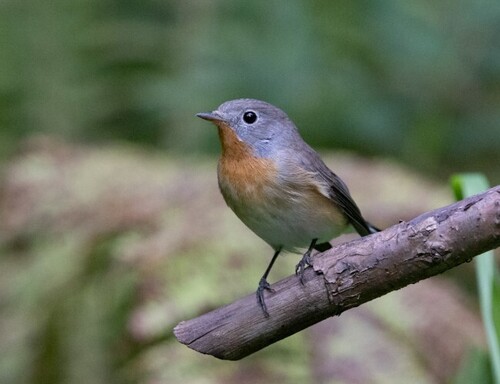 Red-breasted Flycatcher
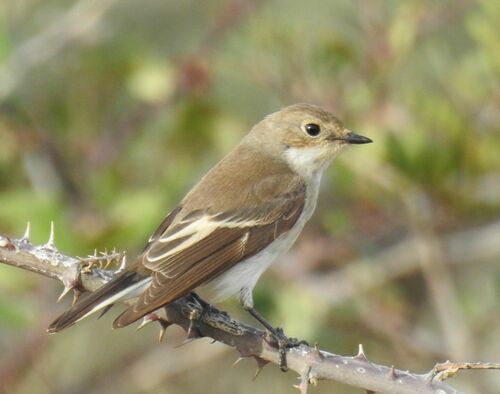 European Pied Flycatcher
In short
The most reliable field mark between Red-breasted Flycatcher and European Pied Flycatcher is the male's throat and upperpart coloration: breeding male Red-breasted Flycatchers show a distinctive orange throat and grey head, while male European Pied Flycatchers are black-and-white with a white wing patch. Females and immatures of both species are much trickier, but Red-breasted Flycatchers are generally warmer brown above and lack the strong wing patch of Pied. In all plumages, Red-breasted Flycatcher is smaller and has a more delicate structure, with a wheatear-like tail pattern (black with white outer bases) that is distinctive if seen well. Pied Flycatcher is slightly larger, with a bolder, more contrasting wing and tail pattern, especially in males. Both species can be silent in autumn, making visual clues crucial.
Identification tips
- Male breeding plumage: Red-breasted Flycatcher males have a grey head and a bright orange throat patch, lacking any black-and-white contrast; Pied Flycatcher males are black above with a large white wing patch, white tail sides, and a small white forehead patch.
- Female and immature plumage: Both are brown above and pale below, but Red-breasted is warmer-toned and lacks the bold white wing patch of Pied. Pied females/immatures show a pale wing panel and white tail sides, though less obvious than in males.
- Wing pattern in flight: Red-breasted Flycatcher (all ages) has plain brown wings with faint pale edging, no bold wing patch; Pied Flycatcher (all ages, especially males) shows a distinct pale or white wing panel.
- Tail pattern: Red-breasted Flycatcher has a black tail with white only at the base of the outermost feathers, giving a 'wheatear-like' look when fanned or flicked; Pied Flycatcher has white on the tail sides, often more extensive and obvious.
- Eyering: Both have a white eyering, but it is more prominent and noticeable in Red-breasted Flycatcher.
- Bill color: Red-breasted Flycatcher has a paler, more extensive pinkish base to the bill; Pied Flycatcher has a darker bill overall.
- Size and structure: Red-breasted Flycatcher is smaller and more delicate, with a finer bill and daintier jizz; Pied Flycatcher is slightly larger and more robust.
- Perched behavior: Red-breasted often flicks its tail upwards and drops its wingtips, especially when perched; Pied is more upright and less tail-flicking.
- Habitat in migration: Red-breasted is more likely in dense, damp woodland edges; Pied prefers drier, open woods but both can overlap.
- Seasonal context: In western Europe in autumn, Red-breasted is a regular passage migrant, while Pied is a common breeder and migrant.
- Vocalizations: If singing, Red-breasted's song is less melodious and more whistled than Pied's; calls are rarely diagnostic in autumn.
- Pitfalls: Female and immature Pied Flycatchers can be very similar to Red-breasted, especially in dull light; focus on wing panel, tail pattern, and overall warmth of plumage.
- Notable absences: Red-breasted never shows a bold white wing patch or extensive white tail sides; Pied never shows an orange throat or grey head.
- Jizz in the field: Red-breasted is often more active in the lower canopy and shrubs, with more tail action; Pied is more likely to be seen higher up and perching more upright.
- Bill structure: Both have broad-based, pointed bills typical of aerial insectivores, but Red-breasted's is finer and paler at the base.
Size
Red-breasted Flycatcher is slightly smaller (11–12 cm) than European Pied Flycatcher (12–13.5 cm), and noticeably more delicate in build. Pied Flycatcher averages 12 g in body mass, making it a touch heavier and stockier. In the field, Red-breasted often appears daintier, with a finer bill and more compact jizz, while Pied can look more robust, especially in males.
Plumage
Juvenile and female plumages are the main pitfall. Red-breasted Flycatcher (all ages/sexes) lacks the bold white wing patch of Pied Flycatcher; instead, the wing is plain brown with only faint pale edging. In flight, Red-breasted shows a distinctive tail pattern: black tail with white only at the base of the outermost feathers, giving a 'wheatear-like' look, visible when the tail is fanned or flicked. Pied Flycatcher (adult male breeding) is strikingly black above with a large white wing patch, white tail sides, and a small white forehead patch; females and immatures are brown above but still show a pale wing panel and white tail sides, though less bold. Red-breasted males in breeding plumage have a grey head and orange throat (unique among these two), while Pied males are black-and-white. Females and immatures of both are brown above and pale below, but Red-breasted is warmer-toned and lacks the strong wing panel. Both species have a white eyering, but it is more prominent in Red-breasted. Bill base is paler and more extensive pinkish in Red-breasted, while Pied's is darker.
Behaviour
Both species are active flycatchers, often sallying from perches to catch insects. Red-breasted Flycatcher frequently flicks its tail upwards and drops its wingtips, especially while perched, and often inspects leaves and trunks in a warbler-like manner. Pied Flycatcher also sallies for insects but can appear more upright and less tail-flicking. Both may forage in the canopy, but Red-breasted is more likely to be seen lower down or in shrubby edges during migration.
Habitat
Red-breasted Flycatcher breeds in eastern Europe and Central Asia, favoring deciduous and mixed forests, and is a regular passage migrant in western Europe, especially in autumn. Pied Flycatcher breeds widely across most of Europe and the Western Palearctic, often in mature woodland with nest boxes or natural cavities. On migration, both can turn up in similar habitats, but Red-breasted is more likely in denser or damper woodland edges, while Pied is commoner in drier, open woods.
Voice
Red-breasted Flycatcher has a sweet, whistled song, less melodious than Pied Flycatcher, usually with quiet 'zit' notes followed by a descending phrase; its rattling call is slower than that of Taiga Flycatcher. Pied Flycatcher has a more melodious, far-carrying song, but both species are mostly silent outside the breeding season. Calls are not usually diagnostic in autumn, but Red-breasted's chip-chip-chr-rrr and slower rattling zrrrt may help if heard well.
Red-breasted Flycatcher · European Pied Flycatcher · My Tricky Birds