

Motmot

ニシオジロビタキ 対 マダラヒタキ

Ficedula parva 対 Ficedula hypoleuca

ニシオジロビタキとマダラヒタキのクイズ
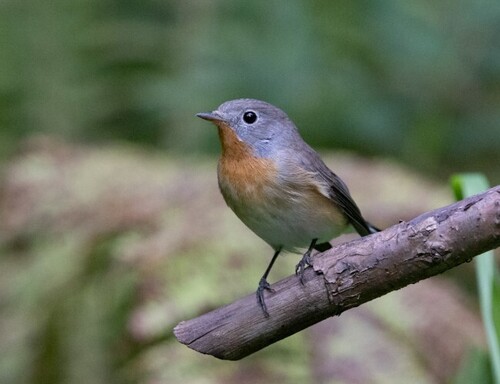
ニシオジロビタキ (Ficedula parva) ニシオジロビタキ
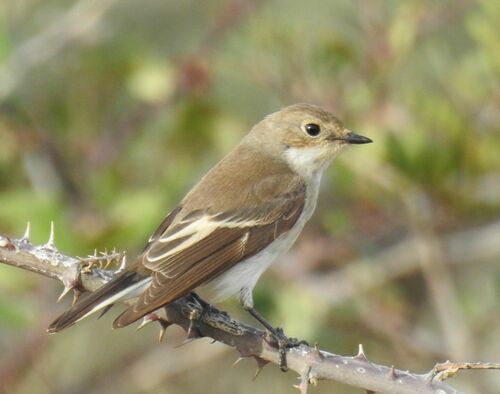
マダラヒタキ (Ficedula hypoleuca) マダラヒタキ

メディア

読み込み中…

要点

ニシオジロビタキとマダラヒタキの間で最も信頼できるフィールドマークは、オスの喉と上部の色合いです:繁殖期のオスのニシオジロビタキは特徴的なオレンジ色の喉と灰色の頭を示し、オスのマダラヒタキは白い翼の斑点を持つ黒と白の色合いです。両種の雌と幼鳥は非常に見分けが難しいですが、ニシオジロビタキは一般的に上面が暖かい茶色で、マダラの強い翼の斑点がありません。すべての羽色において、ニシオジロビタキは小さく、より繊細な構造を持ち、特徴的なウィートイーアーのような尾のパターン(黒に白い外側の基部)が見られます。マダラヒタキはわずかに大きく、特にオスではより大胆で対照的な翼と尾のパターンを持っています。両種は秋に静かになることがあり、視覚的な手がかりが重要です。

識別のコツ

  1. Male breeding plumage: ニシオジロビタキのオスは灰色の頭と明るいオレンジ色の喉の斑点を持ち、黒と白の対比がありません;マダラヒタキのオスは上面が黒で、大きな白い翼の斑点、白い尾の側面、小さな白い額の斑点を持っています。
  2. Female and immature plumage: 両者は上面が茶色で下面が淡いですが、ニシオジロビタキはより暖かいトーンで、マダラの大胆な白い翼の斑点がありません。マダラの雌/幼鳥は淡い翼のパネルと白い尾の側面を示しますが、オスほど明白ではありません。
  3. Wing pattern in flight: ニシオジロビタキ(すべての年齢)は淡いエッジのある無地の茶色の翼を持ち、大胆な翼の斑点はありません;マダラヒタキ(すべての年齢、特にオス)は明確な淡いまたは白い翼のパネルを示します。
  4. Tail pattern: ニシオジロビタキは外側の羽の基部にのみ白がある黒い尾を持ち、扇状に広げたり振ったりすると「ウィートイーアーのような」外観を与えます;マダラヒタキは尾の側面に白があり、しばしばより広範で明白です。
  5. Eyering: 両者は白いアイリングを持っていますが、ニシオジロビタキの方が目立ちます。
  6. Bill color: ニシオジロビタキはくちばしの基部がより淡く、広範囲にピンク色です;マダラヒタキは全体的に暗いくちばしを持っています。
  7. Size and structure: ニシオジロビタキは小さく、より繊細で、より細いくちばしと優雅な姿勢を持っています;マダラヒタキはわずかに大きく、より頑丈です。
  8. Perched behavior: ニシオジロビタキはしばしば尾を上に振り、特に止まっているときに翼の先端を下げます;マダラはより直立しており、尾を振ることは少ないです。
  9. Habitat in migration: ニシオジロビタキは密集した湿った森林の端にいる可能性が高いです;マダラは乾燥した開けた森を好みますが、両者は重なることがあります。
  10. Seasonal context: 西ヨーロッパの秋に、ニシオジロビタキは定期的な通過移動者であり、マダラは一般的な繁殖者および移動者です。
  11. Vocalizations: 歌っている場合、ニシオジロビタキの歌はマダラのものよりもメロディックではなく、より笛のようです;呼び声は秋には診断的であることは稀です。
  12. Pitfalls: 雌および幼鳥のマダラヒタキは、特に鈍い光の中でニシオジロビタキに非常に似ていることがあります;翼のパネル、尾のパターン、および羽毛の全体的な暖かさに焦点を当ててください。
  13. Notable absences: ニシオジロビタキは大胆な白い翼の斑点や広範囲な白い尾の側面を示すことはありません;マダラはオレンジ色の喉や灰色の頭を示すことはありません。
  14. Jizz in the field: ニシオジロビタキはしばしば下層の樹冠や低木の中でより活発で、尾の動きが多いです;マダラはより高い位置で見られ、より直立して止まっていることが多いです。
  15. Bill structure: 両者は空中の昆虫食者に典型的な広い基部と尖ったくちばしを持っていますが、ニシオジロビタキのものはより細く、基部が淡いです。

大きさ

ニシオジロビタキはマダラヒタキ(12–13.5 cm)よりもわずかに小さく(11–12 cm)、明らかにより繊細な体型を持っています。マダラヒタキは体重が平均12 gで、わずかに重く、頑丈です。フィールドでは、ニシオジロビタキはしばしばより優雅に見え、より細いくちばしとよりコンパクトな姿勢を持ち、マダラは特にオスではより頑丈に見えることがあります。

羽色

幼鳥と雌の羽毛は主な落とし穴です。ニシオジロビタキ(すべての年齢/性別)はマダラヒタキの大胆な白い翼の斑点がなく、代わりに翼は無地の茶色で淡いエッジのみがあります。飛行中、ニシオジロビタキは特徴的な尾のパターンを示します:外側の羽の基部にのみ白がある黒い尾で、「ウィートイーアーのような」外観を与え、尾が扇状に広げられたり振られたりするときに見えます。マダラヒタキ(繁殖期のオス)は上面が際立って黒く、大きな白い翼の斑点、白い尾の側面、小さな白い額の斑点を持っています;雌と幼鳥は上面が茶色ですが、依然として淡い翼のパネルと白い尾の側面を示しますが、あまり大胆ではありません。繁殖羽毛のニシオジロビタキのオスは灰色の頭とオレンジ色の喉を持ち(この2種の中でユニーク)、マダラのオスは黒と白です。両者の雌と幼鳥は上面が茶色で下面が淡いですが、ニシオジロビタキは暖かいトーンで、強い翼のパネルがありません。両種は白いアイリングを持っていますが、ニシオジロビタキの方が目立ちます。ニシオジロビタキのくちばしの基部はより淡く、広範囲にピンク色で、マダラのものは暗いです。

行動

両種は活発なフライキャッチャーであり、しばしば止まり木から昆虫を捕まえるために飛び出します。ニシオジロビタキはしばしば尾を上に振り、特に止まっているときに翼の先端を下げ、しばしば葉や幹をウィーバーのように調べます。マダラヒタキも昆虫を捕まえますが、より直立して見え、尾を振ることは少ないです。両者は樹冠で餌を探すことがありますが、ニシオジロビタキは移動中に下層や低木の端で見られる可能性が高いです。

生息環境

ニシオジロビタキは東ヨーロッパと中央アジアで繁殖し、落葉樹と混合林を好み、西ヨーロッパでは特に秋に定期的な通過移動者です。マダラヒタキはヨーロッパと西パレアクティックのほとんどで広く繁殖し、巣箱や自然の空洞がある成熟した森林でよく見られます。移動中、両者は似たような生息地に現れることがありますが、ニシオジロビタキはより密集した湿った森林の端にいる可能性が高く、マダラは乾燥した開けた森に多く見られます。

声

ニシオジロビタキは甘く、笛のような歌を持ち、マダラヒタキよりもメロディックではなく、通常は静かな「ズィット」という音の後に下降するフレーズが続きます;そのガラガラとした呼び声は、オジロビタキのものよりも遅いです。マダラヒタキはよりメロディックで遠くまで響く歌を持っていますが、両種は繁殖期以外はほとんど静かです。呼び声は秋には通常診断的ではありませんが、ニシオジロビタキのチップチップチュルルと遅いガラガラのズリートは、よく聞こえた場合に役立つかもしれません。

より良い説明を送る

比較と同じ項目を使ってください。文章はすぐに公開されます。

The most reliable field mark between Red-breasted Flycatcher and European Pied Flycatcher is the male's throat and upperpart coloration: breeding male Red-breasted Flycatchers show a distinctive orange throat and grey head, while male European Pied Flycatchers are black-and-white with a white wing patch. Females and immatures of both species are much trickier, but Red-breasted Flycatchers are generally warmer brown above and lack the strong wing patch of Pied. In all plumages, Red-breasted Flycatcher is smaller and has a more delicate structure, with a wheatear-like tail pattern (black with white outer bases) that is distinctive if seen well. Pied Flycatcher is slightly larger, with a bolder, more contrasting wing and tail pattern, especially in males. Both species can be silent in autumn, making visual clues crucial.

  1. Male breeding plumage: Red-breasted Flycatcher males have a grey head and a bright orange throat patch, lacking any black-and-white contrast; Pied Flycatcher males are black above with a large white wing patch, white tail sides, and a small white forehead patch.
  2. Female and immature plumage: Both are brown above and pale below, but Red-breasted is warmer-toned and lacks the bold white wing patch of Pied. Pied females/immatures show a pale wing panel and white tail sides, though less obvious than in males.
  3. Wing pattern in flight: Red-breasted Flycatcher (all ages) has plain brown wings with faint pale edging, no bold wing patch; Pied Flycatcher (all ages, especially males) shows a distinct pale or white wing panel.
  4. Tail pattern: Red-breasted Flycatcher has a black tail with white only at the base of the outermost feathers, giving a 'wheatear-like' look when fanned or flicked; Pied Flycatcher has white on the tail sides, often more extensive and obvious.
  5. Eyering: Both have a white eyering, but it is more prominent and noticeable in Red-breasted Flycatcher.
  6. Bill color: Red-breasted Flycatcher has a paler, more extensive pinkish base to the bill; Pied Flycatcher has a darker bill overall.
  7. Size and structure: Red-breasted Flycatcher is smaller and more delicate, with a finer bill and daintier jizz; Pied Flycatcher is slightly larger and more robust.
  8. Perched behavior: Red-breasted often flicks its tail upwards and drops its wingtips, especially when perched; Pied is more upright and less tail-flicking.
  9. Habitat in migration: Red-breasted is more likely in dense, damp woodland edges; Pied prefers drier, open woods but both can overlap.
  10. Seasonal context: In western Europe in autumn, Red-breasted is a regular passage migrant, while Pied is a common breeder and migrant.
  11. Vocalizations: If singing, Red-breasted's song is less melodious and more whistled than Pied's; calls are rarely diagnostic in autumn.
  12. Pitfalls: Female and immature Pied Flycatchers can be very similar to Red-breasted, especially in dull light; focus on wing panel, tail pattern, and overall warmth of plumage.
  13. Notable absences: Red-breasted never shows a bold white wing patch or extensive white tail sides; Pied never shows an orange throat or grey head.
  14. Jizz in the field: Red-breasted is often more active in the lower canopy and shrubs, with more tail action; Pied is more likely to be seen higher up and perching more upright.
  15. Bill structure: Both have broad-based, pointed bills typical of aerial insectivores, but Red-breasted's is finer and paler at the base.

Red-breasted Flycatcher is slightly smaller (11–12 cm) than European Pied Flycatcher (12–13.5 cm), and noticeably more delicate in build. Pied Flycatcher averages 12 g in body mass, making it a touch heavier and stockier. In the field, Red-breasted often appears daintier, with a finer bill and more compact jizz, while Pied can look more robust, especially in males.

Juvenile and female plumages are the main pitfall. Red-breasted Flycatcher (all ages/sexes) lacks the bold white wing patch of Pied Flycatcher; instead, the wing is plain brown with only faint pale edging. In flight, Red-breasted shows a distinctive tail pattern: black tail with white only at the base of the outermost feathers, giving a 'wheatear-like' look, visible when the tail is fanned or flicked. Pied Flycatcher (adult male breeding) is strikingly black above with a large white wing patch, white tail sides, and a small white forehead patch; females and immatures are brown above but still show a pale wing panel and white tail sides, though less bold. Red-breasted males in breeding plumage have a grey head and orange throat (unique among these two), while Pied males are black-and-white. Females and immatures of both are brown above and pale below, but Red-breasted is warmer-toned and lacks the strong wing panel. Both species have a white eyering, but it is more prominent in Red-breasted. Bill base is paler and more extensive pinkish in Red-breasted, while Pied's is darker.

Both species are active flycatchers, often sallying from perches to catch insects. Red-breasted Flycatcher frequently flicks its tail upwards and drops its wingtips, especially while perched, and often inspects leaves and trunks in a warbler-like manner. Pied Flycatcher also sallies for insects but can appear more upright and less tail-flicking. Both may forage in the canopy, but Red-breasted is more likely to be seen lower down or in shrubby edges during migration.

Red-breasted Flycatcher breeds in eastern Europe and Central Asia, favoring deciduous and mixed forests, and is a regular passage migrant in western Europe, especially in autumn. Pied Flycatcher breeds widely across most of Europe and the Western Palearctic, often in mature woodland with nest boxes or natural cavities. On migration, both can turn up in similar habitats, but Red-breasted is more likely in denser or damper woodland edges, while Pied is commoner in drier, open woods.

Red-breasted Flycatcher has a sweet, whistled song, less melodious than Pied Flycatcher, usually with quiet 'zit' notes followed by a descending phrase; its rattling call is slower than that of Taiga Flycatcher. Pied Flycatcher has a more melodious, far-carrying song, but both species are mostly silent outside the breeding season. Calls are not usually diagnostic in autumn, but Red-breasted's chip-chip-chr-rrr and slower rattling zrrrt may help if heard well.

変更を破棄しますか?

保存していない編集があります。今離れると失われます。

ニシオジロビタキ · マダラヒタキ · 苦手な鳥