

Motmot

Red-backed Shrike vs Great Grey Shrike

Lanius collurio versus Lanius excubitor

Play a quiz with Red-backed Shrike and Great Grey Shrike
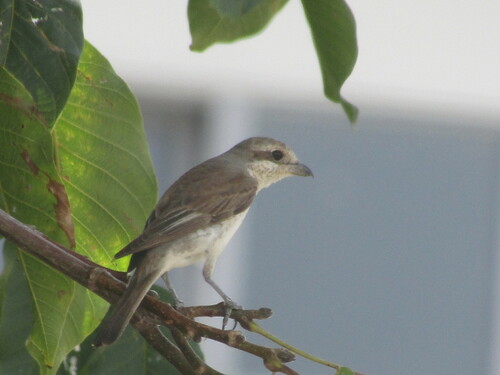
Red-backed Shrike (Lanius collurio) Red-backed Shrike
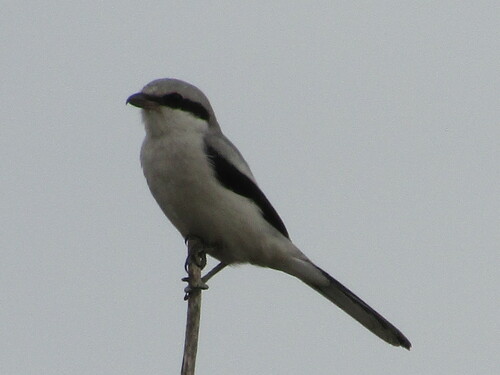
Great Grey Shrike (Lanius excubitor) Great Grey Shrike

Media

Loading…

In short

The most reliable field mark to separate Red-backed Shrike from Great Grey Shrike is overall coloration: adult male Red-backed Shrike shows a reddish-brown back and grey head, while Great Grey Shrike is a much larger, pearly grey bird with a bold black mask and white underparts. Females and juveniles of Red-backed Shrike are browner and finely barred above and below, never as crisply grey and white as Great Grey Shrike. In flight or at rest, Great Grey Shrike is bulkier, with a heavier bill and a distinctive white wing patch. If you see a shrike with a reddish or brown back, especially in summer, it's almost certainly Red-backed; a big, pale grey shrike with a strong black mask and white wing panel is Great Grey. Immature Red-backed Shrikes can be confusing, but their vermiculated (finely barred) pattern and smaller size are good clues.

Identification tips

  1. Overall size and structure: Great Grey Shrike is much larger and heavier than Red-backed, with a bulkier body, bigger head, and thicker bill. If the bird looks notably robust or 'big-headed,' suspect Great Grey.
  2. Back color (adults): Male Red-backed Shrike has a rich reddish-brown back, unique among European shrikes. Great Grey Shrike is always pale grey above, never reddish or brown.
  3. Head and mask: Great Grey Shrike has a broad, bold black mask extending from bill through the eye, set in a pale grey head. Red-backed Shrike's mask is narrower, and in males the head is blue-grey; females and juveniles have a brownish head and less distinct mask.
  4. Underparts: Great Grey Shrike is clean white below, while Red-backed Shrike (especially females and juveniles) shows buff or pinkish underparts with fine barring (vermiculations).
  5. Wing pattern (adults): Great Grey Shrike shows a prominent white wing patch at rest and in flight, formed by white bases to the primaries and secondaries. Red-backed Shrike lacks such a large white patch; its wings are darker and less contrasting.
  6. Tail pattern: Both have black and white tails, but Great Grey's is longer and wedge-shaped with broad white edges; Red-backed's is shorter and less striking, sometimes likened to a wheatear's.
  7. Juvenile/female plumage: Young and female Red-backed Shrikes are brown above and below, with dense fine barring. Great Grey Shrike juveniles are not as brown or barred, and never as vermiculated as Red-backed.
  8. Bill: Great Grey Shrike's bill is noticeably heavier and more hooked, suited to larger prey. Red-backed's bill is finer and more delicate.
  9. Flight style: Great Grey Shrike's flight is undulating and heavy, often low to the ground, with a tendency to approach perches from below. Red-backed is lighter and more agile in flight.
  10. Perching behavior: Both perch conspicuously, but Great Grey often sits more upright and appears more dominant, sometimes displaying by fanning tail and wings or raising a small crest.
  11. Habitat and season: In summer, Red-backed Shrike is more likely in lowland bushy areas; Great Grey is more likely in winter, northern, or upland open habitats.
  12. Aggressive displays: Great Grey Shrike may be seen performing spiraling display flights or aggressive postures, especially at territory boundaries; Red-backed is less demonstrative.
  13. Group behavior: Great Grey Shrike may gather in small winter roosts; Red-backed is more solitary or in pairs during breeding season.
  14. Context in Britain: Red-backed Shrike is now extremely rare and local in Britain, while Great Grey Shrike is a scarce winter visitor—season and location can help.
  15. When in doubt: Focus on back color (red vs. grey), size, and the presence or absence of a white wing patch. Juvenile Red-backed's fine barring is unique; Great Grey's clean, pale look is distinctive.

Size

Great Grey Shrike is substantially larger and heavier than Red-backed Shrike (adult mass ~63g vs. Red-backed's smaller size; Red-backed's length is 16–18 cm, but Great Grey is noticeably bulkier and longer overall) [wikidata][wikipedia]. Great Grey Shrike has a more robust, powerful bill and a proportionally longer tail, giving it a heavier, more imposing appearance in the field. Red-backed Shrike is more delicate and slender, with a finer bill and shorter tail. Side-by-side, the size difference is obvious, but at a distance, look for the Great Grey's bulk and upright stance.

Plumage

Juvenile and female Red-backed Shrikes are brown above with fine barring (vermiculations) on both upperparts and underparts, lacking the clean grey and white contrast of Great Grey Shrike. Adult male Red-backed Shrike is distinctive with a reddish-brown back, grey head, and black eye-stripe; underparts are pinkish and the tail is black and white, somewhat like a wheatear. Great Grey Shrike of all ages is pearly grey above, with a bold black mask, white underparts, and a prominent white wing patch (visible at rest and in flight). Its tail is wedge-shaped with white edges. Juvenile Great Grey Shrike is less well described in the notes, but does not show the dense vermiculation of young Red-backed. In flight, Great Grey Shrike's white wing patch and tail pattern are striking, while Red-backed shows less contrast and lacks the large white wing panel.

Behaviour

Both species hunt from exposed perches and impale prey, but Great Grey Shrike often appears more dominant and aggressive, sometimes performing conspicuous display flights (spiraling high, then gliding down) at territory boundaries. Great Grey Shrike's flight is heavy and undulating, with a tendency to stay low and approach perches from below. It can hover briefly, and in social interactions, it displays with upright postures, tail and wing flicking, or by fluffing its crest. Red-backed Shrike is less robust in demeanor and typically perches more delicately. Both species may gather in small groups outside the breeding season, but Great Grey Shrike is more likely to be seen in winter roosts.

Habitat

Red-backed Shrike breeds in open country with scattered bushes, hedgerows, or scrub, often in more southern or eastern areas of Europe. It is migratory, wintering in tropical Africa. Great Grey Shrike prefers open landscapes as well, but is more often found in northern or upland areas, and is resident or only partially migratory in many parts of its range. In Britain, Red-backed Shrike is now very rare and local, while Great Grey Shrike is a scarce but regular winter visitor. If you find a shrike in open, bushy lowland in summer, Red-backed is more likely; in winter or in more northern, open habitats, suspect Great Grey.

Submit a better description

Use the same sections as the comparison. Your text is published immediately.

The most reliable field mark to separate Red-backed Shrike from Great Grey Shrike is overall coloration: adult male Red-backed Shrike shows a reddish-brown back and grey head, while Great Grey Shrike is a much larger, pearly grey bird with a bold black mask and white underparts. Females and juveniles of Red-backed Shrike are browner and finely barred above and below, never as crisply grey and white as Great Grey Shrike. In flight or at rest, Great Grey Shrike is bulkier, with a heavier bill and a distinctive white wing patch. If you see a shrike with a reddish or brown back, especially in summer, it's almost certainly Red-backed; a big, pale grey shrike with a strong black mask and white wing panel is Great Grey. Immature Red-backed Shrikes can be confusing, but their vermiculated (finely barred) pattern and smaller size are good clues.

  1. Overall size and structure: Great Grey Shrike is much larger and heavier than Red-backed, with a bulkier body, bigger head, and thicker bill. If the bird looks notably robust or 'big-headed,' suspect Great Grey.
  2. Back color (adults): Male Red-backed Shrike has a rich reddish-brown back, unique among European shrikes. Great Grey Shrike is always pale grey above, never reddish or brown.
  3. Head and mask: Great Grey Shrike has a broad, bold black mask extending from bill through the eye, set in a pale grey head. Red-backed Shrike's mask is narrower, and in males the head is blue-grey; females and juveniles have a brownish head and less distinct mask.
  4. Underparts: Great Grey Shrike is clean white below, while Red-backed Shrike (especially females and juveniles) shows buff or pinkish underparts with fine barring (vermiculations).
  5. Wing pattern (adults): Great Grey Shrike shows a prominent white wing patch at rest and in flight, formed by white bases to the primaries and secondaries. Red-backed Shrike lacks such a large white patch; its wings are darker and less contrasting.
  6. Tail pattern: Both have black and white tails, but Great Grey's is longer and wedge-shaped with broad white edges; Red-backed's is shorter and less striking, sometimes likened to a wheatear's.
  7. Juvenile/female plumage: Young and female Red-backed Shrikes are brown above and below, with dense fine barring. Great Grey Shrike juveniles are not as brown or barred, and never as vermiculated as Red-backed.
  8. Bill: Great Grey Shrike's bill is noticeably heavier and more hooked, suited to larger prey. Red-backed's bill is finer and more delicate.
  9. Flight style: Great Grey Shrike's flight is undulating and heavy, often low to the ground, with a tendency to approach perches from below. Red-backed is lighter and more agile in flight.
  10. Perching behavior: Both perch conspicuously, but Great Grey often sits more upright and appears more dominant, sometimes displaying by fanning tail and wings or raising a small crest.
  11. Habitat and season: In summer, Red-backed Shrike is more likely in lowland bushy areas; Great Grey is more likely in winter, northern, or upland open habitats.
  12. Aggressive displays: Great Grey Shrike may be seen performing spiraling display flights or aggressive postures, especially at territory boundaries; Red-backed is less demonstrative.
  13. Group behavior: Great Grey Shrike may gather in small winter roosts; Red-backed is more solitary or in pairs during breeding season.
  14. Context in Britain: Red-backed Shrike is now extremely rare and local in Britain, while Great Grey Shrike is a scarce winter visitor—season and location can help.
  15. When in doubt: Focus on back color (red vs. grey), size, and the presence or absence of a white wing patch. Juvenile Red-backed's fine barring is unique; Great Grey's clean, pale look is distinctive.

Great Grey Shrike is substantially larger and heavier than Red-backed Shrike (adult mass ~63g vs. Red-backed's smaller size; Red-backed's length is 16–18 cm, but Great Grey is noticeably bulkier and longer overall) [wikidata][wikipedia]. Great Grey Shrike has a more robust, powerful bill and a proportionally longer tail, giving it a heavier, more imposing appearance in the field. Red-backed Shrike is more delicate and slender, with a finer bill and shorter tail. Side-by-side, the size difference is obvious, but at a distance, look for the Great Grey's bulk and upright stance.

Juvenile and female Red-backed Shrikes are brown above with fine barring (vermiculations) on both upperparts and underparts, lacking the clean grey and white contrast of Great Grey Shrike. Adult male Red-backed Shrike is distinctive with a reddish-brown back, grey head, and black eye-stripe; underparts are pinkish and the tail is black and white, somewhat like a wheatear. Great Grey Shrike of all ages is pearly grey above, with a bold black mask, white underparts, and a prominent white wing patch (visible at rest and in flight). Its tail is wedge-shaped with white edges. Juvenile Great Grey Shrike is less well described in the notes, but does not show the dense vermiculation of young Red-backed. In flight, Great Grey Shrike's white wing patch and tail pattern are striking, while Red-backed shows less contrast and lacks the large white wing panel.

Both species hunt from exposed perches and impale prey, but Great Grey Shrike often appears more dominant and aggressive, sometimes performing conspicuous display flights (spiraling high, then gliding down) at territory boundaries. Great Grey Shrike's flight is heavy and undulating, with a tendency to stay low and approach perches from below. It can hover briefly, and in social interactions, it displays with upright postures, tail and wing flicking, or by fluffing its crest. Red-backed Shrike is less robust in demeanor and typically perches more delicately. Both species may gather in small groups outside the breeding season, but Great Grey Shrike is more likely to be seen in winter roosts.

Red-backed Shrike breeds in open country with scattered bushes, hedgerows, or scrub, often in more southern or eastern areas of Europe. It is migratory, wintering in tropical Africa. Great Grey Shrike prefers open landscapes as well, but is more often found in northern or upland areas, and is resident or only partially migratory in many parts of its range. In Britain, Red-backed Shrike is now very rare and local, while Great Grey Shrike is a scarce but regular winter visitor. If you find a shrike in open, bushy lowland in summer, Red-backed is more likely; in winter or in more northern, open habitats, suspect Great Grey.

Discard your changes?

You have unsaved edits. If you leave now, those changes will be lost.

Red-backed Shrike · Great Grey Shrike · My Tricky Birds