

Motmot

Red-backed Shrike vs Eurasian Penduline Tit

Lanius collurio versus Remiz pendulinus

Play a quiz with Red-backed Shrike and Eurasian Penduline Tit
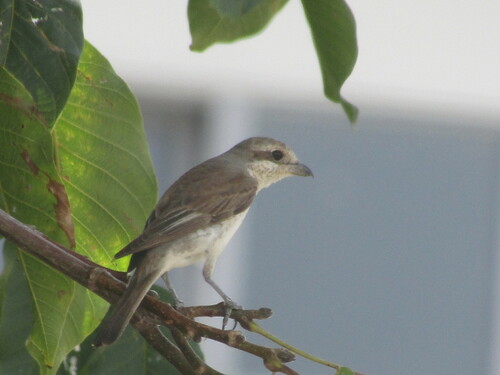
Red-backed Shrike (Lanius collurio) Red-backed Shrike
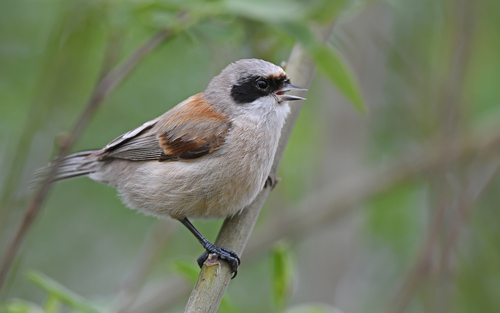
Eurasian Penduline Tit (Remiz pendulinus) Eurasian Penduline Tit

Media

Loading…

In short

The most reliable field mark between Red-backed Shrike and Eurasian Penduline Tit is overall structure and bill shape: the shrike is much larger, with a heavy, hooked bill and upright stance, while the penduline tit is distinctly smaller, with a fine, pointed bill and more delicate proportions. In all plumages, shrikes show a bold black mask and reddish or brown upperparts (depending on age/sex), whereas penduline tits have a narrow black mask, pale grey head, and chestnut back. Juveniles and females of both can look brownish, but the shrike's size, thick bill, and upright posture always stand out. If seen in flight, shrikes show a strong black-and-white tail pattern, while penduline tits lack this contrast. Habitat and behavior also help: shrikes hunt from exposed perches, penduline tits are more often seen in reeds or willows, rarely sallying out.

Identification tips

  1. Size and structure: Red-backed Shrike is much larger and bulkier than Eurasian Penduline Tit. If the bird looks small and delicate, it's likely a tit; if it appears thrush-sized and robust, it's a shrike. This holds for all ages and sexes.
  2. Bill shape: Shrike has a thick, hooked bill (raptor-like), visible even at a distance. Penduline Tit's bill is fine, straight, and pointed, typical of insectivorous tits. Bill shape is diagnostic in all plumages.
  3. Facial mask: Both species have a black mask, but the shrike's is broader, bolder, and extends through the eye across the face. The tit's mask is narrower, more like a line, and set on a pale grey head. In shrikes, the mask is a classic shrike feature; in penduline tits, it's more subtle.
  4. Head color: Adult male shrike has a blue-grey head; females and juveniles are brownish, but never pale grey. Penduline Tit always has a pale grey head in both sexes and ages.
  5. Upperparts color: Male shrike is reddish above; females/juveniles are brown and vermiculated (finely barred). Penduline Tit has a chestnut brown back, never reddish or vermiculated.
  6. Underparts: Shrike's underparts are tinged pink in males, buff and vermiculated in females/juveniles. Penduline Tit's underparts are pale, without vermiculation.
  7. Tail pattern: Shrike shows a bold black-and-white tail pattern, especially in flight or when fanned. Penduline Tit's tail is plain and lacks strong contrast.
  8. Wing pattern (juvenile/female): Shrike juveniles/females have brown, vermiculated upperparts and show the tail pattern in flight. Penduline Tit juveniles/females are plain brown above, without vermiculation or strong tail pattern.
  9. Perching behavior: Shrikes perch upright on exposed branches, wires, or posts. Penduline Tits are more often in reeds or willows, rarely perching in the open.
  10. Foraging style: Shrikes hunt from a perch, often returning to the same spot. Penduline Tits are active, acrobatic foragers, often hanging upside down.
  11. Habitat: Shrikes are found in open country with bushes; penduline tits in wetlands, reedbeds, or near water.
  12. Nest: If seen building a hanging, woven nest, it's a penduline tit. Shrikes do not build such nests.
  13. Sex differences: Male shrike is more colorful (red back, grey head); female/juvenile shrikes are browner but still larger and heavier-billed than any tit. Male penduline tit has a broader mask, but both sexes are similar.
  14. Seasonal context: Shrikes are summer visitors in much of Europe; penduline tits may be resident or migratory depending on region. Out of season, shrike is unlikely.
  15. Common pitfalls: Juvenile/female shrikes can look tit-like if seen briefly, but size, bill, and tail pattern always separate them. Penduline Tit never shows shrike's upright stance, heavy bill, or tail pattern.

Size

Red-backed Shrike is considerably larger (16–18 cm) than Eurasian Penduline Tit (10–11.5 cm) [wikipedia]. The shrike is also bulkier, with a proportionally larger head and a much heavier, hooked bill. The penduline tit is noticeably small, light, and slim, with a fine, needle-like bill. Even at a distance, the size gap is apparent if both species are known.

Plumage

Juvenile and female Red-backed Shrikes have brown, vermiculated upperparts and buff, vermiculated underparts, lacking the reddish tones of adult males. They show a black-and-white tail pattern in all ages, especially obvious in flight. The adult male shrike is reddish above, with a grey head and a thick black mask. In contrast, Eurasian Penduline Tit of all ages has a pale grey head with a narrow black mask, chestnut brown back, and pale underparts. Males have a broader mask and more rufous back, but sexes are similar. Penduline Tits never show vermiculation or the shrike's strong tail pattern. The shrike's mask is broader and more sharply defined; the tit's is thinner and does not extend as far. Bill color and shape also differ: shrike's is robust and hooked, tit's is fine and straight.

Behaviour

Red-backed Shrikes hunt from prominent, open perches, often sitting upright and sallying out to catch prey or returning with food to impale on thorns. They appear bold and conspicuous. Eurasian Penduline Tits are more active and agile, typically foraging in reeds, willows, or other dense vegetation, often hanging upside down or flitting about in small groups. They rarely perch in the open for long and do not use exposed hunting posts. The shrike's behavior is predatory and stationary; the tit's is restless and acrobatic.

Habitat

Red-backed Shrikes prefer open country with scattered bushes, hedgerows, or small trees, often in farmland, scrub, or heath. They are rarely found deep in reedbeds or dense wetlands. Eurasian Penduline Tits are closely tied to wetlands, especially reedbeds, willow thickets, and riverine habitats. If the bird is seen in extensive reeds or building a hanging nest, it's a penduline tit; if in open scrub or perched on a wire or bush, it's more likely a shrike.

Submit a better description

Use the same sections as the comparison. Your text is published immediately.

The most reliable field mark between Red-backed Shrike and Eurasian Penduline Tit is overall structure and bill shape: the shrike is much larger, with a heavy, hooked bill and upright stance, while the penduline tit is distinctly smaller, with a fine, pointed bill and more delicate proportions. In all plumages, shrikes show a bold black mask and reddish or brown upperparts (depending on age/sex), whereas penduline tits have a narrow black mask, pale grey head, and chestnut back. Juveniles and females of both can look brownish, but the shrike's size, thick bill, and upright posture always stand out. If seen in flight, shrikes show a strong black-and-white tail pattern, while penduline tits lack this contrast. Habitat and behavior also help: shrikes hunt from exposed perches, penduline tits are more often seen in reeds or willows, rarely sallying out.

  1. Size and structure: Red-backed Shrike is much larger and bulkier than Eurasian Penduline Tit. If the bird looks small and delicate, it's likely a tit; if it appears thrush-sized and robust, it's a shrike. This holds for all ages and sexes.
  2. Bill shape: Shrike has a thick, hooked bill (raptor-like), visible even at a distance. Penduline Tit's bill is fine, straight, and pointed, typical of insectivorous tits. Bill shape is diagnostic in all plumages.
  3. Facial mask: Both species have a black mask, but the shrike's is broader, bolder, and extends through the eye across the face. The tit's mask is narrower, more like a line, and set on a pale grey head. In shrikes, the mask is a classic shrike feature; in penduline tits, it's more subtle.
  4. Head color: Adult male shrike has a blue-grey head; females and juveniles are brownish, but never pale grey. Penduline Tit always has a pale grey head in both sexes and ages.
  5. Upperparts color: Male shrike is reddish above; females/juveniles are brown and vermiculated (finely barred). Penduline Tit has a chestnut brown back, never reddish or vermiculated.
  6. Underparts: Shrike's underparts are tinged pink in males, buff and vermiculated in females/juveniles. Penduline Tit's underparts are pale, without vermiculation.
  7. Tail pattern: Shrike shows a bold black-and-white tail pattern, especially in flight or when fanned. Penduline Tit's tail is plain and lacks strong contrast.
  8. Wing pattern (juvenile/female): Shrike juveniles/females have brown, vermiculated upperparts and show the tail pattern in flight. Penduline Tit juveniles/females are plain brown above, without vermiculation or strong tail pattern.
  9. Perching behavior: Shrikes perch upright on exposed branches, wires, or posts. Penduline Tits are more often in reeds or willows, rarely perching in the open.
  10. Foraging style: Shrikes hunt from a perch, often returning to the same spot. Penduline Tits are active, acrobatic foragers, often hanging upside down.
  11. Habitat: Shrikes are found in open country with bushes; penduline tits in wetlands, reedbeds, or near water.
  12. Nest: If seen building a hanging, woven nest, it's a penduline tit. Shrikes do not build such nests.
  13. Sex differences: Male shrike is more colorful (red back, grey head); female/juvenile shrikes are browner but still larger and heavier-billed than any tit. Male penduline tit has a broader mask, but both sexes are similar.
  14. Seasonal context: Shrikes are summer visitors in much of Europe; penduline tits may be resident or migratory depending on region. Out of season, shrike is unlikely.
  15. Common pitfalls: Juvenile/female shrikes can look tit-like if seen briefly, but size, bill, and tail pattern always separate them. Penduline Tit never shows shrike's upright stance, heavy bill, or tail pattern.

Red-backed Shrike is considerably larger (16–18 cm) than Eurasian Penduline Tit (10–11.5 cm) [wikipedia]. The shrike is also bulkier, with a proportionally larger head and a much heavier, hooked bill. The penduline tit is noticeably small, light, and slim, with a fine, needle-like bill. Even at a distance, the size gap is apparent if both species are known.

Juvenile and female Red-backed Shrikes have brown, vermiculated upperparts and buff, vermiculated underparts, lacking the reddish tones of adult males. They show a black-and-white tail pattern in all ages, especially obvious in flight. The adult male shrike is reddish above, with a grey head and a thick black mask. In contrast, Eurasian Penduline Tit of all ages has a pale grey head with a narrow black mask, chestnut brown back, and pale underparts. Males have a broader mask and more rufous back, but sexes are similar. Penduline Tits never show vermiculation or the shrike's strong tail pattern. The shrike's mask is broader and more sharply defined; the tit's is thinner and does not extend as far. Bill color and shape also differ: shrike's is robust and hooked, tit's is fine and straight.

Red-backed Shrikes hunt from prominent, open perches, often sitting upright and sallying out to catch prey or returning with food to impale on thorns. They appear bold and conspicuous. Eurasian Penduline Tits are more active and agile, typically foraging in reeds, willows, or other dense vegetation, often hanging upside down or flitting about in small groups. They rarely perch in the open for long and do not use exposed hunting posts. The shrike's behavior is predatory and stationary; the tit's is restless and acrobatic.

Red-backed Shrikes prefer open country with scattered bushes, hedgerows, or small trees, often in farmland, scrub, or heath. They are rarely found deep in reedbeds or dense wetlands. Eurasian Penduline Tits are closely tied to wetlands, especially reedbeds, willow thickets, and riverine habitats. If the bird is seen in extensive reeds or building a hanging nest, it's a penduline tit; if in open scrub or perched on a wire or bush, it's more likely a shrike.

Discard your changes?

You have unsaved edits. If you leave now, those changes will be lost.

Red-backed Shrike · Eurasian Penduline Tit · My Tricky Birds