

Motmot

Red-and-green Macaw vs White-eyed Parakeet

Ara chloropterus versus Psittacara leucophthalmus

Play a quiz with Red-and-green Macaw and White-eyed Parakeet
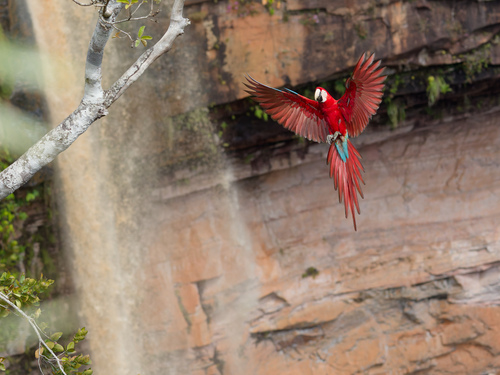
Red-and-green Macaw (Ara chloropterus) Red-and-green Macaw
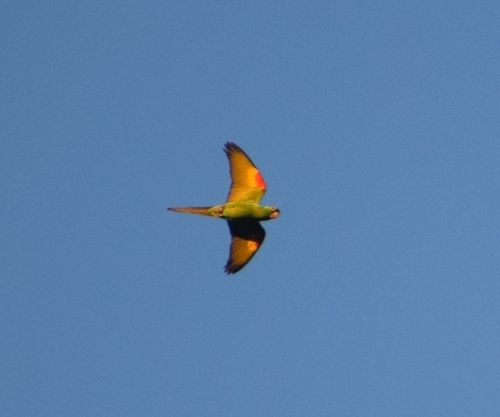
White-eyed Parakeet (Psittacara leucophthalmus) White-eyed Parakeet

Media

Loading…

In short

The most reliable field mark between Red-and-green Macaw and White-eyed Parakeet is overall size and structure: the macaw is a massive, heavy-billed bird nearly three times the length and many times the mass of the parakeet. In flight or perched, the macaw’s mostly red plumage with broad green upperwing coverts and distinctive red facial lines on white skin are unmistakable, while the parakeet is a slim, mostly green bird with scattered red on the head and wing, and a pale orbital ring. Juvenile White-eyed Parakeets lack much of the red on the head and wings, but even then, their small size and green coloration set them apart from any age macaw. If you see a large, mostly red parrot with green wings, it is the macaw; a medium-small, green parakeet with a white eye ring is the parakeet.

Identification tips

  1. Size is the most immediate clue: Red-and-green Macaw is nearly three times as long and many times the mass of White-eyed Parakeet. If the bird looks crow-sized or larger, it is not a parakeet.
  2. Bill structure: Macaw has a massive, strongly hooked bill, pale at the base, dominating the face; parakeet’s bill is much smaller, more slender, and horn-colored.
  3. Facial pattern: Macaw shows bare white skin around the eye with fine red feather lines (unique among macaws); parakeet has a white to yellowish bare orbital ring but no feather lines.
  4. Plumage color: Macaw is mostly bright red with broad green on the upperwing coverts; parakeet is mostly green with red flecks on head/neck and red at the bend/edge of the wing.
  5. Upperwing coverts in flight: Macaw’s upperwing is green (not yellow); parakeet’s wing shows red and yellow patches, especially on the underwing coverts.
  6. Tail: Macaw’s tail is very long, red with teal highlights; parakeet’s tail is shorter, green above, olive below.
  7. Juvenile confusion: Young parakeets lack much red on the head/wing but remain green with a pale eye ring; macaw juveniles are still mostly red and much larger.
  8. Flock size and behavior: Parakeets often in noisy flocks; macaws in pairs or small groups, less agile in flight.
  9. Voice: Macaw’s call is a deep, harsh scream; parakeet’s is a rapid, high-pitched chatter.
  10. Perched posture: Macaw sits upright, often high in large trees, with a heavy build; parakeet is more slender, often active and social.
  11. Habitat context: Macaw prefers mature forest and large trees; parakeet is more adaptable to edge, secondary growth, and sometimes urban settings.
  12. Red on the head: Parakeet’s red is limited to flecks; macaw’s entire head and breast are red.
  13. Yellow in the wing: Only parakeet shows yellow on the outermost greater underwing coverts; macaw’s wing is green and red.
  14. Sexes similar: Both species show little sexual dimorphism, so these marks work for both sexes.
  15. Captive birds: Both are kept as pets, but macaw is much larger and more expensive; confusion in captivity is rare due to size.

Size

Red-and-green Macaw is enormous: adults measure 90–95 cm (35–37 in) in length and average over 1,200 g in weight, making them the largest Ara macaw and one of the heaviest parrots overall. In contrast, White-eyed Parakeet is much smaller, at 32–35 cm (13–14 in) and about 158 g (range 100–218 g). The macaw’s bulk, long tail, and massive bill are obvious even at a distance, while the parakeet is slender, light-bodied, and much less imposing. Even a lone macaw will dwarf any parakeet nearby.

Plumage

Juvenile White-eyed Parakeets resemble adults but have little or no red on the head and wings, making them appear even plainer green; however, they still show the characteristic pale orbital ring. Red-and-green Macaw of all ages is mostly bright red, with broad green upperwing coverts (not yellow), and a unique facial pattern: bare white skin with fine red feather lines around the eye. The parakeet is mostly green with variable red flecks on the head and neck, red at the bend and edge of the wing, and yellow on the outermost greater underwing coverts. In flight, the macaw’s red and green upperwing and long, red tail with teal highlights are striking, while the parakeet shows green upperparts with flashes of red and yellow on the wings. No age or season brings these two species close in overall color pattern.

Behaviour

Red-and-green Macaws are powerful, deliberate fliers, often seen in pairs or small groups, and are much more likely to be noticed by their size and loud calls. They are less agile than parakeets and often perch high in large trees. White-eyed Parakeets are fast, agile, and gregarious, typically seen in flocks, sometimes quite large, and are more likely to be seen feeding or flying rapidly in chattering groups. Both species are social, but their flight style and flocking behavior differ markedly.

Habitat

Both species are widespread in South America, but the macaw is typically found in larger tracts of forest and woodland, while the parakeet can occur in a broader range of habitats, including forest edges, secondary growth, and even urban areas. In regions where both occur, habitat overlap is possible, but the macaw is more closely tied to mature forest and large trees for nesting.

Voice

Red-and-green Macaw gives deep, harsh, carrying squawks and screams, much louder and lower-pitched than the parakeet. White-eyed Parakeet has higher-pitched, chattering calls, often given in rapid series by flocks. Even at a distance, the macaw’s voice is more powerful and resonant, while the parakeet’s calls are thinner and more rapid.

Submit a better description

Use the same sections as the comparison. Your text is published immediately.

The most reliable field mark between Red-and-green Macaw and White-eyed Parakeet is overall size and structure: the macaw is a massive, heavy-billed bird nearly three times the length and many times the mass of the parakeet. In flight or perched, the macaw’s mostly red plumage with broad green upperwing coverts and distinctive red facial lines on white skin are unmistakable, while the parakeet is a slim, mostly green bird with scattered red on the head and wing, and a pale orbital ring. Juvenile White-eyed Parakeets lack much of the red on the head and wings, but even then, their small size and green coloration set them apart from any age macaw. If you see a large, mostly red parrot with green wings, it is the macaw; a medium-small, green parakeet with a white eye ring is the parakeet.

  1. Size is the most immediate clue: Red-and-green Macaw is nearly three times as long and many times the mass of White-eyed Parakeet. If the bird looks crow-sized or larger, it is not a parakeet.
  2. Bill structure: Macaw has a massive, strongly hooked bill, pale at the base, dominating the face; parakeet’s bill is much smaller, more slender, and horn-colored.
  3. Facial pattern: Macaw shows bare white skin around the eye with fine red feather lines (unique among macaws); parakeet has a white to yellowish bare orbital ring but no feather lines.
  4. Plumage color: Macaw is mostly bright red with broad green on the upperwing coverts; parakeet is mostly green with red flecks on head/neck and red at the bend/edge of the wing.
  5. Upperwing coverts in flight: Macaw’s upperwing is green (not yellow); parakeet’s wing shows red and yellow patches, especially on the underwing coverts.
  6. Tail: Macaw’s tail is very long, red with teal highlights; parakeet’s tail is shorter, green above, olive below.
  7. Juvenile confusion: Young parakeets lack much red on the head/wing but remain green with a pale eye ring; macaw juveniles are still mostly red and much larger.
  8. Flock size and behavior: Parakeets often in noisy flocks; macaws in pairs or small groups, less agile in flight.
  9. Voice: Macaw’s call is a deep, harsh scream; parakeet’s is a rapid, high-pitched chatter.
  10. Perched posture: Macaw sits upright, often high in large trees, with a heavy build; parakeet is more slender, often active and social.
  11. Habitat context: Macaw prefers mature forest and large trees; parakeet is more adaptable to edge, secondary growth, and sometimes urban settings.
  12. Red on the head: Parakeet’s red is limited to flecks; macaw’s entire head and breast are red.
  13. Yellow in the wing: Only parakeet shows yellow on the outermost greater underwing coverts; macaw’s wing is green and red.
  14. Sexes similar: Both species show little sexual dimorphism, so these marks work for both sexes.
  15. Captive birds: Both are kept as pets, but macaw is much larger and more expensive; confusion in captivity is rare due to size.

Red-and-green Macaw is enormous: adults measure 90–95 cm (35–37 in) in length and average over 1,200 g in weight, making them the largest Ara macaw and one of the heaviest parrots overall. In contrast, White-eyed Parakeet is much smaller, at 32–35 cm (13–14 in) and about 158 g (range 100–218 g). The macaw’s bulk, long tail, and massive bill are obvious even at a distance, while the parakeet is slender, light-bodied, and much less imposing. Even a lone macaw will dwarf any parakeet nearby.

Juvenile White-eyed Parakeets resemble adults but have little or no red on the head and wings, making them appear even plainer green; however, they still show the characteristic pale orbital ring. Red-and-green Macaw of all ages is mostly bright red, with broad green upperwing coverts (not yellow), and a unique facial pattern: bare white skin with fine red feather lines around the eye. The parakeet is mostly green with variable red flecks on the head and neck, red at the bend and edge of the wing, and yellow on the outermost greater underwing coverts. In flight, the macaw’s red and green upperwing and long, red tail with teal highlights are striking, while the parakeet shows green upperparts with flashes of red and yellow on the wings. No age or season brings these two species close in overall color pattern.

Red-and-green Macaws are powerful, deliberate fliers, often seen in pairs or small groups, and are much more likely to be noticed by their size and loud calls. They are less agile than parakeets and often perch high in large trees. White-eyed Parakeets are fast, agile, and gregarious, typically seen in flocks, sometimes quite large, and are more likely to be seen feeding or flying rapidly in chattering groups. Both species are social, but their flight style and flocking behavior differ markedly.

Both species are widespread in South America, but the macaw is typically found in larger tracts of forest and woodland, while the parakeet can occur in a broader range of habitats, including forest edges, secondary growth, and even urban areas. In regions where both occur, habitat overlap is possible, but the macaw is more closely tied to mature forest and large trees for nesting.

Red-and-green Macaw gives deep, harsh, carrying squawks and screams, much louder and lower-pitched than the parakeet. White-eyed Parakeet has higher-pitched, chattering calls, often given in rapid series by flocks. Even at a distance, the macaw’s voice is more powerful and resonant, while the parakeet’s calls are thinner and more rapid.

Discard your changes?

You have unsaved edits. If you leave now, those changes will be lost.

Red-and-green Macaw · White-eyed Parakeet · My Tricky Birds