

Motmot

ベニコンゴウインコ 対 メジロメキシコインコ

Ara chloropterus 対 Psittacara leucophthalmus

ベニコンゴウインコとメジロメキシコインコのクイズ
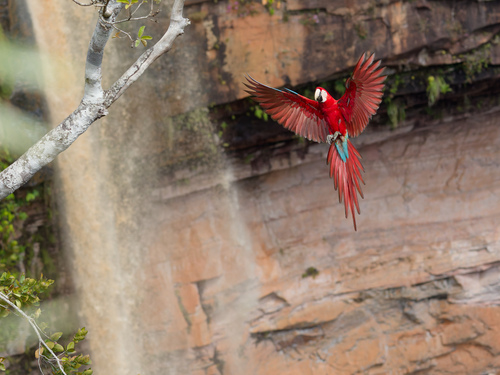
ベニコンゴウインコ (Ara chloropterus) ベニコンゴウインコ
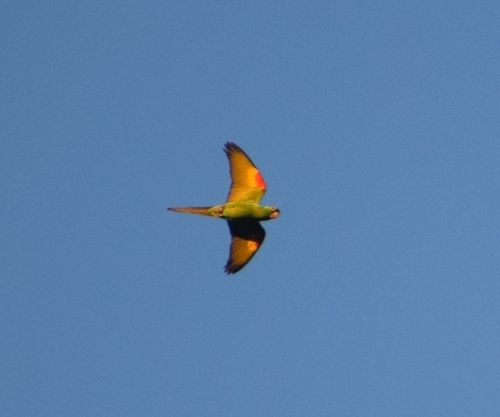
メジロメキシコインコ (Psittacara leucophthalmus) メジロメキシコインコ

メディア

読み込み中…

要点

ベニコンゴウインコとメジロメキシコインコの最も信頼できるフィールドマークは、全体のサイズと構造です:ベニコンゴウインコは、メジロメキシコインコの長さのほぼ3倍、質量は何倍もある巨大で重いくちばしの鳥です。飛んでいる時や止まっている時、ベニコンゴウインコの主に赤い羽毛は、広い緑の上翼覆羽と白い皮膚に特徴的な赤い顔のラインがあり、間違いなく識別できます。一方、メジロメキシコインコは、頭と翼に散在する赤色を持つスリムで主に緑の鳥で、淡い眼窩リングがあります。幼鳥のメジロメキシコインコは、頭と翼の赤色がほとんどありませんが、それでも小さなサイズと緑の色合いが、どの年齢のベニコンゴウインコとも区別されます。大きくて主に赤いオウムに緑の翼があれば、それはベニコンゴウインコです;中小型の緑のインコで白い眼リングがあれば、それはメジロメキシコインコです。

識別のコツ

  1. Size is the most immediate clue: ベニコンゴウインコは、メジロメキシコインコのほぼ3倍の長さで、質量も何倍もあります。もしその鳥がカラスサイズかそれ以上に見えるなら、それはインコではありません。
  2. Bill structure: ベニコンゴウインコは、顔を支配する巨大で強くフック状のくちばしを持ち、基部は淡い色です;メジロメキシコインコのくちばしは、はるかに小さく、より細く、角色です。
  3. Facial pattern: ベニコンゴウインコは、目の周りに細い赤い羽毛のラインがある裸の白い皮膚を示します(マコウの中でユニークです);メジロメキシコインコは、白から黄味がかった裸の眼窩リングを持っていますが、羽毛のラインはありません。
  4. Plumage color: ベニコンゴウインコは、主に明るい赤で、上翼覆羽に広い緑があります;メジロメキシコインコは、主に緑で、頭/首に赤い斑点があり、翼の曲がり/端に赤があります。
  5. Upperwing coverts in flight: ベニコンゴウインコの上翼は緑です(黄色ではありません);メジロメキシコインコの翼は、特に下翼覆羽に赤と黄色の斑点を示します。
  6. Tail: ベニコンゴウインコの尾は非常に長く、赤でティールのハイライトがあります;メジロメキシコインコの尾は短く、上は緑、下はオリーブ色です。
  7. Juvenile confusion: 幼いメジロメキシコインコは、頭/翼に赤がほとんどありませんが、淡い眼リングを持つ緑のままです;ベニコンゴウインコの幼鳥は、まだ主に赤く、はるかに大きいです。
  8. Flock size and behavior: メジロメキシコインコは、しばしば騒がしい群れで見られます;ベニコンゴウインコは、ペアまたは小さなグループで、飛行中はあまり機敏ではありません。
  9. Voice: ベニコンゴウインコの鳴き声は、深く、厳しい叫びです;メジロメキシコインコの鳴き声は、速く、高音のおしゃべりです。
  10. Perched posture: ベニコンゴウインコは、しばしば大きな木の高い位置に、重い体で直立して座ります;メジロメキシコインコは、より細身で、しばしば活発で社交的です。
  11. Habitat context: ベニコンゴウインコは成熟した森林と大きな木を好みます;メジロメキシコインコは、エッジ、二次成長、時には都市環境にも適応しやすいです。
  12. Red on the head: メジロメキシコインコの赤は斑点に限られています;ベニコンゴウインコの頭と胸全体は赤です。
  13. Yellow in the wing: メジロメキシコインコだけが、最も外側の大きな下翼覆羽に黄色を示します;ベニコンゴウインコの翼は緑と赤です。
  14. Sexes similar: 両種は性的二形性がほとんどないため、これらのマークは両方の性に適用されます。
  15. Captive birds: 両方ともペットとして飼われていますが、ベニコンゴウインコははるかに大きく、より高価です;サイズのため、飼育下での混乱はまれです。

大きさ

ベニコンゴウインコは巨大です:成鳥は長さ90–95 cm(35–37インチ)で、体重は平均1,200 gを超え、最大のアラマコウであり、全体で最も重いオウムの一つです。それに対して、メジロメキシコインコははるかに小さく、長さ32–35 cm(13–14インチ)で、体重は約158 g(範囲100–218 g)です。ベニコンゴウインコの体格、長い尾、巨大なくちばしは、遠くからでも明らかであり、メジロメキシコインコは細身で軽量で、はるかに威圧感がありません。たとえ一羽のベニコンゴウインコでも、近くのメジロメキシコインコを圧倒します。

羽色

幼いメジロメキシコインコは成鳥に似ていますが、頭と翼に赤がほとんどなく、より地味な緑に見えます;しかし、特徴的な淡い眼窩リングはまだ示しています。すべての年齢のベニコンゴウインコは主に明るい赤で、広い緑の上翼覆羽(黄色ではありません)を持ち、ユニークな顔のパターンがあります:目の周りに細い赤い羽毛のラインがある裸の白い皮膚です。メジロメキシコインコは主に緑で、頭と首に変動する赤い斑点があり、翼の曲がりと端に赤があり、最も外側の大きな下翼覆羽に黄色があります。飛行中、ベニコンゴウインコの赤と緑の上翼と長い赤い尾はティールのハイライトがあり、目を引きますが、メジロメキシコインコは翼に赤と黄色のフラッシュを持つ緑の上部を示します。どの年齢や季節でも、これらの2種は全体の色パターンで近づくことはありません。

行動

ベニコンゴウインコは力強く、意図的に飛ぶ鳥で、しばしばペアまたは小さなグループで見られ、そのサイズと大きな鳴き声によって目立つことが多いです。彼らはメジロメキシコインコよりも機敏ではなく、しばしば大きな木の高い位置に止まります。メジロメキシコインコは速く、機敏で、社交的で、通常は群れで見られ、時にはかなり大きく、食べたり、騒がしいグループで急速に飛んだりするのがより一般的です。両種は社交的ですが、飛行スタイルと群れ行動は著しく異なります。

生息環境

両種は南アメリカに広く分布していますが、ベニコンゴウインコは通常、より大きな森林や林地に見られ、メジロメキシコインコは森林のエッジ、二次成長、さらには都市地域を含むより広範な生息地に出現することがあります。両方が生息する地域では、生息地の重複が可能ですが、ベニコンゴウインコは巣作りのために成熟した森林と大きな木により密接に結びついています。

声

ベニコンゴウインコは、深く、厳しい、響く鳴き声や叫び声を出し、メジロメキシコインコよりもはるかに大きく、低い音です。メジロメキシコインコは、高音の、おしゃべりの鳴き声を持ち、しばしば群れによって急速に連続して発せられます。遠くからでも、ベニコンゴウインコの声はより力強く、共鳴し、メジロメキシコインコの鳴き声はより細く、速いです。

より良い説明を送る

比較と同じ項目を使ってください。文章はすぐに公開されます。

The most reliable field mark between Red-and-green Macaw and White-eyed Parakeet is overall size and structure: the macaw is a massive, heavy-billed bird nearly three times the length and many times the mass of the parakeet. In flight or perched, the macaw’s mostly red plumage with broad green upperwing coverts and distinctive red facial lines on white skin are unmistakable, while the parakeet is a slim, mostly green bird with scattered red on the head and wing, and a pale orbital ring. Juvenile White-eyed Parakeets lack much of the red on the head and wings, but even then, their small size and green coloration set them apart from any age macaw. If you see a large, mostly red parrot with green wings, it is the macaw; a medium-small, green parakeet with a white eye ring is the parakeet.

  1. Size is the most immediate clue: Red-and-green Macaw is nearly three times as long and many times the mass of White-eyed Parakeet. If the bird looks crow-sized or larger, it is not a parakeet.
  2. Bill structure: Macaw has a massive, strongly hooked bill, pale at the base, dominating the face; parakeet’s bill is much smaller, more slender, and horn-colored.
  3. Facial pattern: Macaw shows bare white skin around the eye with fine red feather lines (unique among macaws); parakeet has a white to yellowish bare orbital ring but no feather lines.
  4. Plumage color: Macaw is mostly bright red with broad green on the upperwing coverts; parakeet is mostly green with red flecks on head/neck and red at the bend/edge of the wing.
  5. Upperwing coverts in flight: Macaw’s upperwing is green (not yellow); parakeet’s wing shows red and yellow patches, especially on the underwing coverts.
  6. Tail: Macaw’s tail is very long, red with teal highlights; parakeet’s tail is shorter, green above, olive below.
  7. Juvenile confusion: Young parakeets lack much red on the head/wing but remain green with a pale eye ring; macaw juveniles are still mostly red and much larger.
  8. Flock size and behavior: Parakeets often in noisy flocks; macaws in pairs or small groups, less agile in flight.
  9. Voice: Macaw’s call is a deep, harsh scream; parakeet’s is a rapid, high-pitched chatter.
  10. Perched posture: Macaw sits upright, often high in large trees, with a heavy build; parakeet is more slender, often active and social.
  11. Habitat context: Macaw prefers mature forest and large trees; parakeet is more adaptable to edge, secondary growth, and sometimes urban settings.
  12. Red on the head: Parakeet’s red is limited to flecks; macaw’s entire head and breast are red.
  13. Yellow in the wing: Only parakeet shows yellow on the outermost greater underwing coverts; macaw’s wing is green and red.
  14. Sexes similar: Both species show little sexual dimorphism, so these marks work for both sexes.
  15. Captive birds: Both are kept as pets, but macaw is much larger and more expensive; confusion in captivity is rare due to size.

Red-and-green Macaw is enormous: adults measure 90–95 cm (35–37 in) in length and average over 1,200 g in weight, making them the largest Ara macaw and one of the heaviest parrots overall. In contrast, White-eyed Parakeet is much smaller, at 32–35 cm (13–14 in) and about 158 g (range 100–218 g). The macaw’s bulk, long tail, and massive bill are obvious even at a distance, while the parakeet is slender, light-bodied, and much less imposing. Even a lone macaw will dwarf any parakeet nearby.

Juvenile White-eyed Parakeets resemble adults but have little or no red on the head and wings, making them appear even plainer green; however, they still show the characteristic pale orbital ring. Red-and-green Macaw of all ages is mostly bright red, with broad green upperwing coverts (not yellow), and a unique facial pattern: bare white skin with fine red feather lines around the eye. The parakeet is mostly green with variable red flecks on the head and neck, red at the bend and edge of the wing, and yellow on the outermost greater underwing coverts. In flight, the macaw’s red and green upperwing and long, red tail with teal highlights are striking, while the parakeet shows green upperparts with flashes of red and yellow on the wings. No age or season brings these two species close in overall color pattern.

Red-and-green Macaws are powerful, deliberate fliers, often seen in pairs or small groups, and are much more likely to be noticed by their size and loud calls. They are less agile than parakeets and often perch high in large trees. White-eyed Parakeets are fast, agile, and gregarious, typically seen in flocks, sometimes quite large, and are more likely to be seen feeding or flying rapidly in chattering groups. Both species are social, but their flight style and flocking behavior differ markedly.

Both species are widespread in South America, but the macaw is typically found in larger tracts of forest and woodland, while the parakeet can occur in a broader range of habitats, including forest edges, secondary growth, and even urban areas. In regions where both occur, habitat overlap is possible, but the macaw is more closely tied to mature forest and large trees for nesting.

Red-and-green Macaw gives deep, harsh, carrying squawks and screams, much louder and lower-pitched than the parakeet. White-eyed Parakeet has higher-pitched, chattering calls, often given in rapid series by flocks. Even at a distance, the macaw’s voice is more powerful and resonant, while the parakeet’s calls are thinner and more rapid.

変更を破棄しますか?

保存していない編集があります。今離れると失われます。

ベニコンゴウインコ · メジロメキシコインコ · 苦手な鳥