

Motmot

Plain Antvireo vs Blue-black Grosbeak

Dysithamnus mentalis versus Cyanoloxia cyanoides

Play a quiz with Plain Antvireo and Blue-black Grosbeak
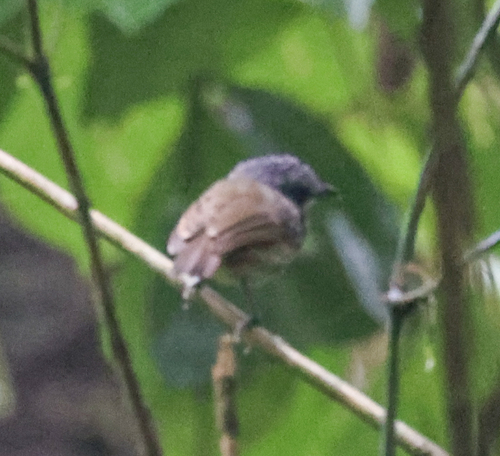
Plain Antvireo (Dysithamnus mentalis) Plain Antvireo
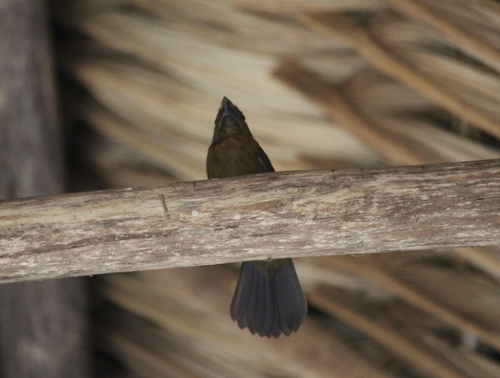
Blue-black Grosbeak (Cyanoloxia cyanoides) Blue-black Grosbeak

Media

Loading…

In short

The most reliable field mark to separate Plain Antvireo from Blue-black Grosbeak is overall color and wing pattern: adult male grosbeaks are a striking deep blue with lighter blue eyebrows and shoulder patches, while male antvireos are grayish olive with white-tipped wing coverts and a hidden white scapular patch. Females are also distinct: female antvireos are olive to cinnamon-tawny above with yellowish underparts, while female grosbeaks are dark brown, sometimes with a reddish hue. Structurally, grosbeaks are larger and heavier-billed, while antvireos are compact with a short tail and a proportionally large head. Immature and female birds can be confused in poor light, but careful attention to bill size, wing covert pattern, and overall coloration will separate them in most field conditions.

Identification tips

  1. Adult male color: Male Blue-black Grosbeak is deep blue with lighter blue eyebrows and shoulder patch; male Plain Antvireo is grayish olive above with a dark gray crown and blackish ear coverts. This is the most obvious separation in good light.
  2. Female/immature color: Female antvireo is olive to cinnamon-tawny above with yellowish underparts; female grosbeak is dark brown, sometimes with a reddish tinge, and lacks yellow or olive tones. Immature grosbeaks resemble females.
  3. Wing coverts: Antvireo (all ages/sexes) shows white tips on the greater and median coverts, sometimes forming a distinct wing bar, and olive or olive-yellow edges to flight feathers. Grosbeak lacks any white on the wing coverts; males have a blue shoulder patch, females are uniformly dark brown.
  4. Hidden scapular patch: Male antvireo has a hidden white patch between the scapulars, sometimes glimpsed when the bird is fluffed or preening; grosbeak never shows this.
  5. Bill shape and size: Grosbeak has a thick, conical bill typical of seed-eaters, much larger and heavier than the short, pointed bill of antvireo. This is diagnostic at close range or in photos.
  6. Head and tail structure: Antvireo is compact, with a large head and short tail; grosbeak is bulkier overall, with a proportionally longer tail and heavier body.
  7. Underpart color: Antvireo males have a white throat and upper breast with gray spots, pale gray flanks, and a yellow belly center; females have more extensive yellow below. Grosbeak males are blue throughout, females are brown throughout.
  8. Behavior: Antvireos move quickly and deliberately through dense foliage, often flicking their tails; grosbeaks are slower, often perched more openly and less active.
  9. Habitat context: If seen deep in dense, shaded understory, antvireo is more likely; grosbeak prefers edges and more open areas.
  10. Size impression: In mixed flocks, grosbeak will appear much larger and bulkier than antvireo.
  11. No blue in antvireo: Any hint of blue on the bird rules out antvireo.
  12. No yellow in grosbeak: Any yellow or olive-yellow on underparts or wing edges rules out grosbeak.
  13. No white wing bars in grosbeak: White-tipped coverts or wing bars indicate antvireo.
  14. No thick conical bill in antvireo: A heavy, seed-eater's bill is diagnostic for grosbeak.
  15. Singing bird: If you see a bird singing from an open perch and it's blue or brown, consider grosbeak; antvireo is more secretive and less likely to sing from an exposed perch.

Size

Plain Antvireo is a small, chunky bird (10–13 cm, 12–16 g) [wikipedia]. Blue-black Grosbeak is larger and more robust, with a noticeably heavier bill (exact measurements not provided in the notes, but all grosbeaks in this group are substantially bigger than antvireos) [wikipedia]. In direct comparison, the grosbeak will look bulkier and longer, especially in the bill and body, while the antvireo appears compact with a short tail and large head.

Plumage

Adult male Blue-black Grosbeak is deep blue overall with lighter blue eyebrows and a blue shoulder patch; the forehead is also paler blue. Adult male Plain Antvireo is grayish olive above, with a dark gray crown and blackish ear coverts, and has a hidden white scapular patch. The antvireo's wings show white tips on the greater and median coverts, and olive edges to the flight feathers, while the grosbeak's wings are uniformly blue-black with the blue shoulder patch. Females are also distinct: female antvireo is olive to cinnamon-tawny above with yellowish underparts, while female grosbeak is dark brown, sometimes with a reddish tinge, lacking any yellow or olive tones. Juvenile and immature plumages are not detailed for either species, but the covert and overall color differences should persist. Subspecific variation in antvireo can affect the amount of gray or yellow, but never approaches the deep blue or dark brown of grosbeak. In all ages and sexes, the grosbeak lacks the white-tipped coverts and hidden scapular patch of the antvireo.

Behaviour

Plain Antvireo is typically seen moving methodically in the lower to mid-levels of forest, often in pairs or small groups, and is known for its short, deliberate hops and tail flicks. Blue-black Grosbeak is more likely to be seen singly or in pairs, often perched more openly or singing from a mid-level perch. Grosbeaks may appear more sluggish and less active than antvireos, and their heavier build is apparent in their slower, more ponderous movements.

Habitat

Both species can overlap in humid forest and edge habitats in Central and South America, but Plain Antvireo is more strictly tied to dense, shaded understory and mid-levels, often in mature or secondary forest, while Blue-black Grosbeak is more flexible, occurring in forest edges, second growth, and sometimes more open woodland. Antvireos are more likely to be found in the interior of dense thickets, while grosbeaks may be seen at forest margins or in semi-open areas.

Submit a better description

Use the same sections as the comparison. Your text is published immediately.

The most reliable field mark to separate Plain Antvireo from Blue-black Grosbeak is overall color and wing pattern: adult male grosbeaks are a striking deep blue with lighter blue eyebrows and shoulder patches, while male antvireos are grayish olive with white-tipped wing coverts and a hidden white scapular patch. Females are also distinct: female antvireos are olive to cinnamon-tawny above with yellowish underparts, while female grosbeaks are dark brown, sometimes with a reddish hue. Structurally, grosbeaks are larger and heavier-billed, while antvireos are compact with a short tail and a proportionally large head. Immature and female birds can be confused in poor light, but careful attention to bill size, wing covert pattern, and overall coloration will separate them in most field conditions.

  1. Adult male color: Male Blue-black Grosbeak is deep blue with lighter blue eyebrows and shoulder patch; male Plain Antvireo is grayish olive above with a dark gray crown and blackish ear coverts. This is the most obvious separation in good light.
  2. Female/immature color: Female antvireo is olive to cinnamon-tawny above with yellowish underparts; female grosbeak is dark brown, sometimes with a reddish tinge, and lacks yellow or olive tones. Immature grosbeaks resemble females.
  3. Wing coverts: Antvireo (all ages/sexes) shows white tips on the greater and median coverts, sometimes forming a distinct wing bar, and olive or olive-yellow edges to flight feathers. Grosbeak lacks any white on the wing coverts; males have a blue shoulder patch, females are uniformly dark brown.
  4. Hidden scapular patch: Male antvireo has a hidden white patch between the scapulars, sometimes glimpsed when the bird is fluffed or preening; grosbeak never shows this.
  5. Bill shape and size: Grosbeak has a thick, conical bill typical of seed-eaters, much larger and heavier than the short, pointed bill of antvireo. This is diagnostic at close range or in photos.
  6. Head and tail structure: Antvireo is compact, with a large head and short tail; grosbeak is bulkier overall, with a proportionally longer tail and heavier body.
  7. Underpart color: Antvireo males have a white throat and upper breast with gray spots, pale gray flanks, and a yellow belly center; females have more extensive yellow below. Grosbeak males are blue throughout, females are brown throughout.
  8. Behavior: Antvireos move quickly and deliberately through dense foliage, often flicking their tails; grosbeaks are slower, often perched more openly and less active.
  9. Habitat context: If seen deep in dense, shaded understory, antvireo is more likely; grosbeak prefers edges and more open areas.
  10. Size impression: In mixed flocks, grosbeak will appear much larger and bulkier than antvireo.
  11. No blue in antvireo: Any hint of blue on the bird rules out antvireo.
  12. No yellow in grosbeak: Any yellow or olive-yellow on underparts or wing edges rules out grosbeak.
  13. No white wing bars in grosbeak: White-tipped coverts or wing bars indicate antvireo.
  14. No thick conical bill in antvireo: A heavy, seed-eater's bill is diagnostic for grosbeak.
  15. Singing bird: If you see a bird singing from an open perch and it's blue or brown, consider grosbeak; antvireo is more secretive and less likely to sing from an exposed perch.

Plain Antvireo is a small, chunky bird (10–13 cm, 12–16 g) [wikipedia]. Blue-black Grosbeak is larger and more robust, with a noticeably heavier bill (exact measurements not provided in the notes, but all grosbeaks in this group are substantially bigger than antvireos) [wikipedia]. In direct comparison, the grosbeak will look bulkier and longer, especially in the bill and body, while the antvireo appears compact with a short tail and large head.

Adult male Blue-black Grosbeak is deep blue overall with lighter blue eyebrows and a blue shoulder patch; the forehead is also paler blue. Adult male Plain Antvireo is grayish olive above, with a dark gray crown and blackish ear coverts, and has a hidden white scapular patch. The antvireo's wings show white tips on the greater and median coverts, and olive edges to the flight feathers, while the grosbeak's wings are uniformly blue-black with the blue shoulder patch. Females are also distinct: female antvireo is olive to cinnamon-tawny above with yellowish underparts, while female grosbeak is dark brown, sometimes with a reddish tinge, lacking any yellow or olive tones. Juvenile and immature plumages are not detailed for either species, but the covert and overall color differences should persist. Subspecific variation in antvireo can affect the amount of gray or yellow, but never approaches the deep blue or dark brown of grosbeak. In all ages and sexes, the grosbeak lacks the white-tipped coverts and hidden scapular patch of the antvireo.

Plain Antvireo is typically seen moving methodically in the lower to mid-levels of forest, often in pairs or small groups, and is known for its short, deliberate hops and tail flicks. Blue-black Grosbeak is more likely to be seen singly or in pairs, often perched more openly or singing from a mid-level perch. Grosbeaks may appear more sluggish and less active than antvireos, and their heavier build is apparent in their slower, more ponderous movements.

Both species can overlap in humid forest and edge habitats in Central and South America, but Plain Antvireo is more strictly tied to dense, shaded understory and mid-levels, often in mature or secondary forest, while Blue-black Grosbeak is more flexible, occurring in forest edges, second growth, and sometimes more open woodland. Antvireos are more likely to be found in the interior of dense thickets, while grosbeaks may be seen at forest margins or in semi-open areas.

Discard your changes?

You have unsaved edits. If you leave now, those changes will be lost.

Plain Antvireo · Blue-black Grosbeak · My Tricky Birds