

Motmot

Piping Plover vs Greater Sand Plover

Charadrius melodus versus Anarhynchus leschenaultii

Play a quiz with Piping Plover and Greater Sand Plover
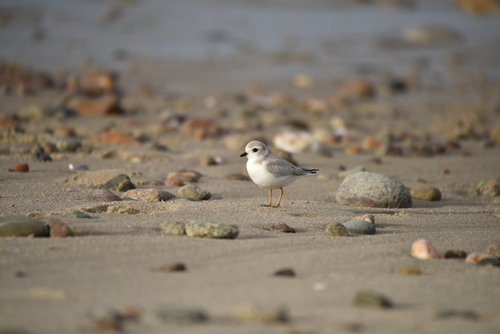
Piping Plover (Charadrius melodus) Piping Plover
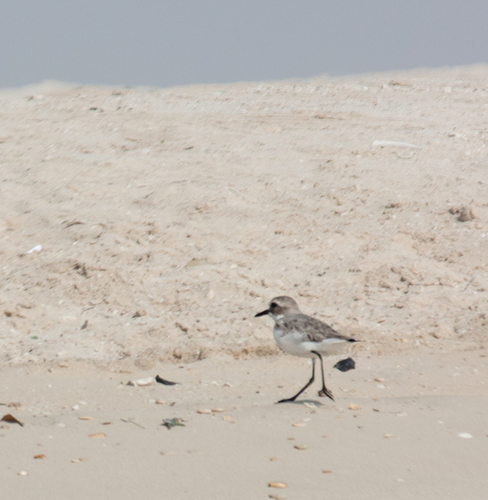
Greater Sand Plover (Anarhynchus leschenaultii) Greater Sand Plover

Media

Loading…

In short

The most reliable field mark to separate Piping Plover from Greater Sand Plover is leg color: Piping Plover shows bright yellow-orange legs, while Greater Sand Plover has greenish-yellow legs. Piping Plover is distinctly smaller, stockier, and has a shorter, stubbier bill compared to the longer-legged, longer-billed Greater Sand Plover. In breeding plumage, Piping Plover has a sharp black forehead band and a thin black neck ring, while Greater Sand Plover males show an orange breast band and forehead with a black eye mask. Nonbreeding and immature plumages are more challenging, but the Piping Plover always looks paler and more compact, with a shorter bill and brighter legs. Watch for structure and leg color when plumage is ambiguous.

Identification tips

  1. Leg color is the single most reliable field mark: Piping Plover always has bright yellow-orange legs, while Greater Sand Plover has greenish-yellow legs. This is visible at close range or with good optics in all plumages and ages.
  2. Bill structure: Piping Plover has a short, thick, stubby bill that is orange with a black tip. Greater Sand Plover has a longer, thicker, all-black bill (though the exact length varies by subspecies). This is a strong structural clue, especially when birds are side by side.
  3. Size and shape: Piping Plover is much smaller and rounder, with a large head and short neck, giving a compact, chunky appearance. Greater Sand Plover is noticeably larger, longer-legged, and more elongated, with a longer neck and a more horizontal stance.
  4. Breeding plumage head pattern: Piping Plover males show a sharp black band across the forehead and a thin black neck ring. Greater Sand Plover males have an orange forehead and nape, a variable orange breast band, and a black eye mask. Females of both are duller but still structurally distinct.
  5. Nonbreeding/juvenile plumage: Both species become duller, but Piping Plover remains paler, sandier above, and always has bright legs and a short bill. Greater Sand Plover is browner above, with only a faint rufous tinge, greenish-yellow legs, and a longer bill.
  6. Bill color in nonbreeding plumage: Piping Plover's bill remains orange with a black tip, while Greater Sand Plover's bill is always black.
  7. Breast band: Piping Plover's breast band is thin, black, and often incomplete or faint outside breeding season. Greater Sand Plover's is orange and broader in breeding males, fading to a hint or absent in nonbreeding birds.
  8. Forehead band: Piping Plover has a black forehead band (male) or faint band (female), while Greater Sand Plover has an orange (not black) forehead in breeding males and lacks a sharp black band.
  9. Leg length: Greater Sand Plover's legs are much longer in proportion to the body, giving it a taller, more upright posture.
  10. Habitat and range: Piping Plover is a North American breeder; Greater Sand Plover is an Old World species and only appears as a rare vagrant in North America. Context is key.
  11. Flight profile: Piping Plover in flight appears compact and rounded; Greater Sand Plover looks longer-winged and more stretched.
  12. Jizz: Piping Plover often appears more static and deliberate, while Greater Sand Plover is more active and covers ground quickly.
  13. Sex differences: In Piping Plover, the male's forehead and breast bands are much more pronounced than the female's, but both sexes share the same structure and leg color. In Greater Sand Plover, males are more colorful in breeding plumage, but structure and bare part color remain consistent.
  14. No distinctive upperwing pattern: Neither species shows a unique upperwing or flight pattern for quick separation, so rely on structure and bare part color in flight.
  15. Potential pitfalls: In dull light or at distance, leg color can be hard to judge; use structure and bill shape as backup. Juvenile and nonbreeding birds are most easily confused, but Piping Plover's compact shape and bright legs are consistent.

Size

Piping Plover is significantly smaller and more compact, measuring 15–19 cm in length and weighing around 55 g [wikidata]. Greater Sand Plover is larger, at 19–22 cm in length (no mass given, but clearly bulkier). The difference is quite noticeable when seen together: Greater Sand Plover is longer-legged, longer-billed, and overall more elongated, while Piping Plover is sparrow-sized and chunky. If you see a small, round, short-legged plover, it is almost certainly a Piping Plover; a larger, lankier bird with long legs and a longer bill points to Greater Sand Plover.

Plumage

Juvenile and nonbreeding plumages can be confusing, as both species become duller and lose strong color contrasts. However, Piping Plover juveniles and nonbreeding adults retain a pale, sand-colored upperpart and always have bright yellow-orange legs and a short, orange bill with a black tip. Their breast band is faint or broken outside breeding season, and the forehead band is reduced. Greater Sand Plover juveniles and nonbreeding birds are browner above, with only a hint of rufous on the head, and always have greenish-yellow legs and a black bill. In breeding plumage, Piping Plover males have a sharp black forehead band and a thin black neck ring, while Greater Sand Plover males show a variable orange breast band, orange on the forehead and nape, and a black eye mask. Females of both species are duller, but the structural differences and leg color remain reliable. No distinctive upperwing or flight pattern marks are described for either species, so focus on structure and bare part coloration.

Behaviour

Both species forage in open sandy or gravelly habitats, running and pausing to pick at prey. Piping Plover often appears more deliberate and less restless than Greater Sand Plover, which may appear more active and cover more ground due to its longer legs. In flight, Piping Plover looks compact and rounded, while Greater Sand Plover shows a longer, more stretched profile. Both species can be wary, but Piping Plover is especially sensitive to human disturbance on nesting beaches.

Habitat

Piping Plover is strictly a North American breeder, found on coastal sand and gravel beaches, sandbars, and lake shores. Greater Sand Plover breeds in Central Asia and winters on beaches and mudflats from Africa to Australasia; it is a rare vagrant to North America. If you are in North America and see a small plover on a sandy beach, Piping Plover is vastly more likely, except in the rare event of a vagrant Greater Sand Plover. Both species prefer open, sandy or gravelly habitats, but context and range are strong clues.

Submit a better description

Use the same sections as the comparison. Your text is published immediately.

The most reliable field mark to separate Piping Plover from Greater Sand Plover is leg color: Piping Plover shows bright yellow-orange legs, while Greater Sand Plover has greenish-yellow legs. Piping Plover is distinctly smaller, stockier, and has a shorter, stubbier bill compared to the longer-legged, longer-billed Greater Sand Plover. In breeding plumage, Piping Plover has a sharp black forehead band and a thin black neck ring, while Greater Sand Plover males show an orange breast band and forehead with a black eye mask. Nonbreeding and immature plumages are more challenging, but the Piping Plover always looks paler and more compact, with a shorter bill and brighter legs. Watch for structure and leg color when plumage is ambiguous.

  1. Leg color is the single most reliable field mark: Piping Plover always has bright yellow-orange legs, while Greater Sand Plover has greenish-yellow legs. This is visible at close range or with good optics in all plumages and ages.
  2. Bill structure: Piping Plover has a short, thick, stubby bill that is orange with a black tip. Greater Sand Plover has a longer, thicker, all-black bill (though the exact length varies by subspecies). This is a strong structural clue, especially when birds are side by side.
  3. Size and shape: Piping Plover is much smaller and rounder, with a large head and short neck, giving a compact, chunky appearance. Greater Sand Plover is noticeably larger, longer-legged, and more elongated, with a longer neck and a more horizontal stance.
  4. Breeding plumage head pattern: Piping Plover males show a sharp black band across the forehead and a thin black neck ring. Greater Sand Plover males have an orange forehead and nape, a variable orange breast band, and a black eye mask. Females of both are duller but still structurally distinct.
  5. Nonbreeding/juvenile plumage: Both species become duller, but Piping Plover remains paler, sandier above, and always has bright legs and a short bill. Greater Sand Plover is browner above, with only a faint rufous tinge, greenish-yellow legs, and a longer bill.
  6. Bill color in nonbreeding plumage: Piping Plover's bill remains orange with a black tip, while Greater Sand Plover's bill is always black.
  7. Breast band: Piping Plover's breast band is thin, black, and often incomplete or faint outside breeding season. Greater Sand Plover's is orange and broader in breeding males, fading to a hint or absent in nonbreeding birds.
  8. Forehead band: Piping Plover has a black forehead band (male) or faint band (female), while Greater Sand Plover has an orange (not black) forehead in breeding males and lacks a sharp black band.
  9. Leg length: Greater Sand Plover's legs are much longer in proportion to the body, giving it a taller, more upright posture.
  10. Habitat and range: Piping Plover is a North American breeder; Greater Sand Plover is an Old World species and only appears as a rare vagrant in North America. Context is key.
  11. Flight profile: Piping Plover in flight appears compact and rounded; Greater Sand Plover looks longer-winged and more stretched.
  12. Jizz: Piping Plover often appears more static and deliberate, while Greater Sand Plover is more active and covers ground quickly.
  13. Sex differences: In Piping Plover, the male's forehead and breast bands are much more pronounced than the female's, but both sexes share the same structure and leg color. In Greater Sand Plover, males are more colorful in breeding plumage, but structure and bare part color remain consistent.
  14. No distinctive upperwing pattern: Neither species shows a unique upperwing or flight pattern for quick separation, so rely on structure and bare part color in flight.
  15. Potential pitfalls: In dull light or at distance, leg color can be hard to judge; use structure and bill shape as backup. Juvenile and nonbreeding birds are most easily confused, but Piping Plover's compact shape and bright legs are consistent.

Piping Plover is significantly smaller and more compact, measuring 15–19 cm in length and weighing around 55 g [wikidata]. Greater Sand Plover is larger, at 19–22 cm in length (no mass given, but clearly bulkier). The difference is quite noticeable when seen together: Greater Sand Plover is longer-legged, longer-billed, and overall more elongated, while Piping Plover is sparrow-sized and chunky. If you see a small, round, short-legged plover, it is almost certainly a Piping Plover; a larger, lankier bird with long legs and a longer bill points to Greater Sand Plover.

Juvenile and nonbreeding plumages can be confusing, as both species become duller and lose strong color contrasts. However, Piping Plover juveniles and nonbreeding adults retain a pale, sand-colored upperpart and always have bright yellow-orange legs and a short, orange bill with a black tip. Their breast band is faint or broken outside breeding season, and the forehead band is reduced. Greater Sand Plover juveniles and nonbreeding birds are browner above, with only a hint of rufous on the head, and always have greenish-yellow legs and a black bill. In breeding plumage, Piping Plover males have a sharp black forehead band and a thin black neck ring, while Greater Sand Plover males show a variable orange breast band, orange on the forehead and nape, and a black eye mask. Females of both species are duller, but the structural differences and leg color remain reliable. No distinctive upperwing or flight pattern marks are described for either species, so focus on structure and bare part coloration.

Both species forage in open sandy or gravelly habitats, running and pausing to pick at prey. Piping Plover often appears more deliberate and less restless than Greater Sand Plover, which may appear more active and cover more ground due to its longer legs. In flight, Piping Plover looks compact and rounded, while Greater Sand Plover shows a longer, more stretched profile. Both species can be wary, but Piping Plover is especially sensitive to human disturbance on nesting beaches.

Piping Plover is strictly a North American breeder, found on coastal sand and gravel beaches, sandbars, and lake shores. Greater Sand Plover breeds in Central Asia and winters on beaches and mudflats from Africa to Australasia; it is a rare vagrant to North America. If you are in North America and see a small plover on a sandy beach, Piping Plover is vastly more likely, except in the rare event of a vagrant Greater Sand Plover. Both species prefer open, sandy or gravelly habitats, but context and range are strong clues.

Discard your changes?

You have unsaved edits. If you leave now, those changes will be lost.

Piping Plover · Greater Sand Plover · My Tricky Birds