

Motmot

Pin-tailed Snipe vs Latham's Snipe

Gallinago stenura versus Gallinago hardwickii

Play a quiz with Pin-tailed Snipe and Latham's Snipe
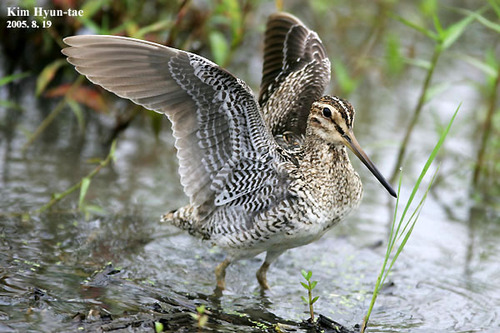
Pin-tailed Snipe (Gallinago stenura) Pin-tailed Snipe
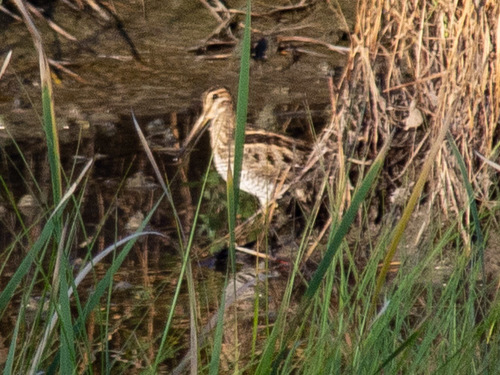
Latham's Snipe (Gallinago hardwickii) Latham's Snipe

Media

Loading…

In short

The most reliable field mark between Pin-tailed Snipe and Latham's Snipe is size: Latham's is noticeably larger and heavier, with a bulkier appearance both perched and in flight. Both species share cryptic, mottled brown-and-buff plumage and are extremely similar at a distance, but Pin-tailed Snipe has a distinctly shorter tail and a flatter, more direct flight path when flushed. In the hand or at close range, subtle differences in structure and weight can help, but in the field, size, tail length, and flight jizz are your best clues. Age-specific wing or tail pattern differences are not well documented for separating these two, so focus on overall structure and impression.

Identification tips

  1. Size and bulk: Latham's Snipe is noticeably larger and heavier than Pin-tailed Snipe. Use this when you have a good view or comparison with other snipes. Works for all ages and sexes.
  2. Tail length and shape: Pin-tailed Snipe has a distinctly shorter tail, which can be seen in flight or when perched. Latham's Snipe's tail is proportionally longer. Applies to all ages.
  3. Flight jizz: Pin-tailed Snipe typically flushes with a flatter, more direct flight path, while Latham's Snipe often flies with a more arched, bounding pattern. This is subtle and requires experience but can be useful when birds flush from cover.
  4. Display behavior: Only Pin-tailed Snipe males display in groups and produce a whistling noise from their outer tail feathers in flight. If you see or hear this, it's diagnostic for Pin-tailed.
  5. Bill length: Both have long, straight bills, but Latham's Snipe's bill is slightly longer and heavier, matching its larger size. This is subtle and not always reliable in the field.
  6. Plumage pattern: Both species have cryptic, mottled brown and buff plumage with cream lines down the back, a dark eye-stripe, and streaked underparts. These marks are not reliable for separation.
  7. Upperwing and flight pattern: No documented differences in upperwing pattern or age-specific flight marks between these two; do not rely on wing panels or trailing edge.
  8. Leg color: Pin-tailed Snipe has short greenish-grey legs, but this is not a strong separator as Latham's can appear similar.
  9. Voice: If you hear a weak 'squik' or the distinctive display song with whistling, it's Pin-tailed Snipe. Latham's Snipe is less vocal and does not produce the same display sounds.
  10. Habitat: Both use similar wetland habitats; do not use habitat as a separator unless you are in a known breeding area.
  11. Group size: Pin-tailed Snipe may display in groups, while Latham's is more solitary or in loose groups. This is only useful if you see display behavior.
  12. Season and range: If you are in Australia in the non-breeding season, Latham's Snipe is more likely, but both can overlap on migration in Southeast Asia.
  13. Sex and age: Both sexes and all ages are similar in plumage; do not rely on sex or age for separation.
  14. Confusion with other snipes: Both can be confused with Swinhoe's Snipe and Common Snipe; ensure you are not mistaking those species, especially if you see a white trailing edge (which neither Pin-tailed nor Latham's shows).
  15. In-the-hand features: The pin-like outer tail feathers of Pin-tailed Snipe are diagnostic but rarely visible in the field except during display.

Size

Latham's Snipe is significantly larger and heavier than Pin-tailed Snipe. Latham's averages about 153 g (range 150–230 g), compared to Pin-tailed's average of 116.5 g. In length, Latham's is 29–33 cm, while Pin-tailed is 25–27 cm. This size difference is often apparent in direct comparison or with experience, with Latham's looking bulkier and longer-billed. Both are long-billed snipes, but Latham's is the largest snipe regularly found in East Asia and Australia, while Pin-tailed is more compact.

Plumage

There are no reliable age-specific upperwing or flight pattern differences documented between these two species; both have cryptically mottled brown, buff, and white plumage typical of Gallinago snipes. Both show cream lines down the back, a dark eye-stripe with pale supercilium and subocular lines, and streaked underparts. Pin-tailed Snipe has a slightly shorter tail, and its outer tail feathers are modified into pin-like structures, which are more apparent in the hand or when displaying. Latham's Snipe is overall slightly darker and bulkier, but this is subtle and easily missed. Both sexes and ages are similar, and immatures differ only in minor details not diagnostic in the field.

Behaviour

Both species flush reluctantly from cover and fly in a zigzag pattern when disturbed. Pin-tailed Snipe tends to have a flatter, more direct flight path compared to the more arched, bounding flight of Latham's Snipe. Pin-tailed males may display in groups, producing distinctive whistling noises from their outer tail feathers during display flights. Latham's Snipe is solitary or in loose groups and does not have the same group display behavior.

Habitat

Both species use similar wetland habitats, including marshes, wet meadows, and rice fields, especially on migration. Habitat is not a reliable separator in most of their overlapping range, as both can occur in the same types of muddy, grassy, or reedy wetlands. Latham's Snipe breeds in northern Japan and migrates to eastern Australia, while Pin-tailed Snipe breeds in northern Eurasia and winters in South and Southeast Asia, but these differences are not useful for field separation outside the breeding season.

Voice

Pin-tailed Snipe males display with a loud, repetitive 'tcheka' song, which builds to fizzing and buzzing, and produce a distinctive whistling noise with their pin-like outer tail feathers in flight. The normal call is a weak 'squik.' Latham's Snipe's vocalizations are less well described in the sources, but it does not have the same distinctive whistling display flight. In practice, vocalizations are rarely diagnostic unless you witness a Pin-tailed's display.

Submit a better description

Use the same sections as the comparison. Your text is published immediately.

The most reliable field mark between Pin-tailed Snipe and Latham's Snipe is size: Latham's is noticeably larger and heavier, with a bulkier appearance both perched and in flight. Both species share cryptic, mottled brown-and-buff plumage and are extremely similar at a distance, but Pin-tailed Snipe has a distinctly shorter tail and a flatter, more direct flight path when flushed. In the hand or at close range, subtle differences in structure and weight can help, but in the field, size, tail length, and flight jizz are your best clues. Age-specific wing or tail pattern differences are not well documented for separating these two, so focus on overall structure and impression.

  1. Size and bulk: Latham's Snipe is noticeably larger and heavier than Pin-tailed Snipe. Use this when you have a good view or comparison with other snipes. Works for all ages and sexes.
  2. Tail length and shape: Pin-tailed Snipe has a distinctly shorter tail, which can be seen in flight or when perched. Latham's Snipe's tail is proportionally longer. Applies to all ages.
  3. Flight jizz: Pin-tailed Snipe typically flushes with a flatter, more direct flight path, while Latham's Snipe often flies with a more arched, bounding pattern. This is subtle and requires experience but can be useful when birds flush from cover.
  4. Display behavior: Only Pin-tailed Snipe males display in groups and produce a whistling noise from their outer tail feathers in flight. If you see or hear this, it's diagnostic for Pin-tailed.
  5. Bill length: Both have long, straight bills, but Latham's Snipe's bill is slightly longer and heavier, matching its larger size. This is subtle and not always reliable in the field.
  6. Plumage pattern: Both species have cryptic, mottled brown and buff plumage with cream lines down the back, a dark eye-stripe, and streaked underparts. These marks are not reliable for separation.
  7. Upperwing and flight pattern: No documented differences in upperwing pattern or age-specific flight marks between these two; do not rely on wing panels or trailing edge.
  8. Leg color: Pin-tailed Snipe has short greenish-grey legs, but this is not a strong separator as Latham's can appear similar.
  9. Voice: If you hear a weak 'squik' or the distinctive display song with whistling, it's Pin-tailed Snipe. Latham's Snipe is less vocal and does not produce the same display sounds.
  10. Habitat: Both use similar wetland habitats; do not use habitat as a separator unless you are in a known breeding area.
  11. Group size: Pin-tailed Snipe may display in groups, while Latham's is more solitary or in loose groups. This is only useful if you see display behavior.
  12. Season and range: If you are in Australia in the non-breeding season, Latham's Snipe is more likely, but both can overlap on migration in Southeast Asia.
  13. Sex and age: Both sexes and all ages are similar in plumage; do not rely on sex or age for separation.
  14. Confusion with other snipes: Both can be confused with Swinhoe's Snipe and Common Snipe; ensure you are not mistaking those species, especially if you see a white trailing edge (which neither Pin-tailed nor Latham's shows).
  15. In-the-hand features: The pin-like outer tail feathers of Pin-tailed Snipe are diagnostic but rarely visible in the field except during display.

Latham's Snipe is significantly larger and heavier than Pin-tailed Snipe. Latham's averages about 153 g (range 150–230 g), compared to Pin-tailed's average of 116.5 g. In length, Latham's is 29–33 cm, while Pin-tailed is 25–27 cm. This size difference is often apparent in direct comparison or with experience, with Latham's looking bulkier and longer-billed. Both are long-billed snipes, but Latham's is the largest snipe regularly found in East Asia and Australia, while Pin-tailed is more compact.

There are no reliable age-specific upperwing or flight pattern differences documented between these two species; both have cryptically mottled brown, buff, and white plumage typical of Gallinago snipes. Both show cream lines down the back, a dark eye-stripe with pale supercilium and subocular lines, and streaked underparts. Pin-tailed Snipe has a slightly shorter tail, and its outer tail feathers are modified into pin-like structures, which are more apparent in the hand or when displaying. Latham's Snipe is overall slightly darker and bulkier, but this is subtle and easily missed. Both sexes and ages are similar, and immatures differ only in minor details not diagnostic in the field.

Both species flush reluctantly from cover and fly in a zigzag pattern when disturbed. Pin-tailed Snipe tends to have a flatter, more direct flight path compared to the more arched, bounding flight of Latham's Snipe. Pin-tailed males may display in groups, producing distinctive whistling noises from their outer tail feathers during display flights. Latham's Snipe is solitary or in loose groups and does not have the same group display behavior.

Both species use similar wetland habitats, including marshes, wet meadows, and rice fields, especially on migration. Habitat is not a reliable separator in most of their overlapping range, as both can occur in the same types of muddy, grassy, or reedy wetlands. Latham's Snipe breeds in northern Japan and migrates to eastern Australia, while Pin-tailed Snipe breeds in northern Eurasia and winters in South and Southeast Asia, but these differences are not useful for field separation outside the breeding season.

Pin-tailed Snipe males display with a loud, repetitive 'tcheka' song, which builds to fizzing and buzzing, and produce a distinctive whistling noise with their pin-like outer tail feathers in flight. The normal call is a weak 'squik.' Latham's Snipe's vocalizations are less well described in the sources, but it does not have the same distinctive whistling display flight. In practice, vocalizations are rarely diagnostic unless you witness a Pin-tailed's display.

Discard your changes?

You have unsaved edits. If you leave now, those changes will be lost.

Pin-tailed Snipe · Latham's Snipe · My Tricky Birds