

Motmot

Parrot Crossbill vs Common Crossbill

Loxia pytyopsittacus versus Loxia curvirostra

Play a quiz with Parrot Crossbill and Common Crossbill
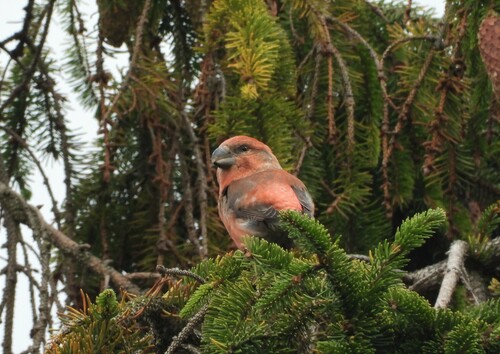
Parrot Crossbill (Loxia pytyopsittacus) Parrot Crossbill
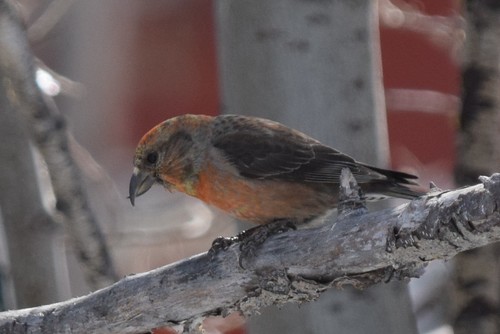
Common Crossbill (Loxia curvirostra) Common Crossbill

Media

Loading…

In short

Parrot Crossbill and Common Crossbill are notoriously difficult to separate in the field, especially on plumage, which is highly variable and overlapping in both species. The most reliable field mark is the bill: Parrot Crossbill has a noticeably deeper, heavier, and blunter bill, with a larger head and more robust jizz, while Common Crossbill is slimmer and more delicate. Size can be helpful, as Parrot Crossbill is bulkier and heavier, but there is overlap. Calls are often the best separator, with Parrot Crossbill giving a deeper, harder 'choop' or 'tyuup' compared to the more variable calls of Common Crossbill. In all ages and sexes, extreme care is needed, and many individuals cannot be safely identified without vocalizations.

Identification tips

  1. Bill size and shape: Parrot Crossbill has a noticeably deeper, thicker, and blunter bill, with a larger, more rounded head. In profile, the bill looks massive and parrot-like. This is the best structural clue, but beware of overlap with large-billed Common Crossbills and small Parrot Crossbills.
  2. Overall bulk: Parrot Crossbill is bulkier and heavier-set, with a more powerful neck and chest, compared to the slimmer, lighter Common Crossbill. This is best judged in direct comparison or with experience.
  3. Plumage color: Both species show highly variable plumage, with males red/orange and females green/yellow. Do not use color alone for identification, as there is extensive overlap and more variation within species than between them.
  4. Juvenile/immature plumage: Both species' juveniles are greyish-green and streaked, with no diagnostic differences noted. Wing pattern is not helpful, as both lack wing bars and have plain dark wings.
  5. Flight and perched jizz: Parrot Crossbill appears more heavy-headed and thick-necked both in flight and when perched. Common Crossbill is more slender and less robust.
  6. Vocalizations: Parrot Crossbill's call is a deep, hard 'choop' or 'tyuup', lower-pitched than any Common Crossbill call. Common Crossbill calls are more variable, generally higher-pitched and less resonant. Always try to record and compare calls if possible.
  7. Feeding behavior: Both species feed on conifer cones, but Parrot Crossbill is more specialized on Scots pine. In mixed flocks, look for birds feeding on large, tough pine cones with ease—these may be Parrot Crossbills.
  8. Habitat: Parrot Crossbill is most likely in mature pine forests, especially in northern Europe and Scotland. Common Crossbill can occur in a wider range of coniferous habitats and is more likely to appear suddenly in irruptions.
  9. Flock composition: Both species can occur in mixed flocks, especially outside the breeding season. Do not assume all birds in a flock are the same species—carefully check each individual.
  10. Range and context: In areas where both species are possible, such as Scotland, identification should be made with extreme caution. In southern Europe, large-billed crossbills may be Parrot Crossbill or large-billed Common Crossbill types, and research is ongoing.
  11. Sex and age: No reliable sex- or age-specific field marks separate these two species; all ages and sexes are similarly variable.
  12. Mandible crossing: Both species have crossed mandibles, so this feature does not help separate them.
  13. Size in hand: If handling birds (e.g., by ringers), Parrot Crossbill will weigh more and have a larger bill, but overlap exists and measurements must be precise.
  14. When in doubt: If you cannot confidently assess bill size/shape or obtain a clear call, it is safest to leave the bird unidentified to species.
  15. Photographic evidence: Good side-on photos showing bill depth and head size, or clear audio recordings, are essential for documentation. Avoid relying on single field marks or fleeting views.

Size

Parrot Crossbill is distinctly bulkier and heavier than Common Crossbill, with an average body mass of 54 g (range 44–58.2 g), compared to the generally lighter Common Crossbill (no precise average in the notes, but consistently described as slimmer). Parrot Crossbill measures 16–18 cm in length with a wingspan of 27–31 cm, making it slightly larger overall. In the field, this translates to a more robust, thickset impression for Parrot Crossbill, while Common Crossbill appears more slender and less heavy-headed.

Plumage

Plumage is not a reliable separator between these two species at any age. Both adult males are red or orange, females green or yellow, and juveniles are greyish-green and streaked. There is more variation within each species than between them, and no consistent age-specific wing or flight pattern differences are noted. Both have dark wings without wing bars (unlike Two-barred Crossbill), and the crossed mandibles are present in all ages. Thus, plumage should not be relied upon for separation, and misidentification is common if only color is used.

Behaviour

Both species form flocks outside the breeding season, often mixing with each other and with other crossbill species. Parrot Crossbill is more resident, tending to stay in the same area unless food fails, while Common Crossbill is highly nomadic and irruptive, moving widely in response to cone crops. In the field, this means Common Crossbills may appear suddenly and in large numbers, while Parrot Crossbills are more likely to be found in traditional pine forests year-round. Both species feed acrobatically on conifer cones using their crossed bills.

Habitat

Parrot Crossbill is strongly associated with mature pine forests in northern and northeastern Europe, especially Scots pine. It is mainly resident in these habitats. Common Crossbill has a much broader habitat tolerance, breeding in a variety of coniferous forests across Eurasia and North America, and is highly irruptive, appearing wherever cone crops are abundant. In areas where both occur (e.g., Scotland, northern Europe), habitat alone is not diagnostic, but Parrot Crossbill is more likely in extensive, mature pine stands.

Voice

Vocalizations are often the only reliable way to separate these species in the field. Parrot Crossbill gives a deeper, harder 'choop' or 'tyuup' call, which is distinctly lower-pitched and more resonant than the calls of Common Crossbill. Common Crossbill has a wide range of call types, generally higher-pitched and less hard-edged. Careful listening and, ideally, recording and analysis of calls are recommended for confident identification.

Submit a better description

Use the same sections as the comparison. Your text is published immediately.

Parrot Crossbill and Common Crossbill are notoriously difficult to separate in the field, especially on plumage, which is highly variable and overlapping in both species. The most reliable field mark is the bill: Parrot Crossbill has a noticeably deeper, heavier, and blunter bill, with a larger head and more robust jizz, while Common Crossbill is slimmer and more delicate. Size can be helpful, as Parrot Crossbill is bulkier and heavier, but there is overlap. Calls are often the best separator, with Parrot Crossbill giving a deeper, harder 'choop' or 'tyuup' compared to the more variable calls of Common Crossbill. In all ages and sexes, extreme care is needed, and many individuals cannot be safely identified without vocalizations.

  1. Bill size and shape: Parrot Crossbill has a noticeably deeper, thicker, and blunter bill, with a larger, more rounded head. In profile, the bill looks massive and parrot-like. This is the best structural clue, but beware of overlap with large-billed Common Crossbills and small Parrot Crossbills.
  2. Overall bulk: Parrot Crossbill is bulkier and heavier-set, with a more powerful neck and chest, compared to the slimmer, lighter Common Crossbill. This is best judged in direct comparison or with experience.
  3. Plumage color: Both species show highly variable plumage, with males red/orange and females green/yellow. Do not use color alone for identification, as there is extensive overlap and more variation within species than between them.
  4. Juvenile/immature plumage: Both species' juveniles are greyish-green and streaked, with no diagnostic differences noted. Wing pattern is not helpful, as both lack wing bars and have plain dark wings.
  5. Flight and perched jizz: Parrot Crossbill appears more heavy-headed and thick-necked both in flight and when perched. Common Crossbill is more slender and less robust.
  6. Vocalizations: Parrot Crossbill's call is a deep, hard 'choop' or 'tyuup', lower-pitched than any Common Crossbill call. Common Crossbill calls are more variable, generally higher-pitched and less resonant. Always try to record and compare calls if possible.
  7. Feeding behavior: Both species feed on conifer cones, but Parrot Crossbill is more specialized on Scots pine. In mixed flocks, look for birds feeding on large, tough pine cones with ease—these may be Parrot Crossbills.
  8. Habitat: Parrot Crossbill is most likely in mature pine forests, especially in northern Europe and Scotland. Common Crossbill can occur in a wider range of coniferous habitats and is more likely to appear suddenly in irruptions.
  9. Flock composition: Both species can occur in mixed flocks, especially outside the breeding season. Do not assume all birds in a flock are the same species—carefully check each individual.
  10. Range and context: In areas where both species are possible, such as Scotland, identification should be made with extreme caution. In southern Europe, large-billed crossbills may be Parrot Crossbill or large-billed Common Crossbill types, and research is ongoing.
  11. Sex and age: No reliable sex- or age-specific field marks separate these two species; all ages and sexes are similarly variable.
  12. Mandible crossing: Both species have crossed mandibles, so this feature does not help separate them.
  13. Size in hand: If handling birds (e.g., by ringers), Parrot Crossbill will weigh more and have a larger bill, but overlap exists and measurements must be precise.
  14. When in doubt: If you cannot confidently assess bill size/shape or obtain a clear call, it is safest to leave the bird unidentified to species.
  15. Photographic evidence: Good side-on photos showing bill depth and head size, or clear audio recordings, are essential for documentation. Avoid relying on single field marks or fleeting views.

Parrot Crossbill is distinctly bulkier and heavier than Common Crossbill, with an average body mass of 54 g (range 44–58.2 g), compared to the generally lighter Common Crossbill (no precise average in the notes, but consistently described as slimmer). Parrot Crossbill measures 16–18 cm in length with a wingspan of 27–31 cm, making it slightly larger overall. In the field, this translates to a more robust, thickset impression for Parrot Crossbill, while Common Crossbill appears more slender and less heavy-headed.

Plumage is not a reliable separator between these two species at any age. Both adult males are red or orange, females green or yellow, and juveniles are greyish-green and streaked. There is more variation within each species than between them, and no consistent age-specific wing or flight pattern differences are noted. Both have dark wings without wing bars (unlike Two-barred Crossbill), and the crossed mandibles are present in all ages. Thus, plumage should not be relied upon for separation, and misidentification is common if only color is used.

Both species form flocks outside the breeding season, often mixing with each other and with other crossbill species. Parrot Crossbill is more resident, tending to stay in the same area unless food fails, while Common Crossbill is highly nomadic and irruptive, moving widely in response to cone crops. In the field, this means Common Crossbills may appear suddenly and in large numbers, while Parrot Crossbills are more likely to be found in traditional pine forests year-round. Both species feed acrobatically on conifer cones using their crossed bills.

Parrot Crossbill is strongly associated with mature pine forests in northern and northeastern Europe, especially Scots pine. It is mainly resident in these habitats. Common Crossbill has a much broader habitat tolerance, breeding in a variety of coniferous forests across Eurasia and North America, and is highly irruptive, appearing wherever cone crops are abundant. In areas where both occur (e.g., Scotland, northern Europe), habitat alone is not diagnostic, but Parrot Crossbill is more likely in extensive, mature pine stands.

Vocalizations are often the only reliable way to separate these species in the field. Parrot Crossbill gives a deeper, harder 'choop' or 'tyuup' call, which is distinctly lower-pitched and more resonant than the calls of Common Crossbill. Common Crossbill has a wide range of call types, generally higher-pitched and less hard-edged. Careful listening and, ideally, recording and analysis of calls are recommended for confident identification.

Discard your changes?

You have unsaved edits. If you leave now, those changes will be lost.

Parrot Crossbill · Common Crossbill · My Tricky Birds