

Parakeet Auklet vs Marbled Murrelet
Aethia psittacula versus Brachyramphus marmoratus
Play a quiz with Parakeet Auklet and Marbled Murrelet
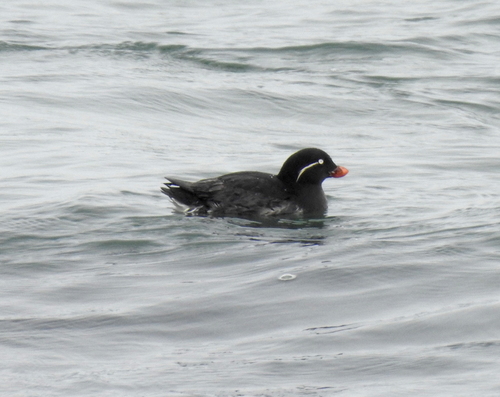 Parakeet Auklet
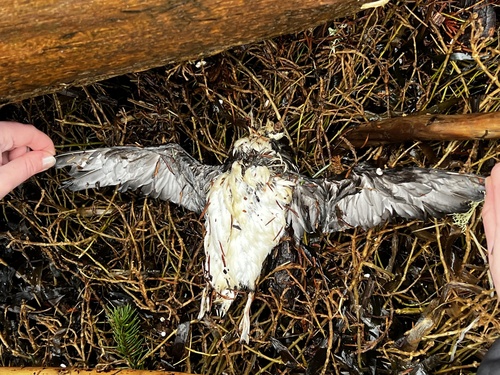 Marbled Murrelet
In short
The most reliable field mark to separate Parakeet Auklet from Marbled Murrelet is the bill: Parakeet Auklet has a short, thick, bright orange bill with a distinct upward curve, while Marbled Murrelet has a thin, straight, black bill. In flight or at rest, Parakeet Auklet shows a crisp white face plume behind the eye and a sharp contrast between dark upperparts and white underparts, whereas Marbled Murrelet lacks the plume and has more variable, seasonally mottled plumage. Marbled Murrelet is slightly larger and slimmer, with pointed wings and a more streamlined, less compact jizz. Both species can appear similar in non-breeding plumage, but bill shape and facial pattern remain diagnostic.
Identification tips
- Bill shape and color: Parakeet Auklet has a short, thick, bright orange bill with a pronounced upward curve, visible even at a distance; Marbled Murrelet has a thin, straight, black bill. This is the most reliable separation in all plumages and ages.
- White face plume: Only Parakeet Auklet shows a distinct white plume extending back from the eye; Marbled Murrelet never shows this feature.
- Facial pattern: Parakeet Auklet's face is dark with a white plume, while Marbled Murrelet in non-breeding plumage has a white throat and collar, and a dark crown and nape, but no plume.
- Body shape ('jizz'): Parakeet Auklet is compact and chunky, with a short neck and tail; Marbled Murrelet is more elongated, with a slimmer profile and pointed wings.
- Plumage contrast: Parakeet Auklet always shows a sharp contrast between dark upperparts and white underparts; Marbled Murrelet can appear similar in winter, but breeding birds become mottled brown overall, losing the clean contrast.
- Upperwing pattern: No distinctive juvenile or immature wing pattern is described for either species, but Parakeet Auklet's compact wings and body are distinctive in flight compared to the more pointed wings of Marbled Murrelet.
- Bill color in flight: The orange bill of Parakeet Auklet can sometimes be seen even in flight, especially in good light; Marbled Murrelet's bill is always black and less obvious.
- Habitat context: If seen inland or near large old-growth conifers, Marbled Murrelet is far more likely; Parakeet Auklet is strictly coastal and pelagic.
- Group size: Parakeet Auklet may be seen in flocks near colonies; Marbled Murrelet is typically solitary or in pairs at sea.
- Vocalizations: Only Parakeet Auklet is likely to be heard calling, especially at nest sites; Marbled Murrelet is usually silent in the field.
- Seasonal change: Marbled Murrelet shows strong seasonal variation, with mottled brown breeding plumage (spring-summer) and white underparts in winter; Parakeet Auklet changes little between seasons.
- Tail and neck: Parakeet Auklet has a shorter tail and neck, adding to its compact look; Marbled Murrelet's proportions are more elongated.
- Size: Marbled Murrelet is slightly larger (25 cm vs. 23 cm), but this is rarely diagnostic without direct comparison.
- Feeding behavior: Both dive for food, but Parakeet Auklet often picks items from the sea bottom, sometimes at greater depths.
- Common pitfalls: In poor light or at distance, Marbled Murrelet in non-breeding plumage can look similar to Parakeet Auklet, but the bill and face plume remain reliable separation points.
Size
Parakeet Auklet averages about 23 cm in length, while Marbled Murrelet is slightly larger at 25 cm. The difference is subtle and not always obvious in the field, but Marbled Murrelet is also slimmer and less chunky overall. Parakeet Auklet's body appears more compact, with a shorter neck and tail, while Marbled Murrelet is more elongated and streamlined. Bill size is a key structural difference: Parakeet Auklet's bill is thick, short, and bright orange, while Marbled Murrelet's bill is thin, straight, and black. [wikipedia][avonet]
Plumage
Juvenile and immature plumages are not detailed in the sources, but key contrasts apply to all ages in non-breeding plumage. Parakeet Auklet always shows a crisp white face plume extending behind the eye, a feature absent in Marbled Murrelet at all ages and seasons. Parakeet Auklet has dark upperparts and clean white underparts, with little seasonal change; the face is dark with the white plume. Marbled Murrelet in non-breeding plumage has white underparts, black crown, nape, wings, and back, and a white neck collar (not present in Parakeet Auklet). In breeding plumage, Marbled Murrelet becomes mottled brown overall, losing the sharp dark-and-white contrast of Parakeet Auklet. The Marbled Murrelet never shows a white face plume or the upturned orange bill. Both species have dark upperwings in flight, but Parakeet Auklet's compact shape and facial pattern remain distinctive.
Behaviour
Parakeet Auklet is often seen near breeding colonies on remote cliffs, sometimes in mixed auklet flocks, and tends to be more vocal at the nest. It forages by diving and picking food from the sea bottom, often far from shore. Marbled Murrelet is less likely to be seen in large groups, forages alone or in pairs, and is notable for its unique nesting behavior: flying inland to nest in old-growth forests, sometimes far from the coast. In flight, Parakeet Auklet appears compact and quick, while Marbled Murrelet is more streamlined and buoyant, with pointed wings.
Habitat
Parakeet Auklet breeds on remote, rocky cliffs in the North Pacific (Alaska, Kamchatka, Siberia) and is rarely seen inland. Marbled Murrelet, while also a North Pacific seabird, is unique among alcids for nesting in old-growth forests, sometimes up to 80 km inland, or on the ground at high latitudes. At sea, Marbled Murrelet is usually found closer to shore, especially near forested coastlines, while Parakeet Auklet is more pelagic and associated with offshore islands. If observed inland or near large conifers, Marbled Murrelet is far more likely.
Voice
Parakeet Auklet is highly vocal at the nest, giving rhythmic hoarse calls and quavering squeals, especially during pair interactions and territory defense. Marbled Murrelet is generally silent at sea and not known for conspicuous vocalizations in the field. If you hear a series of hoarse, rhythmic calls near a nesting site, Parakeet Auklet is more likely; Marbled Murrelet is unlikely to be detected by voice in typical field situations.