

Motmot

Papuan Eclectus vs Blue-rumped Parrot

Eclectus polychloros versus Psittinus cyanurus

Play a quiz with Papuan Eclectus and Blue-rumped Parrot
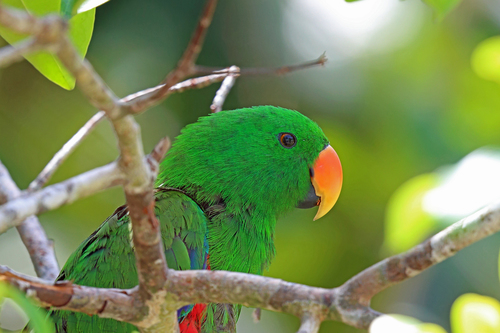
Papuan Eclectus (Eclectus polychloros) Papuan Eclectus
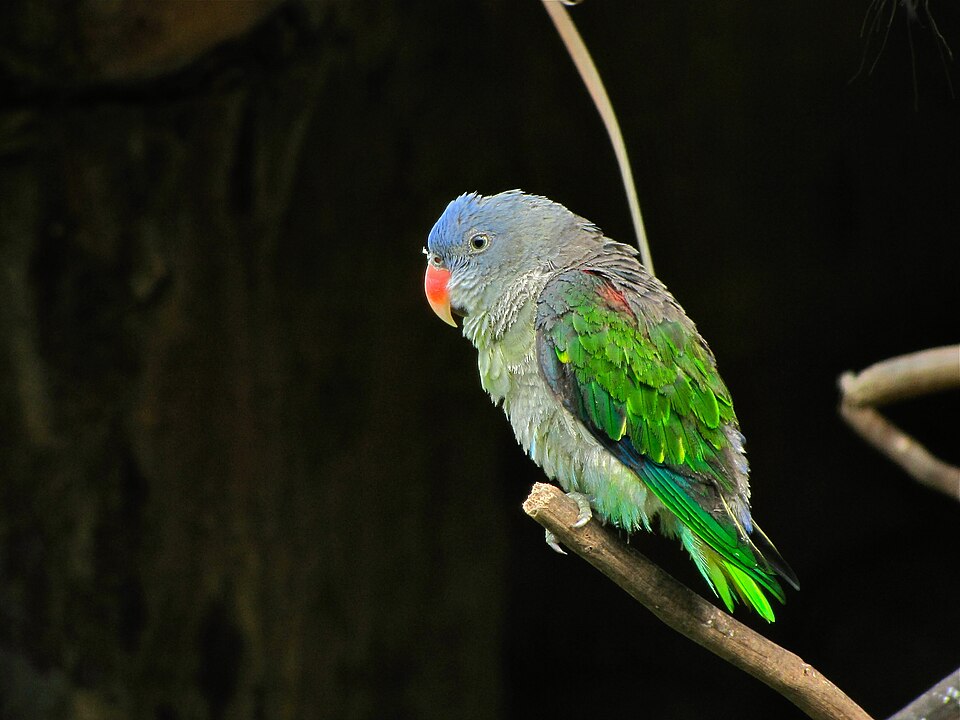
Blue-rumped Parrot (Psittinus cyanurus) Blue-rumped Parrot

Media

Loading…

In short

The most reliable field mark to separate Papuan Eclectus from Blue-rumped Parrot is overall size and structure: Papuan Eclectus is much larger and bulkier, while Blue-rumped Parrot is small and compact. In adult males, Papuan Eclectus is a uniform bright green with a yellow-tipped tail, whereas male Blue-rumped Parrot shows a blue rump and head, black mantle, and red bill. Females are also very different: female Papuan Eclectus is mostly red and blue, while female Blue-rumped Parrot is green with a grey-brown head. In flight, Blue-rumped Parrot flashes bright red underwing coverts and a reddish shoulder, which Papuan Eclectus lacks. These differences are visible at all ages and sexes, making confusion unlikely with good views, but distant or brief looks at green parrots can still cause mix-ups.

Identification tips

  1. Size and Structure: Papuan Eclectus is much larger and bulkier than Blue-rumped Parrot. Use this as your first check, especially if you have a sense of scale.
  2. Tail Pattern (Male Papuan Eclectus): Look for a yellow band at the tip of the tail, with central tail feathers green and lateral ones blue and green. Blue-rumped Parrot lacks this pattern.
  3. Overall Color (Adult Males): Male Papuan Eclectus is bright green with only a slight yellow tinge, while male Blue-rumped Parrot has a blue head and rump, black mantle, and red bill.
  4. Red Underwing Coverts (Blue-rumped Parrot): In flight or when stretching, Blue-rumped Parrot of both sexes shows bright red underwing coverts and a reddish shoulder patch—never seen in Papuan Eclectus.
  5. Female Plumage: Female Papuan Eclectus is mostly red and blue, extremely different from the green female Blue-rumped Parrot with a grey-brown head.
  6. Bill Color: Male Blue-rumped Parrot has a red upper mandible, while Papuan Eclectus males have a more typical parrot bill (not described as red in the notes).
  7. Yellowish Wing Coverts (Blue-rumped Parrot): Blue-rumped Parrot shows yellowish margins on the wing coverts, especially visible at close range.
  8. Geographic Range: If you are in New Guinea or northern Cape York, expect Papuan Eclectus; in Southeast Asia or the Malay Peninsula, expect Blue-rumped Parrot.
  9. Sexual Dimorphism: Both species are sexually dimorphic, but the differences are much more dramatic in Papuan Eclectus (red/blue female vs green male) than in Blue-rumped Parrot (female has grey-brown head, male has blue head/rump).
  10. Flight Impression: Blue-rumped Parrot appears small, compact, and agile in flight; Papuan Eclectus is large, long-tailed, and heavier in flight.
  11. Shoulder Patch: Only Blue-rumped Parrot shows a reddish shoulder patch; Papuan Eclectus does not.
  12. Habitat Context: If you see a small green parrot with red underwings in a Southeast Asian lowland forest, it is almost certainly Blue-rumped Parrot.
  13. Subspecies Variation: Some Papuan Eclectus subspecies (e.g., Aru Island) may show pink/orange/red in the tail tip, but this is not seen in Blue-rumped Parrot.
  14. No Overlap in Wild: If you are birding in the wild, the two species do not overlap geographically, so location is a key check.
  15. No Age-specific Flight Marks: There are no described juvenile or immature-specific upperwing or flight marks for either species, so use adult field marks for all ages.

Size

Papuan Eclectus is substantially larger than Blue-rumped Parrot. The Blue-rumped Parrot is a small parrot, about 18 cm in length, and appears compact and short-tailed. Papuan Eclectus is much bigger and heavier, with a noticeably longer tail and a bulkier, more robust build. Even at a distance, the size difference is usually apparent if both species are known from the area. There is no overlap in size between the two, and structure alone can often rule out confusion.

Plumage

There are no age-specific upperwing or flight marks described for Papuan Eclectus, but Blue-rumped Parrot of all ages and sexes shows bright red underwing coverts and a reddish shoulder patch in flight or when wings are spread. Adult male Papuan Eclectus is bright green overall with only a slight yellow tinge and a yellow band at the tail tip; the central tail feathers are green, with lateral feathers blue and green. Adult male Blue-rumped Parrot has a blue head and rump, black mantle, red upper mandible, and yellowish margins on the wing coverts. Females are even more distinct: female Papuan Eclectus is mostly red and blue, while female Blue-rumped Parrot is green with a grey-brown head. The bright red underwing coverts and reddish shoulder are present in both sexes of Blue-rumped Parrot, but not in Papuan Eclectus. No juvenile or immature-specific wing patterns are described for either species in the sources.

Behaviour

Behavior is not strongly diagnostic from the available notes. Both species are arboreal parrots, but Papuan Eclectus, being much larger, may appear slower and more deliberate in flight, while Blue-rumped Parrot is likely to be faster and more agile due to its smaller size. Social and feeding behaviors are not detailed in the provided sources.

Habitat

Papuan Eclectus is native to New Guinea and nearby islands, sometimes extending to northern Cape York Peninsula. Blue-rumped Parrot is found in southern Myanmar, peninsular Thailand, Malaysia, Borneo, Sumatra, and nearby islands. Their ranges do not overlap in the wild, so location is a strong clue. If seen in New Guinea or northern Australia, it is Papuan Eclectus; if in Southeast Asia or the Malay Archipelago, it is Blue-rumped Parrot.

Submit a better description

Use the same sections as the comparison. Your text is published immediately.

The most reliable field mark to separate Papuan Eclectus from Blue-rumped Parrot is overall size and structure: Papuan Eclectus is much larger and bulkier, while Blue-rumped Parrot is small and compact. In adult males, Papuan Eclectus is a uniform bright green with a yellow-tipped tail, whereas male Blue-rumped Parrot shows a blue rump and head, black mantle, and red bill. Females are also very different: female Papuan Eclectus is mostly red and blue, while female Blue-rumped Parrot is green with a grey-brown head. In flight, Blue-rumped Parrot flashes bright red underwing coverts and a reddish shoulder, which Papuan Eclectus lacks. These differences are visible at all ages and sexes, making confusion unlikely with good views, but distant or brief looks at green parrots can still cause mix-ups.

  1. Size and Structure: Papuan Eclectus is much larger and bulkier than Blue-rumped Parrot. Use this as your first check, especially if you have a sense of scale.
  2. Tail Pattern (Male Papuan Eclectus): Look for a yellow band at the tip of the tail, with central tail feathers green and lateral ones blue and green. Blue-rumped Parrot lacks this pattern.
  3. Overall Color (Adult Males): Male Papuan Eclectus is bright green with only a slight yellow tinge, while male Blue-rumped Parrot has a blue head and rump, black mantle, and red bill.
  4. Red Underwing Coverts (Blue-rumped Parrot): In flight or when stretching, Blue-rumped Parrot of both sexes shows bright red underwing coverts and a reddish shoulder patch—never seen in Papuan Eclectus.
  5. Female Plumage: Female Papuan Eclectus is mostly red and blue, extremely different from the green female Blue-rumped Parrot with a grey-brown head.
  6. Bill Color: Male Blue-rumped Parrot has a red upper mandible, while Papuan Eclectus males have a more typical parrot bill (not described as red in the notes).
  7. Yellowish Wing Coverts (Blue-rumped Parrot): Blue-rumped Parrot shows yellowish margins on the wing coverts, especially visible at close range.
  8. Geographic Range: If you are in New Guinea or northern Cape York, expect Papuan Eclectus; in Southeast Asia or the Malay Peninsula, expect Blue-rumped Parrot.
  9. Sexual Dimorphism: Both species are sexually dimorphic, but the differences are much more dramatic in Papuan Eclectus (red/blue female vs green male) than in Blue-rumped Parrot (female has grey-brown head, male has blue head/rump).
  10. Flight Impression: Blue-rumped Parrot appears small, compact, and agile in flight; Papuan Eclectus is large, long-tailed, and heavier in flight.
  11. Shoulder Patch: Only Blue-rumped Parrot shows a reddish shoulder patch; Papuan Eclectus does not.
  12. Habitat Context: If you see a small green parrot with red underwings in a Southeast Asian lowland forest, it is almost certainly Blue-rumped Parrot.
  13. Subspecies Variation: Some Papuan Eclectus subspecies (e.g., Aru Island) may show pink/orange/red in the tail tip, but this is not seen in Blue-rumped Parrot.
  14. No Overlap in Wild: If you are birding in the wild, the two species do not overlap geographically, so location is a key check.
  15. No Age-specific Flight Marks: There are no described juvenile or immature-specific upperwing or flight marks for either species, so use adult field marks for all ages.

Papuan Eclectus is substantially larger than Blue-rumped Parrot. The Blue-rumped Parrot is a small parrot, about 18 cm in length, and appears compact and short-tailed. Papuan Eclectus is much bigger and heavier, with a noticeably longer tail and a bulkier, more robust build. Even at a distance, the size difference is usually apparent if both species are known from the area. There is no overlap in size between the two, and structure alone can often rule out confusion.

There are no age-specific upperwing or flight marks described for Papuan Eclectus, but Blue-rumped Parrot of all ages and sexes shows bright red underwing coverts and a reddish shoulder patch in flight or when wings are spread. Adult male Papuan Eclectus is bright green overall with only a slight yellow tinge and a yellow band at the tail tip; the central tail feathers are green, with lateral feathers blue and green. Adult male Blue-rumped Parrot has a blue head and rump, black mantle, red upper mandible, and yellowish margins on the wing coverts. Females are even more distinct: female Papuan Eclectus is mostly red and blue, while female Blue-rumped Parrot is green with a grey-brown head. The bright red underwing coverts and reddish shoulder are present in both sexes of Blue-rumped Parrot, but not in Papuan Eclectus. No juvenile or immature-specific wing patterns are described for either species in the sources.

Behavior is not strongly diagnostic from the available notes. Both species are arboreal parrots, but Papuan Eclectus, being much larger, may appear slower and more deliberate in flight, while Blue-rumped Parrot is likely to be faster and more agile due to its smaller size. Social and feeding behaviors are not detailed in the provided sources.

Papuan Eclectus is native to New Guinea and nearby islands, sometimes extending to northern Cape York Peninsula. Blue-rumped Parrot is found in southern Myanmar, peninsular Thailand, Malaysia, Borneo, Sumatra, and nearby islands. Their ranges do not overlap in the wild, so location is a strong clue. If seen in New Guinea or northern Australia, it is Papuan Eclectus; if in Southeast Asia or the Malay Archipelago, it is Blue-rumped Parrot.

Discard your changes?

You have unsaved edits. If you leave now, those changes will be lost.

Papuan Eclectus · Blue-rumped Parrot · My Tricky Birds