

Pallas's Gull vs Sooty Gull
Ichthyaetus ichthyaetus versus Ichthyaetus hemprichii
Play a quiz with Pallas's Gull and Sooty Gull
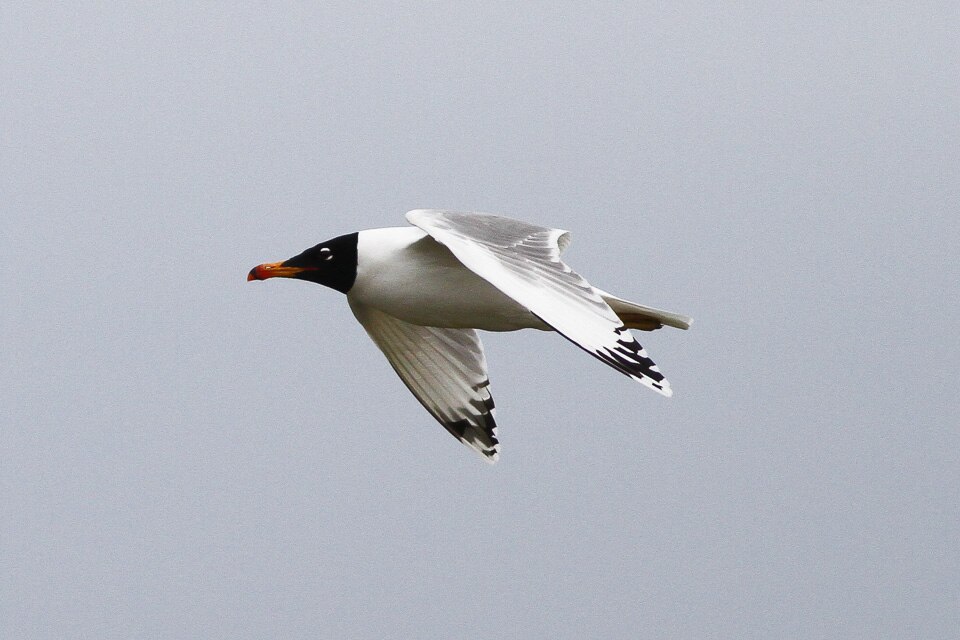 Pallas's Gull
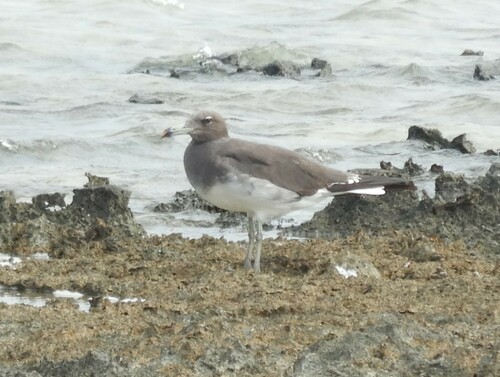 Sooty Gull
In short
The most reliable field mark between Pallas's Gull and Sooty Gull is size and head pattern: Pallas's is a massive gull with a bold black hood in summer adults, while Sooty Gull is distinctly smaller and never shows a full black hood. In all plumages, Pallas's shows a heavier build and, outside breeding, a dark eye-mask rather than a full hood. Sooty Gull has a much darker mantle and upperwings, and lacks the striking white wingtip mirrors of Pallas's. Immature and non-breeding birds are most often confused, but careful attention to overall size, head pattern, and wing coloration will separate them in the field.
Identification tips
- Size is the first check: Pallas's Gull is much larger and bulkier than Sooty Gull. If the bird looks huge and heavy-billed, especially among other gulls, Pallas's is likely.
- Breeding adult head pattern: Only Pallas's Gull has a full black hood in summer. Sooty Gull never shows this; its head is dusky with a white eye-crescent.
- Non-breeding/immature head pattern: Pallas's shows a dark eye-mask on a pale head, even in non-breeding and immature plumages. Sooty Gull's head is dusky but lacks a sharp, mask-like pattern.
- Mantle and upperwing color: Pallas's has a pale grey mantle and upperwings; Sooty Gull is much darker, with sooty-brown upperparts.
- Wingtip pattern: Pallas's Gull adults have large, conspicuous white 'mirrors' at the wing tips, visible in flight and at rest. Sooty Gull's wing tips are dark, lacking large white spots.
- Leg and bill color: Pallas's has yellow legs and an orangey-yellow bill with a red tip (adult); Sooty Gull's leg and bill colors are less bright and not as distinctly marked.
- Structure: Pallas's appears long-winged, big-headed, and heavy-billed; Sooty Gull is slimmer and more delicate.
- Juvenile/immature upperwing: Young Pallas's develop grey upperparts quickly and show more contrast in the wing than Sooty Gull, which is overall darker and more uniform.
- Habitat context: Inland or freshwater sites favor Pallas's; strictly coastal locations, especially in the Red Sea or Indian Ocean, favor Sooty Gull.
- Behavior in mixed flocks: Pallas's often dominates due to size; Sooty Gull is less assertive.
- Voice: If heard, Pallas's deep 'aargh' is distinctive; Sooty Gull's calls are less deep and less diagnostic.
- Bill tip: The red tip on Pallas's bill is a good check in adults, especially at close range.
- Season: Only Pallas's shows a full black hood, and only in summer; Sooty Gull never does, regardless of season.
- Geographic range: Sooty Gull is restricted to tropical and subtropical coasts of the western Indian Ocean; Pallas's is more widespread and often inland.
- Pitfall: Immature and non-breeding Pallas's can look dusky-headed, but the mask is always sharper than Sooty Gull's diffuse dusky head.
Size
Pallas's Gull is dramatically larger: average body mass is about 1394 g [wikidata], with a length of 55–72 cm and a wingspan of 142–170 cm [wikipedia]. Sooty Gull is notably smaller (no direct mass given, but never approaches Pallas's bulk). In the field, Pallas's appears huge and heavy-billed, towering over Sooty Gull. When both are present, the size gap is obvious; even singly, Pallas's looks large-headed and long-winged compared to any other black-headed gull.
Plumage
For adults in breeding plumage, Pallas's Gull is unmistakable: it has a full jet-black hood, pale grey mantle and upperwings, and large white mirrors at the wing tips. Its legs are yellow and the bill is orangey-yellow with a red tip. Sooty Gull adults never show a full black hood; instead, they have a dusky head with a white eye-crescent and a much darker, sooty-brown mantle and upperwings. In non-breeding and immature plumages, Pallas's loses the full hood but retains a dark eye-mask, while Sooty Gull's head remains dusky but lacks a sharp mask. Young Pallas's Gulls quickly develop grey upperparts, but take four years to mature; their wing pattern is always paler and more contrasting than Sooty Gull, which is overall darker and more uniform. The white 'mirrors' on Pallas's wing tips are diagnostic in all but the youngest birds, while Sooty Gull's wing tips are dark without large white spots.
Behaviour
Both species are typical gulls in behavior, often seen scavenging or loafing near water. Pallas's Gull, due to its size, often dominates feeding flocks and may appear more ponderous in flight. Sooty Gull is more agile and less imposing, often seen foraging along shorelines or among other seabirds. Pallas's may be more likely to be seen inland or at large lakes, while Sooty Gull is more strictly coastal.
Habitat
Pallas's Gull breeds in inland wetlands and lakes, especially in central Asia, and winters along coasts and large bodies of water. Sooty Gull is a coastal specialist, found mainly along the Red Sea, Arabian Sea, and Indian Ocean coasts, rarely venturing far inland. If you are far from the sea, Pallas's is far more likely; on tropical or subtropical coasts, especially in the western Indian Ocean, Sooty Gull is expected.
Voice
Pallas's Gull gives a deep 'aargh' cry, which is lower and more resonant than the typical calls of Sooty Gull. Sooty Gull's voice is not described in detail in the provided notes, but is generally less deep and less distinctive than Pallas's.