

Pale-winged Starling vs Red-winged Starling
Onychognathus nabouroup versus Onychognathus morio
Play a quiz with Pale-winged Starling and Red-winged Starling
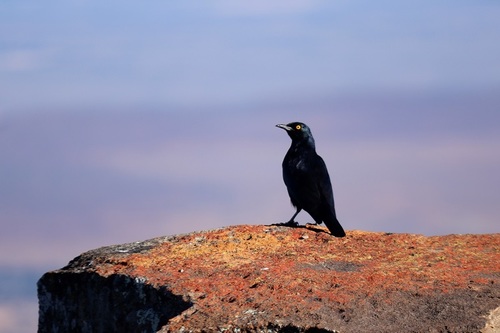 Pale-winged Starling
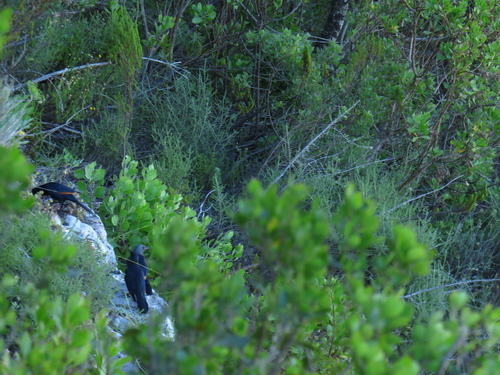 Red-winged Starling
In short
The most reliable field mark to separate Pale-winged Starling from Red-winged Starling is the color of the primaries seen in flight: Pale-winged shows pale whitish primaries edged with orange, while Red-winged displays rich rufous (chestnut) primaries. Eye color is also key—Pale-winged has a bright red or orange eye, while Red-winged's is dark, almost black. Only female Red-winged Starlings have a grey head and breast, a feature never shown by Pale-winged. Both species are similar in size and overall structure, but careful attention to wing and eye color, especially in flight or good light, will resolve most confusion.
Identification tips
- Check the color of the primaries in flight: Pale-winged Starling shows pale whitish primaries edged with orange, forming a pale wing panel; Red-winged Starling has deep rufous or chestnut primaries. This is the single most reliable mark in all ages after fledging.
- Assess eye color carefully: Pale-winged Starling has a bright red or orange iris, visible even at a distance in good light. Red-winged Starling's eye is dark, almost black in adults, and brownish in juveniles. This is diagnostic in perched birds if seen well.
- Look for a grey head and breast: Only female Red-winged Starlings have an ash-grey head and upper breast. If you see this, you are looking at a female Red-winged; Pale-winged never shows this feature.
- Gloss and overall color: Both are glossy black, but Red-winged may appear slightly more iridescent. This is subtle and unreliable compared to wing and eye color.
- Juvenile confusion: Juvenile Red-winged resembles the adult male but is less glossy and has a brown eye. Juvenile Pale-winged is not well described, but the pale wing panel should still be visible in flight.
- Sexual dimorphism: Only Red-winged shows clear sex differences (female grey head); Pale-winged is similar in both sexes.
- Habitat context: In towns, cities, or on cliffs, Red-winged is more likely, especially in eastern/southern Africa. In arid, rocky, or more remote regions of southwestern Africa, Pale-winged is more probable, but overlap occurs.
- Behavior: Both species are generalist omnivores and may forage in similar ways. Behavior is not a strong separator.
- Bill and structure: No reliable difference in bill shape, tail, or overall structure is noted in the sources; both are robust, medium-large starlings.
- Vocalizations: Red-winged's whistled call may help if heard, but Pale-winged's voice is not described and should not be relied on.
- Seasonal variation: No significant seasonal plumage changes are reported for either species; use wing and eye color year-round.
- Lighting pitfalls: In poor light, the pale or rufous wing panels may be hard to distinguish; try to observe birds in good light or wait for flight views.
- Group composition: Mixed flocks can occur in overlap zones—check each individual carefully, especially in flight.
- Range awareness: Know your local species—if you are outside the range of one, the other is more likely, but vagrancy and overlap do happen.
- Summary tip: Prioritize wing panel color in flight and eye color in perched birds; use female head color as a clincher for Red-winged. Avoid relying on subtle differences in gloss or behavior.
Size
Both species are robust, medium-large starlings with similar overall proportions. The Pale-winged Starling has a reported body mass of 103 g [wikidata]; Red-winged Starling is similar in length (27–30 cm) but lacks a direct mass figure in the sources. In the field, size is not a reliable separator between these two, as their bulk and silhouette overlap considerably.
Plumage
-
Juvenile/immature birds: No specific age-related upperwing pattern is described for either species, so focus on adult-like features even in young birds. Juvenile Red-winged Starlings resemble adult males but are less glossy and have brown (not dark red) eyes; Pale-winged juveniles are not described in detail, but eye color may be less intense than in adults.
-
Adults in flight: The most diagnostic mark is the color of the primaries. Pale-winged Starling flashes pale whitish primaries with orange edges, creating a striking pale panel in the wing. Red-winged Starling shows deep rufous or chestnut primaries, which look rich reddish-brown in flight. This difference is visible in all ages after fledging.
-
Perched birds: Eye color is critical—Pale-winged has a bright red or orange iris, while Red-winged's is dark, nearly black (juveniles brownish). Only female Red-winged Starlings have a grey head and breast, which is never seen in Pale-winged. Both species are otherwise glossy black overall, but Red-winged may appear slightly more iridescent.
-
Sex differences: Only Red-winged shows sexual dimorphism: females have a distinctive ash-grey head and upper breast, while males are all dark. Pale-winged shows no such difference.
Behaviour
Both species are omnivorous and opportunistic, feeding on fruit, insects, and sometimes nectar. Red-winged Starlings are noted for their adaptability to urban environments, often seen around cliffs, buildings, and towns. Pale-winged Starlings are generalist foragers as well but are less associated with urban habitats. Both perch conspicuously and may be seen in small groups, but behavior alone is not a strong separator.
Habitat
Pale-winged Starling is found in southwestern Africa (Angola, Botswana, Namibia, South Africa), while Red-winged Starling ranges more widely from Ethiopia to South Africa, favoring cliffs and mountainous areas but also adapting to cities and towns. In areas of overlap (southern Africa), habitat alone is not diagnostic, but Red-winged is more likely in urban or cliffy settings, while Pale-winged is more typical of arid, rocky regions.
Voice
Red-winged Starling has a distinctive whistled contact call ('cher-leeeoo'), but no specific vocal differences are detailed for Pale-winged in the sources. Voice is not a primary separator based on available information.
Pale-winged Starling · Red-winged Starling · My Tricky Birds