

Pale-vented Bush-hen vs Australian Pratincole
Amaurornis moluccana versus Glareola isabella
Play a quiz with Pale-vented Bush-hen and Australian Pratincole
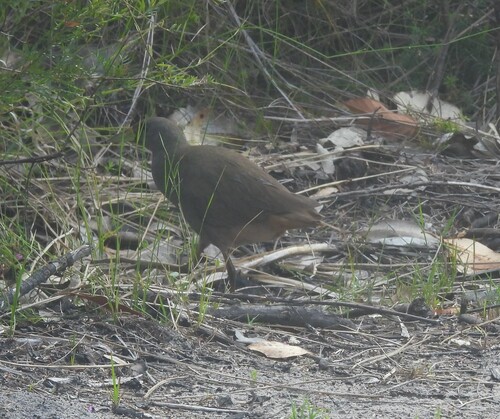 Pale-vented Bush-hen
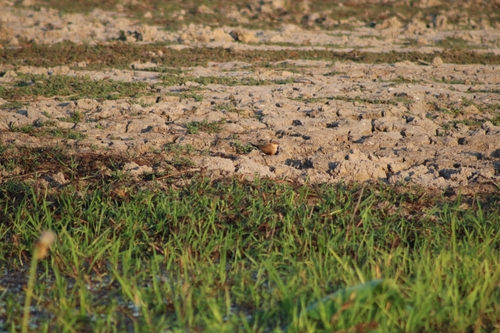 Australian Pratincole
In short
The most reliable field mark to separate Pale-vented Bush-hen from Australian Pratincole is the bush-hen’s blue-grey body with a distinctive pale buff or rufous vent and undertail, versus the pratincole’s sandy brown upperparts and white throat, with a black loral stripe in breeding adults. In flight, the pratincole shows pointed black wings and a square-cut tail with white sides, while the bush-hen has rounded brown wings and tail, lacking strong contrast. Juvenile pratincoles are paler and streaked, but still show a slim, long-legged profile unlike the bush-hen’s chunky, rail-like build. Habitat is also a strong clue: bush-hens skulk in dense wet vegetation, while pratincoles are open-country birds of dry ground.
Identification tips
- Juvenile/immature in flight: Juvenile pratincoles are sandy brown above, paler below, with streaked crown/nape and a square-cut tail edged white; bush-hen juveniles are plain pale blue-grey with a pale or rufous vent/undertail, lacking streaks or white in the tail.
- Adult upperwing in flight: Pratincoles show sharply pointed black outer wings contrasting with sandy inner wing and body; bush-hens have rounded brown wings and tail with little contrast.
- Tail shape: Pratincole’s tail is square and edged white (especially visible in flight or display); bush-hen’s tail is rounded, brown, and lacks white.
- Bill shape and color: Bush-hen has a thick, lime green bill with a red shield in breeding season (duller in non-breeding); pratincole’s bill is short, slender, decurved, and red with black base in breeding, duller in non-breeding/juvenile.
- Leg color and length: Pratincole has long, slim, grey to black legs; bush-hen has shorter, stouter, olive-yellow legs.
- Body shape: Bush-hen is chunky, with a hunched, rail-like profile; pratincole is slim, upright, and long-legged, often appearing taller than it is.
- Facial markings: Breeding pratincole has a sharp black loral stripe and white chin/throat; bush-hen has a plain face with dark eye and no strong markings.
- Vent/undertail color: Bush-hen always shows a pale buff or rufous vent and undertail, a key mark at all ages and seasons; pratincole’s undertail is white at the sides but never rufous or buff.
- Plumage color: Bush-hen is blue-grey with brown wings/tail; pratincole is sandy brown above, paler below, with a white throat and sandy breast.
- Habitat context: Bush-hens are in dense, wet vegetation near water; pratincoles are in open, dry, often barren ground.
- Behavior: Bush-hens skulk and run, rarely fly; pratincoles are active, run upright, and fly frequently with agile, pointed-wing flight.
- Size impression: Bush-hen is larger and heavier, with a shorter wingspan; pratincole is smaller, lighter, and much longer-winged for its size.
- Seasonal bill color: Breeding bush-hens have a red shield on the bill; breeding pratincoles have a red and black bill, but this fades in non-breeding and juveniles.
- Juvenile confusion: Juvenile pratincoles may lack strong facial marks but are always sandy and streaked, never blue-grey or with a rufous vent.
- Tail display: Pratincoles may fan or raise their tail in display, showing white sides; bush-hens do not display the tail in this way.
Size
Pale-vented Bush-hen is larger and heavier, measuring 25–30 cm in length and weighing 150–210 g [wikipedia], with a relatively short, thick bill. Australian Pratincole is smaller and much lighter, at 19–24 cm long and 55–75 g [wikipedia], with a slender, short, decurved bill and much longer wings and legs relative to body size. The pratincole’s wingspan (50–60 cm) is also much greater than the bush-hen’s, reflecting its aerial habits.
Plumage
Juvenile and non-breeding Australian Pratincoles are sandy brown above and paler below, with a faint or absent loral stripe and streaked crown/nape, and in flight show sandy inner wings with black outer primaries and a square white-edged tail. Juvenile Pale-vented Bush-hens are paler blue-grey but always have the diagnostic pale or rufous vent and undertail, and lack any streaking or facial markings. Adult bush-hens are dull blue-grey with brown wings and tail, and a consistently pale (buff to rufous) vent/undertail, while adult pratincoles in breeding plumage show a sharp black loral stripe, white chin/throat, sandy brown breast, and black pointed wings. The pratincole’s tail is square with white sides, unlike the bush-hen’s plain brown, rounded tail. Bill color is also a seasonal cue: bush-hens have a lime green bill with red shield in breeding, duller outside, while pratincoles have a bright red and black bill in breeding, duller in non-breeding and juvenile birds.
Behaviour
Pale-vented Bush-hen is secretive, skulking in dense wet vegetation and rarely seen in the open; it moves with a hunched, rail-like gait, often running rather than flying. Australian Pratincole is active and conspicuous in open country, running and pausing upright, often seen hawking insects in the air or performing distraction displays with wings raised or tail fanned. In flight, pratincoles are agile and buoyant, with pointed wings and fast, swallow-like flight, while bush-hens fly weakly and only short distances, with rounded wings.
Habitat
Bush-hens inhabit dense, moist lowland forests, reedbeds, and wet thickets, always near water and rarely venturing into open ground [wikipedia]. Australian Pratincoles are birds of dry, open country—arid plains, grasslands, and bare ground—often far from water, and almost never in dense cover. If you see the bird in thick, wet vegetation, it is almost certainly a bush-hen; in open, dry country, a pratincole.
Pale-vented Bush-hen · Australian Pratincole · My Tricky Birds