

Pale-legged Hornero vs Brown Cacholote
Furnarius leucopus versus Pseudoseisura lophotes
Play a quiz with Pale-legged Hornero and Brown Cacholote
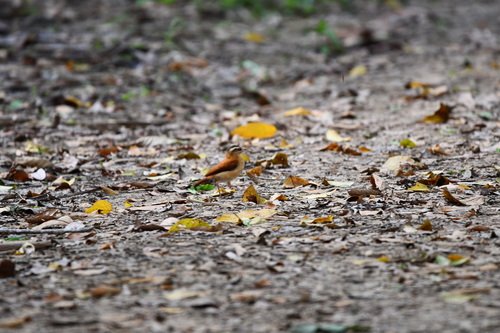 Pale-legged Hornero
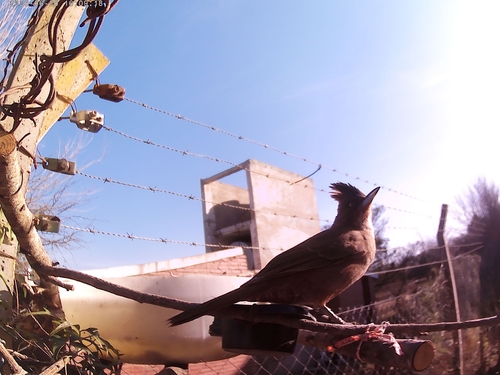 Brown Cacholote
In short
The most reliable field mark to separate Pale-legged Hornero from Brown Cacholote is overall size and structure: Brown Cacholote is much larger and heavier, with a prominent dark crest and a uniformly rufous body, while Pale-legged Hornero is smaller, lacks a crest, and shows a contrasting pale supercilium and chestnut wing/tail panels. In flight or perched, the hornero’s pale legs and bicolored face stand out against the cacholote’s all-rufous, heavier look. Juveniles of both species resemble adults, so age is less likely to cause confusion, but the hornero’s shorter bill in young birds can be a subtle clue. Habitat and behavior can help: cacholotes are usually in taller trees and more forested or park-like settings, while horneros are more often seen on the ground or low perches in open areas.
Identification tips
- Size is a major separator: Brown Cacholote is much larger and bulkier than Pale-legged Hornero. If the bird appears big and heavy, think cacholote.
- Crest presence: Cacholote has a prominent, dark, jay-like crest—always absent in hornero. Any hint of a crest rules out hornero.
- Facial pattern: Hornero shows a broad, pale supercilium and contrasting ear coverts, giving a two-toned face. Cacholote’s face is uniformly rufous, with only a slightly darker area between eye and nostril.
- Bill color and shape: Cacholote’s bill is longer, heavier, and black; hornero’s is shorter, nearly straight, and dusky horn with a paler tip. Juvenile horneros have a noticeably shorter bill than adults.
- Iris color: Cacholote has a yellow iris (adults), while hornero’s is reddish brown or chestnut. This is subtle but can be seen in good light.
- Leg color: Hornero has pale pinkish, pearly gray, or whitish legs; cacholote’s are grayish-olive to dull greenish. This is best seen on perched birds.
- Wing and tail pattern: Hornero shows chestnut wing coverts and a broad chestnut band on blackish flight feathers, plus a chestnut tail. Cacholote’s wings and tail are uniformly rufous, with only the primaries and secondaries slightly darker.
- Underparts: Hornero’s underparts are white on the throat, grading to tawny-ochraceous on the breast and flanks, and nearly whitish on the belly. Cacholote’s throat is especially vibrant rufous, but the rest of the underparts are only slightly lighter than the upperparts.
- Behavior: Hornero is usually seen on the ground or low perches, often running or foraging. Cacholote is more arboreal, often high in trees, especially during duets.
- Nest association: If a large, stick-built nest is present, especially in a tree, this points to cacholote. Hornero’s mud nests are not described here but are very different.
- Habitat: Open, grassy, or scrubby areas favor hornero; forest edges, parks, and taller trees favor cacholote.
- Vocalization: A long, noisy duet from the treetops is cacholote; hornero’s song is more trilled or rattling and less likely to be a duet.
- Sex and age: Both species have similar plumage in both sexes; juvenile horneros have a shorter bill, but otherwise age is not a strong separator.
- Pitfalls: In poor light, cacholote’s uniformly rufous plumage can make it look smaller or less crested, but the lack of a pale supercilium and the overall size should still separate it from hornero.
- When in doubt: Focus on the combination of size, crest, facial pattern, and habitat—these are the most reliable clues in the field.
Size
Brown Cacholote is significantly larger (24–26 cm, 63–79 g) than Pale-legged Hornero (15–18 cm, 37–49 g) [wikipedia][avonet]. Cacholote is one of the largest furnariids and appears bulky and long-tailed, while hornero is medium-sized, more compact, and lighter. The cacholote’s bill is also longer and heavier, and its legs are stouter. In the field, this size difference is usually obvious if both species are seen in similar contexts.
Plumage
No distinctive age-specific upperwing or flight marks are described for either species; both juveniles and adults are similar in pattern, but hornero juveniles have a visibly shorter bill and slightly different feather shapes. Adult Pale-legged Hornero has a striking combination of a wide whitish supercilium, brownish gray ear coverts, and a dark rufescent brown crown, with bright orange-rufous back and chestnut tail. Its wings show chestnut coverts and a broad chestnut band on blackish flight feathers. Underparts are white to tawny-ochraceous, with a white throat and paler belly. In contrast, Brown Cacholote is almost entirely rufous, with subtle shade differences: darker around the lores and tail base, lighter on the breast, and a particularly vibrant throat. Its most distinctive feature is a dark, jay-like crest, and the iris is yellow (vs. reddish brown in hornero). The cacholote’s bill is black, while hornero’s is dusky horn with a paler tip. The hornero’s legs are pale pinkish or gray, while cacholote’s are grayish-olive to dull greenish. Both sexes are similar in both species.
Behaviour
Pale-legged Hornero is often seen walking or running on the ground or perched low, foraging in open or semi-open areas. Brown Cacholote is more arboreal, frequently seen in pairs on top of trees, especially during duetting displays with fanned tails and spread wings. Cacholotes are also notable for their large, stick-built nests in trees, which are much more massive and elaborate than the hornero’s mud oven nests (not described here, but cacholote nests are unique and conspicuous). Horneros are less likely to be seen in the canopy or high perches.
Habitat
Brown Cacholote prefers forests, parklands, and wooded edges, often in taller trees or at forest margins in Argentina, Bolivia, Brazil, Paraguay, and Uruguay. Pale-legged Hornero is found in more open habitats—often near water, in savannas, open woodlands, or scrubby areas—across Bolivia, Brazil, Guyana, and Peru. Horneros are more likely to be seen in open country or at the edge of human habitation, while cacholotes are associated with denser tree cover and less open ground.
Voice
Brown Cacholote performs long, loud duets from treetops, with noisy, coarse notes that fade toward the end; calls are loud "krok" or "cluck" sounds. Pale-legged Hornero’s vocalizations are not described in detail here, but horneros generally have rapid, trilled or rattling songs, often delivered from a perch or in flight. In the field, the cacholote’s duet and harsh calls are distinctive, especially when accompanied by display postures.