

Paddyfield Warbler vs Blyth's Reed Warbler
Acrocephalus agricola versus Acrocephalus dumetorum
Play a quiz with Paddyfield Warbler and Blyth's Reed Warbler
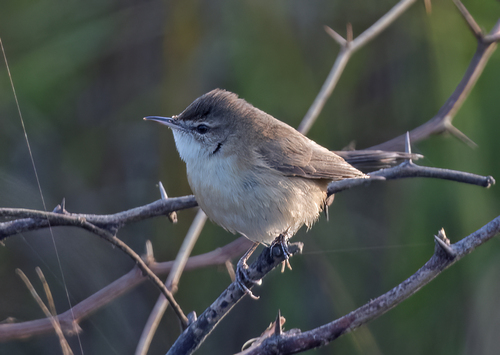 Paddyfield Warbler
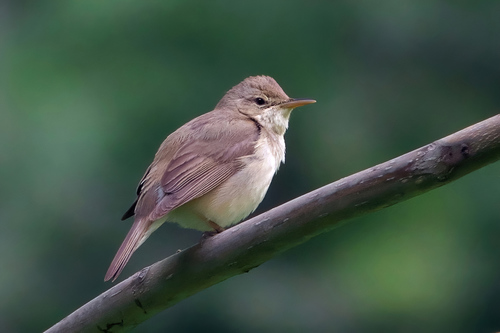 Blyth's Reed Warbler
In short
The most reliable field mark to separate Paddyfield Warbler from Blyth's Reed Warbler is the overall warmer, buffier tone of Paddyfield, especially on the underparts and rump, compared to the colder, greyer-brown and plainer look of Blyth's Reed. Paddyfield Warbler shows a clearer, longer whitish supercilium and a distinctly short, pointed bill, while Blyth's Reed Warbler has a shorter, less distinct supercilium and a longer, heavier bill. Both species are similar in size and structure, but subtle differences in plumage warmth, bill shape, and facial pattern are key. Juvenile Paddyfield Warblers are especially rich buff below, which can be a strong clue in late summer and autumn.
Identification tips
- Juvenile underparts: In late summer and autumn, juvenile Paddyfield Warblers show rich buff underparts, much warmer than the plain off-white of any Blyth's Reed Warbler. This is one of the most reliable age-specific clues.
- Rump color: Paddyfield Warbler has a warm brown rump, contrasting with its back; Blyth's Reed Warbler's rump is not distinct from its plain olive-brown upperparts.
- Supercilium: Paddyfield Warbler shows a long, clear, whitish supercilium extending well behind the eye, while Blyth's Reed Warbler's supercilium is shorter, less distinct, and often fades behind the eye.
- Bill shape: Paddyfield Warbler has a short, pointed bill; Blyth's Reed Warbler's bill is longer, thicker, and heavier, with a pale pinkish-brown base to the lower mandible. This can be seen well in close views.
- Plumage warmth: Paddyfield Warbler is generally warmer and buffier overall, especially on the underparts and rump. Blyth's Reed Warbler is colder, greyer, and plainer, lacking any warm tones.
- Upperparts: Paddyfield Warbler's back is pale brown and unstreaked, while Blyth's Reed Warbler is plain olive-brown above, with less olive on the wings.
- Wing structure: Both have short, rounded wings, but Blyth's Reed Warbler's wings may appear even shorter and more rounded, accentuating its compact look.
- Leg and foot color: Blyth's Reed Warbler has greyish-brown legs and feet, matching the base color of its bill; Paddyfield's leg color is less distinctive in the field.
- Facial expression: The clearer, longer supercilium of Paddyfield gives it a more open-faced look, while Blyth's Reed appears plainer and less marked in the face.
- Song: If singing, Blyth's Reed Warbler gives a more varied, harsh, and mechanical song with ticks and chaks; Paddyfield's song is more rhythmic, fast, and less forceful, with more acrocephaline whistles.
- Habitat: In marshes, rice fields, or extensive reedbeds, Paddyfield Warbler is more likely; in shrubby woodland edges or gardens, especially away from water, Blyth's Reed Warbler is more likely.
- Perched jizz: Paddyfield Warbler often looks slimmer and more delicate, with a finer bill and longer supercilium; Blyth's Reed Warbler can appear bulkier-headed and heavier-billed.
- Flight views: Both are short-winged and slim, but any hint of a warmer rump or buff underparts in flight favors Paddyfield Warbler.
- Seasonal context: In autumn, look for the richer buff juveniles of Paddyfield; in spring, both can look worn and faded, making structure and facial pattern more important.
- Sex: Sexes are identical in both species, so do not rely on sex-based differences.
Size
Both species are very close in size: Paddyfield Warbler is about 13 cm long with a wingspan of 15–17.5 cm, while Blyth's Reed Warbler ranges from 12–14 cm in length. Blyth's Reed is slightly heavier on average (8–16 g) but this is not a practical field mark. Both are slim, medium-small Acrocephalus warblers, so size alone is not reliable for separation.
Plumage
Juvenile and first-year Paddyfield Warblers are distinctly richer buff on the underparts than any Blyth's Reed Warbler, which remains plain off-white below at all ages. Paddyfield Warbler adults have a warm brown rump and unstreaked pale brown back, with a clear, long whitish supercilium that stands out in the field. Blyth's Reed Warbler, by contrast, is plainer and colder olive-brown above, lacking the warm tones of Paddyfield, and its supercilium is shorter and less contrasting. The wings of both are short and rounded, but Blyth's Reed appears even more so, with less olive on the wings. Paddyfield's bill is short and pointed, while Blyth's Reed's is longer and thicker, with a pale pinkish-brown base to the lower mandible. Sexes are alike in both species.
Behaviour
Both species are secretive and skulk in dense vegetation, but Blyth's Reed Warbler is more often found in shrubby or wooded edges, while Paddyfield Warbler prefers low, grassy or reedy habitats. In flight, both appear slim and short-winged, but Blyth's Reed may seem slightly bulkier due to its heavier bill and thicker legs.
Habitat
Paddyfield Warbler is usually found in low vegetation such as long grass, reeds, and rice fields, especially in marshy or wetland areas. Blyth's Reed Warbler, while also using wet habitats, is more often associated with the edges and clearings of damp broadleaved woodland, wooded gullies, parks, gardens, and sometimes coniferous forest. In winter, Blyth's Reed can be found in both wet and dry trees, while Paddyfield tends to stick to low, grassy or reedy cover.
Voice
Both species have variable songs with mimicry, but Paddyfield Warbler's song is fast, rhythmic, and weaker than Marsh Warbler, with acrocephaline whistles. Blyth's Reed Warbler's song is more varied, mixing harsh ticks, chaks, and churrs with melodious whistles and mimicry. In the field, Blyth's Reed often sounds harsher and more mechanical, while Paddyfield is more rhythmic and less forceful.