

Motmot

Paddyfield Pipit vs Tawny Pipit

Anthus rufulus versus Anthus campestris

Play a quiz with Paddyfield Pipit and Tawny Pipit
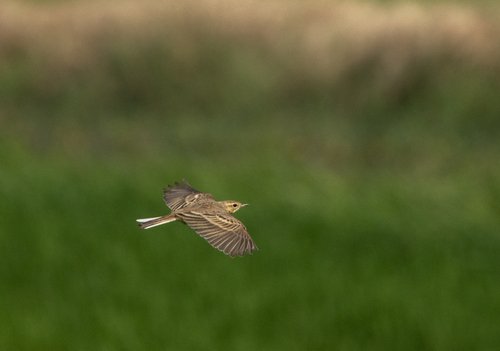
Paddyfield Pipit (Anthus rufulus) Paddyfield Pipit
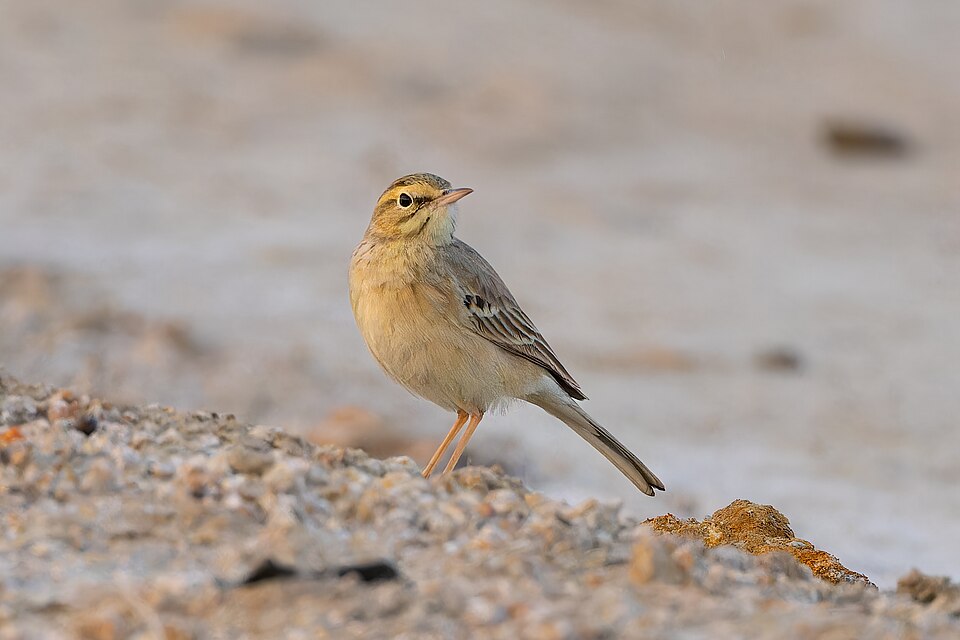
Tawny Pipit (Anthus campestris) Tawny Pipit

Media

Loading…

In short

The most reliable field mark between Paddyfield Pipit and Tawny Pipit is the amount of streaking on the upperparts and breast: Paddyfield Pipit (especially juveniles and some subspecies) shows more prominent streaking above and below, while Tawny Pipit is generally plainer and less streaked. Structure is also key: Paddyfield Pipit is smaller, dumpier, with a shorter tail and legs, while Tawny Pipit is longer, sleeker, and sandier in tone. In flight, Paddyfield Pipit’s fluttering, weaker flight contrasts with Tawny Pipit’s strong, direct flight. Vocalizations differ, but are subtle in the field. Both can overlap in winter in South Asia, making careful attention to these details essential.

Identification tips

  1. Breast and upperpart streaking: Paddyfield Pipit (especially juveniles and some adults) shows prominent streaking on the breast and upperparts; Tawny Pipit is much plainer, with little to no streaking. This is the most reliable mark in all plumages.
  2. Juvenile/first-winter plumage: Young Paddyfield Pipits have obvious pale feather edges and strong breast spots, while Tawny Pipit juveniles are still plain and sandy above and below.
  3. Overall coloration: Paddyfield Pipit is grey-brown above, while Tawny Pipit is sandy brown. Paddyfield can look richer or paler depending on subspecies, but always more streaked.
  4. Structure: Paddyfield Pipit is smaller, dumpier, with a shorter tail and legs. Tawny Pipit is longer, more upright, with longer legs and tail, and a sleeker appearance.
  5. Bill shape: Both have dark bills, but Tawny Pipit’s is narrower and less robust, though this is subtle and best used in combination with other marks.
  6. Flight style: Paddyfield Pipit has a weaker, fluttering flight; Tawny Pipit’s flight is strong and direct. This is best judged with experience or when seeing both together.
  7. Perched jizz: Paddyfield Pipit often appears hunched or squat, while Tawny Pipit stands more upright and alert.
  8. Tail length: Tawny Pipit’s tail is longer and more noticeable in flight and at rest; Paddyfield’s is shorter and less prominent.
  9. Leg length: Tawny Pipit’s legs are longer, contributing to its upright stance; Paddyfield’s legs look proportionally shorter.
  10. Voice: Paddyfield Pipit gives a 'chip-chip-chip' call; Tawny Pipit gives a higher-pitched 'schip'. Use with caution, as calls can be confused with other pipits.
  11. Habitat context: In cultivated fields, grassy patches, or scrub in southern Asia, Paddyfield Pipit is more likely, especially as a resident. In drier, sandy, or steppe-like habitats, especially in winter, Tawny Pipit may be present.
  12. Seasonal overlap: In winter, both species can occur together in South Asia. Be extra cautious and rely on multiple field marks.
  13. Subspecies variation: Paddyfield Pipit shows regional variation in color and streaking, but always more streaked than Tawny Pipit. The Western Ghats population can appear darker and more heavily streaked.
  14. Sex differences: Both species are sexually monomorphic—sex is not a useful field mark.
  15. Comparison with other pipits: Both can be confused with Richard’s and Blyth’s Pipits; always check for streaking, structure, and call in combination.

Size

Tawny Pipit is the larger of the two, with a body mass of about 22 g and a length of 16 cm, compared to Paddyfield Pipit’s 15 cm (mass not specified but smaller by structure and impression). Tawny Pipit also has a longer wingspan (25–28 cm). Paddyfield Pipit appears noticeably smaller, shorter-tailed, and more compact, especially when seen side by side or with direct comparison to other pipits.

Plumage

Juvenile and first-winter Paddyfield Pipits are distinctly more streaked on the breast and upperparts, with pale feather edges and prominent spotting, making them look more patterned than any age of Tawny Pipit. Adult Paddyfield Pipits retain some breast streaking and upperpart streaks, though less than juveniles, but still more than Tawny. Tawny Pipit of all ages is sandy brown above and pale below, with minimal streaking—often appearing almost plain on the mantle and breast. Paddyfield Pipit can show regional variation: some populations are paler or darker, but always with more streaking than Tawny. Both species are generally undistinguished in coloration, but the presence or absence of streaks is the most consistent visual cue.

Behaviour

Paddyfield Pipit tends to have a weaker, more fluttering flight and appears dumpier and less upright when perched. Tawny Pipit, by contrast, has a strong, direct flight and stands more upright, often appearing sleeker and longer-legged. Both species forage on the ground in open habitats, but Paddyfield Pipit is more likely to be seen in cultivated fields and grassy patches, often running rather than walking.

Habitat

Both species can occur together in South Asia during the winter. Paddyfield Pipit is a resident breeder in open scrub, grassland, and cultivated land, especially in southern Asia east to the Philippines. Tawny Pipit is a migrant, breeding across the central Palearctic and wintering in tropical Africa and the Indian subcontinent. In winter, both may be found in similar open country, but Paddyfield Pipit is more tied to agricultural and grassy habitats, while Tawny Pipit may be found in drier, sandier, or more steppe-like terrain.

Voice

Paddyfield Pipit’s usual call is a repeated 'chip-chip-chip', which is quite different from Tawny Pipit’s higher-pitched 'schip'. Tawny Pipit’s song is a short, loud, disyllabic 'chir-ree chir-ree', but this is rarely heard in wintering areas. Calls are useful if heard well, but both can be confused with other pipits, so use voice as supporting evidence rather than the sole criterion.

Submit a better description

Use the same sections as the comparison. Your text is published immediately.

The most reliable field mark between Paddyfield Pipit and Tawny Pipit is the amount of streaking on the upperparts and breast: Paddyfield Pipit (especially juveniles and some subspecies) shows more prominent streaking above and below, while Tawny Pipit is generally plainer and less streaked. Structure is also key: Paddyfield Pipit is smaller, dumpier, with a shorter tail and legs, while Tawny Pipit is longer, sleeker, and sandier in tone. In flight, Paddyfield Pipit’s fluttering, weaker flight contrasts with Tawny Pipit’s strong, direct flight. Vocalizations differ, but are subtle in the field. Both can overlap in winter in South Asia, making careful attention to these details essential.

  1. Breast and upperpart streaking: Paddyfield Pipit (especially juveniles and some adults) shows prominent streaking on the breast and upperparts; Tawny Pipit is much plainer, with little to no streaking. This is the most reliable mark in all plumages.
  2. Juvenile/first-winter plumage: Young Paddyfield Pipits have obvious pale feather edges and strong breast spots, while Tawny Pipit juveniles are still plain and sandy above and below.
  3. Overall coloration: Paddyfield Pipit is grey-brown above, while Tawny Pipit is sandy brown. Paddyfield can look richer or paler depending on subspecies, but always more streaked.
  4. Structure: Paddyfield Pipit is smaller, dumpier, with a shorter tail and legs. Tawny Pipit is longer, more upright, with longer legs and tail, and a sleeker appearance.
  5. Bill shape: Both have dark bills, but Tawny Pipit’s is narrower and less robust, though this is subtle and best used in combination with other marks.
  6. Flight style: Paddyfield Pipit has a weaker, fluttering flight; Tawny Pipit’s flight is strong and direct. This is best judged with experience or when seeing both together.
  7. Perched jizz: Paddyfield Pipit often appears hunched or squat, while Tawny Pipit stands more upright and alert.
  8. Tail length: Tawny Pipit’s tail is longer and more noticeable in flight and at rest; Paddyfield’s is shorter and less prominent.
  9. Leg length: Tawny Pipit’s legs are longer, contributing to its upright stance; Paddyfield’s legs look proportionally shorter.
  10. Voice: Paddyfield Pipit gives a 'chip-chip-chip' call; Tawny Pipit gives a higher-pitched 'schip'. Use with caution, as calls can be confused with other pipits.
  11. Habitat context: In cultivated fields, grassy patches, or scrub in southern Asia, Paddyfield Pipit is more likely, especially as a resident. In drier, sandy, or steppe-like habitats, especially in winter, Tawny Pipit may be present.
  12. Seasonal overlap: In winter, both species can occur together in South Asia. Be extra cautious and rely on multiple field marks.
  13. Subspecies variation: Paddyfield Pipit shows regional variation in color and streaking, but always more streaked than Tawny Pipit. The Western Ghats population can appear darker and more heavily streaked.
  14. Sex differences: Both species are sexually monomorphic—sex is not a useful field mark.
  15. Comparison with other pipits: Both can be confused with Richard’s and Blyth’s Pipits; always check for streaking, structure, and call in combination.

Tawny Pipit is the larger of the two, with a body mass of about 22 g and a length of 16 cm, compared to Paddyfield Pipit’s 15 cm (mass not specified but smaller by structure and impression). Tawny Pipit also has a longer wingspan (25–28 cm). Paddyfield Pipit appears noticeably smaller, shorter-tailed, and more compact, especially when seen side by side or with direct comparison to other pipits.

Juvenile and first-winter Paddyfield Pipits are distinctly more streaked on the breast and upperparts, with pale feather edges and prominent spotting, making them look more patterned than any age of Tawny Pipit. Adult Paddyfield Pipits retain some breast streaking and upperpart streaks, though less than juveniles, but still more than Tawny. Tawny Pipit of all ages is sandy brown above and pale below, with minimal streaking—often appearing almost plain on the mantle and breast. Paddyfield Pipit can show regional variation: some populations are paler or darker, but always with more streaking than Tawny. Both species are generally undistinguished in coloration, but the presence or absence of streaks is the most consistent visual cue.

Paddyfield Pipit tends to have a weaker, more fluttering flight and appears dumpier and less upright when perched. Tawny Pipit, by contrast, has a strong, direct flight and stands more upright, often appearing sleeker and longer-legged. Both species forage on the ground in open habitats, but Paddyfield Pipit is more likely to be seen in cultivated fields and grassy patches, often running rather than walking.

Both species can occur together in South Asia during the winter. Paddyfield Pipit is a resident breeder in open scrub, grassland, and cultivated land, especially in southern Asia east to the Philippines. Tawny Pipit is a migrant, breeding across the central Palearctic and wintering in tropical Africa and the Indian subcontinent. In winter, both may be found in similar open country, but Paddyfield Pipit is more tied to agricultural and grassy habitats, while Tawny Pipit may be found in drier, sandier, or more steppe-like terrain.

Paddyfield Pipit’s usual call is a repeated 'chip-chip-chip', which is quite different from Tawny Pipit’s higher-pitched 'schip'. Tawny Pipit’s song is a short, loud, disyllabic 'chir-ree chir-ree', but this is rarely heard in wintering areas. Calls are useful if heard well, but both can be confused with other pipits, so use voice as supporting evidence rather than the sole criterion.

Discard your changes?

You have unsaved edits. If you leave now, those changes will be lost.

Paddyfield Pipit · Tawny Pipit · My Tricky Birds