

Motmot

Nuttall's Woodpecker vs Ladder-backed Woodpecker

Dryobates nuttallii versus Dryobates scalaris

Play a quiz with Nuttall's Woodpecker and Ladder-backed Woodpecker
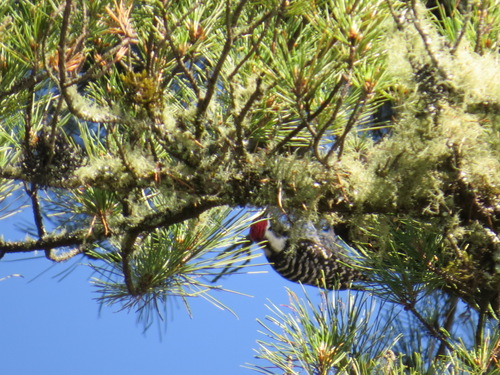
Nuttall's Woodpecker (Dryobates nuttallii) Nuttall's Woodpecker
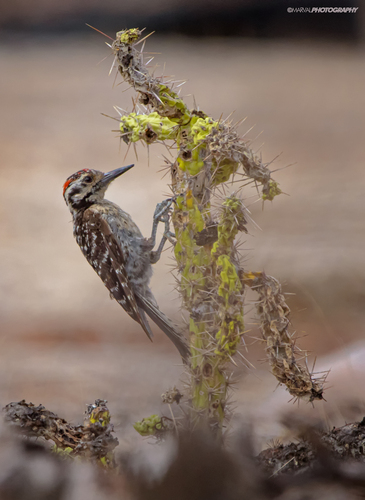
Ladder-backed Woodpecker (Dryobates scalaris) Ladder-backed Woodpecker

Media

Loading…

In short

The most reliable field mark between Nuttall's and Ladder-backed Woodpeckers is the pattern and amount of black on the head and upper back: Nuttall's shows more extensive black on the crown and a solid black patch at the top of the back, while Ladder-backed has less black on the head and upper back, with the black more broken up by white. Both species have similar black-and-white barred wings and backs, but Nuttall's is more likely to show a solid black upper back, especially when perched. Juvenile males of both species show some red on the crown, but the extent and pattern of head streaking can help. Size is not a strong separator in the field, but Nuttall's averages heavier. Habitat is often a clue: Nuttall's is tied to California oak woodlands, while Ladder-backed prefers drier, brushier habitats further south and east.

Identification tips

  1. Head pattern: Nuttall's shows more extensive black on the forehead and crown, with white streaks on the sides; Ladder-backed has less black on the head, with more white breaking up the crown and nape. This is the most reliable field mark for perched birds of all ages.
  2. Upper back (mantle): Nuttall's has a solid black patch at the top of the back, while Ladder-backed's back is more evenly barred, with little or no solid black area. Look for this when the bird is perched or climbing.
  3. Back barring: Both species have black-and-white barred backs, but Nuttall's barring is interrupted by the solid black upper back, while Ladder-backed's is more uniform and ladder-like.
  4. Underparts: Both have white underparts with some black spotting, but Ladder-backed often shows more black speckling on the flanks and a duskier or buffier wash in southern populations. Nuttall's is cleaner white below with fewer spots.
  5. Rump: Ladder-backed's rump is speckled with black; Nuttall's is less distinctly marked here, but this is subtle and not always visible.
  6. Crown patch (sex/age): Adult males of both species have a red crown patch; females lack it. Juvenile males of both show some red, but Nuttall's juveniles often have more white streaking on the head.
  7. Bill size: Southern Ladder-backed populations may have a smaller bill, but this is variable and not a reliable field mark in most of the range.
  8. Habitat: Nuttall's is nearly always in California oak woodlands; Ladder-backed is in dry brush, thickets, and desert, sometimes using cacti for nesting. Use habitat as a strong supporting clue, especially outside the narrow overlap zone.
  9. Geography: If you are outside California's oak belt, it's almost certainly Ladder-backed. Within California, check habitat and head pattern.
  10. Behavior: Both species climb trunks and branches, but only Ladder-backed is likely to be seen feeding on cactus fruit or nesting in cacti.
  11. Size: Nuttall's averages heavier (38.3 g vs. 30.3 g), but this is not easily judged in the field.
  12. Voice: Nuttall's gives soft wheezing calls and less intense rattles; no distinctive vocal difference is noted for Ladder-backed in these sources.
  13. Flight: No diagnostic differences in wing pattern or flight style are noted between the two species in the provided notes.
  14. Juvenile plumage: Both species' juveniles resemble adults, but Nuttall's juveniles often show more white streaking on the head.
  15. Pitfalls: Both species are very similar and can hybridize in the overlap zone; always use a combination of head pattern, upper back, and habitat for best accuracy.

Size

Nuttall's Woodpecker is slightly heavier on average (38.3 g vs. 30.3 g for Ladder-backed), but their lengths overlap (Nuttall's: 16–18 cm; Ladder-backed: 16.5–19 cm). In the field, this difference is subtle and rarely diagnostic unless birds are side by side. Bill size may appear slightly larger on some southern Ladder-backed, but this is not a reliable mark for most observers.

Plumage

For all ages, both species show black-and-white barred backs and wings, but Nuttall's has a solid black patch at the top of the back (mantle), while Ladder-backed's back barring is more continuous and broken up. On perched birds, look for the extent of black on the head: Nuttall's has a black forehead and crown with white streaks on the sides, and a solid black upper back; Ladder-backed has less black on the head, with more white breaking up the crown and nape. Underparts are white with some black spotting in both, but Ladder-backed tends to have more extensive black speckling on the flanks and a creamier or duskier tone in southern birds. Juvenile males of both species show some red on the crown, but Nuttall's juveniles often have more white streaking on the head. In flight, both show similar barred wings and tails; there is no mention of a diagnostic upperwing pattern for juveniles or adults in either species from the provided notes.

Behaviour

Both species forage by climbing trunks and branches, using their zygodactyl feet and stiff tails to brace themselves vertically. Nuttall's is noted for peeling bark to access ants, while Ladder-backed also feeds on cactus fruit in arid regions. Drumming and soft wheezing calls are typical for Nuttall's during pair bonding, but both species drum and excavate nest cavities in trees or, for Ladder-backed, sometimes in cacti. Behavior is not a strong separator unless habitat context is considered.

Habitat

Nuttall's Woodpecker is almost exclusively found in oak woodlands of California, rarely straying far from this habitat. Ladder-backed Woodpecker prefers dry, brushy areas and thickets, ranging across the southwestern US, Mexico, and into Central America. In the small overlap zone in southern California and northern Baja, habitat can still be a clue: Nuttall's sticks to oaks, Ladder-backed to drier scrub. If you find a woodpecker in a cactus patch or desert thicket, it's almost certainly Ladder-backed; in a mature oak woodland, it's likely Nuttall's.

Voice

Nuttall's Woodpecker gives soft wheezing calls during pair bonding and less intense rattle calls for territory. No specific vocal differences are described for Ladder-backed in the provided notes, and both species drum. Voice is not a reliable separator based on these sources.

Submit a better description

Use the same sections as the comparison. Your text is published immediately.

The most reliable field mark between Nuttall's and Ladder-backed Woodpeckers is the pattern and amount of black on the head and upper back: Nuttall's shows more extensive black on the crown and a solid black patch at the top of the back, while Ladder-backed has less black on the head and upper back, with the black more broken up by white. Both species have similar black-and-white barred wings and backs, but Nuttall's is more likely to show a solid black upper back, especially when perched. Juvenile males of both species show some red on the crown, but the extent and pattern of head streaking can help. Size is not a strong separator in the field, but Nuttall's averages heavier. Habitat is often a clue: Nuttall's is tied to California oak woodlands, while Ladder-backed prefers drier, brushier habitats further south and east.

  1. Head pattern: Nuttall's shows more extensive black on the forehead and crown, with white streaks on the sides; Ladder-backed has less black on the head, with more white breaking up the crown and nape. This is the most reliable field mark for perched birds of all ages.
  2. Upper back (mantle): Nuttall's has a solid black patch at the top of the back, while Ladder-backed's back is more evenly barred, with little or no solid black area. Look for this when the bird is perched or climbing.
  3. Back barring: Both species have black-and-white barred backs, but Nuttall's barring is interrupted by the solid black upper back, while Ladder-backed's is more uniform and ladder-like.
  4. Underparts: Both have white underparts with some black spotting, but Ladder-backed often shows more black speckling on the flanks and a duskier or buffier wash in southern populations. Nuttall's is cleaner white below with fewer spots.
  5. Rump: Ladder-backed's rump is speckled with black; Nuttall's is less distinctly marked here, but this is subtle and not always visible.
  6. Crown patch (sex/age): Adult males of both species have a red crown patch; females lack it. Juvenile males of both show some red, but Nuttall's juveniles often have more white streaking on the head.
  7. Bill size: Southern Ladder-backed populations may have a smaller bill, but this is variable and not a reliable field mark in most of the range.
  8. Habitat: Nuttall's is nearly always in California oak woodlands; Ladder-backed is in dry brush, thickets, and desert, sometimes using cacti for nesting. Use habitat as a strong supporting clue, especially outside the narrow overlap zone.
  9. Geography: If you are outside California's oak belt, it's almost certainly Ladder-backed. Within California, check habitat and head pattern.
  10. Behavior: Both species climb trunks and branches, but only Ladder-backed is likely to be seen feeding on cactus fruit or nesting in cacti.
  11. Size: Nuttall's averages heavier (38.3 g vs. 30.3 g), but this is not easily judged in the field.
  12. Voice: Nuttall's gives soft wheezing calls and less intense rattles; no distinctive vocal difference is noted for Ladder-backed in these sources.
  13. Flight: No diagnostic differences in wing pattern or flight style are noted between the two species in the provided notes.
  14. Juvenile plumage: Both species' juveniles resemble adults, but Nuttall's juveniles often show more white streaking on the head.
  15. Pitfalls: Both species are very similar and can hybridize in the overlap zone; always use a combination of head pattern, upper back, and habitat for best accuracy.

Nuttall's Woodpecker is slightly heavier on average (38.3 g vs. 30.3 g for Ladder-backed), but their lengths overlap (Nuttall's: 16–18 cm; Ladder-backed: 16.5–19 cm). In the field, this difference is subtle and rarely diagnostic unless birds are side by side. Bill size may appear slightly larger on some southern Ladder-backed, but this is not a reliable mark for most observers.

For all ages, both species show black-and-white barred backs and wings, but Nuttall's has a solid black patch at the top of the back (mantle), while Ladder-backed's back barring is more continuous and broken up. On perched birds, look for the extent of black on the head: Nuttall's has a black forehead and crown with white streaks on the sides, and a solid black upper back; Ladder-backed has less black on the head, with more white breaking up the crown and nape. Underparts are white with some black spotting in both, but Ladder-backed tends to have more extensive black speckling on the flanks and a creamier or duskier tone in southern birds. Juvenile males of both species show some red on the crown, but Nuttall's juveniles often have more white streaking on the head. In flight, both show similar barred wings and tails; there is no mention of a diagnostic upperwing pattern for juveniles or adults in either species from the provided notes.

Both species forage by climbing trunks and branches, using their zygodactyl feet and stiff tails to brace themselves vertically. Nuttall's is noted for peeling bark to access ants, while Ladder-backed also feeds on cactus fruit in arid regions. Drumming and soft wheezing calls are typical for Nuttall's during pair bonding, but both species drum and excavate nest cavities in trees or, for Ladder-backed, sometimes in cacti. Behavior is not a strong separator unless habitat context is considered.

Nuttall's Woodpecker is almost exclusively found in oak woodlands of California, rarely straying far from this habitat. Ladder-backed Woodpecker prefers dry, brushy areas and thickets, ranging across the southwestern US, Mexico, and into Central America. In the small overlap zone in southern California and northern Baja, habitat can still be a clue: Nuttall's sticks to oaks, Ladder-backed to drier scrub. If you find a woodpecker in a cactus patch or desert thicket, it's almost certainly Ladder-backed; in a mature oak woodland, it's likely Nuttall's.

Nuttall's Woodpecker gives soft wheezing calls during pair bonding and less intense rattle calls for territory. No specific vocal differences are described for Ladder-backed in the provided notes, and both species drum. Voice is not a reliable separator based on these sources.

Discard your changes?

You have unsaved edits. If you leave now, those changes will be lost.

Nuttall's Woodpecker · Ladder-backed Woodpecker · My Tricky Birds