

Motmot

Northern Wheatear vs Desert Wheatear

Oenanthe oenanthe versus Oenanthe deserti

Play a quiz with Northern Wheatear and Desert Wheatear
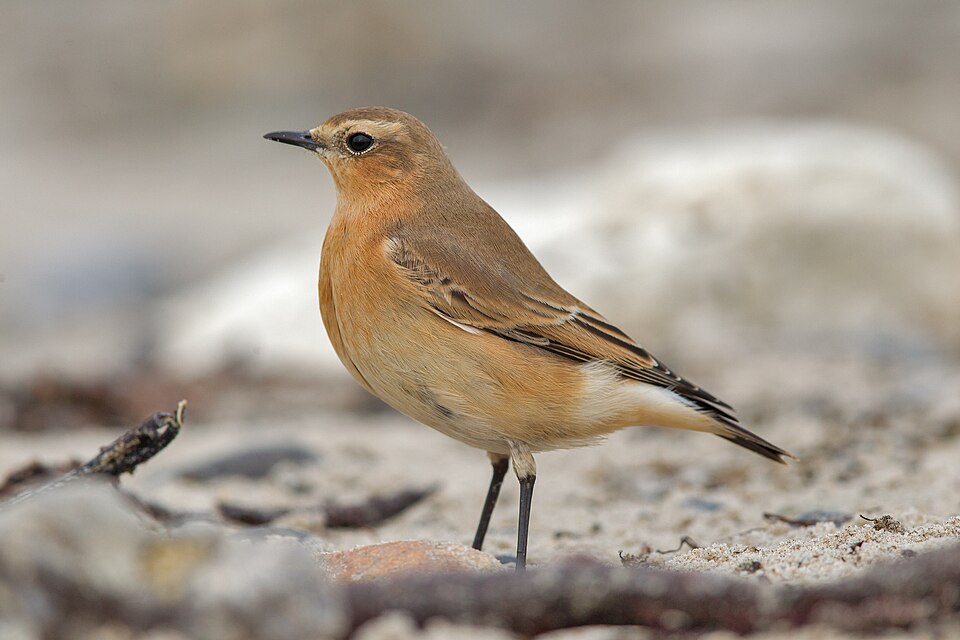
Northern Wheatear (Oenanthe oenanthe) Northern Wheatear
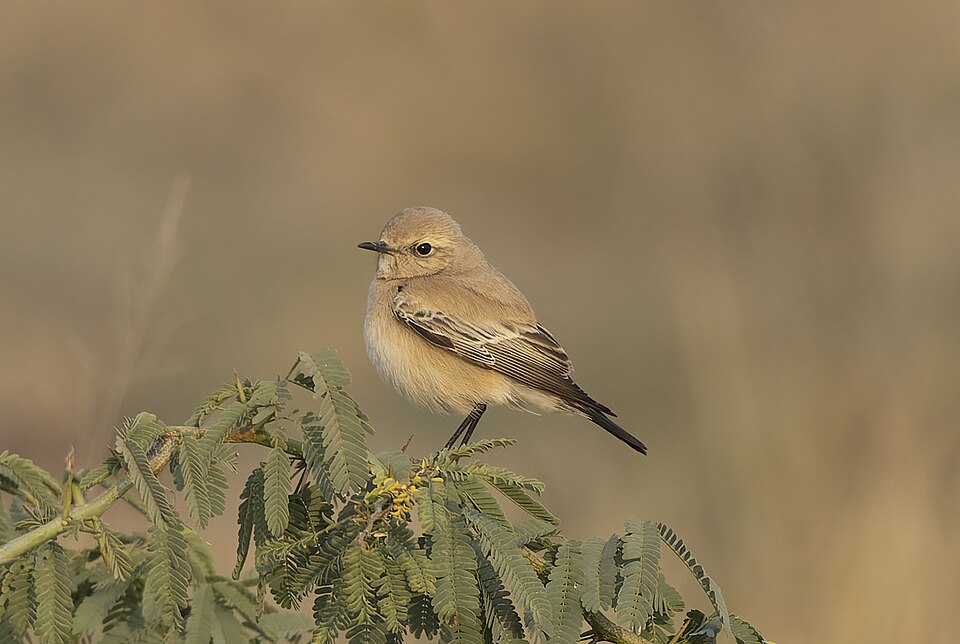
Desert Wheatear (Oenanthe deserti) Desert Wheatear

Media

Loading…

In short

The most reliable field mark to separate Northern Wheatear from Desert Wheatear is the tail pattern: Northern Wheatear of all ages shows a white rump and tail base with a bold black 'T' at the tip, while Desert Wheatear has an all-black tail to the level of the upper tail-coverts, with only the basal third of the tail feathers white. In flight or when the tail is spread, this difference is obvious and diagnostic. Males of both species can show black on the face and throat, but only Desert Wheatear males have black extending onto the shoulders and a more extensive black throat patch. Females and immatures are trickier, but the tail pattern remains the best separator. Both species are similar in size and shape, but Desert Wheatear tends to look paler and sandier overall, especially on the rump and upper tail-coverts. Voice and habitat can help, but are less reliable in vagrancy situations.

Identification tips

  1. Tail pattern is the single most reliable field mark: Northern Wheatear always shows a white rump and tail base with a bold black 'T' at the tip (inverted T), while Desert Wheatear has an all-black tail to the level of the upper tail-coverts, with only the basal third of the tail feathers white. This is visible in flight, when the tail is spread, or even when perched if the tail is cocked.
  2. Rump color: Northern Wheatear's rump is white, contrasting with the back. Desert Wheatear's rump and upper tail-coverts are sandy-buff, blending with the back and tail.
  3. Male face and throat: Male Northern Wheatear in summer has a black face mask and buff throat, but the black does not extend onto the shoulders. Male Desert Wheatear has a more extensive black area covering the face, throat, lores, ear-coverts, and extending onto the shoulders, with a distinct white supercilium.
  4. Female and immature throat: Female and immature Northern Wheatear lack black on the throat; female Desert Wheatear also lacks black on the throat, but the overall tone is sandier and greyer, with sandy rump and upper tail-coverts.
  5. Upperparts color: Northern Wheatear (male) is grey above in summer; Desert Wheatear is sandy-grey to buff above, often appearing paler and warmer.
  6. Underparts: Northern Wheatear is buff below; Desert Wheatear is sandy-buff on the breast and creamy-white on the belly and undertail.
  7. Juvenile plumage: Juvenile Desert Wheatear is speckled above due to pale centres and brown tips to feathers; juvenile Northern Wheatear is plainer brownish above.
  8. Wing color: Northern Wheatear has black wings (male) or dark brown (female); Desert Wheatear's primaries are black with white tips and edges, secondaries have broader white edges, but this is subtle and not a primary field mark.
  9. Bill, legs, and feet: Both species have black bills and legs; not useful for separation.
  10. Supercilium: Desert Wheatear (male) has a distinct pale buff supercilium; Northern Wheatear's supercilium is less pronounced.
  11. Size and shape: Both are similar in size and structure; do not rely on this for identification.
  12. Behavior: Both perch upright and sally for insects; Desert Wheatear may hover briefly, but this is not a reliable separator.
  13. Habitat: Desert Wheatear prefers arid, semi-desert habitats; Northern Wheatear is found in open stony country. Use with caution, especially for vagrants.
  14. Voice: Northern Wheatear gives a 'chack' call; Desert Wheatear's call is not described here, so do not rely on voice.
  15. Seasonal variation: Male Northern Wheatear in autumn resembles female but retains black wings; male Desert Wheatear's black throat may be partially obscured by white feather tips in winter, but tail pattern remains diagnostic.

Size

Both species are very similar in size, with Northern Wheatear measuring 14.5–16 cm in length and Desert Wheatear 14.5–15 cm. Wingspan is only given for Northern Wheatear (26–32 cm), but both are small, upright passerines. Weight overlaps: Northern Wheatear 17–30 g, Desert Wheatear 15–34 g. In the field, size is not a useful separator.

Plumage

The most diagnostic plumage feature at all ages is the tail pattern. Northern Wheatear (adult, juvenile, all plumages) shows a white rump and tail base with a black terminal band forming an inverted 'T'—the central tail feathers are black-tipped, but the outer tail feathers are mostly white with only the tips black. Desert Wheatear of all ages and sexes has an all-black tail up to the level of the upper tail-coverts, with only the basal third of the tail feathers white; this makes the tail look almost entirely black from above or below, especially when fanned.

Adult male Northern Wheatear in summer has grey upperparts, black wings, black face mask, and buff throat; in autumn, males resemble females but retain black wings. Adult male Desert Wheatear is paler sandy-grey above, with a white supercilium, black on the face and throat extending to the shoulders, and sandy-buff breast. Female Northern Wheatear is pale brown above, buff below, with darker brown wings; female Desert Wheatear is greyer above, buffer below, with sandy brown rump and upper tail-coverts, and lacks black on the throat. Juvenile Desert Wheatear is speckled above due to pale centres and brown tips to feathers; juvenile Northern Wheatear is plainer brownish. Both species have black legs and bills.

Behaviour

Both species perch upright on rocks, earth clods, or low bushes, and sally to the ground for insects. Desert Wheatear is noted for perching on bushes or tussocks and can hover briefly when catching prey. Both species can perform song-flights and are active, alert birds. Behavioral differences are subtle and not reliable for separation in the field.

Habitat

Northern Wheatear breeds in open stony country, often with sparse vegetation, across Europe, Asia, and parts of North America. Desert Wheatear is a bird of semi-deserts and arid regions, breeding in the Sahara, Arabian Peninsula, and Central Asia. In western Europe, Desert Wheatear is only a rare vagrant, so context can help, but both may occur in open, barren habitats when vagrant. Habitat is a supporting clue but not diagnostic where ranges overlap or for vagrants.

Voice

Northern Wheatear gives a typical 'chack' call and has a whistling, crackly song. Desert Wheatear's voice is not described in detail in the provided notes. Vocalizations are not a primary separator between these two species, especially for silent birds or vagrants.

Submit a better description

Use the same sections as the comparison. Your text is published immediately.

The most reliable field mark to separate Northern Wheatear from Desert Wheatear is the tail pattern: Northern Wheatear of all ages shows a white rump and tail base with a bold black 'T' at the tip, while Desert Wheatear has an all-black tail to the level of the upper tail-coverts, with only the basal third of the tail feathers white. In flight or when the tail is spread, this difference is obvious and diagnostic. Males of both species can show black on the face and throat, but only Desert Wheatear males have black extending onto the shoulders and a more extensive black throat patch. Females and immatures are trickier, but the tail pattern remains the best separator. Both species are similar in size and shape, but Desert Wheatear tends to look paler and sandier overall, especially on the rump and upper tail-coverts. Voice and habitat can help, but are less reliable in vagrancy situations.

  1. Tail pattern is the single most reliable field mark: Northern Wheatear always shows a white rump and tail base with a bold black 'T' at the tip (inverted T), while Desert Wheatear has an all-black tail to the level of the upper tail-coverts, with only the basal third of the tail feathers white. This is visible in flight, when the tail is spread, or even when perched if the tail is cocked.
  2. Rump color: Northern Wheatear's rump is white, contrasting with the back. Desert Wheatear's rump and upper tail-coverts are sandy-buff, blending with the back and tail.
  3. Male face and throat: Male Northern Wheatear in summer has a black face mask and buff throat, but the black does not extend onto the shoulders. Male Desert Wheatear has a more extensive black area covering the face, throat, lores, ear-coverts, and extending onto the shoulders, with a distinct white supercilium.
  4. Female and immature throat: Female and immature Northern Wheatear lack black on the throat; female Desert Wheatear also lacks black on the throat, but the overall tone is sandier and greyer, with sandy rump and upper tail-coverts.
  5. Upperparts color: Northern Wheatear (male) is grey above in summer; Desert Wheatear is sandy-grey to buff above, often appearing paler and warmer.
  6. Underparts: Northern Wheatear is buff below; Desert Wheatear is sandy-buff on the breast and creamy-white on the belly and undertail.
  7. Juvenile plumage: Juvenile Desert Wheatear is speckled above due to pale centres and brown tips to feathers; juvenile Northern Wheatear is plainer brownish above.
  8. Wing color: Northern Wheatear has black wings (male) or dark brown (female); Desert Wheatear's primaries are black with white tips and edges, secondaries have broader white edges, but this is subtle and not a primary field mark.
  9. Bill, legs, and feet: Both species have black bills and legs; not useful for separation.
  10. Supercilium: Desert Wheatear (male) has a distinct pale buff supercilium; Northern Wheatear's supercilium is less pronounced.
  11. Size and shape: Both are similar in size and structure; do not rely on this for identification.
  12. Behavior: Both perch upright and sally for insects; Desert Wheatear may hover briefly, but this is not a reliable separator.
  13. Habitat: Desert Wheatear prefers arid, semi-desert habitats; Northern Wheatear is found in open stony country. Use with caution, especially for vagrants.
  14. Voice: Northern Wheatear gives a 'chack' call; Desert Wheatear's call is not described here, so do not rely on voice.
  15. Seasonal variation: Male Northern Wheatear in autumn resembles female but retains black wings; male Desert Wheatear's black throat may be partially obscured by white feather tips in winter, but tail pattern remains diagnostic.

Both species are very similar in size, with Northern Wheatear measuring 14.5–16 cm in length and Desert Wheatear 14.5–15 cm. Wingspan is only given for Northern Wheatear (26–32 cm), but both are small, upright passerines. Weight overlaps: Northern Wheatear 17–30 g, Desert Wheatear 15–34 g. In the field, size is not a useful separator.

The most diagnostic plumage feature at all ages is the tail pattern. Northern Wheatear (adult, juvenile, all plumages) shows a white rump and tail base with a black terminal band forming an inverted 'T'—the central tail feathers are black-tipped, but the outer tail feathers are mostly white with only the tips black. Desert Wheatear of all ages and sexes has an all-black tail up to the level of the upper tail-coverts, with only the basal third of the tail feathers white; this makes the tail look almost entirely black from above or below, especially when fanned.

Adult male Northern Wheatear in summer has grey upperparts, black wings, black face mask, and buff throat; in autumn, males resemble females but retain black wings. Adult male Desert Wheatear is paler sandy-grey above, with a white supercilium, black on the face and throat extending to the shoulders, and sandy-buff breast. Female Northern Wheatear is pale brown above, buff below, with darker brown wings; female Desert Wheatear is greyer above, buffer below, with sandy brown rump and upper tail-coverts, and lacks black on the throat. Juvenile Desert Wheatear is speckled above due to pale centres and brown tips to feathers; juvenile Northern Wheatear is plainer brownish. Both species have black legs and bills.

Both species perch upright on rocks, earth clods, or low bushes, and sally to the ground for insects. Desert Wheatear is noted for perching on bushes or tussocks and can hover briefly when catching prey. Both species can perform song-flights and are active, alert birds. Behavioral differences are subtle and not reliable for separation in the field.

Northern Wheatear breeds in open stony country, often with sparse vegetation, across Europe, Asia, and parts of North America. Desert Wheatear is a bird of semi-deserts and arid regions, breeding in the Sahara, Arabian Peninsula, and Central Asia. In western Europe, Desert Wheatear is only a rare vagrant, so context can help, but both may occur in open, barren habitats when vagrant. Habitat is a supporting clue but not diagnostic where ranges overlap or for vagrants.

Northern Wheatear gives a typical 'chack' call and has a whistling, crackly song. Desert Wheatear's voice is not described in detail in the provided notes. Vocalizations are not a primary separator between these two species, especially for silent birds or vagrants.

Discard your changes?

You have unsaved edits. If you leave now, those changes will be lost.

Northern Wheatear · Desert Wheatear · My Tricky Birds