

Motmot

Northern Waterthrush vs Blackpoll Warbler

Parkesia noveboracensis versus Setophaga striata

Play a quiz with Northern Waterthrush and Blackpoll Warbler
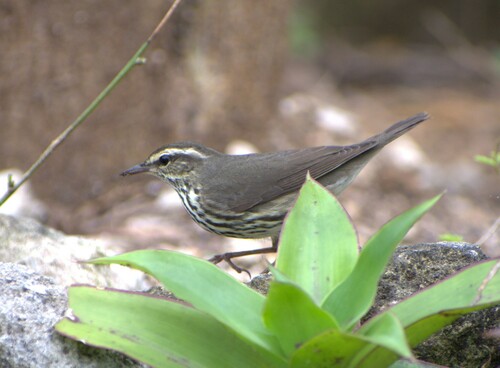
Northern Waterthrush (Parkesia noveboracensis) Northern Waterthrush
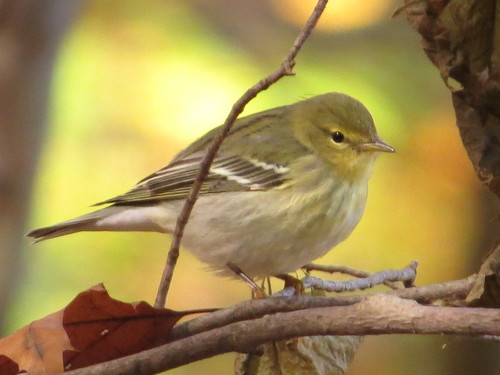
Blackpoll Warbler (Setophaga striata) Blackpoll Warbler

Media

Loading…

In short

The most reliable field mark to separate Northern Waterthrush from Blackpoll Warbler is the strong, continuous streaking below on the waterthrush versus the cleaner, white underparts with finer streaks (mostly on the sides) of the blackpoll, especially in breeding plumages. Juvenile and non-breeding Blackpolls can be confusing, but the waterthrush always shows a bold, pale supercilium and heavily streaked underparts, while Blackpolls have two white wing bars and often brighter legs. Structurally, the waterthrush is longer-billed and appears more elongated, with a habit of walking and tail-bobbing, unlike the more compact, perching Blackpoll. Habitat and behavior also help: waterthrushes are found near water and walk along the ground, while Blackpolls are canopy foragers. Voice is quite different, but may not always be heard.

Identification tips

  1. Underpart streaking: Northern Waterthrush always shows heavy, continuous dark streaks from throat to flanks (all ages/seasons); Blackpoll Warbler has clean white underparts with fine streaks mostly on the sides (breeding) or yellowish wash (immature/fall).
  2. Supercilium: Waterthrush has a bold, pale (white or buff) eyebrow stripe above the eye, contrasting with a brown crown; Blackpoll lacks this, instead showing a white cheek and black cap in breeding males, or a plain face in non-breeding/immature birds.
  3. Wing bars: Blackpoll Warbler always shows two white wing bars (all ages); Northern Waterthrush lacks wing bars, with plain brown wings.
  4. Bill shape: Waterthrush has a longer, heavier, and more pointed bill; Blackpoll's bill is shorter and finer.
  5. Leg color: Blackpoll Warbler has bright orangish-pink legs (especially in spring/summer); waterthrush legs are dark.
  6. Back color: Waterthrush has an evenly brown back; Blackpoll (breeding) has a dark-streaked brown back, and (non-breeding/immature) a greenish-olive back.
  7. Juvenile/fall confusion: Young Blackpolls are greenish above and yellowish below with wing bars; juvenile waterthrushes are buffier below but always heavily streaked and lack wing bars.
  8. Behavior: Waterthrushes walk (not hop) along the ground, bobbing their tails; Blackpolls hop and flit in trees, rarely on the ground, and do not bob their tails.
  9. Habitat: Waterthrushes are found near water, often on muddy banks; Blackpolls are usually in trees, especially in migration.
  10. Perched posture: Waterthrushes often appear elongated and horizontal; Blackpolls are more compact and upright.
  11. Voice: Waterthrush song is loud, emphatic, and falling; Blackpoll's is high, thin, and insect-like. Calls are also different, but may be hard to hear in the field.
  12. Size impression: Waterthrushes look heavier and longer-legged; Blackpolls are daintier and shorter-legged.
  13. Sex differences: Blackpoll males in breeding plumage are strikingly black-capped; females and immatures are duller but still show wing bars and lack the waterthrush's supercilium and streaking.
  14. Seasonal context: In late spring and summer, a black-capped, white-cheeked warbler is Blackpoll; a brown-crowned, streaky, supercilium-marked bird is waterthrush.
  15. Common pitfalls: Immature Blackpolls in fall can look brownish and streaky, but always check for wing bars (present in Blackpoll, absent in waterthrush) and the presence/absence of a strong supercilium.

Size

Both species are similar in length (Northern Waterthrush: 12–15 cm; Blackpoll Warbler: 12.5–15 cm), but the waterthrush is generally heavier (up to 25 g vs. Blackpoll's average 12–15 g) and more robust. The waterthrush has a longer bill (1.1–1.2 cm vs. Blackpoll's 0.8–1.2 cm) and longer tarsus (1.9–2.3 cm vs. Blackpoll's 1.8–2 cm), giving it a lankier, longer-legged look. Blackpolls are more compact, with shorter bills and legs, and often appear daintier and more upright when perched.

Plumage

Juvenile and immature Blackpoll Warblers show greenish heads, yellowish underparts (sometimes extending to the belly), and always have two white wing bars. In all ages, Blackpolls lack the continuous, heavy streaking below that is diagnostic of Northern Waterthrush. Adult breeding male Blackpolls have a striking black cap, white cheeks, and white underparts with fine black streaks mostly on the sides, plus two white wing bars. Females are duller but still show wing bars and lack the bold supercilium. Northern Waterthrushes of all ages have a strong white or buffy supercilium, brown crown, and heavily streaked underparts from throat to flanks. Juvenile waterthrushes have buffier underparts but retain the streaking and supercilium. Waterthrushes lack wing bars and have a plain brown back and wings. Blackpolls' orangish-pink legs are also distinctive, while waterthrushes have dark legs.

Behaviour

Northern Waterthrushes walk along the ground, often near water, constantly bobbing their tails and rear ends. They rarely hop and seldom perch high. Blackpoll Warblers are typical warblers: they forage by hopping and flitting among branches, mostly in the canopy, and do not bob their tails. Waterthrushes' teetering walk is unique among warblers and diagnostic in the right context.

Habitat

Northern Waterthrushes are closely tied to wet habitats—stream edges, bogs, and wet woods—where they walk along muddy banks. Blackpoll Warblers breed in northern coniferous forests and migrate through a variety of wooded habitats, often high in the canopy and away from water. Finding a streaky, brownish warbler walking along a stream bank almost always points to Northern Waterthrush.

Voice

Northern Waterthrush gives a loud, emphatic, clear song of falling, accelerating chirps, and a sharp 'spwik' call. Blackpoll Warbler's song is a high, thin, almost insect-like series of 'tsi tsi tsi' notes, very different in quality. Flight calls differ: waterthrush gives a buzzy, rising 'zzip', while Blackpoll's is a thin, high 'tseep'.

Submit a better description

Use the same sections as the comparison. Your text is published immediately.

The most reliable field mark to separate Northern Waterthrush from Blackpoll Warbler is the strong, continuous streaking below on the waterthrush versus the cleaner, white underparts with finer streaks (mostly on the sides) of the blackpoll, especially in breeding plumages. Juvenile and non-breeding Blackpolls can be confusing, but the waterthrush always shows a bold, pale supercilium and heavily streaked underparts, while Blackpolls have two white wing bars and often brighter legs. Structurally, the waterthrush is longer-billed and appears more elongated, with a habit of walking and tail-bobbing, unlike the more compact, perching Blackpoll. Habitat and behavior also help: waterthrushes are found near water and walk along the ground, while Blackpolls are canopy foragers. Voice is quite different, but may not always be heard.

  1. Underpart streaking: Northern Waterthrush always shows heavy, continuous dark streaks from throat to flanks (all ages/seasons); Blackpoll Warbler has clean white underparts with fine streaks mostly on the sides (breeding) or yellowish wash (immature/fall).
  2. Supercilium: Waterthrush has a bold, pale (white or buff) eyebrow stripe above the eye, contrasting with a brown crown; Blackpoll lacks this, instead showing a white cheek and black cap in breeding males, or a plain face in non-breeding/immature birds.
  3. Wing bars: Blackpoll Warbler always shows two white wing bars (all ages); Northern Waterthrush lacks wing bars, with plain brown wings.
  4. Bill shape: Waterthrush has a longer, heavier, and more pointed bill; Blackpoll's bill is shorter and finer.
  5. Leg color: Blackpoll Warbler has bright orangish-pink legs (especially in spring/summer); waterthrush legs are dark.
  6. Back color: Waterthrush has an evenly brown back; Blackpoll (breeding) has a dark-streaked brown back, and (non-breeding/immature) a greenish-olive back.
  7. Juvenile/fall confusion: Young Blackpolls are greenish above and yellowish below with wing bars; juvenile waterthrushes are buffier below but always heavily streaked and lack wing bars.
  8. Behavior: Waterthrushes walk (not hop) along the ground, bobbing their tails; Blackpolls hop and flit in trees, rarely on the ground, and do not bob their tails.
  9. Habitat: Waterthrushes are found near water, often on muddy banks; Blackpolls are usually in trees, especially in migration.
  10. Perched posture: Waterthrushes often appear elongated and horizontal; Blackpolls are more compact and upright.
  11. Voice: Waterthrush song is loud, emphatic, and falling; Blackpoll's is high, thin, and insect-like. Calls are also different, but may be hard to hear in the field.
  12. Size impression: Waterthrushes look heavier and longer-legged; Blackpolls are daintier and shorter-legged.
  13. Sex differences: Blackpoll males in breeding plumage are strikingly black-capped; females and immatures are duller but still show wing bars and lack the waterthrush's supercilium and streaking.
  14. Seasonal context: In late spring and summer, a black-capped, white-cheeked warbler is Blackpoll; a brown-crowned, streaky, supercilium-marked bird is waterthrush.
  15. Common pitfalls: Immature Blackpolls in fall can look brownish and streaky, but always check for wing bars (present in Blackpoll, absent in waterthrush) and the presence/absence of a strong supercilium.

Both species are similar in length (Northern Waterthrush: 12–15 cm; Blackpoll Warbler: 12.5–15 cm), but the waterthrush is generally heavier (up to 25 g vs. Blackpoll's average 12–15 g) and more robust. The waterthrush has a longer bill (1.1–1.2 cm vs. Blackpoll's 0.8–1.2 cm) and longer tarsus (1.9–2.3 cm vs. Blackpoll's 1.8–2 cm), giving it a lankier, longer-legged look. Blackpolls are more compact, with shorter bills and legs, and often appear daintier and more upright when perched.

Juvenile and immature Blackpoll Warblers show greenish heads, yellowish underparts (sometimes extending to the belly), and always have two white wing bars. In all ages, Blackpolls lack the continuous, heavy streaking below that is diagnostic of Northern Waterthrush. Adult breeding male Blackpolls have a striking black cap, white cheeks, and white underparts with fine black streaks mostly on the sides, plus two white wing bars. Females are duller but still show wing bars and lack the bold supercilium. Northern Waterthrushes of all ages have a strong white or buffy supercilium, brown crown, and heavily streaked underparts from throat to flanks. Juvenile waterthrushes have buffier underparts but retain the streaking and supercilium. Waterthrushes lack wing bars and have a plain brown back and wings. Blackpolls' orangish-pink legs are also distinctive, while waterthrushes have dark legs.

Northern Waterthrushes walk along the ground, often near water, constantly bobbing their tails and rear ends. They rarely hop and seldom perch high. Blackpoll Warblers are typical warblers: they forage by hopping and flitting among branches, mostly in the canopy, and do not bob their tails. Waterthrushes' teetering walk is unique among warblers and diagnostic in the right context.

Northern Waterthrushes are closely tied to wet habitats—stream edges, bogs, and wet woods—where they walk along muddy banks. Blackpoll Warblers breed in northern coniferous forests and migrate through a variety of wooded habitats, often high in the canopy and away from water. Finding a streaky, brownish warbler walking along a stream bank almost always points to Northern Waterthrush.

Northern Waterthrush gives a loud, emphatic, clear song of falling, accelerating chirps, and a sharp 'spwik' call. Blackpoll Warbler's song is a high, thin, almost insect-like series of 'tsi tsi tsi' notes, very different in quality. Flight calls differ: waterthrush gives a buzzy, rising 'zzip', while Blackpoll's is a thin, high 'tseep'.

Discard your changes?

You have unsaved edits. If you leave now, those changes will be lost.

Northern Waterthrush · Blackpoll Warbler · My Tricky Birds