

Motmot

Northern Lapwing vs Sociable Lapwing

Vanellus vanellus versus Vanellus gregarius

Play a quiz with Northern Lapwing and Sociable Lapwing
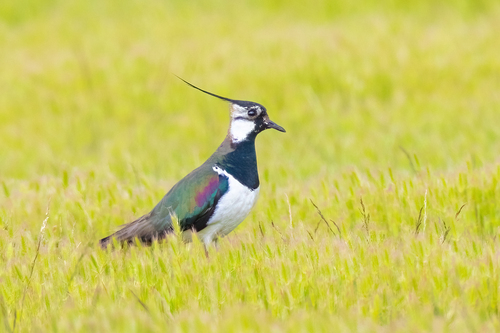
Northern Lapwing (Vanellus vanellus) Northern Lapwing
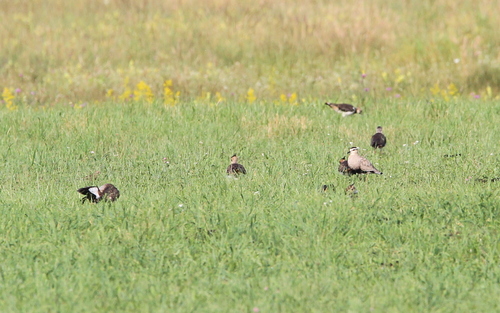
Sociable Lapwing (Vanellus gregarius) Sociable Lapwing

Media

Loading…

In short

The most reliable field mark to separate Northern Lapwing from Sociable Lapwing is the head and crest: Northern Lapwing (all ages) shows a distinctive long, wispy crest and a bold black-and-white face, while Sociable Lapwing lacks a true crest and instead has a sharply defined black crown and eyestripe bordered by white, especially in adults. In flight, Sociable Lapwing shows a white tail with a black terminal band and brown, white, and grey wings, whereas Northern Lapwing has rounded, broad wings with a greenish gloss and lacks the Sociable's crisp tail pattern. Juveniles of Sociable Lapwing have a 'scaly' back, while young Northern Lapwings look more like duller adults. Structure and leg color also help: Sociable Lapwing has longer, blackish legs, while Northern Lapwing is shorter-legged. Both species can occur together on migration, but their overall jizz and plumage details are distinct with careful observation.

Identification tips

  1. Crest: Northern Lapwing (all ages) has a long, wispy crest; Sociable Lapwing lacks a true crest, showing only a slightly raised crown. This is the quickest field check at any distance.
  2. Head Pattern (adult/immature): Sociable Lapwing has a sharply defined black crown and eyestripe, both bordered with white, giving a striking striped look; Northern Lapwing has a mostly white face with a black crown and throat, but lacks the Sociable's crisp stripes.
  3. Juvenile Back Pattern: Juvenile Sociable Lapwing shows a 'scaly' back with pale edges to the feathers, and only faint traces of the adult head pattern; juvenile Northern Lapwing resembles a duller adult, lacking the scaly effect.
  4. Tail Pattern in Flight: Sociable Lapwing (all ages) has a white tail with a sharp black terminal band, visible in flight and when preening; Northern Lapwing's tail is less contrasting, lacking the crisp black band.
  5. Upperwing in Flight: Sociable Lapwing shows brown, white, and grey wings in flight; Northern Lapwing has broad, rounded wings with a green-glossed black upperwing and lacks the Sociable's tricolored look.
  6. Leg Color and Length: Sociable Lapwing has long, blackish legs, making it appear taller and more upright; Northern Lapwing is the shortest-legged lapwing, with legs that look relatively short and dark.
  7. Bill: Sociable Lapwing has a short, black bill; Northern Lapwing's bill is similar in length but may appear slightly heavier at close range.
  8. Breast and Underparts (breeding plumage): Breeding Sociable Lapwing has a black lower breast fading to chestnut near the vent; Northern Lapwing male has a black throat and breast, but the black does not fade to chestnut.
  9. Back Color: Northern Lapwing's back is green-glossed, especially in good light; Sociable Lapwing's back is brownish to greyish, sometimes slightly glossy in summer.
  10. Face Pattern (non-breeding): Non-breeding Sociable Lapwing still shows a distinctive head pattern, while Northern Lapwing remains boldly black-and-white but without the Sociable's stripes.
  11. Voice: Northern Lapwing's 'pee-wit' call is loud and musical; Sociable Lapwing gives a harsh 'kereck', which is less likely to be confused.
  12. Flight Style: Northern Lapwing has a floppy, buoyant, and erratic flight with broad, rounded wings; Sociable Lapwing's flight is more direct and less acrobatic.
  13. Habitat: Northern Lapwing prefers wetter grasslands and pastures; Sociable Lapwing is more often found in dry steppes and arid fields, though both can overlap on migration.
  14. Seasonal Overlap: Both species can occur together in migration periods, especially in the Middle East and occasionally in Europe; careful attention to head pattern and tail in flight is crucial in mixed flocks.
  15. Abundance: Northern Lapwing is common and widespread in Europe; Sociable Lapwing is rare and local, so context and numbers can help, but always confirm with field marks.

Size

Both species are similar in length (Northern Lapwing: 28–33 cm, Sociable Lapwing: 27–30 cm), but Sociable Lapwing is slightly lighter-billed and longer-legged. Body mass for Sociable Lapwing averages 226 g [wikidata], which is within the range for Northern Lapwing (128–330 g), so size alone is not diagnostic. In the field, Northern Lapwing often looks bulkier and more compact, while Sociable Lapwing appears more slender and upright due to its longer legs.

Plumage

Juvenile Sociable Lapwings show a 'scaly' appearance on the back due to pale-edged feathers and have only faint traces of the adult head pattern; this is not seen in Northern Lapwing juveniles, which instead resemble duller, less crisply marked adults. In flight, Sociable Lapwing of all ages shows a white tail with a sharp black terminal band and contrasting brown, white, and grey wings, making it stand out from Northern Lapwing, which has a green-glossed black upperwing, broad rounded wings, and lacks the Sociable's tail pattern. Adult Northern Lapwing males have a long crest, black throat and breast, and a greenish back, while Sociable Lapwing adults have a black crown and eyestripe bordered by white, white underparts, and in breeding plumage, a black lower breast fading to chestnut near the vent. Non-breeding Sociable Lapwings are paler brown above with a distinctive head pattern, while Northern Lapwing remains boldly black-and-white with a greenish gloss and less seasonal change.

Behaviour

Northern Lapwing is known for its tumbling, acrobatic display flights and constant calling during the breeding season. It often feeds in flocks on open fields, showing a more erratic, buoyant flight with broad, rounded wings. Sociable Lapwing is also gregarious, especially on migration and in winter, sometimes forming large flocks. Its flight is more direct and less erratic, and it often stands more upright due to its longer legs. Both species feed by picking at the ground in open habitats, but Sociable Lapwing's movements may appear more deliberate and less 'floppy' than Northern Lapwing.

Habitat

Northern Lapwing is widespread in temperate Eurosiberia and favors wet grasslands, rough pasture, and arable fields, often in lowland areas. Sociable Lapwing breeds in the steppes of Kazakhstan and prefers arid grasslands, steppes, and cultivated fields, avoiding wetter habitats favored by Northern Lapwing. On migration and in winter, both can occur together in open fields, but Sociable Lapwing is much rarer and more localized, especially in Europe.

Voice

Northern Lapwing is highly vocal, especially in the breeding season, with a loud, shrill 'pee-wit' call and a wheezy, tumbling display song ('pee-wit, wit wit, eeze wit'). Sociable Lapwing's call is a harsh 'kereck', less musical and more grating than Northern Lapwing's. In mixed flocks, the distinctive 'pee-wit' of Northern Lapwing is a strong clue, while Sociable Lapwing is generally quieter.

Submit a better description

Use the same sections as the comparison. Your text is published immediately.

The most reliable field mark to separate Northern Lapwing from Sociable Lapwing is the head and crest: Northern Lapwing (all ages) shows a distinctive long, wispy crest and a bold black-and-white face, while Sociable Lapwing lacks a true crest and instead has a sharply defined black crown and eyestripe bordered by white, especially in adults. In flight, Sociable Lapwing shows a white tail with a black terminal band and brown, white, and grey wings, whereas Northern Lapwing has rounded, broad wings with a greenish gloss and lacks the Sociable's crisp tail pattern. Juveniles of Sociable Lapwing have a 'scaly' back, while young Northern Lapwings look more like duller adults. Structure and leg color also help: Sociable Lapwing has longer, blackish legs, while Northern Lapwing is shorter-legged. Both species can occur together on migration, but their overall jizz and plumage details are distinct with careful observation.

  1. Crest: Northern Lapwing (all ages) has a long, wispy crest; Sociable Lapwing lacks a true crest, showing only a slightly raised crown. This is the quickest field check at any distance.
  2. Head Pattern (adult/immature): Sociable Lapwing has a sharply defined black crown and eyestripe, both bordered with white, giving a striking striped look; Northern Lapwing has a mostly white face with a black crown and throat, but lacks the Sociable's crisp stripes.
  3. Juvenile Back Pattern: Juvenile Sociable Lapwing shows a 'scaly' back with pale edges to the feathers, and only faint traces of the adult head pattern; juvenile Northern Lapwing resembles a duller adult, lacking the scaly effect.
  4. Tail Pattern in Flight: Sociable Lapwing (all ages) has a white tail with a sharp black terminal band, visible in flight and when preening; Northern Lapwing's tail is less contrasting, lacking the crisp black band.
  5. Upperwing in Flight: Sociable Lapwing shows brown, white, and grey wings in flight; Northern Lapwing has broad, rounded wings with a green-glossed black upperwing and lacks the Sociable's tricolored look.
  6. Leg Color and Length: Sociable Lapwing has long, blackish legs, making it appear taller and more upright; Northern Lapwing is the shortest-legged lapwing, with legs that look relatively short and dark.
  7. Bill: Sociable Lapwing has a short, black bill; Northern Lapwing's bill is similar in length but may appear slightly heavier at close range.
  8. Breast and Underparts (breeding plumage): Breeding Sociable Lapwing has a black lower breast fading to chestnut near the vent; Northern Lapwing male has a black throat and breast, but the black does not fade to chestnut.
  9. Back Color: Northern Lapwing's back is green-glossed, especially in good light; Sociable Lapwing's back is brownish to greyish, sometimes slightly glossy in summer.
  10. Face Pattern (non-breeding): Non-breeding Sociable Lapwing still shows a distinctive head pattern, while Northern Lapwing remains boldly black-and-white but without the Sociable's stripes.
  11. Voice: Northern Lapwing's 'pee-wit' call is loud and musical; Sociable Lapwing gives a harsh 'kereck', which is less likely to be confused.
  12. Flight Style: Northern Lapwing has a floppy, buoyant, and erratic flight with broad, rounded wings; Sociable Lapwing's flight is more direct and less acrobatic.
  13. Habitat: Northern Lapwing prefers wetter grasslands and pastures; Sociable Lapwing is more often found in dry steppes and arid fields, though both can overlap on migration.
  14. Seasonal Overlap: Both species can occur together in migration periods, especially in the Middle East and occasionally in Europe; careful attention to head pattern and tail in flight is crucial in mixed flocks.
  15. Abundance: Northern Lapwing is common and widespread in Europe; Sociable Lapwing is rare and local, so context and numbers can help, but always confirm with field marks.

Both species are similar in length (Northern Lapwing: 28–33 cm, Sociable Lapwing: 27–30 cm), but Sociable Lapwing is slightly lighter-billed and longer-legged. Body mass for Sociable Lapwing averages 226 g [wikidata], which is within the range for Northern Lapwing (128–330 g), so size alone is not diagnostic. In the field, Northern Lapwing often looks bulkier and more compact, while Sociable Lapwing appears more slender and upright due to its longer legs.

Juvenile Sociable Lapwings show a 'scaly' appearance on the back due to pale-edged feathers and have only faint traces of the adult head pattern; this is not seen in Northern Lapwing juveniles, which instead resemble duller, less crisply marked adults. In flight, Sociable Lapwing of all ages shows a white tail with a sharp black terminal band and contrasting brown, white, and grey wings, making it stand out from Northern Lapwing, which has a green-glossed black upperwing, broad rounded wings, and lacks the Sociable's tail pattern. Adult Northern Lapwing males have a long crest, black throat and breast, and a greenish back, while Sociable Lapwing adults have a black crown and eyestripe bordered by white, white underparts, and in breeding plumage, a black lower breast fading to chestnut near the vent. Non-breeding Sociable Lapwings are paler brown above with a distinctive head pattern, while Northern Lapwing remains boldly black-and-white with a greenish gloss and less seasonal change.

Northern Lapwing is known for its tumbling, acrobatic display flights and constant calling during the breeding season. It often feeds in flocks on open fields, showing a more erratic, buoyant flight with broad, rounded wings. Sociable Lapwing is also gregarious, especially on migration and in winter, sometimes forming large flocks. Its flight is more direct and less erratic, and it often stands more upright due to its longer legs. Both species feed by picking at the ground in open habitats, but Sociable Lapwing's movements may appear more deliberate and less 'floppy' than Northern Lapwing.

Northern Lapwing is widespread in temperate Eurosiberia and favors wet grasslands, rough pasture, and arable fields, often in lowland areas. Sociable Lapwing breeds in the steppes of Kazakhstan and prefers arid grasslands, steppes, and cultivated fields, avoiding wetter habitats favored by Northern Lapwing. On migration and in winter, both can occur together in open fields, but Sociable Lapwing is much rarer and more localized, especially in Europe.

Northern Lapwing is highly vocal, especially in the breeding season, with a loud, shrill 'pee-wit' call and a wheezy, tumbling display song ('pee-wit, wit wit, eeze wit'). Sociable Lapwing's call is a harsh 'kereck', less musical and more grating than Northern Lapwing's. In mixed flocks, the distinctive 'pee-wit' of Northern Lapwing is a strong clue, while Sociable Lapwing is generally quieter.

Discard your changes?

You have unsaved edits. If you leave now, those changes will be lost.

Northern Lapwing · Sociable Lapwing · My Tricky Birds