

Northern Lapwing vs Kentish Plover
Vanellus vanellus versus Anarhynchus alexandrinus
Play a quiz with Northern Lapwing and Kentish Plover
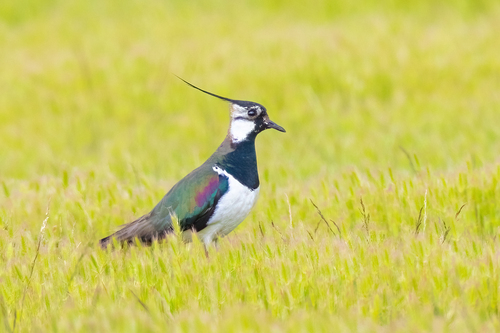 Northern Lapwing
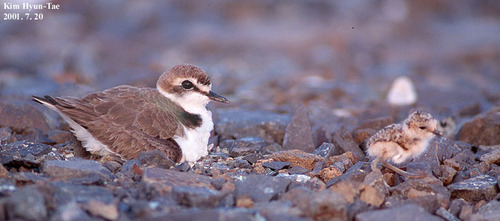 Kentish Plover
In short
Northern Lapwing and Kentish Plover are easily separated by overall structure and plumage, but confusion can arise at a distance or with immatures. The lapwing is a much larger, round-winged bird with a prominent crest and a striking black-and-white pattern, especially in flight. Kentish Plover is a small, compact shorebird with a plain, pale look, dark legs and bill, and lacks any crest or iridescence. If you see a green-glossed back, long crest, or broad rounded wings, it's a lapwing; a small, quick-moving bird with a dark bill and legs on open sand or mud is a Kentish Plover.
Identification tips
- Size is the quickest separator: Lapwing is much larger and bulkier than Kentish Plover; even at a distance, the lapwing's size is obvious among waders.
- Crested vs. uncrested: Lapwing always shows a crest (long in males, shorter in females/juveniles); Kentish Plover never has a crest.
- Wing shape in flight: Lapwing has broad, rounded wings and a slow, buoyant flight; Kentish Plover has narrow, pointed wings and a fast, direct flight.
- Plumage contrast: Lapwing is boldly black and white with a green-glossed back; Kentish Plover is pale brown above, white below, and lacks iridescence.
- Face pattern: Lapwing has a striking black-and-white face, especially in males; Kentish Plover males have a dark head bar and ear coverts, but females are much plainer.
- Breast pattern: Lapwing has a solid black breast band (in males), while Kentish Plover males have two incomplete dark breast-bands; females lack strong breast markings.
- Bill and legs: Lapwing has relatively short, pale legs for its size; Kentish Plover has dark, slender legs and a fine dark bill.
- Habitat: Lapwing is found in grassy fields and farmland, rarely on open sand; Kentish Plover is on sandy beaches, salt flats, and lagoons.
- Behavior: Lapwing often flocks and displays with slow, tumbling flight; Kentish Plover runs quickly, stops, and dashes again, rarely flocking in large numbers.
- Vocalization: Loud, repeated "pee-wit" calls indicate lapwing; Kentish Plover is generally quiet.
- Sexual dimorphism: Lapwing sexes are similar except for crest length and head contrast; Kentish Plover males are more strongly marked in breeding season, but this fades and females are always paler.
- Juvenile confusion: Juvenile lapwings look like duller adults but still show the crest and black-and-white pattern; juvenile Kentish Plovers are always plain and lack any crest or iridescence.
- Context: If the bird is among other small shorebirds on a beach, it's likely a Kentish Plover; if in a grassy or arable field, especially in a flock, it's likely a lapwing.
- Flight impression: Lapwing's flight is floppy and buoyant; Kentish Plover's is rapid and direct.
- When in doubt: Look for the lapwing's green gloss and crest, or the plover's small size, plainness, and dark bill/legs.
Size
Northern Lapwing is dramatically larger (28–33 cm long, 128–330 g) than Kentish Plover (body mass ~47 g) [wikipedia][wikidata]. Lapwing has a wingspan of 67–87 cm, while Kentish Plover is much smaller and lighter, appearing delicate and compact. In the field, lapwing's size and bulk are obvious, especially in flight or when standing near other waders. Kentish Plover is one of the smallest plovers, never approaching the lapwing's size.
Plumage
No age-specific upperwing pattern is described for either species in the provided notes, but adult lapwings of both sexes show a bold black-and-white pattern with a green-glossed back and a long, wispy crest. The face is white with strong black contrasts, especially in males, and the wings are broad and rounded. Juvenile and female lapwings have shorter crests and less distinct head markings, but still show the overall black-and-white contrast and greenish back. Kentish Plover adults are pale below and light brown above, with a white underside, dark legs, and a dark bill. Males in breeding plumage show a black horizontal head bar, two incomplete dark breast-bands, black ear coverts, and a rufous nape and crown; females are much paler, with less pronounced markings. Both sexes lack any crest, iridescence, or bold wing pattern. In all ages, Kentish Plover is much plainer and lacks the lapwing's dramatic contrasts.
Behaviour
Lapwings are often seen in flocks, especially outside the breeding season, and display slow, tumbling, buoyant flight with broad, rounded wings. They are vocal and conspicuous, especially during breeding displays. Kentish Plovers are more likely to be seen singly or in small groups, running quickly across open sand or mud, often pausing and then dashing again. Their flight is fast and direct, typical of small plovers, and they are less likely to perform dramatic aerial displays.
Habitat
Northern Lapwing prefers rough grassland, agricultural fields, and sometimes wet meadows, often away from the immediate shoreline. It is rarely found on bare sand or tidal flats. Kentish Plover is a classic shorebird of open sandy beaches, saline lakes, lagoons, and coastal flats, often on bare sand or mud with little vegetation. If you see the bird on a sandy beach or salt flat, especially near water, it's likely a Kentish Plover; in grassy fields or farmland, it's much more likely to be a lapwing.
Voice
Lapwing is very vocal, especially in the breeding season, with a loud, shrill "pee-wit" call and a variety of squeaking or mewing sounds. Displaying males add a wheezy, varied call during flight. Kentish Plover is much quieter, with no distinctive or loud call described in the provided notes. If you hear a repeated, far-carrying "pee-wit" or similar, it's a lapwing.