

Motmot

Northern Lapwing vs Eurasian Skylark

Vanellus vanellus versus Alauda arvensis

Play a quiz with Northern Lapwing and Eurasian Skylark
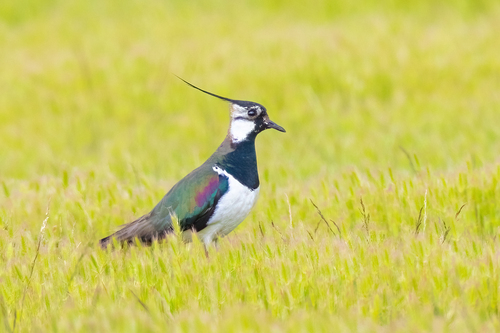
Northern Lapwing (Vanellus vanellus) Northern Lapwing
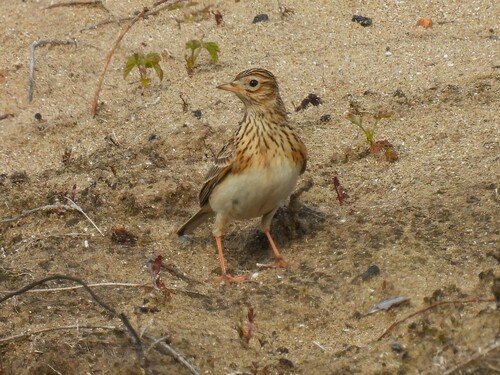
Eurasian Skylark (Alauda arvensis) Eurasian Skylark

Media

Loading…

In short

The most reliable separation between Northern Lapwing and Eurasian Skylark is structural: lapwings are large, broad-winged waders with a long, wispy crest and a striking black-and-white upperwing pattern, while skylarks are much smaller, brownish passerines with a short, blunt crest and plain wings. In flight, lapwings show rounded wings and a strong white-and-black contrast, especially obvious in all plumages, whereas skylarks have short, broad wings with subtle white edges on the tail and rear wing, visible mainly as they fly away. Perched, the lapwing’s green-glossed back, bold face pattern, and long crest are distinctive, while the skylark is streaky brown above and pale below. Voice and habitat also differ markedly, with lapwings calling loudly over wet fields and skylarks singing high overhead in open farmland.

Identification tips

  1. Size and shape: Lapwing is much larger and bulkier than skylark, with a broad, rounded wing and upright stance. Skylark is small, slender, and compact.
  2. Crest: Lapwing has a long, wispy crest (longest in adult males), always obvious when perched. Skylark’s crest is short, blunt, and often held flat, only occasionally raised.
  3. Wing pattern in flight (all ages): Lapwing shows bold black-and-white wings, with white trailing edge and black primaries; skylark’s wings are plain brown with only subtle white on the rear edge, visible mainly from behind.
  4. Tail: Skylark’s tail is short with white edges, visible as it flies away. Lapwing’s tail is relatively short and rounded, but never shows the same white pattern as skylark.
  5. Back color: Lapwing’s back is iridescent green, especially in good light; skylark is always dull brown and streaked.
  6. Face pattern: Lapwing has a striking black-and-white face, with black crown, throat, and breast in males; skylark’s face is plain with a pale supercilium and no strong contrast.
  7. Legs: Lapwing has short, dark legs; skylark’s legs are pale and fine, but this is rarely diagnostic in the field.
  8. Flight style: Lapwing’s flight is slow, floppy, and looping, especially in display; skylark’s is fluttery, direct, and often involves long, hovering ascents.
  9. Perched posture: Lapwing stands tall and upright, often in the open; skylark crouches low, blending into the ground.
  10. Habitat: Lapwing is found in wet fields and marshes; skylark in dry, open farmland and grassland.
  11. Voice: Lapwing calls "pee-wit" or "peewit" loudly; skylark sings a long, musical warble from high overhead.
  12. Seasonal context: Lapwing flocks are common in winter and migration, often in wet fields; skylark is present year-round in many areas, but singing males are most obvious in spring and summer.
  13. Sex/age confusion: Female and juvenile lapwings have shorter crests and duller head markings, but still show the bold wing pattern and green back. Juvenile skylarks are just as plain as adults, with no bold marks.
  14. Common pitfalls: Distant lapwings on the ground can look dark and dumpy, but the crest and face pattern are usually visible with patience. Skylarks rarely show themselves well on the ground, but never have lapwing’s bold pattern or size.
  15. Flock behavior: Lapwings often gather in large, noisy flocks; skylarks are usually solitary or in small groups, except in winter.

Size

Northern Lapwing is much larger (28–33 cm length, 67–87 cm wingspan, 128–330 g) than Eurasian Skylark (18–19 cm length, much smaller mass and wingspan) [wikipedia][avonet][wikidata]. Lapwing is a chunky, short-legged wader; skylark is a small, slender songbird. Even at a distance, lapwing’s size and bulk are apparent, especially in flight, where it dwarfs the skylark.

Plumage

Juvenile and adult Northern Lapwings of both sexes show a bold black-and-white wing pattern in flight: black primaries, white underwings, and a broad white trailing edge are visible from below and above. The back is iridescent green, and the face shows strong black-and-white contrast, with a long, wispy crest (longest in adult males, shorter in females/young). Eurasian Skylark of all ages is much plainer: brown above, paler below, with a short, blunt crest that can be raised or lowered. In flight, skylark shows a short tail and short, broad wings; the only white is a subtle edging to the tail and rear wing, visible mainly from behind. No age or sex of skylark ever shows the lapwing’s bold wing pattern, iridescence, or face contrast. Skylark’s plumage is always streaky and cryptic, never glossy or sharply marked.

Behaviour

Northern Lapwing often feeds and walks on wet ground, sometimes in flocks, and is conspicuous in display flight with slow, floppy wingbeats and acrobatic tumbles. When perched, it stands upright, showing off its crest and bold markings. Eurasian Skylark is usually seen on the ground in open fields or heard singing high overhead; its flight is direct and fluttery, with frequent hovering. Skylark rarely perches in the open for long and is much less showy in its movements. Lapwing’s display flight is erratic and looping, while skylark’s is a steady, hovering ascent.

Habitat

Lapwings favor wet grasslands, marshes, and damp agricultural fields, especially during breeding and migration. They are often found in flocks in open, low-lying areas. Skylarks prefer dry, open farmland, heath, and grassland, avoiding wet habitats. If you see a bird in a wet, muddy field, lapwing is far more likely; in dry, arable land, skylark is the default.

Voice

Lapwing’s call is a loud, shrill "pee-wit" or "peewit," often repeated in display and contact, and accompanied by squeaks and mews. Skylark’s song is a long, bubbling warble delivered in sustained, hovering flight high above the ground—often lasting several minutes. The two voices are completely different: lapwing is sharp and simple, skylark is musical and continuous. Skylark rarely calls from the ground, while lapwing is vocal both on the ground and in flight.

Submit a better description

Use the same sections as the comparison. Your text is published immediately.

The most reliable separation between Northern Lapwing and Eurasian Skylark is structural: lapwings are large, broad-winged waders with a long, wispy crest and a striking black-and-white upperwing pattern, while skylarks are much smaller, brownish passerines with a short, blunt crest and plain wings. In flight, lapwings show rounded wings and a strong white-and-black contrast, especially obvious in all plumages, whereas skylarks have short, broad wings with subtle white edges on the tail and rear wing, visible mainly as they fly away. Perched, the lapwing’s green-glossed back, bold face pattern, and long crest are distinctive, while the skylark is streaky brown above and pale below. Voice and habitat also differ markedly, with lapwings calling loudly over wet fields and skylarks singing high overhead in open farmland.

  1. Size and shape: Lapwing is much larger and bulkier than skylark, with a broad, rounded wing and upright stance. Skylark is small, slender, and compact.
  2. Crest: Lapwing has a long, wispy crest (longest in adult males), always obvious when perched. Skylark’s crest is short, blunt, and often held flat, only occasionally raised.
  3. Wing pattern in flight (all ages): Lapwing shows bold black-and-white wings, with white trailing edge and black primaries; skylark’s wings are plain brown with only subtle white on the rear edge, visible mainly from behind.
  4. Tail: Skylark’s tail is short with white edges, visible as it flies away. Lapwing’s tail is relatively short and rounded, but never shows the same white pattern as skylark.
  5. Back color: Lapwing’s back is iridescent green, especially in good light; skylark is always dull brown and streaked.
  6. Face pattern: Lapwing has a striking black-and-white face, with black crown, throat, and breast in males; skylark’s face is plain with a pale supercilium and no strong contrast.
  7. Legs: Lapwing has short, dark legs; skylark’s legs are pale and fine, but this is rarely diagnostic in the field.
  8. Flight style: Lapwing’s flight is slow, floppy, and looping, especially in display; skylark’s is fluttery, direct, and often involves long, hovering ascents.
  9. Perched posture: Lapwing stands tall and upright, often in the open; skylark crouches low, blending into the ground.
  10. Habitat: Lapwing is found in wet fields and marshes; skylark in dry, open farmland and grassland.
  11. Voice: Lapwing calls "pee-wit" or "peewit" loudly; skylark sings a long, musical warble from high overhead.
  12. Seasonal context: Lapwing flocks are common in winter and migration, often in wet fields; skylark is present year-round in many areas, but singing males are most obvious in spring and summer.
  13. Sex/age confusion: Female and juvenile lapwings have shorter crests and duller head markings, but still show the bold wing pattern and green back. Juvenile skylarks are just as plain as adults, with no bold marks.
  14. Common pitfalls: Distant lapwings on the ground can look dark and dumpy, but the crest and face pattern are usually visible with patience. Skylarks rarely show themselves well on the ground, but never have lapwing’s bold pattern or size.
  15. Flock behavior: Lapwings often gather in large, noisy flocks; skylarks are usually solitary or in small groups, except in winter.

Northern Lapwing is much larger (28–33 cm length, 67–87 cm wingspan, 128–330 g) than Eurasian Skylark (18–19 cm length, much smaller mass and wingspan) [wikipedia][avonet][wikidata]. Lapwing is a chunky, short-legged wader; skylark is a small, slender songbird. Even at a distance, lapwing’s size and bulk are apparent, especially in flight, where it dwarfs the skylark.

Juvenile and adult Northern Lapwings of both sexes show a bold black-and-white wing pattern in flight: black primaries, white underwings, and a broad white trailing edge are visible from below and above. The back is iridescent green, and the face shows strong black-and-white contrast, with a long, wispy crest (longest in adult males, shorter in females/young). Eurasian Skylark of all ages is much plainer: brown above, paler below, with a short, blunt crest that can be raised or lowered. In flight, skylark shows a short tail and short, broad wings; the only white is a subtle edging to the tail and rear wing, visible mainly from behind. No age or sex of skylark ever shows the lapwing’s bold wing pattern, iridescence, or face contrast. Skylark’s plumage is always streaky and cryptic, never glossy or sharply marked.

Northern Lapwing often feeds and walks on wet ground, sometimes in flocks, and is conspicuous in display flight with slow, floppy wingbeats and acrobatic tumbles. When perched, it stands upright, showing off its crest and bold markings. Eurasian Skylark is usually seen on the ground in open fields or heard singing high overhead; its flight is direct and fluttery, with frequent hovering. Skylark rarely perches in the open for long and is much less showy in its movements. Lapwing’s display flight is erratic and looping, while skylark’s is a steady, hovering ascent.

Lapwings favor wet grasslands, marshes, and damp agricultural fields, especially during breeding and migration. They are often found in flocks in open, low-lying areas. Skylarks prefer dry, open farmland, heath, and grassland, avoiding wet habitats. If you see a bird in a wet, muddy field, lapwing is far more likely; in dry, arable land, skylark is the default.

Lapwing’s call is a loud, shrill "pee-wit" or "peewit," often repeated in display and contact, and accompanied by squeaks and mews. Skylark’s song is a long, bubbling warble delivered in sustained, hovering flight high above the ground—often lasting several minutes. The two voices are completely different: lapwing is sharp and simple, skylark is musical and continuous. Skylark rarely calls from the ground, while lapwing is vocal both on the ground and in flight.

Discard your changes?

You have unsaved edits. If you leave now, those changes will be lost.

Northern Lapwing · Eurasian Skylark · My Tricky Birds