

Northern Gannet vs Pygmy Cormorant
Morus bassanus versus Microcarbo pygmaeus
Play a quiz with Northern Gannet and Pygmy Cormorant
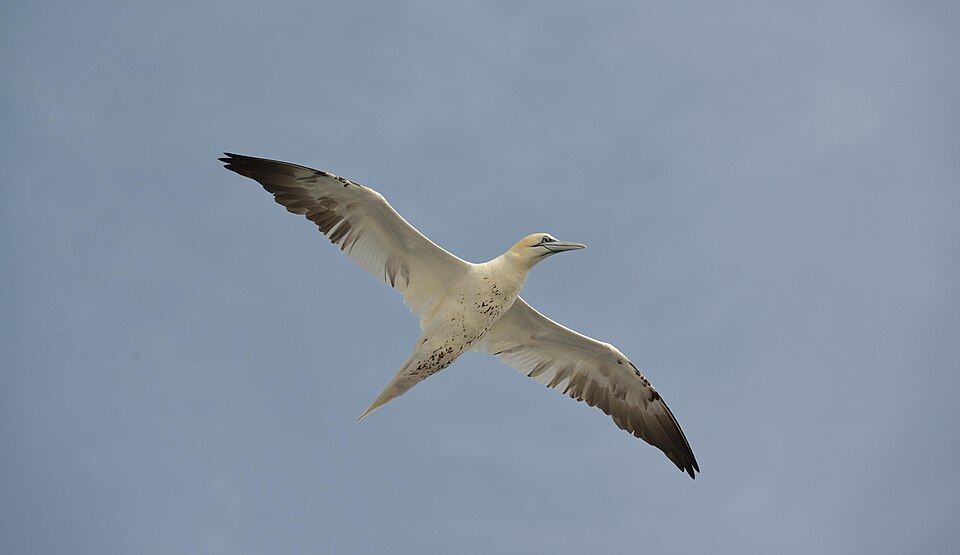 Northern Gannet
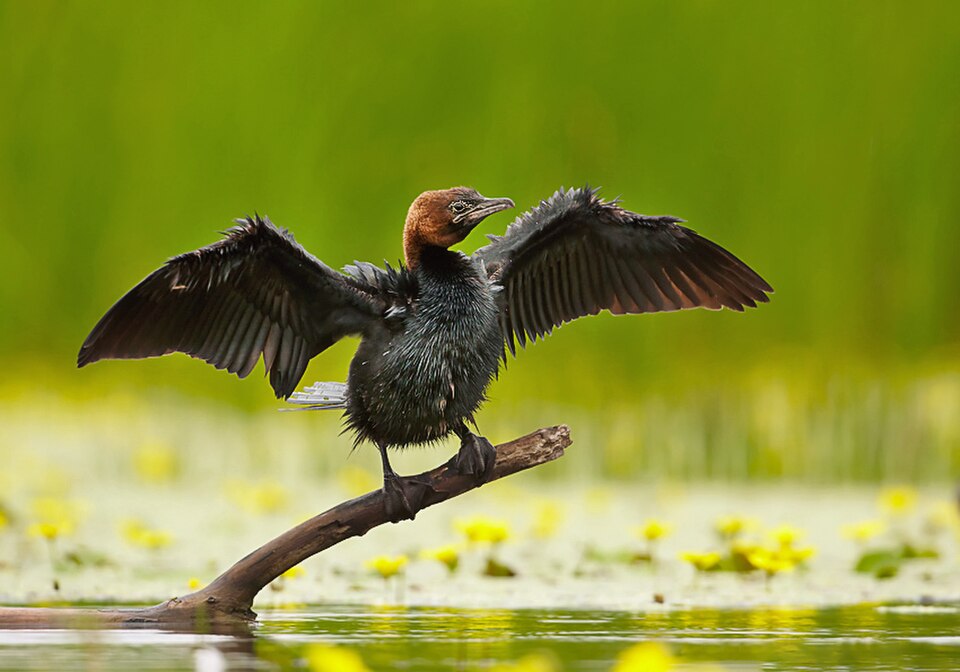 Pygmy Cormorant
In short
The most reliable field mark to separate Northern Gannet from Pygmy Cormorant is overall size and structure: Northern Gannet is a massive, long-winged seabird with a white body and black wingtips, while Pygmy Cormorant is much smaller, darker, and more compact, with a proportionally long tail. Juvenile Northern Gannets are brownish and can look dark at a distance, but never show the slim, snaky-necked jizz or the all-dark plumage of Pygmy Cormorant. In flight, gannets show long, pointed wings and a clean white tail (adults), whereas Pygmy Cormorant is short-winged, long-tailed, and always dark. Habitat is also a strong clue: gannets are strictly marine and rarely seen inland, while pygmy cormorants are freshwater birds of lakes, rivers, and wetlands. If you see a large white seabird with black wingtips, it is a gannet; a small, dark, long-tailed bird near freshwater is a pygmy cormorant.
Identification tips
- Size is the first check: Northern Gannet is much larger than Pygmy Cormorant—almost goose-sized, with a massive wingspan. Pygmy Cormorant is cormorant-sized, much smaller and slimmer.
- Wing shape and flight: Gannet has long, narrow, pointed wings and a streamlined, powerful flight. Pygmy Cormorant has shorter, rounded wings and a rapid, less graceful flight.
- Tail shape: Gannet has a short, white (adult) or pale tail; Pygmy Cormorant has a long, dark, wedge-shaped tail that is obvious both perched and in flight.
- Plumage (adults): Gannet adults are pure white with black wingtips and a buff-tinged head in breeding season. Pygmy Cormorant is dark brown to black all over, with no pale areas.
- Plumage (juveniles/immatures): Juvenile gannets are brownish but never as uniformly dark as cormorants, and their plumage becomes increasingly white with age. They always show a heavier, longer-winged profile. Pygmy Cormorant juveniles are dark like adults.
- Bill color and shape: Gannet has a long, thick, blue-grey bill with black bare skin at the base; Pygmy Cormorant has a thinner, dark bill with no pale base.
- Face pattern: Gannet shows a striking black line around the mouth and eyes; Pygmy Cormorant has a plain dark face.
- Perched posture: Gannets rarely perch except on cliffs; cormorants often perch upright on branches, posts, or in trees, sometimes with wings spread.
- Habitat: Gannet is strictly marine, never found on freshwater. Pygmy Cormorant is a freshwater/estuarine bird, never at sea.
- Behavior: Gannet plunge-dives from height; cormorants dive from the surface and never plunge-dive.
- Group size and context: Gannets are usually seen singly or in loose groups over the sea, often far from land. Pygmy Cormorant is often seen in groups near water, perched or swimming.
- Head color (breeding season): Gannet adults have a buff-tinged head; cormorants never show this.
- Wingtips and tail in flight: Gannet shows black wingtips and a white tail (adults); cormorant is all dark, including tail and wings.
- Confusion risk: At long range, a juvenile gannet may look dark, but the size, structure, and white tail (or pale tail in immatures) always separate it from the uniformly dark, long-tailed pygmy cormorant.
- Never rely on voice: Neither species is likely to be identified by vocalization in the field.
Size
Northern Gannet is dramatically larger, with a body mass around 2999 g and a length of 87–100 cm, plus a wingspan of 170–180 cm [wikidata][wikipedia]. Pygmy Cormorant is much smaller (length 64–78 cm) and lighter built [wikipedia]. In the field, gannet appears huge, almost goose-sized, with long, narrow wings and a thick neck; pygmy cormorant is cormorant-sized, slim, and noticeably long-tailed. Even juvenile gannets are much bulkier than any cormorant.
Plumage
- Juvenile/immature Northern Gannet: Mostly grey-brown, gradually whitening over five years to adult. Immatures can look dark at a distance, but always show a contrasting pattern of white and dark on wings as they age, and never appear entirely dark. The tail is always white (adults) or pale, never black-tipped.
- Adult Northern Gannet: Pure white body, black wingtips, white tail, and a buff-tinged head in breeding season. Bill is blue-grey with black bare skin around face.
- Pygmy Cormorant (all ages): Uniformly dark brown to blackish, with no white in the wings or tail. No buff tones or pale head. The long tail is always dark. Even young birds are dark overall.
- Key contrast: Gannet adults are strikingly white with black wingtips, never all-dark. Juvenile gannets may appear brownish but never as uniformly dark as pygmy cormorant, and always have a heavier, longer-winged look.
Behaviour
Northern Gannet is almost always seen in flight over the sea, often plunging dramatically into the water from height to catch fish. They rarely perch except on cliffs or large rocks, and are seldom seen inland. Pygmy Cormorant is often seen perching upright on branches, posts, or in trees near water, sometimes with wings spread to dry. They swim low in the water and hunt by diving, but never plunge-dive like a gannet. Gannets are fast, direct fliers with long, gliding wings; pygmy cormorants fly with rapid, shallow wingbeats and look less powerful.
Habitat
Northern Gannet is strictly marine, breeding and foraging along rocky coasts and offshore islands in the North Atlantic [wikipedia]. They are never found inland or on freshwater. Pygmy Cormorant is a freshwater and estuarine species, found on lakes, rivers, marshes, and deltas in southeastern Europe and southwestern Asia [wikipedia]. They avoid open sea and are rarely, if ever, seen on saltwater coasts. If the bird is on a freshwater lake or river, it is almost certainly a cormorant.