

Motmot

Northern Brown-throated Weaver vs Vitelline Masked-Weaver

Ploceus castanops versus Ploceus vitellinus

Play a quiz with Northern Brown-throated Weaver and Vitelline Masked-Weaver

Northern Brown-throated Weaver (Ploceus castanops) Northern Brown-throated Weaver
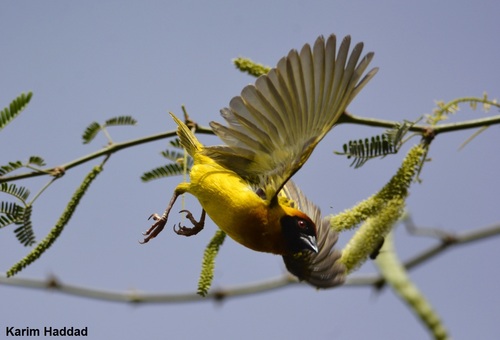
Vitelline Masked-Weaver (Ploceus vitellinus) Vitelline Masked-Weaver

Media

Loading…

In short

Separating Northern Brown-throated Weaver from Vitelline Masked-Weaver in the field is challenging due to their similar structure and general weaver appearance, especially when viewing adults outside the breeding season or immatures. The most reliable separation in practice is geographic: Northern Brown-throated Weaver is restricted to a smaller region in East Africa (notably Uganda, Rwanda, and adjacent areas), while Vitelline Masked-Weaver is widespread across western, central, and eastern Africa. No distinctive age-specific wing or flight pattern is documented for either species, so field separation relies heavily on range, subtle plumage differences (when present), and context. Structural and behavioral differences are not documented in the available sources.

Identification tips

  1. Check the range first: If you are outside Uganda, Rwanda, adjacent northern Burundi, eastern DRC, western Kenya, or northwestern Tanzania, you are almost certainly looking at Vitelline Masked-Weaver, as Northern Brown-throated Weaver does not occur elsewhere.
  2. Within the overlap zone, both are possible: In western Kenya or northwestern Tanzania, both species could be present, so do not rely on range alone.
  3. No distinctive juvenile or immature wing pattern: Neither species is documented as having a unique upperwing or flight pattern at any age, so do not rely on this for separation.
  4. Plumage is not reliably diagnostic: Both species are typical yellow-and-brown weavers, and no specific plumage differences are documented for adults or immatures in the available sources.
  5. Size and structure are similar: Both are medium-sized weavers with no documented differences in bill shape, tail, or overall build.
  6. Habitat overlap: Both species use similar wetland and lakeside habitats, so habitat alone is not a reliable separator within the overlap zone.
  7. Sex and season: No information is available on sex- or season-specific plumage differences between these two species, so these are not helpful for separation.
  8. Voice not described: No distinctive vocal differences are documented in the sources, so do not rely on calls or songs for separation.
  9. Breeding plumage: If you have access to detailed local field guides or photographs, check for subtle differences in face pattern or throat color in breeding males, but these are not described in the provided sources.
  10. Community reports: If birding with local experts, ask about the likelihood of each species in your specific location, as local abundance may help guide your identification.
  11. Photograph for later review: Given the lack of clear field marks, take photos for later comparison with regional field guides or expert review.
  12. Do not overinterpret structure: Since both are typical Ploceus weavers, do not use bill length, tail shape, or posture as a separator.
  13. Consider flock composition: If you see a mixed weaver flock, note the presence of other species, but do not assume either species based on association alone.
  14. Be honest about uncertainty: If you cannot confirm range or have only a brief or poor view, it is reasonable to leave the identification as unresolved between the two.
  15. Consult local checklists: eBird and local ornithological checklists may help clarify which species is more likely in your area at a given season.

Size

Only Northern Brown-throated Weaver has a documented average mass (21.5 g [wikidata]), which is typical for a medium-sized weaver. No direct mass or size data is available for Vitelline Masked-Weaver, but both are similar in build and size, so this is not a useful field mark.

Plumage

No detailed plumage differences, especially for juveniles or immatures, are described in the available sources for these two species. Both are typical Ploceus weavers, likely showing similar yellow and brown coloration, and no distinctive upperwing or flight pattern is reported for either species at any age. Therefore, plumage-based separation is not reliable without further detail, and confusion is likely when viewing non-breeding or immature birds.

Habitat

Both species occur in similar habitats typical of weavers, such as wetlands, lakeshores, and reedbeds. However, their ranges only partially overlap: Northern Brown-throated Weaver is limited to Uganda, Rwanda, northern Burundi, eastern DRC, western Kenya, and northwestern Tanzania, while Vitelline Masked-Weaver is much more widespread across western, central, and eastern Africa. If you are outside the limited East African range of Northern Brown-throated Weaver, Vitelline Masked-Weaver is far more likely. Within the overlap zone, both could occur in similar wetland or lakeside habitats.

Submit a better description

Use the same sections as the comparison. Your text is published immediately.

Separating Northern Brown-throated Weaver from Vitelline Masked-Weaver in the field is challenging due to their similar structure and general weaver appearance, especially when viewing adults outside the breeding season or immatures. The most reliable separation in practice is geographic: Northern Brown-throated Weaver is restricted to a smaller region in East Africa (notably Uganda, Rwanda, and adjacent areas), while Vitelline Masked-Weaver is widespread across western, central, and eastern Africa. No distinctive age-specific wing or flight pattern is documented for either species, so field separation relies heavily on range, subtle plumage differences (when present), and context. Structural and behavioral differences are not documented in the available sources.

  1. Check the range first: If you are outside Uganda, Rwanda, adjacent northern Burundi, eastern DRC, western Kenya, or northwestern Tanzania, you are almost certainly looking at Vitelline Masked-Weaver, as Northern Brown-throated Weaver does not occur elsewhere.
  2. Within the overlap zone, both are possible: In western Kenya or northwestern Tanzania, both species could be present, so do not rely on range alone.
  3. No distinctive juvenile or immature wing pattern: Neither species is documented as having a unique upperwing or flight pattern at any age, so do not rely on this for separation.
  4. Plumage is not reliably diagnostic: Both species are typical yellow-and-brown weavers, and no specific plumage differences are documented for adults or immatures in the available sources.
  5. Size and structure are similar: Both are medium-sized weavers with no documented differences in bill shape, tail, or overall build.
  6. Habitat overlap: Both species use similar wetland and lakeside habitats, so habitat alone is not a reliable separator within the overlap zone.
  7. Sex and season: No information is available on sex- or season-specific plumage differences between these two species, so these are not helpful for separation.
  8. Voice not described: No distinctive vocal differences are documented in the sources, so do not rely on calls or songs for separation.
  9. Breeding plumage: If you have access to detailed local field guides or photographs, check for subtle differences in face pattern or throat color in breeding males, but these are not described in the provided sources.
  10. Community reports: If birding with local experts, ask about the likelihood of each species in your specific location, as local abundance may help guide your identification.
  11. Photograph for later review: Given the lack of clear field marks, take photos for later comparison with regional field guides or expert review.
  12. Do not overinterpret structure: Since both are typical Ploceus weavers, do not use bill length, tail shape, or posture as a separator.
  13. Consider flock composition: If you see a mixed weaver flock, note the presence of other species, but do not assume either species based on association alone.
  14. Be honest about uncertainty: If you cannot confirm range or have only a brief or poor view, it is reasonable to leave the identification as unresolved between the two.
  15. Consult local checklists: eBird and local ornithological checklists may help clarify which species is more likely in your area at a given season.

Only Northern Brown-throated Weaver has a documented average mass (21.5 g [wikidata]), which is typical for a medium-sized weaver. No direct mass or size data is available for Vitelline Masked-Weaver, but both are similar in build and size, so this is not a useful field mark.

No detailed plumage differences, especially for juveniles or immatures, are described in the available sources for these two species. Both are typical Ploceus weavers, likely showing similar yellow and brown coloration, and no distinctive upperwing or flight pattern is reported for either species at any age. Therefore, plumage-based separation is not reliable without further detail, and confusion is likely when viewing non-breeding or immature birds.

Both species occur in similar habitats typical of weavers, such as wetlands, lakeshores, and reedbeds. However, their ranges only partially overlap: Northern Brown-throated Weaver is limited to Uganda, Rwanda, northern Burundi, eastern DRC, western Kenya, and northwestern Tanzania, while Vitelline Masked-Weaver is much more widespread across western, central, and eastern Africa. If you are outside the limited East African range of Northern Brown-throated Weaver, Vitelline Masked-Weaver is far more likely. Within the overlap zone, both could occur in similar wetland or lakeside habitats.

Discard your changes?

You have unsaved edits. If you leave now, those changes will be lost.

Northern Brown-throated Weaver · Vitelline Masked-Weaver · My Tricky Birds