

Mute Swan vs Helmeted Guineafowl
Cygnus olor versus Numida meleagris
Play a quiz with Mute Swan and Helmeted Guineafowl
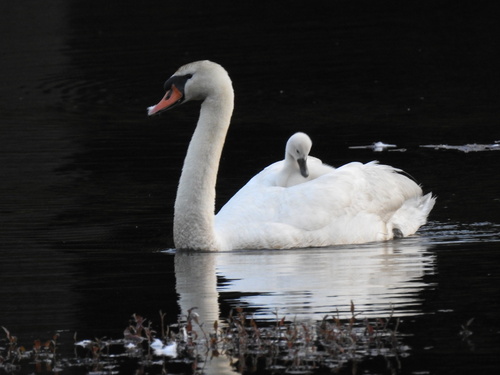 Mute Swan
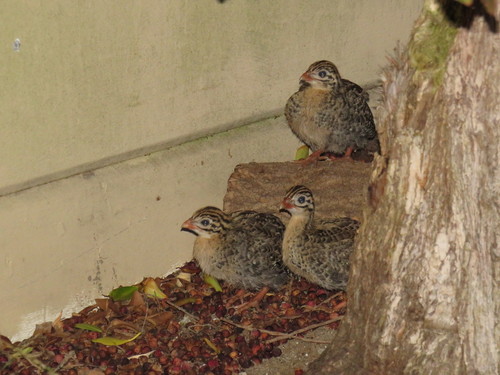 Helmeted Guineafowl
In short
The most reliable field mark to separate Mute Swan from Helmeted Guineafowl is overall structure and size: Mute Swan is a massive, long-necked, all-white waterbird with an orange bill and black facial skin, while Helmeted Guineafowl is a much smaller, round-bodied, dark speckled terrestrial bird with a bare, bumpy blue-and-red head. Juvenile Mute Swans (cygnets) are grayish with a dark bill, but still show a swan's shape and long neck, unlike any guineafowl. In flight, Mute Swan is huge and powerful with long, broad wings; guineafowl are short-winged, explosive fliers. If you see a white, floating bird with a long neck, it's a swan; a running, speckled, chicken-like bird with a helmeted head is a guineafowl.
Identification tips
- Size and shape: Mute Swan is enormous, with a long, sinuous neck and large body; Helmeted Guineafowl is chicken-sized, round-bodied, and short-necked. Size alone is usually enough to separate them.
- Bill and face: Adult Mute Swan has a bright orange bill with a prominent black knob at the base and black facial skin; guineafowl has a small, pale bill and a bare, bumpy head with blue, red, or black skin and a yellowish or reddish casque (helmet).
- Plumage color: Adult Mute Swan is pure white; Helmeted Guineafowl is dark gray-black with dense white spots. Even juvenile swans are never spotted, and guineafowl are never white.
- Juvenile swan (cygnet) confusion: Young swans are gray or buff with a dull bill, but still have a long neck and swim on water. They never show the speckled pattern or helmeted head of guineafowl.
- Wing and tail: Swans have long, broad wings and a wedge-shaped tail; guineafowl have short, rounded wings and a short tail. In flight, swans are steady and powerful, guineafowl are explosive and short-lived fliers.
- Behavior: Swans are aquatic, floating and swimming; guineafowl are terrestrial, running in flocks and rarely flying except when startled.
- Habitat: Swans are always on or near water; guineafowl are found in open land, fields, or woodland edges, never on water.
- Vocalization: Swans are mostly silent, hissing only when threatened; guineafowl are noisy, with loud, harsh calls.
- Flocking: Guineafowl often form large, noisy flocks; swans are usually solitary, in pairs, or with their family group.
- Aggression: Both can be aggressive, but swan aggression is usually seen on water and involves hissing and striking with wings, while guineafowl aggression is between males and involves feather-raising and rushing on land.
- Bill color in juveniles: Young swans have a dull gray-black bill, never orange; guineafowl bills are always pale and small.
- Head ornamentation: Guineafowl have a distinctive helmet-like casque and colorful bare skin; swans have a smooth head with a black knob at the bill base (adults only).
- Flight style: Swans take off with a long run on water and fly strongly; guineafowl burst into flight from the ground and glide short distances.
- Leg color: Swans have dark gray legs; guineafowl legs are less visible but are adapted for running, not swimming.
- Context: If you see a bird swimming or floating, especially with a long neck, it is a swan. If you see a bird running in a field with a speckled body and helmeted head, it is a guineafowl.
Size
Mute Swan is vastly larger than Helmeted Guineafowl by every metric. Mute Swan averages 1475 mm (about 1.5 meters) in length and over 10 kg in mass, making it one of the heaviest flying birds [wikidata]. Helmeted Guineafowl is about 53–58 cm long and weighs around 1.3–1.6 kg [wikidata, wikipedia]. Even a cygnet (young swan) is bulkier than a guineafowl chick. In the field, a Mute Swan dwarfs any guineafowl, both on water and land.
Plumage
Juvenile Mute Swans (cygnets) are grayish or buff with a dull gray-black bill for their first year, never showing the pure white of adults or the orange bill. Adults are entirely white with a bright orange bill and black facial skin. Helmeted Guineafowl, regardless of age, have dark gray-black plumage densely speckled with white spots, and a bare, bony, blue-and-red head with a helmet-like knob. Guineafowl wings and tail are short and rounded, never showing the long, broad wings or wedge-shaped tail of a swan. No age or season brings these two species' plumages close: even a young swan is never speckled, and a guineafowl is never white.
Behaviour
Mute Swans are aquatic, spending most of their time swimming or floating on water, and are powerful, steady fliers. They can be very aggressive, especially when defending nests, and may attack intruders with their wings and bill. Helmeted Guineafowl are terrestrial, running more than flying, and form flocks that walk long distances over land. When alarmed, guineafowl prefer to run, but can burst into a short, explosive flight. Their social behavior is gregarious and noisy, especially outside the breeding season. Swans are usually seen in pairs or family groups, rarely in large flocks.
Habitat
Mute Swans are found on lakes, slow rivers, and other open water bodies, both in their native Eurasian range and as introduced birds elsewhere. They are always associated with water. Helmeted Guineafowl are land birds, native to open country and savanna in Africa but also found on farmland and open woodlands where introduced. They avoid water except to drink and are never seen swimming. If you see a bird on water, it is not a guineafowl.
Voice
Mute Swan is mostly silent, giving only occasional hisses or snorts, especially when threatened. It does not have a loud call. Helmeted Guineafowl are noisy, producing loud, harsh, grating calls when disturbed, and are often heard before they are seen. If you hear a flock making loud, harsh calls, it is likely guineafowl, not swan.