

Muscovy Duck vs Wood Duck
Cairina moschata versus Aix sponsa
Play a quiz with Muscovy Duck and Wood Duck
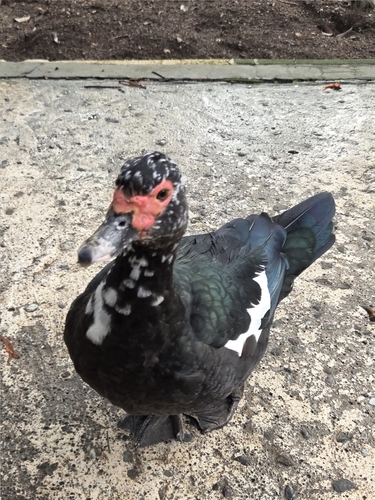 Muscovy Duck
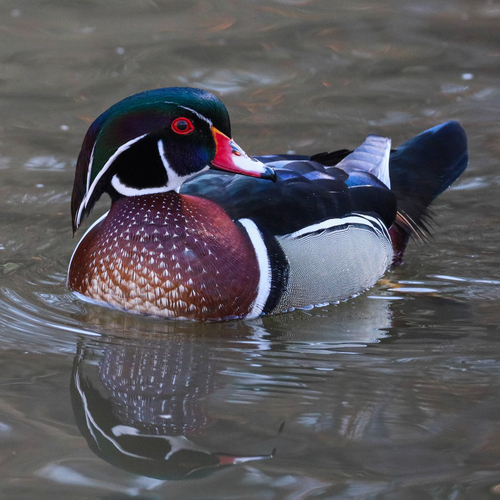 Wood Duck
In short
The most reliable field mark between Muscovy Duck and Wood Duck is overall size and structure: Muscovy is vastly larger and bulkier, with a heavy, flat-topped bill and often prominent red facial wattles, while Wood Duck is compact, slim-necked, and crested. In flight or perched, Muscovy shows extensive white patches on the wings (variable in feral/domestic birds), whereas Wood Duck has a blue-green speculum with a white trailing edge. Juvenile Muscovy are duller with little or no white in the wing, while Wood Duck juveniles retain the blue-green speculum. Sexes differ in both, but the contrast is much greater in Wood Duck, where the male is brightly multicolored and the female is gray-brown with a white eye-ring. Habitat and context can also help: Muscovy is often found in feral or domestic settings, Wood Duck in wooded wetlands.
Identification tips
- Size is the quickest separator: Muscovy is much larger and heavier than Wood Duck, even at a distance. If the duck is goose-sized, it's not a Wood Duck.
- Bill and face structure: Muscovy has a broad, flat-topped bill with a red or blackish knob and often red warty skin around the face (especially in males and feral/domestic birds). Wood Duck has a neat, short bill with no bare skin or wattles.
- Wing pattern in flight: Adult Muscovy shows large white patches on the upperwing (variable in feral/domestic birds), while Wood Duck always has a blue-green speculum with a white trailing edge. Juvenile Muscovy may lack white in the wing, appearing uniformly dark; juvenile Wood Duck still shows the speculum.
- Head and crest: Both have crests, but Muscovy's is a short nape crest, while Wood Duck's is a long, slicked-back crest, especially obvious in males.
- Plumage color and pattern: Male Wood Duck is spectacularly multicolored with iridescent green, purple, chestnut, and bold white markings; female is gray-brown with a white eye-ring and throat. Muscovy is mostly black with white wing patches, and feral/domestic birds may have more white on the head/neck.
- Leg and foot color: Muscovy has blackish legs and feet; Wood Duck legs are duller and less robust.
- Tail and body shape: Muscovy has a broad, flat tail and heavy, deep-chested body. Wood Duck is slim, with a more compact, upright posture.
- Sexual dimorphism: Wood Duck shows strong sexual dimorphism (bright male, drab female); Muscovy sexes are similar, with males larger, glossier, and more facial ornamentation.
- Juvenile confusion: Young Muscovy are dull and lack white in the wing, but still show heavy structure and (in males) facial wattles. Juvenile Wood Ducks are smaller, with the blue-green speculum and white eye-ring.
- Feral/domestic Muscovy variation: Feral Muscovy can show variable white on head/neck and bill color, but always have heavy build and facial wattles. Wood Duck never shows red facial skin or a heavy bill.
- Vocalizations: Muscovy is quiet, with breathy or trilling calls; Wood Duck is noisy, especially when flushed, with distinctive whistles and squeals.
- Habitat context: Muscovy is common in urban parks, farms, and near people; Wood Duck prefers wooded wetlands and is more secretive.
- Behavior: Muscovy is often tame and slow-moving; Wood Duck is wary, quick, and agile, often perching in trees.
- Group composition: Muscovy may be found with domestic ducks or alone; Wood Duck is usually with its own kind or in mixed flocks with other wild ducks.
- Geographic context: In North America, Muscovy is native only to southernmost Texas; elsewhere, feral. Wood Duck is widespread in wooded wetlands across the continent.
Size
Muscovy Duck is enormous compared to Wood Duck: adult Muscovy males can weigh over 3 kg (2125 g average), with females about half that, and reach up to 84 cm in length and 152 cm in wingspan. Wood Duck is medium-sized, only 47–54 cm long with a wingspan of 66–73 cm, and weighs 454–862 g. Even a female Muscovy dwarfs a Wood Duck. In the field, Muscovy's massive, heavy body and broad wings are unmistakable next to the slim, compact Wood Duck.
Plumage
- Juvenile/immature Muscovy: Duller overall, with little or no white on the wing, making them more uniformly dark than adults. Juvenile Wood Ducks retain the blue-green speculum with a white trailing edge, and the female's white eye-ring is present from a young age.
- Adult Muscovy: Predominantly black with large white patches on the wings (amount of white variable in feral/domestic birds), iridescent glossy back and wings in males, and a feathered or bare red warty face (especially in males). Females are similar but smaller and lack the prominent knob. Bill is black with pale pink speckling, legs and feet blackish. Feral/domestic birds may show more white on head/neck and variable bill color.
- Adult Wood Duck: Male is strikingly multicolored with iridescent green, purple, and chestnut, a bold white neck flare, and red eyes. Female is gray-brown with a white eye-ring and throat, and both sexes have a crested head. The speculum is always blue-green with a white trailing edge. No red facial wattles or bare skin.
Behaviour
Muscovy Ducks are often seen loafing near water, on lawns, or even perched in trees or on buildings in feral populations. They are slow-moving and heavy in flight, with broad, shallow wingbeats. Wood Ducks are agile and quick, often seen perching in trees or quickly flying through wooded wetlands with rapid wingbeats. Muscovy's behavior is more domesticated or feral, often approaching people, while Wood Duck is wary and secretive.
Habitat
Muscovy Ducks are found in a wide range of habitats, especially near human habitation: urban/suburban lakes, farms, parks, and sometimes wild wooded wetlands in their native range. Feral populations are common in city parks and ponds. Wood Ducks are closely tied to wooded wetlands, forested ponds, and rivers, often nesting in tree cavities or nest boxes. Seeing a duck in a city park or farm pond with domestic ducks favors Muscovy; a shy duck in a wooded swamp or river is likely Wood Duck.
Voice
Muscovy males give a low, breathy call, while females make a quiet trilling coo. Wood Duck males have a high, rising whistle (jeeeeee), and females give a drawn-out, rising squeal (do weep do weep) when flushed, and a sharp alarm call (cr-r-ek). Wood Duck is much more vocal and distinctive, especially in flight or when alarmed.