

Motmot

Muscovy Duck vs Blue-winged Teal

Cairina moschata versus Spatula discors

Play a quiz with Muscovy Duck and Blue-winged Teal
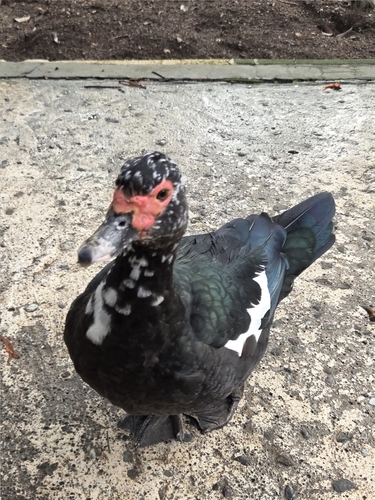
Muscovy Duck (Cairina moschata) Muscovy Duck
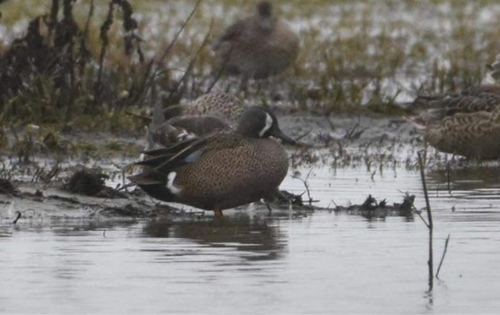
Blue-winged Teal (Spatula discors) Blue-winged Teal

Media

Loading…

In short

The most reliable field mark separating Muscovy Duck from Blue-winged Teal is sheer size and structure: Muscovy is a massive, heavy-bodied duck with a long, broad tail and prominent red facial wattles, while Blue-winged Teal is a small, compact dabbling duck with a short tail and no facial caruncles. In flight, adult Blue-winged Teal of both sexes show distinctive sky-blue wing coverts and a green speculum, which Muscovy never shows. Juvenile Muscovy Ducks are dull overall with little or no white in the wing, while even young Blue-winged Teal show the blue wing panel. Muscovy’s plumage is mostly glossy black with large white wing patches (variable in feral/domestic birds), and the males have a short nape crest and a knobby red face. Blue-winged Teal males have a blue-grey head with a white crescent, and both sexes are much more subtly patterned. If you see a very large, heavy duck with a naked, red, warty face, it is a Muscovy; if you see a small duck with a sky-blue wing patch, it is a Blue-winged Teal.

Identification tips

  1. Size is decisive: Muscovy Duck is massive, often goose-sized, while Blue-winged Teal is small and compact. Even a female Muscovy is much larger than any teal.
  2. Facial features: Muscovy Ducks have a naked, red or dark warty face (caruncles), especially prominent in males; Blue-winged Teal never show any facial wattles or bare skin.
  3. Bill structure and color: Muscovy’s bill is broad, flat, and black with pink speckling (variable in feral/domestic birds), sometimes with a knob at the base; Blue-winged Teal have a more typical duck bill, dark in males, with a pale base in females.
  4. Wing pattern in flight (all ages): Blue-winged Teal always show a sky-blue wing panel (coverts) and green speculum in flight, visible in both sexes and all ages. Muscovy never shows blue or green in the wing; adults show large white patches (variable), juveniles are dull with little or no white.
  5. Tail shape: Muscovy has a long, broad, flat tail, often held slightly fanned; Blue-winged Teal’s tail is short and neat.
  6. Plumage gloss and color: Adult male Muscovy is glossy black with iridescence and large white wing patches; females are duller but still dark. Blue-winged Teal males have a grayish-blue head with a white crescent, brown body, and white rear patch; females are mottled brown.
  7. Leg color: Blue-winged Teal have yellow legs; Muscovy’s legs and feet are blackish.
  8. Crest: Male Muscovy has a short crest on the nape; Blue-winged Teal never show any crest.
  9. Juvenile confusion: Juvenile Muscovy are dull and lack white in the wing, but still show the heavy build and facial caruncles. Juvenile Blue-winged Teal are small, brown, and still show the blue wing panel in flight.
  10. Feral/domestic Muscovy variation: Feral Muscovy can have more white on the head/neck and variable bill color, but always show some red facial caruncles and heavy build.
  11. Behavior: Muscovy may perch in trees or on buildings, and often loafs in urban/farm settings; Blue-winged Teal rarely perches and is usually seen in natural wetlands.
  12. Flight style: Muscovy is heavy and slow in flight, with broad wings and a long tail; Blue-winged Teal is quick and agile, with rapid wingbeats.
  13. Habitat context: In urban parks or farmyards, especially outside the native range, a large black duck with a red face is almost certainly a Muscovy. In shallow marshes with emergent vegetation, especially in migration, small ducks with blue wing panels are Blue-winged Teal.
  14. Voice: Not usually diagnostic, but Muscovy is quiet and breathy; Blue-winged Teal males whistle, females give a soft quack.
  15. Seasonal context: Blue-winged Teal are migratory and may be absent in winter from northern areas, while Muscovy (especially feral) can be resident year-round in urban and suburban habitats.

Size

Size is the most dramatic separator: Muscovy Duck is enormous, with males weighing over 2 kg (often up to 3–4 kg) and females about half that, with a wingspan of 137–152 cm. Blue-winged Teal is much smaller and lighter, at about 40 cm long, 58 cm wingspan, and weighing only 370 g. A Muscovy is closer in size to a goose than to any teal, and even a female Muscovy dwarfs a Blue-winged Teal. If both are present, the size difference is unmistakable.

Plumage

For age and wing pattern: Juvenile Muscovy Ducks are dull overall, lacking the prominent white wing patches of adults, and have little or no white in the wing—this can make them appear more uniformly dark in flight. Blue-winged Teal of all ages, including juveniles and females, show a distinctive sky-blue wing panel (coverts) and a green speculum in flight, which is never present in Muscovy. Adult male Muscovy Ducks are glossy black with large white patches on the wing (amount variable, especially in feral/domestic birds), a short crest, and a prominent red facial knob and wattles. Females are similar but smaller, more drab, and lack the large knob. Blue-winged Teal males have a grayish-blue head with a white crescent in front of the eye, a light brown body, white patch near the rear, and black tail; females are mottled brown with a pale base to the bill. Both sexes of Blue-winged Teal have yellow legs. Muscovy’s bill is black with pink speckling (variable in feral birds), and the face is naked and red or blackish. Feral Muscovy can show more white on the head/neck and variable bill color, but always have some facial caruncles.

Behaviour

Muscovy Ducks often perch on logs, banks, or even in trees (especially when nesting), and may be seen loafing in urban parks or farmyards. They are heavy and slow-moving on land, and in flight appear large and somewhat labored, with broad wings and a long, flat tail. Blue-winged Teal are agile, quick dabblers, usually seen in small flocks, feeding by tipping in shallow water or resting on mudflats and emergent vegetation. Their flight is rapid and direct, typical of small dabbling ducks, and they rarely perch in trees.

Habitat

Muscovy Ducks (wild or feral) are most often found near wooded wetlands, slow rivers, or ponds, but feral birds are common in urban and suburban parks, farmyards, and even city ponds, sometimes nesting on buildings or balconies. Blue-winged Teal prefer shallow freshwater or brackish marshes, ponds, and lakes with dense emergent vegetation, and are more likely to be seen in natural wetland settings or on migration stopovers. Muscovy is much more tolerant of urban and human-altered environments, especially outside its native range.

Voice

Muscovy Duck males give a low, breathy call, while females emit a quiet trilling coo; neither is likely to be heard at a distance. Blue-winged Teal males give a short whistle, and females a soft quack. Vocalizations are not highly distinctive in the field for separating these two, especially at a distance.

Submit a better description

Use the same sections as the comparison. Your text is published immediately.

The most reliable field mark separating Muscovy Duck from Blue-winged Teal is sheer size and structure: Muscovy is a massive, heavy-bodied duck with a long, broad tail and prominent red facial wattles, while Blue-winged Teal is a small, compact dabbling duck with a short tail and no facial caruncles. In flight, adult Blue-winged Teal of both sexes show distinctive sky-blue wing coverts and a green speculum, which Muscovy never shows. Juvenile Muscovy Ducks are dull overall with little or no white in the wing, while even young Blue-winged Teal show the blue wing panel. Muscovy’s plumage is mostly glossy black with large white wing patches (variable in feral/domestic birds), and the males have a short nape crest and a knobby red face. Blue-winged Teal males have a blue-grey head with a white crescent, and both sexes are much more subtly patterned. If you see a very large, heavy duck with a naked, red, warty face, it is a Muscovy; if you see a small duck with a sky-blue wing patch, it is a Blue-winged Teal.

  1. Size is decisive: Muscovy Duck is massive, often goose-sized, while Blue-winged Teal is small and compact. Even a female Muscovy is much larger than any teal.
  2. Facial features: Muscovy Ducks have a naked, red or dark warty face (caruncles), especially prominent in males; Blue-winged Teal never show any facial wattles or bare skin.
  3. Bill structure and color: Muscovy’s bill is broad, flat, and black with pink speckling (variable in feral/domestic birds), sometimes with a knob at the base; Blue-winged Teal have a more typical duck bill, dark in males, with a pale base in females.
  4. Wing pattern in flight (all ages): Blue-winged Teal always show a sky-blue wing panel (coverts) and green speculum in flight, visible in both sexes and all ages. Muscovy never shows blue or green in the wing; adults show large white patches (variable), juveniles are dull with little or no white.
  5. Tail shape: Muscovy has a long, broad, flat tail, often held slightly fanned; Blue-winged Teal’s tail is short and neat.
  6. Plumage gloss and color: Adult male Muscovy is glossy black with iridescence and large white wing patches; females are duller but still dark. Blue-winged Teal males have a grayish-blue head with a white crescent, brown body, and white rear patch; females are mottled brown.
  7. Leg color: Blue-winged Teal have yellow legs; Muscovy’s legs and feet are blackish.
  8. Crest: Male Muscovy has a short crest on the nape; Blue-winged Teal never show any crest.
  9. Juvenile confusion: Juvenile Muscovy are dull and lack white in the wing, but still show the heavy build and facial caruncles. Juvenile Blue-winged Teal are small, brown, and still show the blue wing panel in flight.
  10. Feral/domestic Muscovy variation: Feral Muscovy can have more white on the head/neck and variable bill color, but always show some red facial caruncles and heavy build.
  11. Behavior: Muscovy may perch in trees or on buildings, and often loafs in urban/farm settings; Blue-winged Teal rarely perches and is usually seen in natural wetlands.
  12. Flight style: Muscovy is heavy and slow in flight, with broad wings and a long tail; Blue-winged Teal is quick and agile, with rapid wingbeats.
  13. Habitat context: In urban parks or farmyards, especially outside the native range, a large black duck with a red face is almost certainly a Muscovy. In shallow marshes with emergent vegetation, especially in migration, small ducks with blue wing panels are Blue-winged Teal.
  14. Voice: Not usually diagnostic, but Muscovy is quiet and breathy; Blue-winged Teal males whistle, females give a soft quack.
  15. Seasonal context: Blue-winged Teal are migratory and may be absent in winter from northern areas, while Muscovy (especially feral) can be resident year-round in urban and suburban habitats.

Size is the most dramatic separator: Muscovy Duck is enormous, with males weighing over 2 kg (often up to 3–4 kg) and females about half that, with a wingspan of 137–152 cm. Blue-winged Teal is much smaller and lighter, at about 40 cm long, 58 cm wingspan, and weighing only 370 g. A Muscovy is closer in size to a goose than to any teal, and even a female Muscovy dwarfs a Blue-winged Teal. If both are present, the size difference is unmistakable.

For age and wing pattern: Juvenile Muscovy Ducks are dull overall, lacking the prominent white wing patches of adults, and have little or no white in the wing—this can make them appear more uniformly dark in flight. Blue-winged Teal of all ages, including juveniles and females, show a distinctive sky-blue wing panel (coverts) and a green speculum in flight, which is never present in Muscovy. Adult male Muscovy Ducks are glossy black with large white patches on the wing (amount variable, especially in feral/domestic birds), a short crest, and a prominent red facial knob and wattles. Females are similar but smaller, more drab, and lack the large knob. Blue-winged Teal males have a grayish-blue head with a white crescent in front of the eye, a light brown body, white patch near the rear, and black tail; females are mottled brown with a pale base to the bill. Both sexes of Blue-winged Teal have yellow legs. Muscovy’s bill is black with pink speckling (variable in feral birds), and the face is naked and red or blackish. Feral Muscovy can show more white on the head/neck and variable bill color, but always have some facial caruncles.

Muscovy Ducks often perch on logs, banks, or even in trees (especially when nesting), and may be seen loafing in urban parks or farmyards. They are heavy and slow-moving on land, and in flight appear large and somewhat labored, with broad wings and a long, flat tail. Blue-winged Teal are agile, quick dabblers, usually seen in small flocks, feeding by tipping in shallow water or resting on mudflats and emergent vegetation. Their flight is rapid and direct, typical of small dabbling ducks, and they rarely perch in trees.

Muscovy Ducks (wild or feral) are most often found near wooded wetlands, slow rivers, or ponds, but feral birds are common in urban and suburban parks, farmyards, and even city ponds, sometimes nesting on buildings or balconies. Blue-winged Teal prefer shallow freshwater or brackish marshes, ponds, and lakes with dense emergent vegetation, and are more likely to be seen in natural wetland settings or on migration stopovers. Muscovy is much more tolerant of urban and human-altered environments, especially outside its native range.

Muscovy Duck males give a low, breathy call, while females emit a quiet trilling coo; neither is likely to be heard at a distance. Blue-winged Teal males give a short whistle, and females a soft quack. Vocalizations are not highly distinctive in the field for separating these two, especially at a distance.

Discard your changes?

You have unsaved edits. If you leave now, those changes will be lost.

Muscovy Duck · Blue-winged Teal · My Tricky Birds