

Monotonous Lark vs Green-winged Pytilia
Mirafra passerina versus Pytilia melba
Play a quiz with Monotonous Lark and Green-winged Pytilia
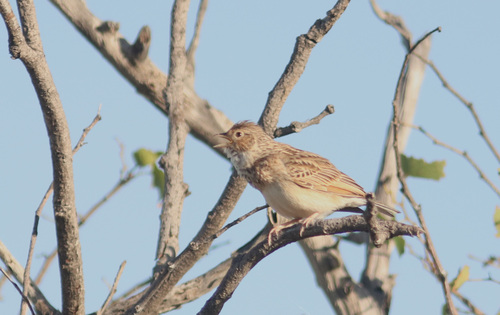 Monotonous Lark
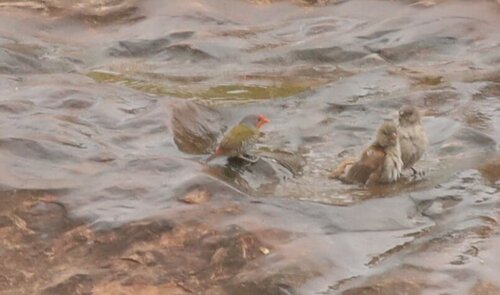 Green-winged Pytilia
In short
The most reliable field mark is overall coloration: Monotonous Lark is a streaky, earth-toned bird with a rufous wing panel, while Green-winged Pytilia is a small, vividly colored finch. If you see a compact, streaky lark with a plain face and subtle rufous in the wing, it's Monotonous Lark; if the bird is strikingly colorful with green in the wings, it's Green-winged Pytilia. Bill shape and facial pattern are also key: lark has a small, conical bill and indistinct eyebrow, while pytilia has a finer, seed-eater's bill and a much more vivid face. Habitat can help: lark is a southern African grassland specialist, pytilia is more widespread but less common in the far south. Immature/juvenile confusion is unlikely due to the strong color contrast, but always check for the rufous wing panel vs. green wing.
Identification tips
- Rufous wing panel (Monotonous Lark, all ages): Look for a distinct rufous patch in the wing, visible both perched and in flight; this is absent in Green-winged Pytilia.
- Overall coloration: Monotonous Lark is streaky brown and buff with subtle patterning; Green-winged Pytilia is much more colorful, with green in the wings and a patterned face.
- Bill shape: The lark has a small but relatively stout bill for a lark, while the pytilia has a fine, pointed seed-eater's bill. If the bill looks delicate and finch-like, it's pytilia.
- Facial pattern: Monotonous Lark's face is plain with an indistinct eyebrow; Green-winged Pytilia has a more vivid, patterned face.
- Chest and belly: The lark has a lightly streaked buffy chest, white throat, and pale belly; the pytilia's underparts are more colorful and patterned (details not specified, but not plain and streaky).
- Structure and jizz: The lark is compact and upright, with a slightly larger head and body; the pytilia is smaller, daintier, and more active.
- Habitat: Lark is found in open grassland in southern Africa; pytilia is more likely in bushy or wooded areas and is less common in the far south.
- Behavior: Lark is more terrestrial and less active; pytilia is more likely to be seen flitting through vegetation or feeding on seeds in low cover.
- Flight style: Lark's flight is more direct and less undulating; pytilia may show more bounding or fluttery flight.
- No strong seasonal or age-based confusion: Both species retain their key field marks year-round and at all ages, so focus on overall color and wing panel.
- If in doubt, check the wing: Rufous (lark) vs. green (pytilia) is the most decisive mark.
- Voice: Not described in the notes; do not rely on vocalizations for separation in this case.
- Geographic context: If you're in pure open grassland in southern Africa, lark is much more likely; if in bushy habitat, especially outside the far south, consider pytilia.
- Size: Lark is slightly larger and bulkier; pytilia is smaller and more delicate, but this can be subtle unless both are seen together.
- Do not confuse with similarly named species: Monotonous Lark is sometimes called 'white-tailed lark,' but this refers to a different species elsewhere—always check the field marks.
Size
Monotonous Lark is a medium-small, compact lark, but still noticeably larger and bulkier than the Green-winged Pytilia, which is a small, delicate finch. The lark has a stouter, more upright posture and a slightly larger head and body, while the pytilia is daintier overall. Bill size is also a clue: the lark's bill is small for a lark but still chunkier than the pytilia's fine, pointed seed-eater's bill. In the field, the lark will appear more robust and less active than the pytilia.
Plumage
- Juvenile/immature upperwing pattern: No specific juvenile or immature upperwing marks are described for either species, but the Monotonous Lark of all ages shows a distinct rufous wing panel, which is a key field mark. Green-winged Pytilia, by contrast, has green in the wings, and is overall much more colorful at all ages.
- Adult plumage: Monotonous Lark is streaky brown above with a plain face, indistinct eyebrow, and a lightly streaked buffy chest separating a white throat from a pale belly. The rufous wing panel is always visible when perched or in flight. Green-winged Pytilia is described as 'colourful', with green wings and a more vivid, patterned face. The two species are extremely different in overall appearance, with the lark being cryptic and the pytilia being bright and patterned. There is no mention of seasonal or sex-based variation that would cause confusion.
Behaviour
Monotonous Lark tends to be more terrestrial, often seen walking or running on the ground in open grassland, with a more upright stance and less active foraging style. Green-winged Pytilia, as a typical estrildid finch, is more likely to be seen flitting through low vegetation, feeding on seeds, and showing more active, agile movements. In flight, the lark is likely to appear more direct and less fluttery than the pytilia, which may show more bounding or undulating flight typical of small finches.
Habitat
Monotonous Lark is a southern African grassland and open country specialist, rarely found outside these habitats. Green-winged Pytilia is widespread across Sub-Saharan Africa but is less common in the far south and coastal west; it prefers bushy or wooded edges, often near water, and is less likely to be found in the open grassland favored by the lark. Thus, a bird in pure open grassland is more likely to be the lark, while a bird in bushy or mixed habitat could be either, but pytilia is less likely in the far south.