

Motmot

Matsudaira's Storm-Petrel vs Bulwer's Petrel

Hydrobates matsudairae versus Bulweria bulwerii

Play a quiz with Matsudaira's Storm-Petrel and Bulwer's Petrel

Matsudaira's Storm-Petrel (Hydrobates matsudairae) Matsudaira's Storm-Petrel
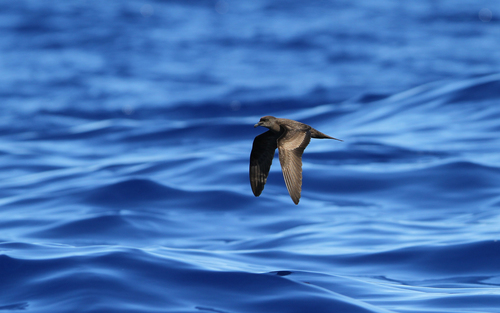
Bulwer's Petrel (Bulweria bulwerii) Bulwer's Petrel

Media

Loading…

In short

The most reliable field mark to separate Matsudaira's Storm-Petrel from Bulwer's Petrel is the combination of Matsudaira's blackish alula contrasting with white bases to the dark primaries, best seen in flight, along with its long, deeply forked tail and long, hooked bill. Bulwer's Petrel, in contrast, shows uniform brown plumage with a long, pointed tail but lacks the contrasting wing pattern and has a more slender, straight bill. Both species are long-winged, but Matsudaira's Storm-Petrel appears more fork-tailed and shows sharper contrast in the wing, while Bulwer's Petrel looks more uniformly brown and less sharply forked. These marks are most useful for adults and older immatures; juvenile-specific wing patterns are not detailed in the available notes.

Identification tips

  1. Upperwing pattern (adults/older immatures): Matsudaira's Storm-Petrel shows a blackish alula contrasting with white bases to the dark primaries, a subtle but diagnostic mark in flight. Bulwer's Petrel lacks this contrast and is uniformly brown above.
  2. Tail shape: Matsudaira's has a long, deeply forked tail, often obvious in flight and when perched. Bulwer's Petrel has a long but only pointed (not deeply forked) tail; the fork is much less pronounced.
  3. Bill structure: Matsudaira's Storm-Petrel has a noticeably long bill with a pronounced hook at the tip, visible at close range or in good photos. Bulwer's Petrel's bill is more slender and straight, lacking the obvious hook.
  4. Overall coloration: Matsudaira's is dark overall but with the aforementioned wing contrast; Bulwer's is a uniform brown, lacking any pale or white panels or bases on the wings.
  5. Flight jizz: Bulwer's Petrel has a buoyant, twisting flight as it picks food from the surface, often appearing steady and gliding. Matsudaira's may appear more agile or tern-like due to its forked tail, though this is subtle and best used in combination with other marks.
  6. Size impression: Bulwer's Petrel is slightly larger and bulkier, with a longer wingspan, but this is hard to judge unless seen side by side.
  7. Habitat and range: Matsudaira's is extremely localized (Volcano Islands for breeding, Indian Ocean for wintering), while Bulwer's is widespread in warm oceans. If seen outside the northwest Pacific or Indian Ocean, Bulwer's is far more likely.
  8. Perched views: Matsudaira's long, hooked bill and deeply forked tail are more apparent when perched. Bulwer's Petrel perched shows a more slender bill and only a pointed tail.
  9. Age/season pitfalls: No specific juvenile or immature wing patterns are described for either species in the available notes, so rely on adult/older immature marks.
  10. Plumage pitfalls: In poor light, Matsudaira's wing contrast may be hard to see; focus on tail shape and bill structure as backup marks.
  11. Voice: No vocal differences are described in the sources; do not rely on calls for separation.
  12. Sex: No sexual dimorphism is described for either species; all marks apply to both sexes.
  13. Context: If seen near breeding colonies, check the known range—Matsudaira's Storm-Petrel is highly range-restricted.
  14. Confusion risk: Both are long-winged, dark seabirds, but the combination of Matsudaira's wing contrast, forked tail, and hooked bill is unique among similar-sized petrels.
  15. When in doubt: If the bird shows a uniform brown plumage with no wing contrast and only a pointed (not forked) tail, Bulwer's Petrel is most likely, especially outside the Volcano Islands or Indian Ocean.

Size

Bulwer's Petrel is slightly larger overall, measuring 25–29 cm in length with a wingspan of 78–90 cm [wikipedia]. Matsudaira's Storm-Petrel's precise measurements are not given in the sources, but structurally it is described as long-tailed and long-billed, which may make it appear more elongated, especially in flight. Both are long-winged oceanic birds, but Bulwer's Petrel is generally bulkier and longer-winged, while Matsudaira's Storm-Petrel's forked tail can make it look more slender and rear-heavy.

Plumage

For Matsudaira's Storm-Petrel (all ages where noted), the key plumage feature is the blackish alula offset by white bases to the otherwise dark primaries, creating a subtle but diagnostic contrast on the upperwing in flight [wikipedia]. The tail is long and deeply forked, and the overall coloration is dark, but the wing contrast is unique. Bulwer's Petrel, by contrast, is uniformly brown across the body and wings, with no contrasting pale or white panels or bases on the primaries or alula, and the tail is long and pointed, not deeply forked. No age-specific juvenile or immature wing patterns are described for either species in the available notes, so these contrasts are most reliable for adults and older immatures.

Behaviour

Bulwer's Petrel is noted for its buoyant, twisting flight as it picks planktonic food items from the ocean surface [wikipedia]. Matsudaira's Storm-Petrel's flight style is not described in detail in the sources, but its long, forked tail may give it a more tern-like or agile appearance compared to the steadier, gliding flight of Bulwer's. Both are pelagic and rarely seen perched except at colonies.

Habitat

Matsudaira's Storm-Petrel breeds only in the Volcano Islands in the northwest Pacific and winters in the Indian Ocean, making it a rare and highly localized species [wikipedia]. Bulwer's Petrel is much more widespread, found across tropical and subtropical regions of the Atlantic, Indian, and Pacific Oceans [wikipedia]. Both are strictly pelagic outside the breeding season, but Bulwer's is far more likely to be encountered in most oceanic regions.

Submit a better description

Use the same sections as the comparison. Your text is published immediately.

The most reliable field mark to separate Matsudaira's Storm-Petrel from Bulwer's Petrel is the combination of Matsudaira's blackish alula contrasting with white bases to the dark primaries, best seen in flight, along with its long, deeply forked tail and long, hooked bill. Bulwer's Petrel, in contrast, shows uniform brown plumage with a long, pointed tail but lacks the contrasting wing pattern and has a more slender, straight bill. Both species are long-winged, but Matsudaira's Storm-Petrel appears more fork-tailed and shows sharper contrast in the wing, while Bulwer's Petrel looks more uniformly brown and less sharply forked. These marks are most useful for adults and older immatures; juvenile-specific wing patterns are not detailed in the available notes.

  1. Upperwing pattern (adults/older immatures): Matsudaira's Storm-Petrel shows a blackish alula contrasting with white bases to the dark primaries, a subtle but diagnostic mark in flight. Bulwer's Petrel lacks this contrast and is uniformly brown above.
  2. Tail shape: Matsudaira's has a long, deeply forked tail, often obvious in flight and when perched. Bulwer's Petrel has a long but only pointed (not deeply forked) tail; the fork is much less pronounced.
  3. Bill structure: Matsudaira's Storm-Petrel has a noticeably long bill with a pronounced hook at the tip, visible at close range or in good photos. Bulwer's Petrel's bill is more slender and straight, lacking the obvious hook.
  4. Overall coloration: Matsudaira's is dark overall but with the aforementioned wing contrast; Bulwer's is a uniform brown, lacking any pale or white panels or bases on the wings.
  5. Flight jizz: Bulwer's Petrel has a buoyant, twisting flight as it picks food from the surface, often appearing steady and gliding. Matsudaira's may appear more agile or tern-like due to its forked tail, though this is subtle and best used in combination with other marks.
  6. Size impression: Bulwer's Petrel is slightly larger and bulkier, with a longer wingspan, but this is hard to judge unless seen side by side.
  7. Habitat and range: Matsudaira's is extremely localized (Volcano Islands for breeding, Indian Ocean for wintering), while Bulwer's is widespread in warm oceans. If seen outside the northwest Pacific or Indian Ocean, Bulwer's is far more likely.
  8. Perched views: Matsudaira's long, hooked bill and deeply forked tail are more apparent when perched. Bulwer's Petrel perched shows a more slender bill and only a pointed tail.
  9. Age/season pitfalls: No specific juvenile or immature wing patterns are described for either species in the available notes, so rely on adult/older immature marks.
  10. Plumage pitfalls: In poor light, Matsudaira's wing contrast may be hard to see; focus on tail shape and bill structure as backup marks.
  11. Voice: No vocal differences are described in the sources; do not rely on calls for separation.
  12. Sex: No sexual dimorphism is described for either species; all marks apply to both sexes.
  13. Context: If seen near breeding colonies, check the known range—Matsudaira's Storm-Petrel is highly range-restricted.
  14. Confusion risk: Both are long-winged, dark seabirds, but the combination of Matsudaira's wing contrast, forked tail, and hooked bill is unique among similar-sized petrels.
  15. When in doubt: If the bird shows a uniform brown plumage with no wing contrast and only a pointed (not forked) tail, Bulwer's Petrel is most likely, especially outside the Volcano Islands or Indian Ocean.

Bulwer's Petrel is slightly larger overall, measuring 25–29 cm in length with a wingspan of 78–90 cm [wikipedia]. Matsudaira's Storm-Petrel's precise measurements are not given in the sources, but structurally it is described as long-tailed and long-billed, which may make it appear more elongated, especially in flight. Both are long-winged oceanic birds, but Bulwer's Petrel is generally bulkier and longer-winged, while Matsudaira's Storm-Petrel's forked tail can make it look more slender and rear-heavy.

For Matsudaira's Storm-Petrel (all ages where noted), the key plumage feature is the blackish alula offset by white bases to the otherwise dark primaries, creating a subtle but diagnostic contrast on the upperwing in flight [wikipedia]. The tail is long and deeply forked, and the overall coloration is dark, but the wing contrast is unique. Bulwer's Petrel, by contrast, is uniformly brown across the body and wings, with no contrasting pale or white panels or bases on the primaries or alula, and the tail is long and pointed, not deeply forked. No age-specific juvenile or immature wing patterns are described for either species in the available notes, so these contrasts are most reliable for adults and older immatures.

Bulwer's Petrel is noted for its buoyant, twisting flight as it picks planktonic food items from the ocean surface [wikipedia]. Matsudaira's Storm-Petrel's flight style is not described in detail in the sources, but its long, forked tail may give it a more tern-like or agile appearance compared to the steadier, gliding flight of Bulwer's. Both are pelagic and rarely seen perched except at colonies.

Matsudaira's Storm-Petrel breeds only in the Volcano Islands in the northwest Pacific and winters in the Indian Ocean, making it a rare and highly localized species [wikipedia]. Bulwer's Petrel is much more widespread, found across tropical and subtropical regions of the Atlantic, Indian, and Pacific Oceans [wikipedia]. Both are strictly pelagic outside the breeding season, but Bulwer's is far more likely to be encountered in most oceanic regions.

Discard your changes?

You have unsaved edits. If you leave now, those changes will be lost.

Matsudaira's Storm-Petrel · Bulwer's Petrel · My Tricky Birds