

Motmot

クロウミツバメ 対 アナドリ

Hydrobates matsudairae 対 Bulweria bulwerii

クロウミツバメとアナドリのクイズ

クロウミツバメ (Hydrobates matsudairae) クロウミツバメ
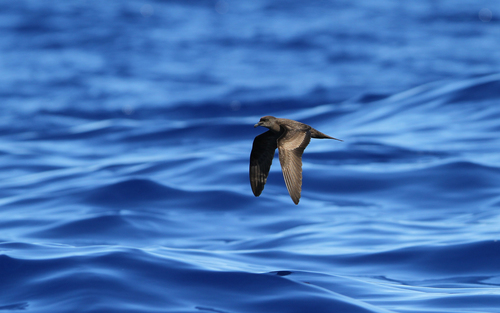
アナドリ (Bulweria bulwerii) アナドリ

メディア

読み込み中…

要点

マツダイラのクロウミツバメとアナドリを区別する最も信頼できるフィールドマークは、マツダイラの黒っぽいアリュラが暗い初列風切羽の白い基部と対照を成す組み合わせで、飛行中に最もよく見られます。さらに、長く深く分岐した尾と長いフック状のくちばしも特徴です。一方、アナドリは均一な茶色の羽毛を持ち、長く尖った尾を持っていますが、対照的な翼のパターンが欠けており、より細長く真っ直ぐなくちばしを持っています。両種は長い翼を持っていますが、マツダイラのクロウミツバメはより分岐した尾を持ち、翼のコントラストがより鮮明に見えます。一方、アナドリはより均一な茶色で、分岐があまり目立ちません。これらのマークは成鳥や古い幼鳥に最も有用です。幼鳥特有の翼のパターンは、利用可能なメモには詳しく記載されていません。

識別のコツ

  1. 上翼パターン(成鳥/古い幼鳥): マツダイラのクロウミツバメは、暗い初列風切羽の白い基部と対照を成す黒っぽいアリュラを示し、飛行中の微妙だが診断的なマークです。アナドリはこの対照が欠けており、上面は均一な茶色です。
  2. 尾の形状: マツダイラは長く深く分岐した尾を持ち、飛行中や止まっているときに明らかです。アナドリは長いが尖った(深く分岐していない)尾を持ち、分岐ははるかに目立ちません。
  3. くちばしの構造: マツダイラのクロウミツバメは、先端に明確なフックがある目立つ長いくちばしを持ち、近距離や良い写真で見ることができます。アナドリのくちばしはより細長く真っ直ぐで、明らかなフックがありません。
  4. 全体の色合い: マツダイラは全体的に暗いですが、前述の翼の対照があります。アナドリは均一な茶色で、翼に淡いまたは白いパネルや基部がありません。
  5. 飛行の印象: アナドリは、表面から食物を拾う際に浮遊感のあるねじれた飛行を持ち、しばしば安定して滑空しているように見えます。マツダイラは分岐した尾のために、より敏捷またはトンビのように見えることがありますが、これは微妙であり、他のマークと組み合わせて使用するのが最良です。
  6. サイズの印象: アナドリはわずかに大きく、よりがっしりしており、翼幅が長いですが、これは並べて見ないと判断が難しいです。
  7. 生息地と分布: マツダイラは非常に局所的で(繁殖のための火山諸島、越冬のためのインド洋)、アナドリは温暖な海で広く分布しています。北西太平洋またはインド洋の外で見られた場合、アナドリの方がはるかに可能性が高いです。
  8. 止まっているときの視点: マツダイラの長いフック状のくちばしと深く分岐した尾は、止まっているときにより明らかです。止まっているアナドリは、より細長いくちばしと尖った尾だけを示します。
  9. 年齢/季節の落とし穴: 利用可能なメモには、どちらの種についても特定の幼鳥または幼鳥の翼のパターンは記載されていないため、成鳥/古い幼鳥のマークに頼ってください。
  10. 羽毛の落とし穴: 照明が悪い場合、マツダイラの翼の対照は見えにくいかもしれません。バックアップマークとして尾の形状とくちばしの構造に焦点を当ててください。
  11. 声: ソースには音声の違いは記載されていません。分離のために呼び声に頼らないでください。
  12. 性別: どちらの種についても性差は記載されていません。すべてのマークは両性に適用されます。
  13. 文脈: 繁殖コロニーの近くで見られた場合、知られている範囲を確認してください。マツダイラのクロウミツバメは非常に範囲が制限されています。
  14. 混乱のリスク: 両者は長い翼を持つ暗い海鳥ですが、マツダイラの翼の対照、分岐した尾、フック状のくちばしの組み合わせは、同じサイズの他のペトレルとは異なります。
  15. 疑わしい場合: 鳥が均一な茶色の羽毛を示し、翼の対照がなく、尖った(分岐していない)尾だけを持っている場合、アナドリの可能性が最も高いです。特に火山諸島やインド洋の外では。

大きさ

アナドリは全体的にわずかに大きく、長さ25〜29 cm、翼幅78〜90 cmです [wikipedia]。マツダイラのクロウミツバメの正確な測定値はソースには記載されていませんが、構造的には長い尾と長いくちばしを持つと説明されており、特に飛行中により細長く見えることがあります。両者は長い翼を持つ海洋性の鳥ですが、アナドリは一般的によりがっしりしており、長い翼を持っています。一方、マツダイラのクロウミツバメの分岐した尾は、より細長く後方重心に見えることがあります。

羽色

マツダイラのクロウミツバメ(すべての年齢で記載されている場合)の主要な羽毛の特徴は、暗い初列風切羽の白い基部によってオフセットされた黒っぽいアリュラであり、飛行中の上翼に微妙だが診断的な対照を生み出します [wikipedia]。尾は長く深く分岐しており、全体の色合いは暗いですが、翼の対照はユニークです。一方、アナドリは、体と翼全体が均一な茶色で、初列風切羽やアリュラに対照的な淡いまたは白いパネルや基部がなく、尾は長く尖っており、深く分岐していません。利用可能なメモには、どちらの種についても年齢特有の幼鳥または幼鳥の翼のパターンは記載されていないため、これらの対照は成鳥や古い幼鳥に最も信頼できます。

行動

アナドリは、海面からプランクトン食物を拾う際の浮遊感のあるねじれた飛行で知られています [wikipedia]。マツダイラのクロウミツバメの飛行スタイルは、ソースには詳細に記載されていませんが、長い分岐した尾は、アナドリのより安定した滑空飛行と比較して、よりトンビのようなまたは敏捷な外観を与えるかもしれません。両者は外洋性で、コロニーを除いて止まっているところはほとんど見られません。

生息環境

マツダイラのクロウミツバメは、北西太平洋の火山諸島でのみ繁殖し、インド洋で越冬するため、希少で非常に局所的な種です [wikipedia]。アナドリは、アトランティック、インド、太平洋の熱帯および亜熱帯地域に広く分布しています [wikipedia]。両者は繁殖シーズン以外は厳密に外洋性ですが、アナドリはほとんどの海洋地域で出会う可能性がはるかに高いです。

より良い説明を送る

比較と同じ項目を使ってください。文章はすぐに公開されます。

The most reliable field mark to separate Matsudaira's Storm-Petrel from Bulwer's Petrel is the combination of Matsudaira's blackish alula contrasting with white bases to the dark primaries, best seen in flight, along with its long, deeply forked tail and long, hooked bill. Bulwer's Petrel, in contrast, shows uniform brown plumage with a long, pointed tail but lacks the contrasting wing pattern and has a more slender, straight bill. Both species are long-winged, but Matsudaira's Storm-Petrel appears more fork-tailed and shows sharper contrast in the wing, while Bulwer's Petrel looks more uniformly brown and less sharply forked. These marks are most useful for adults and older immatures; juvenile-specific wing patterns are not detailed in the available notes.

  1. Upperwing pattern (adults/older immatures): Matsudaira's Storm-Petrel shows a blackish alula contrasting with white bases to the dark primaries, a subtle but diagnostic mark in flight. Bulwer's Petrel lacks this contrast and is uniformly brown above.
  2. Tail shape: Matsudaira's has a long, deeply forked tail, often obvious in flight and when perched. Bulwer's Petrel has a long but only pointed (not deeply forked) tail; the fork is much less pronounced.
  3. Bill structure: Matsudaira's Storm-Petrel has a noticeably long bill with a pronounced hook at the tip, visible at close range or in good photos. Bulwer's Petrel's bill is more slender and straight, lacking the obvious hook.
  4. Overall coloration: Matsudaira's is dark overall but with the aforementioned wing contrast; Bulwer's is a uniform brown, lacking any pale or white panels or bases on the wings.
  5. Flight jizz: Bulwer's Petrel has a buoyant, twisting flight as it picks food from the surface, often appearing steady and gliding. Matsudaira's may appear more agile or tern-like due to its forked tail, though this is subtle and best used in combination with other marks.
  6. Size impression: Bulwer's Petrel is slightly larger and bulkier, with a longer wingspan, but this is hard to judge unless seen side by side.
  7. Habitat and range: Matsudaira's is extremely localized (Volcano Islands for breeding, Indian Ocean for wintering), while Bulwer's is widespread in warm oceans. If seen outside the northwest Pacific or Indian Ocean, Bulwer's is far more likely.
  8. Perched views: Matsudaira's long, hooked bill and deeply forked tail are more apparent when perched. Bulwer's Petrel perched shows a more slender bill and only a pointed tail.
  9. Age/season pitfalls: No specific juvenile or immature wing patterns are described for either species in the available notes, so rely on adult/older immature marks.
  10. Plumage pitfalls: In poor light, Matsudaira's wing contrast may be hard to see; focus on tail shape and bill structure as backup marks.
  11. Voice: No vocal differences are described in the sources; do not rely on calls for separation.
  12. Sex: No sexual dimorphism is described for either species; all marks apply to both sexes.
  13. Context: If seen near breeding colonies, check the known range—Matsudaira's Storm-Petrel is highly range-restricted.
  14. Confusion risk: Both are long-winged, dark seabirds, but the combination of Matsudaira's wing contrast, forked tail, and hooked bill is unique among similar-sized petrels.
  15. When in doubt: If the bird shows a uniform brown plumage with no wing contrast and only a pointed (not forked) tail, Bulwer's Petrel is most likely, especially outside the Volcano Islands or Indian Ocean.

Bulwer's Petrel is slightly larger overall, measuring 25–29 cm in length with a wingspan of 78–90 cm [wikipedia]. Matsudaira's Storm-Petrel's precise measurements are not given in the sources, but structurally it is described as long-tailed and long-billed, which may make it appear more elongated, especially in flight. Both are long-winged oceanic birds, but Bulwer's Petrel is generally bulkier and longer-winged, while Matsudaira's Storm-Petrel's forked tail can make it look more slender and rear-heavy.

For Matsudaira's Storm-Petrel (all ages where noted), the key plumage feature is the blackish alula offset by white bases to the otherwise dark primaries, creating a subtle but diagnostic contrast on the upperwing in flight [wikipedia]. The tail is long and deeply forked, and the overall coloration is dark, but the wing contrast is unique. Bulwer's Petrel, by contrast, is uniformly brown across the body and wings, with no contrasting pale or white panels or bases on the primaries or alula, and the tail is long and pointed, not deeply forked. No age-specific juvenile or immature wing patterns are described for either species in the available notes, so these contrasts are most reliable for adults and older immatures.

Bulwer's Petrel is noted for its buoyant, twisting flight as it picks planktonic food items from the ocean surface [wikipedia]. Matsudaira's Storm-Petrel's flight style is not described in detail in the sources, but its long, forked tail may give it a more tern-like or agile appearance compared to the steadier, gliding flight of Bulwer's. Both are pelagic and rarely seen perched except at colonies.

Matsudaira's Storm-Petrel breeds only in the Volcano Islands in the northwest Pacific and winters in the Indian Ocean, making it a rare and highly localized species [wikipedia]. Bulwer's Petrel is much more widespread, found across tropical and subtropical regions of the Atlantic, Indian, and Pacific Oceans [wikipedia]. Both are strictly pelagic outside the breeding season, but Bulwer's is far more likely to be encountered in most oceanic regions.

変更を破棄しますか?

保存していない編集があります。今離れると失われます。

クロウミツバメ · アナドリ · 苦手な鳥