

Motmot

Manx Shearwater vs Balearic Shearwater

Puffinus puffinus versus Puffinus mauretanicus

Play a quiz with Manx Shearwater and Balearic Shearwater
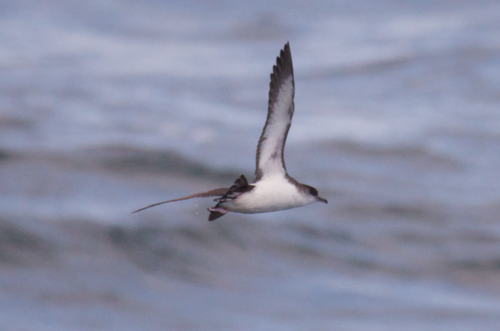
Manx Shearwater (Puffinus puffinus) Manx Shearwater
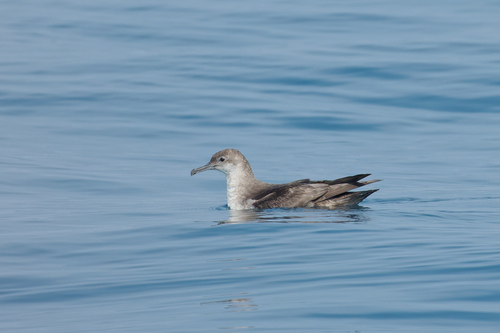
Balearic Shearwater (Puffinus mauretanicus) Balearic Shearwater

Media

Loading…

In short

The most reliable field mark between Manx and Balearic Shearwater is the contrast between the upperparts and underparts in flight: Manx Shearwater shows crisp black-and-white contrast, while Balearic Shearwater appears duskier and less sharply marked, with brownish upperparts and dirty, less white underparts. Both species share a similar 'shearing' flight style and overall shape, but Balearic looks duskier and less clean-cut, especially underneath. Separating them at sea can be challenging, especially in poor light or at distance, but careful attention to plumage contrast and overall brightness is key. Structural differences are subtle and not usually diagnostic in the field.

Identification tips

  1. Plumage contrast is key: Manx Shearwater shows crisp, clean black-and-white contrast between the upperparts and underparts in all plumages; Balearic Shearwater is duskier, with brownish upperparts and dirty, less white underparts. This is the single most reliable field mark.
  2. Underwing and belly brightness: Manx's underwing and belly are bright white and sharply set off from the dark upperparts. Balearic's underwing and belly are off-white to brownish, often appearing smudgy or dingy, with less clear separation from the upperparts.
  3. Overall tone: Manx appears 'clean' and sharply marked; Balearic looks more uniformly dark or 'muddy', especially underneath. In poor light, Balearic can look almost entirely brownish below, while Manx still shows white.
  4. Flight style is not diagnostic: Both species have the same 'shearing' flight, so do not rely on flight action alone.
  5. No age-specific wing patterns: There are no distinctive juvenile or immature upperwing or underwing patterns described for separating these species; the main difference is overall contrast, which applies to all ages.
  6. Structural features are similar: Bill shape, tail, and wing proportions are not reliably different in the field between these two species.
  7. Habitat and range: If seen in the breeding season, Manx is expected in the North Atlantic and Balearic in the western Mediterranean. However, both can occur as non-breeders or migrants outside these areas, so range is only a supporting clue.
  8. Beware of light conditions: In dull or backlit conditions, Manx can look darker and Balearic can appear even duskier, making separation harder. Always try to assess contrast in good light.
  9. Mixed flocks: In areas where both species occur, check each bird carefully; do not assume all birds in a flock are the same species.
  10. No vocal field marks: Calls are not described as useful for separation in the field in the provided sources.
  11. Sexes similar: Both species are sexually monomorphic in plumage and structure; sex is not a field mark.
  12. Juveniles and adults: The same contrast-based marks apply to both adults and juveniles; there are no age-specific traps noted.
  13. Pitfall: confusion with Yelkouan Shearwater: Balearic is very similar to Yelkouan Shearwater, but this is not relevant when only comparing to Manx.
  14. Summary tip: If the bird looks clean, black-and-white and sharply marked, it is likely Manx. If it looks brownish and dirty below, with less clear contrast, suspect Balearic.

Size

Both species are medium-sized shearwaters with overlapping measurements: Manx Shearwater is 30–38 cm long with a 76–89 cm wingspan and an average mass of 521 g [wikidata]. Balearic Shearwater is very similar in size, at 34–39 cm length and 78–90 cm wingspan [wikipedia]. In the field, size is not a reliable separator, as both appear nearly identical and overlap extensively.

Plumage

Plumage contrast is the main field mark. Manx Shearwater (all ages) shows sharply defined blackish upperparts and clean white underparts, giving a striking, high-contrast look in flight—especially noticeable in the underwing and belly. Balearic Shearwater (all ages) is duskier overall, with dark brown upperparts and dirty, off-white or brownish underparts; the contrast between upper and lower surfaces is much less pronounced, so the bird looks more uniformly dark and less 'crisp' than Manx. This difference is visible in all plumages, including juveniles and adults, and is especially apparent when birds bank or show their underparts. No age-specific upperwing or underwing patterns are noted as diagnostic between these two species in the sources provided.

Behaviour

Both species exhibit the classic 'shearing' flight of Puffinus shearwaters, gliding low over the waves with stiff, straight wings and only occasional wingbeats. Both look like a 'flying cross' with wings held at right angles to the body, and both alternate between showing dark upperparts and pale underparts as they bank. There are no behavioral differences noted in the sources that are useful for field separation.

Habitat

Manx Shearwater breeds in the North Atlantic, especially around the UK, Ireland, and nearby islands, and winters in the South Atlantic off South America and southern Africa. Balearic Shearwater breeds exclusively in the Balearic Islands (western Mediterranean) and is most often seen in the Mediterranean and nearby Atlantic waters. While their ranges can overlap outside the breeding season, especially in the western Mediterranean and eastern Atlantic, context can help: Balearic is the expected breeding shearwater in the Balearics, while Manx dominates in the North Atlantic. However, range overlap and vagrancy mean habitat alone is not diagnostic.

Submit a better description

Use the same sections as the comparison. Your text is published immediately.

The most reliable field mark between Manx and Balearic Shearwater is the contrast between the upperparts and underparts in flight: Manx Shearwater shows crisp black-and-white contrast, while Balearic Shearwater appears duskier and less sharply marked, with brownish upperparts and dirty, less white underparts. Both species share a similar 'shearing' flight style and overall shape, but Balearic looks duskier and less clean-cut, especially underneath. Separating them at sea can be challenging, especially in poor light or at distance, but careful attention to plumage contrast and overall brightness is key. Structural differences are subtle and not usually diagnostic in the field.

  1. Plumage contrast is key: Manx Shearwater shows crisp, clean black-and-white contrast between the upperparts and underparts in all plumages; Balearic Shearwater is duskier, with brownish upperparts and dirty, less white underparts. This is the single most reliable field mark.
  2. Underwing and belly brightness: Manx's underwing and belly are bright white and sharply set off from the dark upperparts. Balearic's underwing and belly are off-white to brownish, often appearing smudgy or dingy, with less clear separation from the upperparts.
  3. Overall tone: Manx appears 'clean' and sharply marked; Balearic looks more uniformly dark or 'muddy', especially underneath. In poor light, Balearic can look almost entirely brownish below, while Manx still shows white.
  4. Flight style is not diagnostic: Both species have the same 'shearing' flight, so do not rely on flight action alone.
  5. No age-specific wing patterns: There are no distinctive juvenile or immature upperwing or underwing patterns described for separating these species; the main difference is overall contrast, which applies to all ages.
  6. Structural features are similar: Bill shape, tail, and wing proportions are not reliably different in the field between these two species.
  7. Habitat and range: If seen in the breeding season, Manx is expected in the North Atlantic and Balearic in the western Mediterranean. However, both can occur as non-breeders or migrants outside these areas, so range is only a supporting clue.
  8. Beware of light conditions: In dull or backlit conditions, Manx can look darker and Balearic can appear even duskier, making separation harder. Always try to assess contrast in good light.
  9. Mixed flocks: In areas where both species occur, check each bird carefully; do not assume all birds in a flock are the same species.
  10. No vocal field marks: Calls are not described as useful for separation in the field in the provided sources.
  11. Sexes similar: Both species are sexually monomorphic in plumage and structure; sex is not a field mark.
  12. Juveniles and adults: The same contrast-based marks apply to both adults and juveniles; there are no age-specific traps noted.
  13. Pitfall: confusion with Yelkouan Shearwater: Balearic is very similar to Yelkouan Shearwater, but this is not relevant when only comparing to Manx.
  14. Summary tip: If the bird looks clean, black-and-white and sharply marked, it is likely Manx. If it looks brownish and dirty below, with less clear contrast, suspect Balearic.

Both species are medium-sized shearwaters with overlapping measurements: Manx Shearwater is 30–38 cm long with a 76–89 cm wingspan and an average mass of 521 g [wikidata]. Balearic Shearwater is very similar in size, at 34–39 cm length and 78–90 cm wingspan [wikipedia]. In the field, size is not a reliable separator, as both appear nearly identical and overlap extensively.

Plumage contrast is the main field mark. Manx Shearwater (all ages) shows sharply defined blackish upperparts and clean white underparts, giving a striking, high-contrast look in flight—especially noticeable in the underwing and belly. Balearic Shearwater (all ages) is duskier overall, with dark brown upperparts and dirty, off-white or brownish underparts; the contrast between upper and lower surfaces is much less pronounced, so the bird looks more uniformly dark and less 'crisp' than Manx. This difference is visible in all plumages, including juveniles and adults, and is especially apparent when birds bank or show their underparts. No age-specific upperwing or underwing patterns are noted as diagnostic between these two species in the sources provided.

Both species exhibit the classic 'shearing' flight of Puffinus shearwaters, gliding low over the waves with stiff, straight wings and only occasional wingbeats. Both look like a 'flying cross' with wings held at right angles to the body, and both alternate between showing dark upperparts and pale underparts as they bank. There are no behavioral differences noted in the sources that are useful for field separation.

Manx Shearwater breeds in the North Atlantic, especially around the UK, Ireland, and nearby islands, and winters in the South Atlantic off South America and southern Africa. Balearic Shearwater breeds exclusively in the Balearic Islands (western Mediterranean) and is most often seen in the Mediterranean and nearby Atlantic waters. While their ranges can overlap outside the breeding season, especially in the western Mediterranean and eastern Atlantic, context can help: Balearic is the expected breeding shearwater in the Balearics, while Manx dominates in the North Atlantic. However, range overlap and vagrancy mean habitat alone is not diagnostic.

Discard your changes?

You have unsaved edits. If you leave now, those changes will be lost.

Manx Shearwater · Balearic Shearwater · My Tricky Birds