

Motmot

マンクスミズナギドリ 対 ヨーロッパミズナギドリ

Puffinus puffinus 対 Puffinus mauretanicus

マンクスミズナギドリとヨーロッパミズナギドリのクイズ
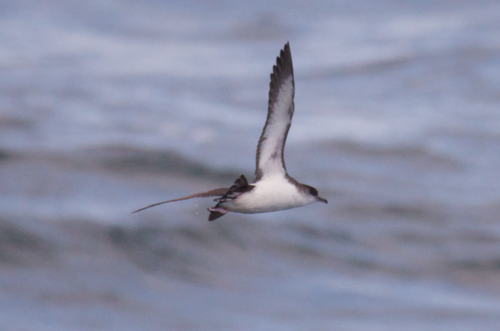
マンクスミズナギドリ (Puffinus puffinus) マンクスミズナギドリ
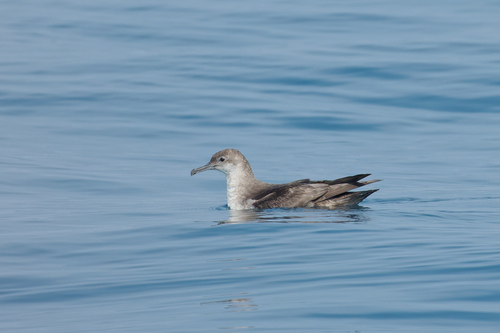
ヨーロッパミズナギドリ (Puffinus mauretanicus) ヨーロッパミズナギドリ

メディア

読み込み中…

要点

マン島ミズナギドリとヨーロッパミズナギドリの最も信頼できるフィールドマークは、飛行中の上面と下面のコントラストです:マン島ミズナギドリは鮮明な白黒のコントラストを示し、ヨーロッパミズナギドリはより暗く、はっきりとしたマーキングが少なく、茶色がかった上面と汚れた、白が少ない下面を持っています。両種は似たような「シアリング」飛行スタイルと全体的な形状を共有していますが、ヨーロッパはより暗く、特に下面がきれいに見えません。海上での分離は難しい場合があり、特に光が悪い場合や距離がある場合は、羽毛のコントラストと全体的な明るさに注意を払うことが重要です。構造的な違いは微妙で、通常はフィールドで診断的ではありません。

識別のコツ

  1. 羽毛のコントラストが重要:マン島ミズナギドリはすべての羽毛で上面と下面の間に鮮明でクリーンな白黒のコントラストを示します;ヨーロッパミズナギドリはより暗く、茶色がかった上面と汚れた、白が少ない下面を持っています。これは最も信頼できるフィールドマークです。
  2. 下翼と腹部の明るさ:マン島の下翼と腹部は明るい白で、暗い上面からはっきりと区別されます。ヨーロッパの下翼と腹部はオフホワイトから茶色がかり、しばしばぼやけて見え、上面との区別があまり明確ではありません。
  3. 全体的なトーン:マン島は「クリーン」で鮮明にマーキングされているように見えます;ヨーロッパはより均一に暗いか「泥っぽい」ように見え、特に下面で顕著です。光が悪い場合、ヨーロッパはほぼ完全に茶色がかって見えることがありますが、マン島はまだ白を示します。
  4. 飛行スタイルは診断的ではない:両種は同じ「シアリング」飛行を持っているため、飛行行動だけに頼らないでください。
  5. 年齢特有の翼パターンはない:これらの種を分けるために記載された特徴的な幼鳥や未成熟の上翼または下翼のパターンはありません;主な違いは全体的なコントラストで、すべての年齢に適用されます。
  6. 構造的特徴は似ている:くちばしの形、尾、翼の比率は、フィールドでこれらの2種の間で信頼できる違いはありません。
  7. 生息地と範囲:繁殖期に見られる場合、マン島は北大西洋に期待され、ヨーロッパは西地中海に期待されます。しかし、両者はこれらの地域の外で非繁殖者や渡り鳥として発生することがあるため、範囲はあくまで補助的な手がかりです。
  8. 光の条件に注意:鈍いまたは逆光の条件では、マン島はより暗く見え、ヨーロッパはさらに暗く見えることがあり、分離が難しくなります。常に良い光の中でコントラストを評価するようにしてください。
  9. 混成群れ:両種が発生する地域では、各鳥を注意深く確認してください;群れのすべての鳥が同じ種であると仮定しないでください。
  10. 音声フィールドマークはない:提供された情報源では、呼び声はフィールドでの分離に役立つとは記載されていません。
  11. 性別は似ている:両種は羽毛と構造において性別的に単形であり、性別はフィールドマークではありません。
  12. 幼鳥と成鳥:同じコントラストに基づくマークは、成鳥と幼鳥の両方に適用されます;年齢特有の罠は記載されていません。
  13. 落とし穴:チチュウカイミズナギドリとの混同:ヨーロッパはチチュウカイミズナギドリに非常に似ていますが、これはマン島と比較する際には関連性がありません。
  14. 要約のヒント:鳥がクリーンで白黒で鮮明にマーキングされているように見える場合、マン島の可能性が高いです。もし茶色がかり、下面が汚れて見え、コントラストがあまり明確でない場合は、ヨーロッパを疑ってください。

大きさ

両種は中型のミズナギドリで、測定値が重なっています:マン島ミズナギドリは30〜38 cmの長さで、76〜89 cmの翼幅、平均質量は521 gです [wikidata]。ヨーロッパミズナギドリは非常に似たサイズで、34〜39 cmの長さと78〜90 cmの翼幅です [wikipedia]。フィールドでは、サイズは信頼できる分離要因ではなく、両者はほぼ同一に見え、広範囲に重なります。

羽色

羽毛のコントラストが主なフィールドマークです。マン島ミズナギドリ(すべての年齢)は、鮮明に定義された黒っぽい上面とクリーンな白い下面を示し、飛行中に目を引く高コントラストの外観を与えます—特に下翼と腹部で顕著です。ヨーロッパミズナギドリ(すべての年齢)は全体的により暗く、暗い茶色の上面と汚れたオフホワイトまたは茶色がかった下面を持っています;上面と下面の間のコントラストははるかに目立たず、鳥はより均一に暗く、マン島よりも「鮮明さ」が少なく見えます。この違いはすべての羽毛において可視であり、幼鳥と成鳥を含み、特に鳥がバンクしたり下面を見せたりする際に顕著です。提供された情報源では、これらの2種の間で診断的な年齢特有の上翼または下翼のパターンは記載されていません。

行動

両種はPuffinusミズナギドリの典型的な「シアリング」飛行を示し、波の上を低く滑空し、硬直したまっすぐな翼で時折の羽ばたきのみを行います。両者は体に対して直角に翼を持ち、バンクする際に暗い上面と淡い下面を交互に見せます。フィールドでの分離に役立つ行動の違いは、提供された情報源には記載されていません。

生息環境

マン島ミズナギドリは北大西洋、特にイギリス、アイルランド、近隣の島々で繁殖し、南大西洋の南アメリカと南アフリカ沖で越冬します。ヨーロッパミズナギドリはバレアレス諸島(西地中海)でのみ繁殖し、地中海および近隣の大西洋の水域で最もよく見られます。繁殖期の外では範囲が重なることがありますが、特に西地中海と東大西洋では、文脈が役立ちます:バレアレスでは期待される繁殖ミズナギドリはヨーロッパであり、マン島は北大西洋で優勢です。しかし、範囲の重複と迷走は、生息地だけでは診断的ではないことを意味します。

より良い説明を送る

比較と同じ項目を使ってください。文章はすぐに公開されます。

The most reliable field mark between Manx and Balearic Shearwater is the contrast between the upperparts and underparts in flight: Manx Shearwater shows crisp black-and-white contrast, while Balearic Shearwater appears duskier and less sharply marked, with brownish upperparts and dirty, less white underparts. Both species share a similar 'shearing' flight style and overall shape, but Balearic looks duskier and less clean-cut, especially underneath. Separating them at sea can be challenging, especially in poor light or at distance, but careful attention to plumage contrast and overall brightness is key. Structural differences are subtle and not usually diagnostic in the field.

  1. Plumage contrast is key: Manx Shearwater shows crisp, clean black-and-white contrast between the upperparts and underparts in all plumages; Balearic Shearwater is duskier, with brownish upperparts and dirty, less white underparts. This is the single most reliable field mark.
  2. Underwing and belly brightness: Manx's underwing and belly are bright white and sharply set off from the dark upperparts. Balearic's underwing and belly are off-white to brownish, often appearing smudgy or dingy, with less clear separation from the upperparts.
  3. Overall tone: Manx appears 'clean' and sharply marked; Balearic looks more uniformly dark or 'muddy', especially underneath. In poor light, Balearic can look almost entirely brownish below, while Manx still shows white.
  4. Flight style is not diagnostic: Both species have the same 'shearing' flight, so do not rely on flight action alone.
  5. No age-specific wing patterns: There are no distinctive juvenile or immature upperwing or underwing patterns described for separating these species; the main difference is overall contrast, which applies to all ages.
  6. Structural features are similar: Bill shape, tail, and wing proportions are not reliably different in the field between these two species.
  7. Habitat and range: If seen in the breeding season, Manx is expected in the North Atlantic and Balearic in the western Mediterranean. However, both can occur as non-breeders or migrants outside these areas, so range is only a supporting clue.
  8. Beware of light conditions: In dull or backlit conditions, Manx can look darker and Balearic can appear even duskier, making separation harder. Always try to assess contrast in good light.
  9. Mixed flocks: In areas where both species occur, check each bird carefully; do not assume all birds in a flock are the same species.
  10. No vocal field marks: Calls are not described as useful for separation in the field in the provided sources.
  11. Sexes similar: Both species are sexually monomorphic in plumage and structure; sex is not a field mark.
  12. Juveniles and adults: The same contrast-based marks apply to both adults and juveniles; there are no age-specific traps noted.
  13. Pitfall: confusion with Yelkouan Shearwater: Balearic is very similar to Yelkouan Shearwater, but this is not relevant when only comparing to Manx.
  14. Summary tip: If the bird looks clean, black-and-white and sharply marked, it is likely Manx. If it looks brownish and dirty below, with less clear contrast, suspect Balearic.

Both species are medium-sized shearwaters with overlapping measurements: Manx Shearwater is 30–38 cm long with a 76–89 cm wingspan and an average mass of 521 g [wikidata]. Balearic Shearwater is very similar in size, at 34–39 cm length and 78–90 cm wingspan [wikipedia]. In the field, size is not a reliable separator, as both appear nearly identical and overlap extensively.

Plumage contrast is the main field mark. Manx Shearwater (all ages) shows sharply defined blackish upperparts and clean white underparts, giving a striking, high-contrast look in flight—especially noticeable in the underwing and belly. Balearic Shearwater (all ages) is duskier overall, with dark brown upperparts and dirty, off-white or brownish underparts; the contrast between upper and lower surfaces is much less pronounced, so the bird looks more uniformly dark and less 'crisp' than Manx. This difference is visible in all plumages, including juveniles and adults, and is especially apparent when birds bank or show their underparts. No age-specific upperwing or underwing patterns are noted as diagnostic between these two species in the sources provided.

Both species exhibit the classic 'shearing' flight of Puffinus shearwaters, gliding low over the waves with stiff, straight wings and only occasional wingbeats. Both look like a 'flying cross' with wings held at right angles to the body, and both alternate between showing dark upperparts and pale underparts as they bank. There are no behavioral differences noted in the sources that are useful for field separation.

Manx Shearwater breeds in the North Atlantic, especially around the UK, Ireland, and nearby islands, and winters in the South Atlantic off South America and southern Africa. Balearic Shearwater breeds exclusively in the Balearic Islands (western Mediterranean) and is most often seen in the Mediterranean and nearby Atlantic waters. While their ranges can overlap outside the breeding season, especially in the western Mediterranean and eastern Atlantic, context can help: Balearic is the expected breeding shearwater in the Balearics, while Manx dominates in the North Atlantic. However, range overlap and vagrancy mean habitat alone is not diagnostic.

変更を破棄しますか?

保存していない編集があります。今離れると失われます。

マンクスミズナギドリ · ヨーロッパミズナギドリ · 苦手な鳥