

Motmot

Malaysian Plover vs Kentish Plover

Anarhynchus peronii versus Anarhynchus alexandrinus

Play a quiz with Malaysian Plover and Kentish Plover
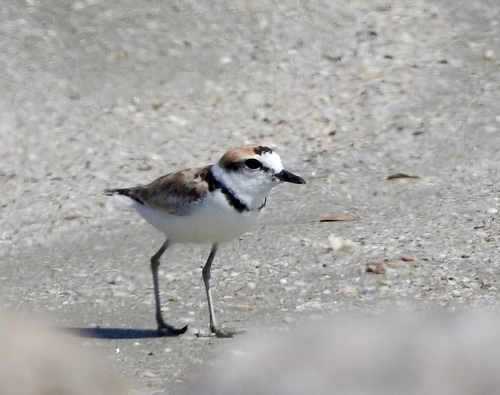
Malaysian Plover (Anarhynchus peronii) Malaysian Plover
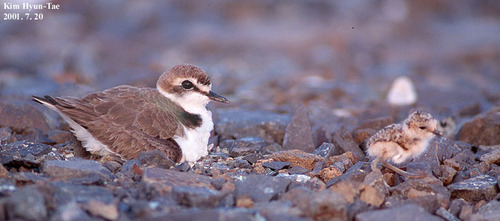
Kentish Plover (Anarhynchus alexandrinus) Kentish Plover

Media

Loading…

In short

The most reliable field mark between Malaysian Plover and Kentish Plover is the male Kentish Plover’s bold, dark head markings and incomplete breast bands, which are absent or much weaker in Malaysian Plover. Females and non-breeding birds of both species can look very similar, but Kentish Plover males in breeding plumage show strong sexual dimorphism, while Malaysian Plover is more subtly marked. Both are small, pale plovers with dark legs and bills, but habitat and subtle plumage cues help separate them. Juvenile and non-breeding birds are especially challenging, so attention to head and breast pattern, as well as context, is crucial.

Identification tips

  1. Male Kentish Plover in breeding plumage: Look for a bold black horizontal bar across the forehead, black ear coverts, and two incomplete dark breast bands. These are absent in Malaysian Plover and in female/non-breeding Kentish Plovers.
  2. Rufous crown and nape (Kentish Plover male): A rufous wash on the crown and nape is typical of breeding male Kentish Plover, but not shown by Malaysian Plover.
  3. Breast band: Malaysian Plover lacks the strong, dark, incomplete breast bands seen in male Kentish Plover; any breast markings on Malaysian Plover are faint and not as well defined.
  4. Head pattern in females and non-breeding birds: Female and non-breeding Kentish Plovers lose much of the bold head and breast pattern, making them very similar to Malaysian Plover. In these cases, separation is very difficult and may not be possible on plumage alone.
  5. Juvenile/immature birds: Both species are pale and lack strong markings as juveniles, making them nearly indistinguishable in the field; do not rely on plumage for separation at this age.
  6. Bill and leg color: Both species have dark bills and legs, so these features do not help with identification.
  7. Size and shape: Both are small, compact plovers with similar structure; size is not a reliable field mark.
  8. Habitat context: Malaysian Plover is a Southeast Asian beach and salt flat specialist; Kentish Plover occurs in a much wider range of habitats, including inland saline lakes and marshes. Use location as a supporting clue, not a primary mark.
  9. Behavior: Both species show similar territorial and distraction behaviors; these are not diagnostic.
  10. Seasonal change in Kentish Plover: Male Kentish Plovers are most distinctive early in the breeding season, when their head and breast markings are at their boldest. As the season progresses, these marks may fade and become less useful for identification.
  11. Sexual dimorphism: Only Kentish Plover shows strong sexual dimorphism in breeding plumage; Malaysian Plover is more subtly marked in both sexes.
  12. Local abundance: If using eBird or local checklists, note that Kentish Plover is far more widespread and common globally, but Malaysian Plover is the default on Southeast Asian beaches.
  13. When in doubt: If you cannot see bold head or breast markings and are in Southeast Asia on a beach, Malaysian Plover is likely. If you see a male with strong black and rufous head pattern and incomplete breast bands, it is a Kentish Plover.
  14. No reliable flight pattern difference: Neither species is described as having a distinctive upperwing or flight pattern for field separation.
  15. Consult local guides: In difficult cases (e.g., juveniles, females, non-breeding birds), consult local experts or photographic guides for subtle differences, but expect overlap and uncertainty.

Size

Both species are very small plovers and overlap in size, with Malaysian Plover weighing about 35–42 g [wikipedia] and Kentish Plover averaging 47 g [wikidata]. In the field, this size difference is negligible and not a reliable separation point. Both have similar proportions and overall jizz, so do not rely on size alone.

Plumage

Plumage differences are most obvious in adult males during the breeding season. Male Kentish Plovers have a bold black horizontal bar across the forehead, black ear coverts, a rufous nape and crown, and two incomplete dark breast bands on each side of the breast. These markings are much reduced or absent in females and non-breeding birds, making them much more similar to Malaysian Plover. Malaysian Plover lacks the bold black head and breast markings of male Kentish Plover; instead, both sexes show a more subdued pattern, with no strong black on the head or breast. Juvenile and first-winter birds of both species are pale and lack strong markings, making separation extremely difficult on plumage alone. No distinctive upperwing or flight pattern differences are described for either species in the sources, so focus on head and breast pattern when birds are perched or close.

Behaviour

Both species are territorial and nest on open ground, with parents defending their nests and using distraction displays. Kentish Plover is noted for especially flexible breeding systems and more aggressive territorial defense, with males often fighting and both sexes using distraction displays. Malaysian Plover is less well documented behaviorally in the sources but is also territorial and nests on open beaches. Behavioral differences are subtle and not reliable for field separation.

Habitat

Habitat can be a useful clue: Malaysian Plover is restricted to beaches and salt flats in Southeast Asia, while Kentish Plover has a much broader range, breeding on saline lakes, lagoons, coasts, sand dunes, marshes, semi-arid desert, and even tundra from North Africa through Eurasia. If you are in Southeast Asia on a sandy beach or salt flat, Malaysian Plover is more likely; in more varied or inland habitats, especially outside Southeast Asia, Kentish Plover is expected. However, both can occur on coastal beaches, so always confirm with plumage.

Submit a better description

Use the same sections as the comparison. Your text is published immediately.

The most reliable field mark between Malaysian Plover and Kentish Plover is the male Kentish Plover’s bold, dark head markings and incomplete breast bands, which are absent or much weaker in Malaysian Plover. Females and non-breeding birds of both species can look very similar, but Kentish Plover males in breeding plumage show strong sexual dimorphism, while Malaysian Plover is more subtly marked. Both are small, pale plovers with dark legs and bills, but habitat and subtle plumage cues help separate them. Juvenile and non-breeding birds are especially challenging, so attention to head and breast pattern, as well as context, is crucial.

  1. Male Kentish Plover in breeding plumage: Look for a bold black horizontal bar across the forehead, black ear coverts, and two incomplete dark breast bands. These are absent in Malaysian Plover and in female/non-breeding Kentish Plovers.
  2. Rufous crown and nape (Kentish Plover male): A rufous wash on the crown and nape is typical of breeding male Kentish Plover, but not shown by Malaysian Plover.
  3. Breast band: Malaysian Plover lacks the strong, dark, incomplete breast bands seen in male Kentish Plover; any breast markings on Malaysian Plover are faint and not as well defined.
  4. Head pattern in females and non-breeding birds: Female and non-breeding Kentish Plovers lose much of the bold head and breast pattern, making them very similar to Malaysian Plover. In these cases, separation is very difficult and may not be possible on plumage alone.
  5. Juvenile/immature birds: Both species are pale and lack strong markings as juveniles, making them nearly indistinguishable in the field; do not rely on plumage for separation at this age.
  6. Bill and leg color: Both species have dark bills and legs, so these features do not help with identification.
  7. Size and shape: Both are small, compact plovers with similar structure; size is not a reliable field mark.
  8. Habitat context: Malaysian Plover is a Southeast Asian beach and salt flat specialist; Kentish Plover occurs in a much wider range of habitats, including inland saline lakes and marshes. Use location as a supporting clue, not a primary mark.
  9. Behavior: Both species show similar territorial and distraction behaviors; these are not diagnostic.
  10. Seasonal change in Kentish Plover: Male Kentish Plovers are most distinctive early in the breeding season, when their head and breast markings are at their boldest. As the season progresses, these marks may fade and become less useful for identification.
  11. Sexual dimorphism: Only Kentish Plover shows strong sexual dimorphism in breeding plumage; Malaysian Plover is more subtly marked in both sexes.
  12. Local abundance: If using eBird or local checklists, note that Kentish Plover is far more widespread and common globally, but Malaysian Plover is the default on Southeast Asian beaches.
  13. When in doubt: If you cannot see bold head or breast markings and are in Southeast Asia on a beach, Malaysian Plover is likely. If you see a male with strong black and rufous head pattern and incomplete breast bands, it is a Kentish Plover.
  14. No reliable flight pattern difference: Neither species is described as having a distinctive upperwing or flight pattern for field separation.
  15. Consult local guides: In difficult cases (e.g., juveniles, females, non-breeding birds), consult local experts or photographic guides for subtle differences, but expect overlap and uncertainty.

Both species are very small plovers and overlap in size, with Malaysian Plover weighing about 35–42 g [wikipedia] and Kentish Plover averaging 47 g [wikidata]. In the field, this size difference is negligible and not a reliable separation point. Both have similar proportions and overall jizz, so do not rely on size alone.

Plumage differences are most obvious in adult males during the breeding season. Male Kentish Plovers have a bold black horizontal bar across the forehead, black ear coverts, a rufous nape and crown, and two incomplete dark breast bands on each side of the breast. These markings are much reduced or absent in females and non-breeding birds, making them much more similar to Malaysian Plover. Malaysian Plover lacks the bold black head and breast markings of male Kentish Plover; instead, both sexes show a more subdued pattern, with no strong black on the head or breast. Juvenile and first-winter birds of both species are pale and lack strong markings, making separation extremely difficult on plumage alone. No distinctive upperwing or flight pattern differences are described for either species in the sources, so focus on head and breast pattern when birds are perched or close.

Both species are territorial and nest on open ground, with parents defending their nests and using distraction displays. Kentish Plover is noted for especially flexible breeding systems and more aggressive territorial defense, with males often fighting and both sexes using distraction displays. Malaysian Plover is less well documented behaviorally in the sources but is also territorial and nests on open beaches. Behavioral differences are subtle and not reliable for field separation.

Habitat can be a useful clue: Malaysian Plover is restricted to beaches and salt flats in Southeast Asia, while Kentish Plover has a much broader range, breeding on saline lakes, lagoons, coasts, sand dunes, marshes, semi-arid desert, and even tundra from North Africa through Eurasia. If you are in Southeast Asia on a sandy beach or salt flat, Malaysian Plover is more likely; in more varied or inland habitats, especially outside Southeast Asia, Kentish Plover is expected. However, both can occur on coastal beaches, so always confirm with plumage.

Discard your changes?

You have unsaved edits. If you leave now, those changes will be lost.

Malaysian Plover · Kentish Plover · My Tricky Birds