

Motmot

Malagasy Bulbul vs Seychelles Bulbul

Hypsipetes madagascariensis versus Hypsipetes crassirostris

Play a quiz with Malagasy Bulbul and Seychelles Bulbul
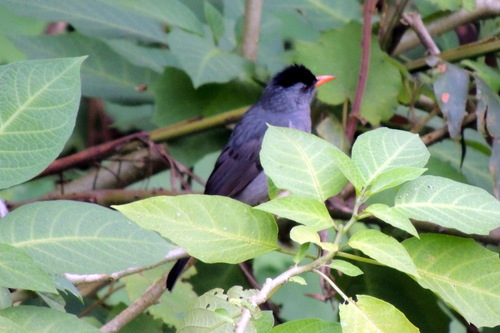
Malagasy Bulbul (Hypsipetes madagascariensis) Malagasy Bulbul
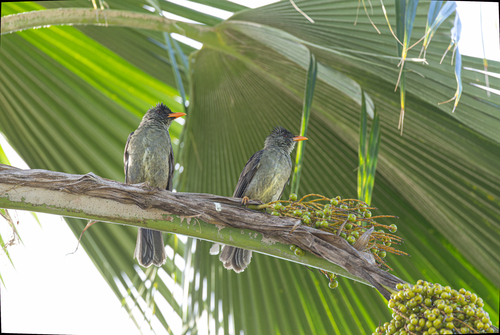
Seychelles Bulbul (Hypsipetes crassirostris) Seychelles Bulbul

Media

Loading…

In short

The most reliable way to separate Malagasy Bulbul from Seychelles Bulbul in the field is by location: Malagasy Bulbul is found only on Madagascar and nearby islands, while Seychelles Bulbul is strictly limited to the Seychelles. Both species are similar in overall structure and plumage, and there are no documented age-specific wing or flight pattern differences to use. If you encounter a bulbul on either archipelago, the local species is almost certainly the one present. When range is ambiguous (e.g., on a remote island or in captivity), subtle differences in bill thickness and local abundance may help, but visual field marks are not well documented for separating these two species.

Identification tips

  1. Range is diagnostic: If you are on Madagascar or its satellite islands, you are seeing Malagasy Bulbul; if you are on the Seychelles, you are seeing Seychelles Bulbul. This is by far the most reliable separation.
  2. Bill thickness (subtle): Seychelles Bulbul is sometimes referred to as 'thick-billed bulbul,' suggesting a slightly heavier bill, but this is a subtle and unreliable mark unless you have direct comparison or are familiar with both species.
  3. No age-specific wing or flight marks: There are no documented differences in juvenile or immature upperwing patterns, tail shapes, or flight silhouettes between the two species. Do not rely on these features.
  4. Plumage similarity: Both species have similar overall coloration and patterning; do not expect to separate them by plumage alone in the field.
  5. Behavioral similarity: Both are active, social, and vocal, with no behavioral quirks noted to separate them.
  6. Habitat within range: Both use a variety of wooded habitats, so habitat type is not diagnostic unless combined with range.
  7. Vocalizations not diagnostic: No distinctive calls or songs are described for either species in the sources; do not use voice for separation.
  8. Alternative names can cause confusion: Both species have been called 'black bulbul' or 'bulbul' of their respective islands; do not rely on common names for identification.
  9. No sexual dimorphism: There is no mention of sex-based plumage or size differences in either species.
  10. If in doubt, check location: For any bulbul seen in the region, always confirm your island or archipelago before attempting to separate these two species visually.

Size

No direct measurements are provided for either species in the sources, but both are medium-sized bulbuls. The Seychelles Bulbul is sometimes called 'thick-billed bulbul,' suggesting a slightly heavier bill compared to Malagasy Bulbul, but this is a subtle difference and not a reliable field mark without direct comparison. Overall body size is similar, and size alone is not a diagnostic feature between these two species.

Plumage

There are no documented differences in juvenile, immature, or adult plumage between Malagasy Bulbul and Seychelles Bulbul in the available sources. Both species are described as typical bulbuls with dark upperparts and paler underparts, and no unique wing or tail patterns are mentioned for any age class. No distinctive upperwing or flight marks are noted for separating immatures or adults.

Behaviour

Both species are typical bulbuls in behavior, being active, vocal, and often seen in pairs or small groups. No behavioral traits are described in the sources that would reliably separate Malagasy Bulbul from Seychelles Bulbul in the field.

Habitat

Habitat is the most useful context clue: Malagasy Bulbul is found throughout Madagascar and some nearby islands, while Seychelles Bulbul is restricted to the Seychelles, where it is common on several main islands. Both species use a range of wooded and forested habitats within their respective ranges, so habitat type alone is not diagnostic unless combined with geographic location.

Voice

No specific vocal differences are described in the available sources. Both species are known to be vocal, but without recordings or detailed descriptions, voice cannot be used to separate them.

Submit a better description

Use the same sections as the comparison. Your text is published immediately.

The most reliable way to separate Malagasy Bulbul from Seychelles Bulbul in the field is by location: Malagasy Bulbul is found only on Madagascar and nearby islands, while Seychelles Bulbul is strictly limited to the Seychelles. Both species are similar in overall structure and plumage, and there are no documented age-specific wing or flight pattern differences to use. If you encounter a bulbul on either archipelago, the local species is almost certainly the one present. When range is ambiguous (e.g., on a remote island or in captivity), subtle differences in bill thickness and local abundance may help, but visual field marks are not well documented for separating these two species.

  1. Range is diagnostic: If you are on Madagascar or its satellite islands, you are seeing Malagasy Bulbul; if you are on the Seychelles, you are seeing Seychelles Bulbul. This is by far the most reliable separation.
  2. Bill thickness (subtle): Seychelles Bulbul is sometimes referred to as 'thick-billed bulbul,' suggesting a slightly heavier bill, but this is a subtle and unreliable mark unless you have direct comparison or are familiar with both species.
  3. No age-specific wing or flight marks: There are no documented differences in juvenile or immature upperwing patterns, tail shapes, or flight silhouettes between the two species. Do not rely on these features.
  4. Plumage similarity: Both species have similar overall coloration and patterning; do not expect to separate them by plumage alone in the field.
  5. Behavioral similarity: Both are active, social, and vocal, with no behavioral quirks noted to separate them.
  6. Habitat within range: Both use a variety of wooded habitats, so habitat type is not diagnostic unless combined with range.
  7. Vocalizations not diagnostic: No distinctive calls or songs are described for either species in the sources; do not use voice for separation.
  8. Alternative names can cause confusion: Both species have been called 'black bulbul' or 'bulbul' of their respective islands; do not rely on common names for identification.
  9. No sexual dimorphism: There is no mention of sex-based plumage or size differences in either species.
  10. If in doubt, check location: For any bulbul seen in the region, always confirm your island or archipelago before attempting to separate these two species visually.

No direct measurements are provided for either species in the sources, but both are medium-sized bulbuls. The Seychelles Bulbul is sometimes called 'thick-billed bulbul,' suggesting a slightly heavier bill compared to Malagasy Bulbul, but this is a subtle difference and not a reliable field mark without direct comparison. Overall body size is similar, and size alone is not a diagnostic feature between these two species.

There are no documented differences in juvenile, immature, or adult plumage between Malagasy Bulbul and Seychelles Bulbul in the available sources. Both species are described as typical bulbuls with dark upperparts and paler underparts, and no unique wing or tail patterns are mentioned for any age class. No distinctive upperwing or flight marks are noted for separating immatures or adults.

Both species are typical bulbuls in behavior, being active, vocal, and often seen in pairs or small groups. No behavioral traits are described in the sources that would reliably separate Malagasy Bulbul from Seychelles Bulbul in the field.

Habitat is the most useful context clue: Malagasy Bulbul is found throughout Madagascar and some nearby islands, while Seychelles Bulbul is restricted to the Seychelles, where it is common on several main islands. Both species use a range of wooded and forested habitats within their respective ranges, so habitat type alone is not diagnostic unless combined with geographic location.

No specific vocal differences are described in the available sources. Both species are known to be vocal, but without recordings or detailed descriptions, voice cannot be used to separate them.

Discard your changes?

You have unsaved edits. If you leave now, those changes will be lost.

Malagasy Bulbul · Seychelles Bulbul · My Tricky Birds