

Motmot

Long-tailed Shrike vs Lesser Grey Shrike

Lanius schach versus Lanius minor

Play a quiz with Long-tailed Shrike and Lesser Grey Shrike
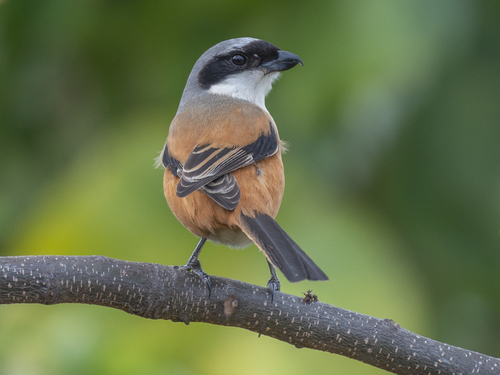
Long-tailed Shrike (Lanius schach) Long-tailed Shrike
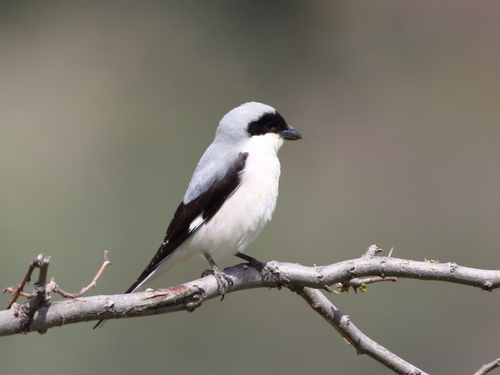
Lesser Grey Shrike (Lanius minor) Lesser Grey Shrike

Media

Loading…

In short

The most reliable way to separate Long-tailed Shrike from Lesser Grey Shrike is by focusing on tail structure and overall plumage contrast: Long-tailed Shrike has a distinctly long, narrow, and graduated tail with rufous flanks and rump, while Lesser Grey Shrike has a shorter tail and a cleaner, more monochrome grey, black, and white appearance with a pinkish flush on the underparts in adults. Juvenile Lesser Grey Shrikes are browner and less contrasting than any Long-tailed Shrike. Both species show a black facial mask, but the extent and tone of black and grey on the head and back differ. Structural differences and subtle plumage details, especially in flight or at a distance, are key for confident identification.

Identification tips

  1. Tail length and shape: Long-tailed Shrike always shows a long, narrow, and graduated tail, often with pale rufous outer feathers; Lesser Grey Shrike's tail is shorter, less graduated, and central feathers are black with white tips and bases.
  2. Rufous tones: Only Long-tailed Shrike has obvious rufous on the flanks and rump (all ages and subspecies, though intensity varies); Lesser Grey Shrike lacks rufous, showing a grey or pale rump and white underparts with a possible pink flush in adults.
  3. Head pattern: Long-tailed Shrike's black mask is broad and often extends over the forehead, sometimes covering the whole head in some subspecies; Lesser Grey Shrike's mask is black in males, dark grey in females, and does not cover the entire crown.
  4. Back and mantle color: Long-tailed Shrike varies from rufous-suffused grey to pure grey depending on subspecies, but always with some rufous on the back or flanks; Lesser Grey Shrike is pale bluish-grey above, with a paler rump and no rufous.
  5. Wing pattern in flight: Long-tailed Shrike has a small white patch at the base of the primaries (visible in perched and flying birds); Lesser Grey Shrike has black primaries with buff tips and white bases, but no prominent white wing panel.
  6. Juvenile differences: Juvenile Lesser Grey Shrike is pale brown above with faint barring and lacks any rufous; juvenile Long-tailed Shrike is not detailed here, but should always show some rufous and a long tail.
  7. Underparts: Lesser Grey Shrike adult males have a pink flush on the lower breast and belly, absent in Long-tailed Shrike; females and juveniles are less pink, but still lack rufous.
  8. Bill and legs: Both species have black bills and legs, not useful for separation.
  9. Size and structure: Lesser Grey Shrike is heavier and more robust, but Long-tailed Shrike appears longer and more slender due to its tail; use tail length as the primary structural clue.
  10. Perching behavior: Both perch conspicuously, but Long-tailed Shrike is more solitary and upright; Lesser Grey Shrike may be seen in more open, agricultural settings and is more likely to be found on wires.
  11. Flight style: Lesser Grey Shrike flies with low, undulating movements and glides to new perches, while Long-tailed Shrike often glides down at an angle from a perch; tail shape is most obvious in flight.
  12. Vocalizations: Long-tailed Shrike's harsh, grating calls and mimicry can be a clue if heard; Lesser Grey Shrike's calls are not described here, so do not rely on voice alone.
  13. Sex differences: Lesser Grey Shrike females are duller and browner than males, with a dark grey head and less pink below; Long-tailed Shrike sexes are alike in plumage.
  14. Season and geography: Consider range and season—Lesser Grey Shrike is migratory and absent from Asia in winter, while Long-tailed Shrike is resident across much of Asia.
  15. Common pitfalls: Do not confuse the small white wing patch of Long-tailed Shrike with the more extensive white panels of some other shrikes (e.g., Bay-backed Shrike); Lesser Grey Shrike lacks a strong white wing panel altogether.

Size

Lesser Grey Shrike is noticeably heavier (46.0g vs 35.5g) and slightly larger in overall build, though this may be subtle in the field. Long-tailed Shrike appears more slender and elongated due to its disproportionately long tail, while Lesser Grey Shrike is more compact and robust. The difference in body mass is more apparent when seen side by side or with experience, but tail length and structure are more immediately useful.

Plumage

Juvenile Lesser Grey Shrike is pale brown above with faint barring and lacks the grey back and rump of adults; underparts are white to cream without any pink. Juvenile Long-tailed Shrike is not described in detail here, but all ages show rufous on the flanks and rump, and a long, narrow tail with pale rufous outer feathers. Adult Long-tailed Shrike (all sexes) shows a broad black mask, often extending over the forehead, with rufous or grey on the mantle and a small white patch at the base of the primaries. Lesser Grey Shrike adult male has a black mask, pale bluish-grey back, paler rump, and white underparts with a pink flush; females are duller and browner, with less pink and a dark grey (not black) head. Lesser Grey Shrike's tail is shorter, with central feathers black with white tips and bases, and outer feathers increasingly white. In flight, Lesser Grey Shrike shows a more uniform wing with black primaries and a buff tip, but no strong white wing patch as in some shrikes; Long-tailed Shrike has a small white patch at the base of the primaries, but not the prominent white panel seen in Bay-backed Shrike. Both have black bills and legs.

Behaviour

Both species perch conspicuously and hunt from elevated spots, but Long-tailed Shrike is more solitary and territorial, often seen alone or in well-spaced pairs. It sits upright with a characteristic 'shrike' posture and frequently glides down at an angle to catch prey, sometimes impaling it. Lesser Grey Shrike also perches on wires or exposed branches, but its flight is described as low and undulating, with frequent glides and upward swoops to new perches. On the ground, it hops briefly to pick up food. Both species fan and flick their tails when excited, but Long-tailed Shrike's tail is longer and more obviously graduated in these movements.

Habitat

Long-tailed Shrike is widespread across Asia in dry, open habitats, often in scrub, fields, and edge environments. Lesser Grey Shrike breeds in South and Central Europe and western Asia, preferring dry open lowlands, and is often seen on wires in agricultural landscapes. Its range does not overlap extensively with Long-tailed Shrike except in parts of western Asia, and it winters in southern Africa. Habitat alone is rarely diagnostic, but context can help in areas of overlap.

Voice

Long-tailed Shrike gives harsh, grating, and scolding calls, sometimes likened to a squealing frog, and is capable of complex vocal mimicry, including imitating other birds and even mammals. Lesser Grey Shrike's vocalizations are not detailed here, but both species are generally vocal and may use harsh calls when agitated. Long-tailed Shrike's mimicry and variety of calls can be a subtle clue if heard well.

Submit a better description

Use the same sections as the comparison. Your text is published immediately.

The most reliable way to separate Long-tailed Shrike from Lesser Grey Shrike is by focusing on tail structure and overall plumage contrast: Long-tailed Shrike has a distinctly long, narrow, and graduated tail with rufous flanks and rump, while Lesser Grey Shrike has a shorter tail and a cleaner, more monochrome grey, black, and white appearance with a pinkish flush on the underparts in adults. Juvenile Lesser Grey Shrikes are browner and less contrasting than any Long-tailed Shrike. Both species show a black facial mask, but the extent and tone of black and grey on the head and back differ. Structural differences and subtle plumage details, especially in flight or at a distance, are key for confident identification.

  1. Tail length and shape: Long-tailed Shrike always shows a long, narrow, and graduated tail, often with pale rufous outer feathers; Lesser Grey Shrike's tail is shorter, less graduated, and central feathers are black with white tips and bases.
  2. Rufous tones: Only Long-tailed Shrike has obvious rufous on the flanks and rump (all ages and subspecies, though intensity varies); Lesser Grey Shrike lacks rufous, showing a grey or pale rump and white underparts with a possible pink flush in adults.
  3. Head pattern: Long-tailed Shrike's black mask is broad and often extends over the forehead, sometimes covering the whole head in some subspecies; Lesser Grey Shrike's mask is black in males, dark grey in females, and does not cover the entire crown.
  4. Back and mantle color: Long-tailed Shrike varies from rufous-suffused grey to pure grey depending on subspecies, but always with some rufous on the back or flanks; Lesser Grey Shrike is pale bluish-grey above, with a paler rump and no rufous.
  5. Wing pattern in flight: Long-tailed Shrike has a small white patch at the base of the primaries (visible in perched and flying birds); Lesser Grey Shrike has black primaries with buff tips and white bases, but no prominent white wing panel.
  6. Juvenile differences: Juvenile Lesser Grey Shrike is pale brown above with faint barring and lacks any rufous; juvenile Long-tailed Shrike is not detailed here, but should always show some rufous and a long tail.
  7. Underparts: Lesser Grey Shrike adult males have a pink flush on the lower breast and belly, absent in Long-tailed Shrike; females and juveniles are less pink, but still lack rufous.
  8. Bill and legs: Both species have black bills and legs, not useful for separation.
  9. Size and structure: Lesser Grey Shrike is heavier and more robust, but Long-tailed Shrike appears longer and more slender due to its tail; use tail length as the primary structural clue.
  10. Perching behavior: Both perch conspicuously, but Long-tailed Shrike is more solitary and upright; Lesser Grey Shrike may be seen in more open, agricultural settings and is more likely to be found on wires.
  11. Flight style: Lesser Grey Shrike flies with low, undulating movements and glides to new perches, while Long-tailed Shrike often glides down at an angle from a perch; tail shape is most obvious in flight.
  12. Vocalizations: Long-tailed Shrike's harsh, grating calls and mimicry can be a clue if heard; Lesser Grey Shrike's calls are not described here, so do not rely on voice alone.
  13. Sex differences: Lesser Grey Shrike females are duller and browner than males, with a dark grey head and less pink below; Long-tailed Shrike sexes are alike in plumage.
  14. Season and geography: Consider range and season—Lesser Grey Shrike is migratory and absent from Asia in winter, while Long-tailed Shrike is resident across much of Asia.
  15. Common pitfalls: Do not confuse the small white wing patch of Long-tailed Shrike with the more extensive white panels of some other shrikes (e.g., Bay-backed Shrike); Lesser Grey Shrike lacks a strong white wing panel altogether.

Lesser Grey Shrike is noticeably heavier (46.0g vs 35.5g) and slightly larger in overall build, though this may be subtle in the field. Long-tailed Shrike appears more slender and elongated due to its disproportionately long tail, while Lesser Grey Shrike is more compact and robust. The difference in body mass is more apparent when seen side by side or with experience, but tail length and structure are more immediately useful.

Juvenile Lesser Grey Shrike is pale brown above with faint barring and lacks the grey back and rump of adults; underparts are white to cream without any pink. Juvenile Long-tailed Shrike is not described in detail here, but all ages show rufous on the flanks and rump, and a long, narrow tail with pale rufous outer feathers. Adult Long-tailed Shrike (all sexes) shows a broad black mask, often extending over the forehead, with rufous or grey on the mantle and a small white patch at the base of the primaries. Lesser Grey Shrike adult male has a black mask, pale bluish-grey back, paler rump, and white underparts with a pink flush; females are duller and browner, with less pink and a dark grey (not black) head. Lesser Grey Shrike's tail is shorter, with central feathers black with white tips and bases, and outer feathers increasingly white. In flight, Lesser Grey Shrike shows a more uniform wing with black primaries and a buff tip, but no strong white wing patch as in some shrikes; Long-tailed Shrike has a small white patch at the base of the primaries, but not the prominent white panel seen in Bay-backed Shrike. Both have black bills and legs.

Both species perch conspicuously and hunt from elevated spots, but Long-tailed Shrike is more solitary and territorial, often seen alone or in well-spaced pairs. It sits upright with a characteristic 'shrike' posture and frequently glides down at an angle to catch prey, sometimes impaling it. Lesser Grey Shrike also perches on wires or exposed branches, but its flight is described as low and undulating, with frequent glides and upward swoops to new perches. On the ground, it hops briefly to pick up food. Both species fan and flick their tails when excited, but Long-tailed Shrike's tail is longer and more obviously graduated in these movements.

Long-tailed Shrike is widespread across Asia in dry, open habitats, often in scrub, fields, and edge environments. Lesser Grey Shrike breeds in South and Central Europe and western Asia, preferring dry open lowlands, and is often seen on wires in agricultural landscapes. Its range does not overlap extensively with Long-tailed Shrike except in parts of western Asia, and it winters in southern Africa. Habitat alone is rarely diagnostic, but context can help in areas of overlap.

Long-tailed Shrike gives harsh, grating, and scolding calls, sometimes likened to a squealing frog, and is capable of complex vocal mimicry, including imitating other birds and even mammals. Lesser Grey Shrike's vocalizations are not detailed here, but both species are generally vocal and may use harsh calls when agitated. Long-tailed Shrike's mimicry and variety of calls can be a subtle clue if heard well.

Discard your changes?

You have unsaved edits. If you leave now, those changes will be lost.

Long-tailed Shrike · Lesser Grey Shrike · My Tricky Birds