

Long-billed Pipit vs Tawny Pipit
Anthus similis versus Anthus campestris
Play a quiz with Long-billed Pipit and Tawny Pipit
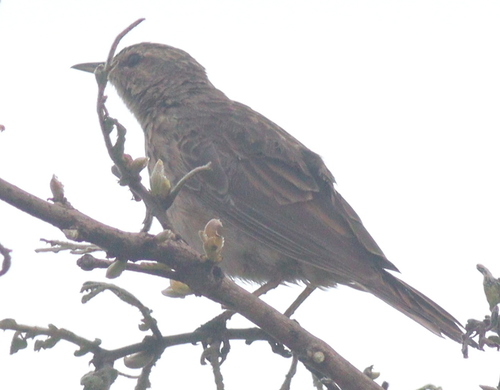 Long-billed Pipit
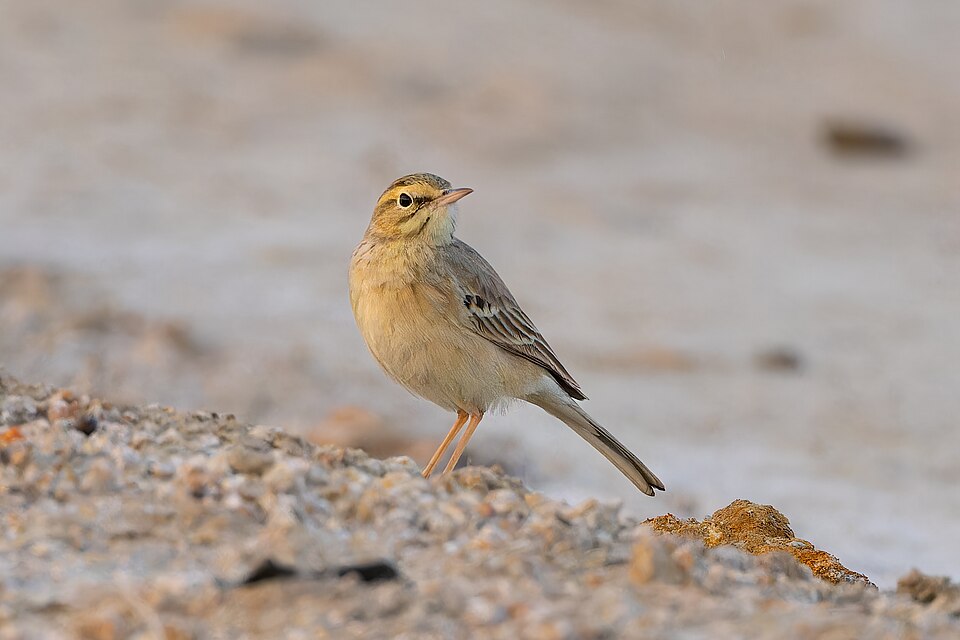 Tawny Pipit
In short
The most reliable field mark between Long-billed Pipit and Tawny Pipit is structure: Long-billed Pipit is slightly larger overall, with a distinctly longer tail and a noticeably longer, heavier dark bill. Both species are very similar in overall sandy-brown coloration and can be extremely difficult to separate on plumage alone, especially on the ground. In flight, both have strong, direct flight and lack obvious wing pattern differences in the available notes, so structural features and bill shape are key. Voice can help, with Long-billed Pipit giving a slower, more varied song and a 'chupp' call, while Tawny Pipit gives a higher-pitched 'schip' call and a short, repetitive song. Care is especially needed in areas where both may occur in winter, as both can appear undistinguished and overlap in size.
Identification tips
- Bill length and shape: Long-billed Pipit has a noticeably longer, heavier, and darker bill than Tawny Pipit. This is often the most reliable field mark, especially in close views or photos. Works for all ages and seasons.
- Tail length: Long-billed Pipit shows a longer tail compared to Tawny Pipit, giving it a more stretched appearance when perched or walking. Useful in side-by-side comparisons or with experience.
- Overall structure: Long-billed Pipit is slightly larger and more elongated, while Tawny Pipit is a bit more compact. This is subtle and best used in combination with bill and tail length.
- Plumage tone: Long-billed Pipit is sandy grey above and whitish or pale buff below; Tawny Pipit is sandy brown above and pale below. This difference is slight and easily obscured by lighting or wear.
- Streaking: Tawny Pipit is described as less streaked than similar pipits, but both Long-billed and Tawny Pipits are rather plain and lack strong streaking. Do not rely on streaking to separate these two.
- Wing pattern in flight: No distinctive juvenile or immature wing pattern differences are described between these two species. Do not expect to separate them by upperwing or flight marks alone.
- Voice: Listen for Long-billed Pipit's slower, more varied song ('sri...churr...') and 'chupp' call, versus Tawny Pipit's higher-pitched 'schip' call and short, repetitive 'chir-ree' song. Calls can be diagnostic with experience, but overlap and variation occur.
- Habitat and range: Both species occur in similar open, dry habitats and can overlap in wintering areas. Do not use habitat as a primary separator where both are possible.
- Flight style: Both species have strong, direct flight; flight jizz is not a reliable separator.
- Pitfalls with other pipits: Both species can be confused with other large pipits (e.g., Richard's, Blyth's, Paddyfield) in South Asia. Always confirm you are only considering Long-billed vs Tawny before applying these tips.
- Season and age: No age-specific marks are described for these two species; all tips apply year-round and to all ages.
- Sex differences: No sexual dimorphism is noted; both sexes are similar.
- Lighting and wear: Subtle color differences are easily masked by lighting, feather wear, or dirt. Prioritize structure over color in poor conditions.
- Side-by-side comparison: If both species are present, direct comparison of bill and tail length is the most effective way to separate them.
- When in doubt: If structural differences are not clear and voice is not heard, it may not be possible to identify a lone bird with certainty.
Size
Long-billed Pipit averages slightly heavier (23.0g vs 22.0g) and is marginally longer (16–17.5 cm vs 16 cm), but this difference is subtle in the field. The more useful size-related mark is the longer tail and longer bill of Long-billed Pipit, which gives it a slightly more elongated appearance compared to the more compact Tawny Pipit. Both are medium-large pipits, so size alone is not a safe separator unless birds are side by side.
Plumage
There are no distinctive age-specific upperwing or flight pattern differences described between these two species, so plumage separation relies on subtle ground marks. Both are sandy brown above and pale below, but Long-billed Pipit tends to be sandy grey above and whitish or pale buff below, while Tawny Pipit is sandy brown above and pale below. Tawny Pipit is less streaked overall, but both are described as 'undistinguished' on the ground. No clear differences in juvenile or immature wing pattern are noted in the available sources. Thus, focus on structural features rather than plumage for reliable identification.
Behaviour
Both species have strong, direct flight and are ground-dwelling, often seen in open habitats. There is no mention of distinctive behavioral differences between them in the available notes. Both can appear rather plain and inconspicuous when foraging or walking on the ground.
Habitat
Both species overlap in wintering grounds in South Asia and Africa, and both prefer open, dry habitats with sparse vegetation. Long-billed Pipit breeds in dry open slopes with rocks and low vegetation, while Tawny Pipit breeds across the central Palearctic and winters in similar open country. Habitat is not a reliable separator where their ranges overlap.
Voice
Long-billed Pipit gives a characteristic 'chupp' call, reminiscent of a desert lark, and its song is slower and more varied than Tawny Pipit, with a repeated 'sri...churr...sri...churr.' Tawny Pipit gives a higher-pitched 'schip' call and a short, repetitive, loud disyllabic 'chir-ree chir-ree' song. In the field, call and song pace and tone can help, but both are similar enough to cause confusion if not heard well.