
Motmot

Long-billed Curlew vs Far Eastern Curlew

Numenius americanus versus Numenius madagascariensis

Play a quiz with Long-billed Curlew and Far Eastern Curlew
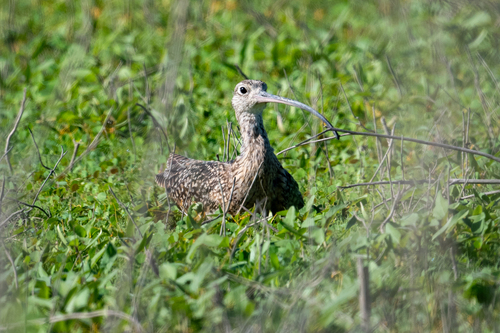
Long-billed Curlew (Numenius americanus) Long-billed Curlew
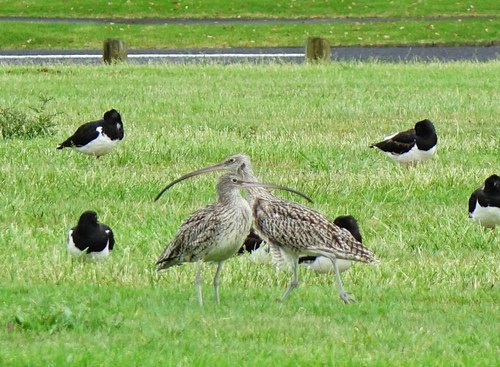
Far Eastern Curlew (Numenius madagascariensis) Far Eastern Curlew

Media

Loading…

In short

The most reliable field mark between Long-billed Curlew and Far Eastern Curlew is the underwing and rump pattern in flight: Far Eastern Curlew shows a plain, unpatterned brown underwing and brown rump, while Long-billed Curlew has a paler, cinnamon-toned underwing and a less uniformly brown rump. Both are huge, long-billed shorebirds with strongly decurved bills, but Far Eastern Curlew is slightly larger overall and appears bulkier, with a longer wingspan and heavier average mass. Bill length overlaps, but Far Eastern Curlew's is typically even longer and stouter. Structure and subtle plumage differences are best seen in good light or flight views; beware of overlap in size and bill length, especially with female Long-billed Curlews. Context (location and flock composition) can help, but for vagrants or in mixed flocks, rely on the underwing and rump.

Identification tips

  1. Underwing in flight (all ages): Far Eastern Curlew shows a plain, unpatterned brown underwing; Long-billed Curlew has a paler, cinnamon underwing. This is the most reliable field mark when birds are flushed or flying overhead.
  2. Rump and lower back (all ages): Far Eastern Curlew has a brown rump and lower back, blending with the rest of the upperparts; Long-billed Curlew's rump is less uniformly brown and may contrast with the back. Check this feature on birds in flight or preening.
  3. Overall size and bulk: Far Eastern Curlew is slightly larger and bulkier, with a longer wingspan and heavier average mass. This is subtle and best judged in direct comparison or with experience.
  4. Bill length and shape: Both species have extremely long, decurved bills. Far Eastern Curlew's bill is typically even longer and stouter, especially in females, but the range overlaps. Use only as a supporting mark, not primary.
  5. Underpart color: Long-billed Curlew has light cinnamon underparts and neck, often warmer and more buffy; Far Eastern Curlew is overall browner and less warm-toned below.
  6. Crown pattern: Long-billed Curlew shows a streaked brown crown; Far Eastern Curlew's head is less distinctly patterned.
  7. Sexual dimorphism: Female Long-billed Curlews have longer bills than males and can approach Far Eastern Curlew in bill length, so do not rely on bill length alone.
  8. Flock size and behavior: Far Eastern Curlew often gathers in large flocks, especially on migration; Long-billed Curlew is more solitary or in small groups. Use with caution, as both can be seen singly.
  9. Geographic context: In North America, Far Eastern Curlew is a vagrant; in East Asia/Australasia, Long-billed Curlew is extremely rare. Always confirm with plumage, especially for out-of-range birds.
  10. Habitat: Both use mudflats and estuaries in winter, but Long-billed Curlew breeds in grasslands, which Far Eastern Curlew does not.
  11. Voice: Far Eastern Curlew's sharp, clear whistle ('cuuue-reee') may be heard in flocks; Long-billed Curlew's call is not described here, so do not use voice as a primary separator.
  12. Perched vs. flight views: Underwing and rump are best seen in flight; perched birds require careful scrutiny of underpart tone and head pattern.
  13. Juvenile/immature plumage: No distinctive juvenile or immature upperwing pattern is described for either species, so use adult marks for all ages.
  14. Potential pitfalls: Do not rely on size or bill length alone due to overlap and sexual dimorphism. Always confirm with underwing and rump pattern in flight.
  15. Lighting conditions: Cinnamon tones of Long-billed Curlew may be less obvious in poor light; focus on underwing and rump pattern whenever possible.

Size

Far Eastern Curlew is the largest curlew and likely the world's largest sandpiper, measuring 60–66 cm in length and 110 cm in wingspan, with an average adult mass of 752.6 g. Long-billed Curlew is slightly smaller at 50–65 cm long, 62–90 cm wingspan, and 699.4 g average mass. The difference is subtle in the field, but Far Eastern Curlew appears bulkier and longer-winged, especially when seen side-by-side. Bill length overlaps (Long-billed Curlew 11.3–21.9 cm, Far Eastern Curlew 12.8–20.1 cm), but the Far Eastern's bill is generally heavier and proportionately longer relative to head size.

Plumage

The most diagnostic plumage feature is the underwing and rump in flight, which applies to all ages and seasons. Far Eastern Curlew shows a plain, unpatterned brown underwing and a brown rump and lower back, creating a uniform look below and behind. Long-billed Curlew, by contrast, has a paler, cinnamon underwing and a less uniformly brown rump, often with some contrast to the back. On perched birds, both are mostly brown above, but Long-billed Curlew shows more cinnamon on the neck and underparts, while Far Eastern Curlew is overall browner and less warm-toned. The crown of Long-billed Curlew is streaked with brown, while Far Eastern Curlew's head pattern is less distinctive. No age-specific upperwing or juvenile pattern is described for either species, so focus on underwing and rump for all ages.

Behaviour

Both species feed by probing mud with their long, decurved bills, often in open wetlands or mudflats. Far Eastern Curlew may be seen in larger flocks during migration or roosting, while Long-billed Curlew is more likely to be seen singly or in smaller groups, especially on breeding grounds. Flight displays are noted for Long-billed Curlew during courtship, with looping, fast flights. Feeding behavior is similar and not reliably diagnostic.

Habitat

Long-billed Curlew breeds in central and western North American grasslands and winters southward and coastward, often in open fields, mudflats, and estuaries. Far Eastern Curlew is found in East Asia and Australasia, favoring coastal mudflats and estuaries, especially on migration and wintering grounds. In North America, any curlew with a plain brown underwing is likely a vagrant Far Eastern Curlew. In the Old World, Long-billed Curlew would be an extreme rarity. Habitat overlap is possible on migration or in wintering areas, so always confirm with plumage and structure.

Voice

Far Eastern Curlew gives a sharp, clear whistle, 'cuuue-reee,' often repeated. No distinctive vocalization is described for Long-billed Curlew in these notes, so voice is not a primary separator in this context.

Submit a better description

Use the same sections as the comparison. Your text is published immediately.

The most reliable field mark between Long-billed Curlew and Far Eastern Curlew is the underwing and rump pattern in flight: Far Eastern Curlew shows a plain, unpatterned brown underwing and brown rump, while Long-billed Curlew has a paler, cinnamon-toned underwing and a less uniformly brown rump. Both are huge, long-billed shorebirds with strongly decurved bills, but Far Eastern Curlew is slightly larger overall and appears bulkier, with a longer wingspan and heavier average mass. Bill length overlaps, but Far Eastern Curlew's is typically even longer and stouter. Structure and subtle plumage differences are best seen in good light or flight views; beware of overlap in size and bill length, especially with female Long-billed Curlews. Context (location and flock composition) can help, but for vagrants or in mixed flocks, rely on the underwing and rump.

  1. Underwing in flight (all ages): Far Eastern Curlew shows a plain, unpatterned brown underwing; Long-billed Curlew has a paler, cinnamon underwing. This is the most reliable field mark when birds are flushed or flying overhead.
  2. Rump and lower back (all ages): Far Eastern Curlew has a brown rump and lower back, blending with the rest of the upperparts; Long-billed Curlew's rump is less uniformly brown and may contrast with the back. Check this feature on birds in flight or preening.
  3. Overall size and bulk: Far Eastern Curlew is slightly larger and bulkier, with a longer wingspan and heavier average mass. This is subtle and best judged in direct comparison or with experience.
  4. Bill length and shape: Both species have extremely long, decurved bills. Far Eastern Curlew's bill is typically even longer and stouter, especially in females, but the range overlaps. Use only as a supporting mark, not primary.
  5. Underpart color: Long-billed Curlew has light cinnamon underparts and neck, often warmer and more buffy; Far Eastern Curlew is overall browner and less warm-toned below.
  6. Crown pattern: Long-billed Curlew shows a streaked brown crown; Far Eastern Curlew's head is less distinctly patterned.
  7. Sexual dimorphism: Female Long-billed Curlews have longer bills than males and can approach Far Eastern Curlew in bill length, so do not rely on bill length alone.
  8. Flock size and behavior: Far Eastern Curlew often gathers in large flocks, especially on migration; Long-billed Curlew is more solitary or in small groups. Use with caution, as both can be seen singly.
  9. Geographic context: In North America, Far Eastern Curlew is a vagrant; in East Asia/Australasia, Long-billed Curlew is extremely rare. Always confirm with plumage, especially for out-of-range birds.
  10. Habitat: Both use mudflats and estuaries in winter, but Long-billed Curlew breeds in grasslands, which Far Eastern Curlew does not.
  11. Voice: Far Eastern Curlew's sharp, clear whistle ('cuuue-reee') may be heard in flocks; Long-billed Curlew's call is not described here, so do not use voice as a primary separator.
  12. Perched vs. flight views: Underwing and rump are best seen in flight; perched birds require careful scrutiny of underpart tone and head pattern.
  13. Juvenile/immature plumage: No distinctive juvenile or immature upperwing pattern is described for either species, so use adult marks for all ages.
  14. Potential pitfalls: Do not rely on size or bill length alone due to overlap and sexual dimorphism. Always confirm with underwing and rump pattern in flight.
  15. Lighting conditions: Cinnamon tones of Long-billed Curlew may be less obvious in poor light; focus on underwing and rump pattern whenever possible.

Far Eastern Curlew is the largest curlew and likely the world's largest sandpiper, measuring 60–66 cm in length and 110 cm in wingspan, with an average adult mass of 752.6 g. Long-billed Curlew is slightly smaller at 50–65 cm long, 62–90 cm wingspan, and 699.4 g average mass. The difference is subtle in the field, but Far Eastern Curlew appears bulkier and longer-winged, especially when seen side-by-side. Bill length overlaps (Long-billed Curlew 11.3–21.9 cm, Far Eastern Curlew 12.8–20.1 cm), but the Far Eastern's bill is generally heavier and proportionately longer relative to head size.

The most diagnostic plumage feature is the underwing and rump in flight, which applies to all ages and seasons. Far Eastern Curlew shows a plain, unpatterned brown underwing and a brown rump and lower back, creating a uniform look below and behind. Long-billed Curlew, by contrast, has a paler, cinnamon underwing and a less uniformly brown rump, often with some contrast to the back. On perched birds, both are mostly brown above, but Long-billed Curlew shows more cinnamon on the neck and underparts, while Far Eastern Curlew is overall browner and less warm-toned. The crown of Long-billed Curlew is streaked with brown, while Far Eastern Curlew's head pattern is less distinctive. No age-specific upperwing or juvenile pattern is described for either species, so focus on underwing and rump for all ages.

Both species feed by probing mud with their long, decurved bills, often in open wetlands or mudflats. Far Eastern Curlew may be seen in larger flocks during migration or roosting, while Long-billed Curlew is more likely to be seen singly or in smaller groups, especially on breeding grounds. Flight displays are noted for Long-billed Curlew during courtship, with looping, fast flights. Feeding behavior is similar and not reliably diagnostic.

Long-billed Curlew breeds in central and western North American grasslands and winters southward and coastward, often in open fields, mudflats, and estuaries. Far Eastern Curlew is found in East Asia and Australasia, favoring coastal mudflats and estuaries, especially on migration and wintering grounds. In North America, any curlew with a plain brown underwing is likely a vagrant Far Eastern Curlew. In the Old World, Long-billed Curlew would be an extreme rarity. Habitat overlap is possible on migration or in wintering areas, so always confirm with plumage and structure.

Far Eastern Curlew gives a sharp, clear whistle, 'cuuue-reee,' often repeated. No distinctive vocalization is described for Long-billed Curlew in these notes, so voice is not a primary separator in this context.

Discard your changes?

You have unsaved edits. If you leave now, those changes will be lost.

Long-billed Curlew · Far Eastern Curlew · My Tricky Birds