

Motmot

Little Tern vs Sandwich Tern

Sternula albifrons versus Thalasseus sandvicensis

Play a quiz with Little Tern and Sandwich Tern
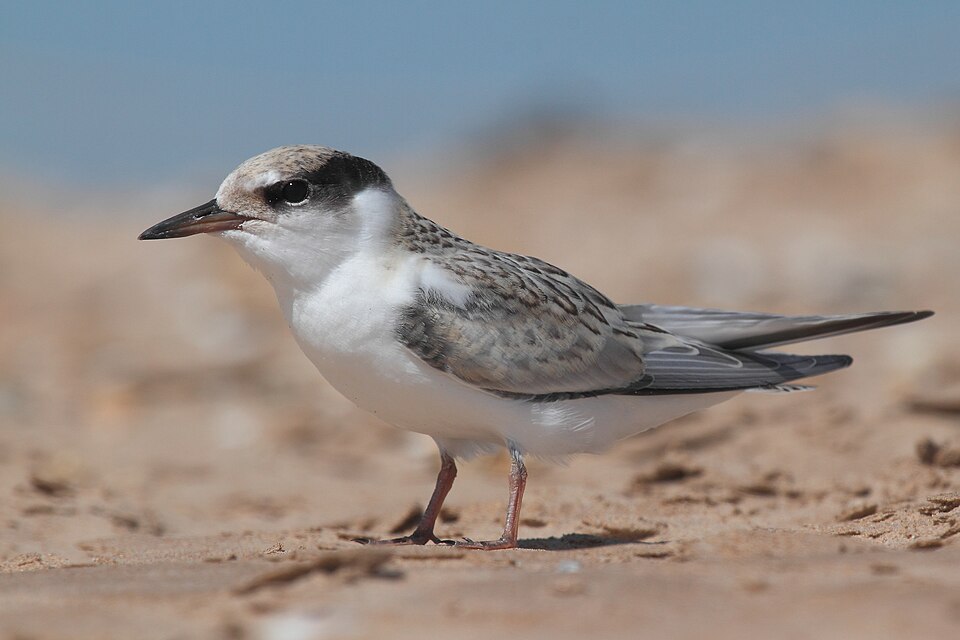
Little Tern (Sternula albifrons) Little Tern

Sandwich Tern (Thalasseus sandvicensis) Sandwich Tern

Media

Loading…

In short

The most reliable way to separate Little Tern from Sandwich Tern is by size and structure: Little Tern is much smaller and more delicate, with a tiny, sharp yellow bill (black-tipped in breeding), while Sandwich Tern is medium-large, with a long, slender black bill tipped yellow. In flight, Little Tern always looks dainty and compact, whereas Sandwich Tern appears long-winged and powerful. Juvenile Sandwich Terns show a scaly upperwing and dark tail tip, which Little Tern juveniles lack. Adult breeding Little Terns have a white forehead and yellow legs, while Sandwich Terns have a shaggy black crest and black legs. Bill and leg color, size, and overall jizz are the quickest field checks, especially at range or in mixed flocks.

Identification tips

  1. Size is the quickest check: Little Tern is much smaller and lighter than Sandwich Tern; if you see both together, the difference is obvious, but even singly, Little Tern looks tiny and compact.
  2. Bill color and shape: Little Tern has a short, fine yellow bill with a black tip in breeding plumage; in winter, the bill is black. Sandwich Tern always has a long, slender black bill with a yellow tip (less obvious in juveniles and winter). Juvenile Sandwich Tern bills may be all blackish, but still much longer and heavier than Little Tern's.
  3. Leg color: Little Tern has yellow legs (duller in winter), while Sandwich Tern has black legs year-round. This is visible at close range or on perched birds.
  4. Forehead pattern in breeding: Little Tern shows a prominent white forehead with a black line through the eye; Sandwich Tern has a full black cap with a shaggy crest. In non-breeding, both develop a white forehead, so this is less reliable then.
  5. Juvenile plumage: Juvenile Sandwich Tern shows a scaly pattern on the back and wings, and a dark tail tip; Little Tern juveniles lack the scaly look and have a plainer back and tail.
  6. Upperwing in flight: Little Tern's wings are narrow and translucent, with no dark wedge or hook tip. Sandwich Tern adults may show a dark 'hook tip' on the primaries in late summer due to feather wear, and always have broader, longer wings.
  7. Tail shape: Both have forked tails, but Sandwich Tern's is longer and more deeply forked, especially noticeable in flight.
  8. Flight style: Little Tern is quick, fluttery, and often hovers; Sandwich Tern is more powerful, with deep, steady wingbeats and less hovering.
  9. Perched posture: Little Tern sits low and squat; Sandwich Tern stands tall and upright, with a longer neck and bill.
  10. Voice: Listen for calls—Sandwich Tern gives a loud, grating 'kear-ik', while Little Tern's calls are sharp, high, and less harsh.
  11. Habitat context: If you are inland or at a small lagoon, Little Tern is more likely; on open coasts and large sandy beaches, especially in big colonies, Sandwich Tern is more expected.
  12. Seasonal bill and leg color: In winter, Little Tern's bill and legs darken, making separation trickier; rely more on size, structure, and voice then.
  13. Mixed flocks: Little Tern rarely mixes with large terns; if you see a group with obvious size differences, check for both species.
  14. Crest: Sandwich Tern shows a shaggy crest in breeding plumage, which Little Tern lacks.
  15. Primary wear: Only Sandwich Tern shows the 'hook tip' effect on primaries in late summer; Little Tern's primaries remain clean-edged.

Size

Little Tern is dramatically smaller: about 21–25 cm in length and weighing around 57 g [wikidata], compared to Sandwich Tern's 36–41 cm length and 200–300 g weight [wikipedia]. The wingspan contrast is also stark: Little Tern 41–47 cm versus Sandwich Tern's 95–105 cm. Even without direct comparison, Little Tern looks tiny and agile, while Sandwich Tern is robust and long-winged, closer in size to a small gull.

Plumage

Juvenile and first-winter birds are easiest to separate by upperwing and tail: juvenile Sandwich Terns show a scaly pattern on the back and wings, with dark tips to the tail and an all-blackish bill (sometimes yellowish at the base), while Little Tern juveniles lack the scaly look and have a proportionally much smaller, paler bill. In adult breeding plumage, Little Tern shows a white forehead, yellow bill with black tip, and yellow legs; Sandwich Tern has a full black cap with a shaggy crest, black legs, and a black bill with a yellow tip. In non-breeding (winter), both species develop a white forehead, but Little Tern's bill turns black and legs dull, while Sandwich Tern retains its black bill (with yellow tip fading) and black legs. The upperwing in flight is always paler and more translucent in Little Tern, with no dark primary wedge or hook tip as in worn Sandwich Tern. Sandwich Tern adults in late summer may show a 'hook tip' pattern on the primaries due to feather wear, which Little Tern never shows.

Behaviour

Little Tern is quick, agile, and often hovers low over water before plunge-diving for small fish. It frequently flies in tight, fast-moving flocks or alone, rarely mixing with larger terns. Sandwich Tern has a more powerful, buoyant flight with deep wingbeats, often seen in loose flocks or mixed tern groups. On the ground, Sandwich Tern stands taller and more upright, with a longer neck and bill, while Little Tern is squat and compact.

Habitat

Both species breed on coasts and sandy beaches, but Little Tern is more likely to be found on small inland waterways and lagoons as well as coastal sites, often in smaller colonies. Sandwich Tern prefers larger, open sandy or shingle beaches and barrier islands, usually in bigger, noisier colonies. In migration and winter, Sandwich Tern is more marine, often seen along open coasts and estuaries, while Little Tern may be found further inland.

Voice

Sandwich Tern is very vocal, giving a loud, grating 'kear-ik' or 'kerr ink' call, which is distinctive and carries far. Little Tern's calls are sharper and higher-pitched, more like a rapid 'kit' or 'kik', less harsh and less far-carrying than Sandwich Tern. If you hear a loud, grating tern call, think Sandwich Tern; if the calls are thin and high, suspect Little Tern.

Submit a better description

Use the same sections as the comparison. Your text is published immediately.

The most reliable way to separate Little Tern from Sandwich Tern is by size and structure: Little Tern is much smaller and more delicate, with a tiny, sharp yellow bill (black-tipped in breeding), while Sandwich Tern is medium-large, with a long, slender black bill tipped yellow. In flight, Little Tern always looks dainty and compact, whereas Sandwich Tern appears long-winged and powerful. Juvenile Sandwich Terns show a scaly upperwing and dark tail tip, which Little Tern juveniles lack. Adult breeding Little Terns have a white forehead and yellow legs, while Sandwich Terns have a shaggy black crest and black legs. Bill and leg color, size, and overall jizz are the quickest field checks, especially at range or in mixed flocks.

  1. Size is the quickest check: Little Tern is much smaller and lighter than Sandwich Tern; if you see both together, the difference is obvious, but even singly, Little Tern looks tiny and compact.
  2. Bill color and shape: Little Tern has a short, fine yellow bill with a black tip in breeding plumage; in winter, the bill is black. Sandwich Tern always has a long, slender black bill with a yellow tip (less obvious in juveniles and winter). Juvenile Sandwich Tern bills may be all blackish, but still much longer and heavier than Little Tern's.
  3. Leg color: Little Tern has yellow legs (duller in winter), while Sandwich Tern has black legs year-round. This is visible at close range or on perched birds.
  4. Forehead pattern in breeding: Little Tern shows a prominent white forehead with a black line through the eye; Sandwich Tern has a full black cap with a shaggy crest. In non-breeding, both develop a white forehead, so this is less reliable then.
  5. Juvenile plumage: Juvenile Sandwich Tern shows a scaly pattern on the back and wings, and a dark tail tip; Little Tern juveniles lack the scaly look and have a plainer back and tail.
  6. Upperwing in flight: Little Tern's wings are narrow and translucent, with no dark wedge or hook tip. Sandwich Tern adults may show a dark 'hook tip' on the primaries in late summer due to feather wear, and always have broader, longer wings.
  7. Tail shape: Both have forked tails, but Sandwich Tern's is longer and more deeply forked, especially noticeable in flight.
  8. Flight style: Little Tern is quick, fluttery, and often hovers; Sandwich Tern is more powerful, with deep, steady wingbeats and less hovering.
  9. Perched posture: Little Tern sits low and squat; Sandwich Tern stands tall and upright, with a longer neck and bill.
  10. Voice: Listen for calls—Sandwich Tern gives a loud, grating 'kear-ik', while Little Tern's calls are sharp, high, and less harsh.
  11. Habitat context: If you are inland or at a small lagoon, Little Tern is more likely; on open coasts and large sandy beaches, especially in big colonies, Sandwich Tern is more expected.
  12. Seasonal bill and leg color: In winter, Little Tern's bill and legs darken, making separation trickier; rely more on size, structure, and voice then.
  13. Mixed flocks: Little Tern rarely mixes with large terns; if you see a group with obvious size differences, check for both species.
  14. Crest: Sandwich Tern shows a shaggy crest in breeding plumage, which Little Tern lacks.
  15. Primary wear: Only Sandwich Tern shows the 'hook tip' effect on primaries in late summer; Little Tern's primaries remain clean-edged.

Little Tern is dramatically smaller: about 21–25 cm in length and weighing around 57 g [wikidata], compared to Sandwich Tern's 36–41 cm length and 200–300 g weight [wikipedia]. The wingspan contrast is also stark: Little Tern 41–47 cm versus Sandwich Tern's 95–105 cm. Even without direct comparison, Little Tern looks tiny and agile, while Sandwich Tern is robust and long-winged, closer in size to a small gull.

Juvenile and first-winter birds are easiest to separate by upperwing and tail: juvenile Sandwich Terns show a scaly pattern on the back and wings, with dark tips to the tail and an all-blackish bill (sometimes yellowish at the base), while Little Tern juveniles lack the scaly look and have a proportionally much smaller, paler bill. In adult breeding plumage, Little Tern shows a white forehead, yellow bill with black tip, and yellow legs; Sandwich Tern has a full black cap with a shaggy crest, black legs, and a black bill with a yellow tip. In non-breeding (winter), both species develop a white forehead, but Little Tern's bill turns black and legs dull, while Sandwich Tern retains its black bill (with yellow tip fading) and black legs. The upperwing in flight is always paler and more translucent in Little Tern, with no dark primary wedge or hook tip as in worn Sandwich Tern. Sandwich Tern adults in late summer may show a 'hook tip' pattern on the primaries due to feather wear, which Little Tern never shows.

Little Tern is quick, agile, and often hovers low over water before plunge-diving for small fish. It frequently flies in tight, fast-moving flocks or alone, rarely mixing with larger terns. Sandwich Tern has a more powerful, buoyant flight with deep wingbeats, often seen in loose flocks or mixed tern groups. On the ground, Sandwich Tern stands taller and more upright, with a longer neck and bill, while Little Tern is squat and compact.

Both species breed on coasts and sandy beaches, but Little Tern is more likely to be found on small inland waterways and lagoons as well as coastal sites, often in smaller colonies. Sandwich Tern prefers larger, open sandy or shingle beaches and barrier islands, usually in bigger, noisier colonies. In migration and winter, Sandwich Tern is more marine, often seen along open coasts and estuaries, while Little Tern may be found further inland.

Sandwich Tern is very vocal, giving a loud, grating 'kear-ik' or 'kerr ink' call, which is distinctive and carries far. Little Tern's calls are sharper and higher-pitched, more like a rapid 'kit' or 'kik', less harsh and less far-carrying than Sandwich Tern. If you hear a loud, grating tern call, think Sandwich Tern; if the calls are thin and high, suspect Little Tern.

Discard your changes?

You have unsaved edits. If you leave now, those changes will be lost.

Little Tern · Sandwich Tern · My Tricky Birds